Aug 23, 2018 | News
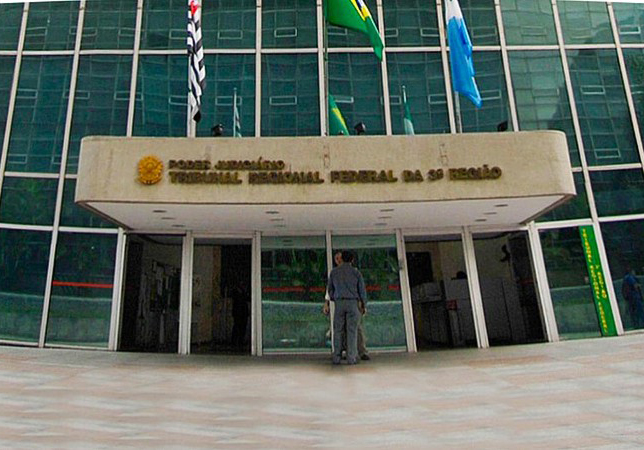
The Regional Federal Tribunal (TRF-3), in a watershed judgment, ruled that prescription or statute of limitations was not applicable to claims of reparation by a victim of torture during the military regime in the 1970s. The Court accepted the arguments of ICJ Commissioner Belisário dos Santos Jr.
The hearing in the lawsuit against the Union and the State of São Paulo took place on Wednesday 22, after the case had been dismissed by the court first instance.
Belisário dos Santos Jr., Executive Committee Member of the ICJ, argued the case for the victim at the invitation of the Juridical Department of CA XI.
He noted: “On the one hand there could be no statute of limitation on torture claims, while on the other hand the the application of the statute of limitations which adopted by Decree 20.910 / 32 had to be considered.”
The lawsuit, which began in 2012, alleges political persecution and torture that took place beginning 1971 .
Belisário dos Santos Jr. argued that the rationale for the law and jurisprudence affirming the inapplicability of statute of limitation lies in the seriousness of the violation of torture, which had been committed on a widespread and systematic basis by order or with the knowledge of high-level State authorities in Brazil at the time.
“The obligation to provide reparation under the UN Convention against Torture could not be superseded by provisions of the domestic law of a State. In addition, the obligation to provide a remedy and reparation is a legal duty of the State which must not depend on the conduct or activity of the victims. For these reasons, the case could not have the same treatment of other lawsuits against the Public Treasury,” he said.
Belisário dos Santos Jr. also pointed out that, pursuant to article 14 of the UN Convention against Torture, which was ratified by Brazil in 1991, “the reparation must be fair and adequate, as recognized by the jurisprudence of the Supreme Court of Justice and TRF 3, itself in accordance with international human rights law and jurisprudence. ”
The TRF-3 decided by 3-2 majority that the statute of limitation was inapplicable and, unanimously, granted the appeal on merit, allowing the lawsuit to proceed.
Aug 23, 2018 | News
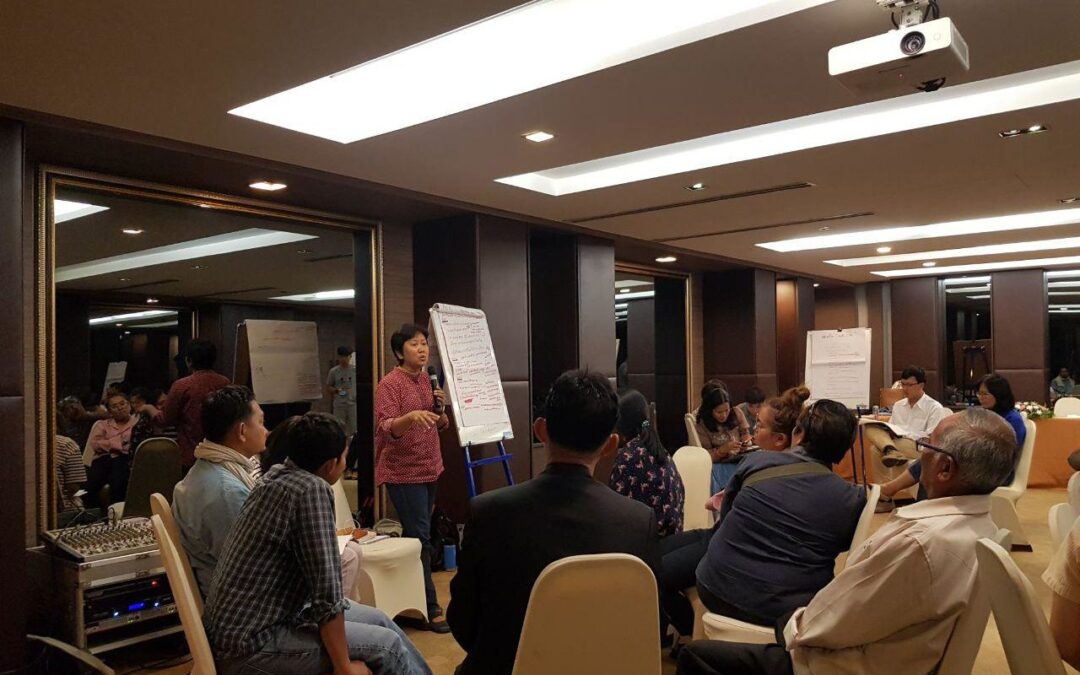
On 22 August, the ICJ co-organized a preparatory discussion in Bangkok for civil society organizations on Thailand’s National Action Plan on Business and Human Rights (NAP).
This event was organized one day in preparation for a formal NGO consultation event on the NAP held today.
The formal NGO consultation event was organized by the National Human Rights Commission of Thailand (NHRCT) to consider the draft NAP released by Thailand’s Ministry of Justice’s Rights and Liberties Protection Department (RLPD) in August 2018.
The ICJ hosted the preparatory discussion jointly with Community Resource Centre Foundation (CRC), Amnesty International Thailand (AI Thailand), Protection International (PI), Fortify Rights and the United Nations’ Office of the High Commissioner for Human Rights (OHCHR).
Thirty members of civil society organizations from all across Thailand attended the preparatory discussion.
Of these participants, four persons from the North of Thailand were supported by the ICJ to attend the discussion, including Ms. Arisara Lekkam, Lecturer of Law at Mae Fah Luang University in Chiang Rai, who was also a speaker at the event.
The event began with a presentation about the NAP and business and human rights issues in Thailand, during which Arisara Lekkam provided an overview of the business and human rights situation in Thailand.
Following the presentation, participants divided into groups to discuss four prioritized areas covered by the NAP: Labour, Land and Natural Resources, Human Rights Defenders and Cross-Border Investment.
At the end of the discussion, each group presented a set of recommendations on the draft NAP pertaining to each prioritized area. These recommendations will be provided to the Ministry of Justice’s RLPD.
This is the third event the ICJ has held on business and human rights in collaboration with partners from the North of Thailand.
On 22 November 2017, the ICJ, in collaboration with Chiang Mai University’s Faculty of Law, held a roundtable discussion on human rights litigation concerning special economic zones in Myanmar and Thailand.
Between 29 and 31 July 2017, the ICJ, in collaboration with Chiang Mai University’s Faculty of Law, held a workshop on ‘Introduction to Business and Human Rights & Basic Principles on Documenting Human Rights Violations” for 25 academics, NGO representatives and lawyers in Chiang Mai.
Background
During the second Universal Periodic Review of Thailand in May 2016, the Royal Thai Government accepted a recommendation to develop, enact and implement a national action plan on business and human rights in order to implement the UN Guiding Principles on Business and Human Rights.
In August 2018, Thailand’s Ministry of Justice’s RLPD, which is currently leading the development of the NAP, released a revised ‘zero draft’ of the NAP.
In line with the release of the revised ‘zero draft’, the NHRCT led the organization of a formal NGO consultation event on 23 August 2018, jointly with Thailand’s Ministry of Justice, Thailand’s Ministry of Foreign Affairs, United Nations Development Programme (UNDP) and OHCHR.
The Royal Thai Government reportedly plans to launch the NAP in September 2018.
Aug 22, 2018
The ICJ is participating in trial observation mission by leading jurists in hearings on the Zimbabwe Presidential election petition that started at the Constitutional Court in Harare today expected to continue over three days.
Nelson Chamisa of the Movement for Democratic Change Alliance (MDC A), the leading opposition candidate, filed the petition alleging serious irregularities in the way the presidential elections were conducted particularly by the Zimbabwe Electoral Commission (ZEC).
Among other things, he is calling for the elections to be annulled or alternatively for him to be declared the winner.
Both the ZEC and the announced winner incumbent president Emmerson Mnangagwa have filed papers opposing the petition.
The ICJ is conducting a joint trial observation with the Africa Judges’ and Jurists’ Forum in the trial observation mission.
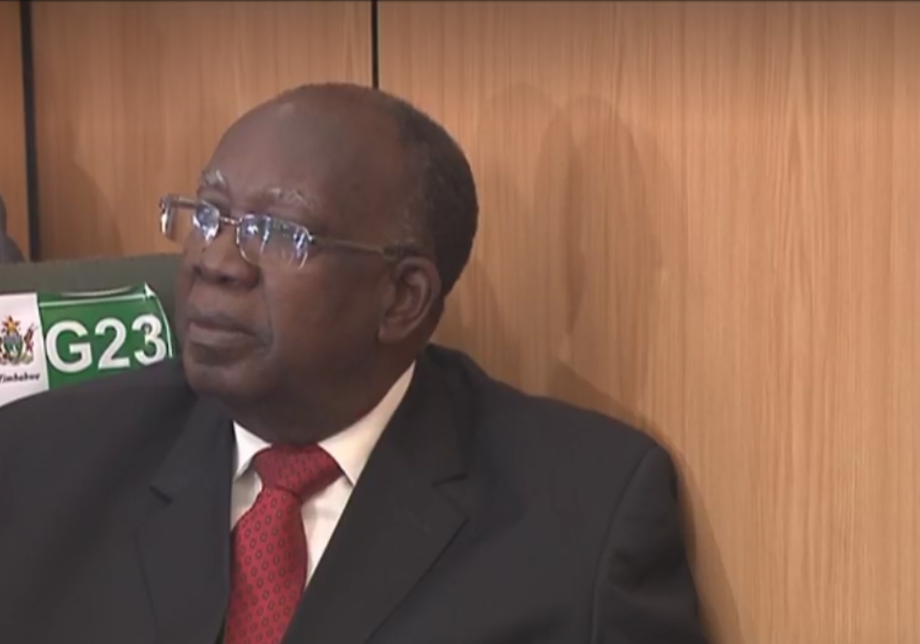
The Mission team is composed of Retired Chief Justice Ernest Sakala (photo) who is a Zambian lawyer and retired Chief Justice of Zambia, Justice Isaac Lenaola a Kenyan lawyer and serving Justice of the Supreme Court of Kenya, since 28 October 2016, Martin Okumu Masiga a Ugandan lawyer and founder member and incumbent Secretary General of the Africa Judges’ and Jurists’ Forum and Simphiwe Sidu a lawyer in the ICJ’s Africa Programme.
The observation mission will include an assessment of the proceedings of the petition in terms of compliance with regional and international human rights law and standards on fair trial and the administration of justice applicable to Zimbabwe.
A statement will be produced at the end of the observation with views that will be made available to the authorities in Zimbabwe and the general public.
Download
A “Question and Answer” briefing paper on the election petition in Zimbabwe is available here for more information:
Zimbabwe-Q and A elections-Advocacy-Analysis brief-2018-ENG (download in PDF)
Contact
Brian Penduka, e: brian.penduka(a)icj.org or t: +263772274307
Arnold Tsunga, e: arnold.tsunga(a)icj.org or t: +27716405926
Aug 21, 2018
The ICJ has issued Challenges to Freedom of Religion or Belief in Nepal, in which the ICJ identified a number of challenges related to the protection and promotion of the right to freedom of religion or belief in the country.
These challenges are:
1. the prohibition and criminalization of “proselytism”;
2. criminal offences related to “blasphemy” and “hurting religious sentiment”;
3. discrimination against religious minorities arising from denial of use of burial grounds and cemeteries in and around Kathmandu; and
4. Tibetan Refugees’ exercise of their right to freedom of religion or belief.
In light of concerns detailed in the briefing, and arising in connection with the above-mentioned challenges, the ICJ made a number of recommendations to the authorities of Nepal.
Nepal-Freedom of religion brief-Advocacy-Analysis brief-2018-ENG (full text, PDF)

Aug 21, 2018 | Articles, Nouvelles
La CIJ et sa section polonaise ont exprimé aujourd’hui leur soutien aux actions de la Cour suprême pour défendre l’état de droit et l’indépendance du pouvoir judiciaire en Pologne, notamment en recourant à la Cour de justice des Communautés européennes (CJCE).
Ces faits interviennent dans la foulée d’attaques répétées de la part de personnalités politiques et des autorités.
La préservation et la sauvegarde de l’indépendance des tribunaux sont essentielles pour la protection des droits de l’Homme en Pologne, ont déclaré les deux organisations.
La CIJ et sa section polonaise ont exhorté les autorités exécutives et législatives du pays à cesser toute ingérence dans la conduite de ses fonctions légitimes par la Cour suprême.
La loi sur la Cour suprême qui a abouti à la «retraite» forcée d’un tiers de la Cour suprême, y compris de la présidente de la Cour, Małgorzata Gersdorf, doit être abrogée et les juges réintégrés, ont souligné la CIJ et sa section polonaise.
Le 2 août, la Cour suprême de Pologne a pris l’initiative, bienvenue, de présenter une demande de décision préliminaire à la Cour de justice de l’Union européenne (CJUE), conformément au droit de l’UE, afin de requérir son interprétation sur la conformité de la législation récente sur l’âge de la retraite des juges avec le droit de l’UE.
Plus précisément, la Cour suprême a demandé si la législation respectait le principe de l’inamovibilité des juges et de l’interdiction de la discrimination fondée sur l’âge en vertu de la directive 2000/78.
La Cour suprême a suspendu l’application de la loi tant que durera la procédure devant la CJUE.
La CIJ et sa section polonaise condamnent les attaques contre la Cour suprême de la part des autorités politiques, et notamment le président Andrzej Duda, qui ont prétendu que la suspension de l’application de la loi n’a aucun fondement juridique.
Au contraire, la Cour suprême de Pologne a agi dans le respect de ses obligations, en vertu de l’article 267 du Traité sur le fonctionnement de l’Union européenne (TFEU), pour questionner l’interprétation des traités et, conformément à la jurisprudence de la CJUE, et pour suspendre l’application de mesures qui pourraient constituer une violation du droit de l’Union européenne, dans l’attente du règlement de la question.
La législation soulève de sérieux problèmes en droit européen, tant en ce qui concerne la protection de l’état de droit en vertu de l’article 2 du TFEU que de la discrimination fondée sur l’âge.
Cette attaque contre les actions de la Cour suprême intervient alors que les autorités exécutives et législatives polonaises sapent systématiquement l’indépendance de la justice en Pologne, ce que la CIJ, sa section en Pologne et les juges du réseau mondial de la CIJ ont condamné à plusieurs reprises.
Les deux organisations soulignent que l’inamovibilité des juges est l’un des principaux piliers de l’indépendance judiciaire et donc de l’état de droit. Une lettre de la CIJ datée du 11 juillet 2018 (disponible uniquement en anglais), signée par 22 hauts magistrats de toutes les régions du monde, a exhorté le gouvernement polonais à agir immédiatement pour réintégrer les juges mis en retraite forcée.