Jul 30, 2018 | Новости, Статьи
Убийство сербского адвоката Драгослава Огняновича должно быть незамедлительно и тщательно расследовано, а виновные привлечены к ответственности, заявила сегодня МКЮ.
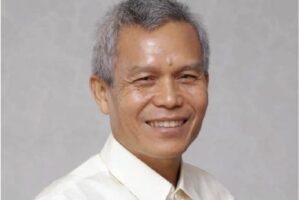
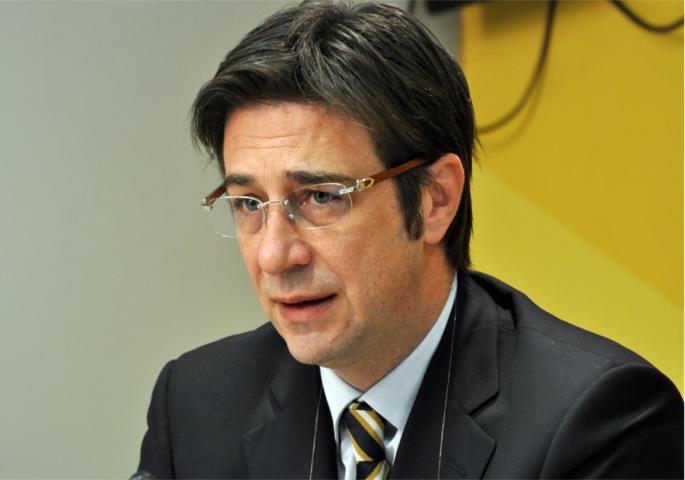
Драгослав Огнянович (фото), известный адвокат, который защищал Слободана Милосовича и также представлял обвиняемых в делах организованной преступности, был застрелен перед его домом в Белграде вечером в субботу 28 июля.
«Безопасность адвокатов имеет очень важное значение для справедливого функционирования системы правосудия и защиты законности. Теперь сербским властям необходимо принять срочные меры для восстановления уверенности в том, что они могут обеспечить безопасность адвокатов, которые могут находиться под угрозой, а также расследовать и привлекать к ответственности лиц, виновных в этом преступлении », – заявила судья Радмила Драгичевич-Дичик из Верховного суда Сербии, вице-президент МКЮ.
«Расследование и судебное разбирательство этого дела станут серьезным испытанием для сербских властей и правовой системы», – добавила она.
Ассоциации адвокатов Сербии и Белграда обьявили недельную приостановку работы юристов, чтобы выразить свою обеспокоенность в связи с риском насилия в отношении адвокатов.
Сербские власти обвиняют продолжающуюся борьбу за влияние между организованными преступными группами, конкурирующими за контроль над торговлей наркотиками.
«Проблемы сербской юридической профессии должны восприниматься серьезно со стороны правительства и прокуратуры, и с адвокатами следует консультироваться по средствам обеспечения безопасности адвокатов», – сказала Роушин Пиллэй, директор Европейской программы МКЮ.
Дополнительная информация
Международное право прав человека, включая Европейскую конвенцию о правах человека, участником которой является Сербия, требует, чтобы государства предпринимали меры для защиты жизни и физической неприкосновенности лиц, которых они знают или должны знать, подвергаются реальной опасности насилия.
Кроме того, право на жизнь, защищенное в соответствии со статьей 2 Европейской конвенции, а также в соответствии с другими нормами международного права, требует от государств обеспечить независимое, быстрое и эффективное расследование убийств с целью привлечения к ответственности виновных.
Согласно Основным принципам ООН роли юристов, правительства должны обеспечить, чтобы юристы могли выполнять все свои профессиональные функции без запугивания, препятствий, преследований или ненадлежащего вмешательства (принцип 16). В Основных принципах ООН указывается, что «там, где безопасность адвокатов находется под угрозой в результате выполнения их функций, они должны быть надлежащим образом защищены властями» (принцип 17).
Jul 27, 2018 | News
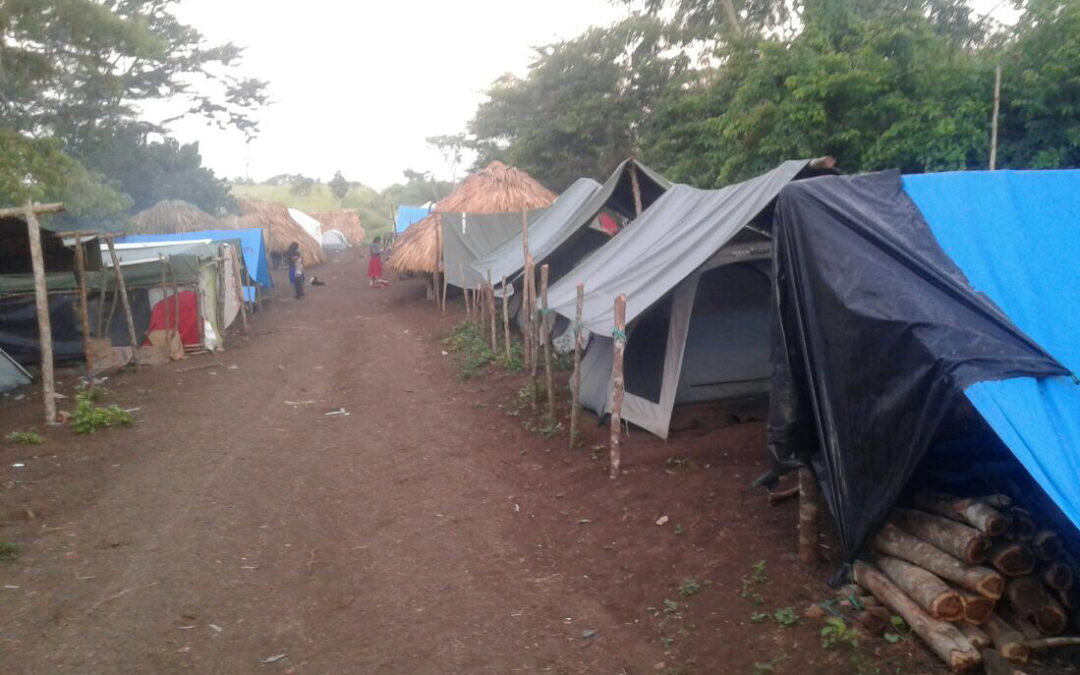
On 25 July, the ICJ visited the displaced persons of the Laguna Larga community, who were forcibly evicted from their homes over a year ago.
These displaced persons are now living in makeshift tents in infra-human conditions in the El Desengaño community, municipality of Candelaria, State of Campeche on the frontier between Guatemala and Mexico.
Their health and well-being are at serious risk.
On 8 September 2017, the Inter-American Commission on Human Rights (IACHR) granted precautionary measures in favour of the evicted and displaced community of Laguna Larga (Resolution 36/2017 Precautionary Measures No 412-17), calling on the Guatemalan authorities to adopt the “necessary measures to protect the rights to life and to personal integrity of the beneficiaries, through measures designed to improve, among other aspects, their sanitary and health conditions, in particular of children, women and the elderly”.
To date, the Guatemalan authorities have taken no action to implement the precautionary measures.
The ICJ was able to observe that the only measure adopted by the Guatemalan State has been to provide the displaced community with two teachers to give classes to the children.
However, the ICJ could also observe that the educational installations are precarious, too hot and very dark, which makes it difficult to give classes.
No sanitary nor health services have been provided by the Guatemalan authorities. On 24 July, a child died only 30 hours after her birth, seemingly a consequence of lack of medical attention.
Neither have other precautionary measures concerning food, access to water and housing been implemented.
The ICJ is deeply concerned that the Guatemalan State has not fulfilled the requirements of the IACHR and that after a year, the rights to life and personal integrity of the displaced community of Laguna Larga is at risk of irreparable harm.
In the face of the inaction of the Guatemalan authorities, members of the Laguna Larga community with the support of Mexican and Guatemalan organizations have managed to implement various projects to provide drinking water, electricity, food and health services.
However, despite these important efforts, this humanitarian support remains insufficient given the serious crisis.
While the efforts of the Laguna Larga community and Mexican and Guatemala non-governmental organizations have been an example of civil society organization, it in no way exonerates, substitutes or reduces the responsibility of the Guatemalan State to guarantee the rights to life and personal integrity of the displaced population and to implement the precautionary measures ordered by the IACHR.
Ramon Cadena, Director of ICJ’s Central American Office, said:
“Given this situation, the ICJ urges the Guatemalan authorities immediately to fulfil the Inter-American Commission on Human Rights’ precautionary measures 412-17 and to resume the dialogue that was started before the eviction. According to international standards, the State should provide reparations for all the harm and prejudice caused.”
Jul 27, 2018 | News
On 26 July 2018, the ICJ Secretary General, Sam Zarifi, met Myanmar’s Union Attorney General, U Tun Tun Oo.
The ICJ Legal Adviser Sean Bain and senior staff from the Union Attorney General’s Office (UAGO) joined the meeting in Nay Pyi Taw.
Rule of law developments in Myanmar were discussed, including progress integrating international standards into the work of the UAGO, such as the new “Code of Ethics for Law Officers”.
The participation of UAGO staff in the ICJ’s recent workshops on the Minnesota Protocol on the Investigation of Potentially Unlawful Deaths was another topic discussed.
Noting the UAGO’s stated reform commitments, Sam Zarifi renewed the ICJ’s call on Myanmar’s prosecution authorities to drop the charges against Wa Lone and Kyaw Soe Oo, two Reuters journalists, which do not appear to have a valid legal rationale.
Efforts to effectively prosecute the assassination of lawyer U Ko Ni were also discussed.
Sean Bain noted the UAGO’s efforts to draft an umbrella land law according to the government’s National Land Use Policy, and highlighted the importance of public participation and consultation in this process, to ensure compliance with Myanmar’s obligations under the International Covenant on Economic, Social and Cultural Rights.
The Attorney General thanked the ICJ for the organization’s ongoing honest advice and support for human rights.
The ICJ has worked with the UAGO since 2014 to provide assistance on prosecutorial independence and human rights in the context of Myanmar’s broader democratic reforms.
Jul 26, 2018 | Noticias
Falta de atención médica por parte del Estado de Guatemala provoca la muerte de niña, 30 horas después de nacida el 24 de julio.
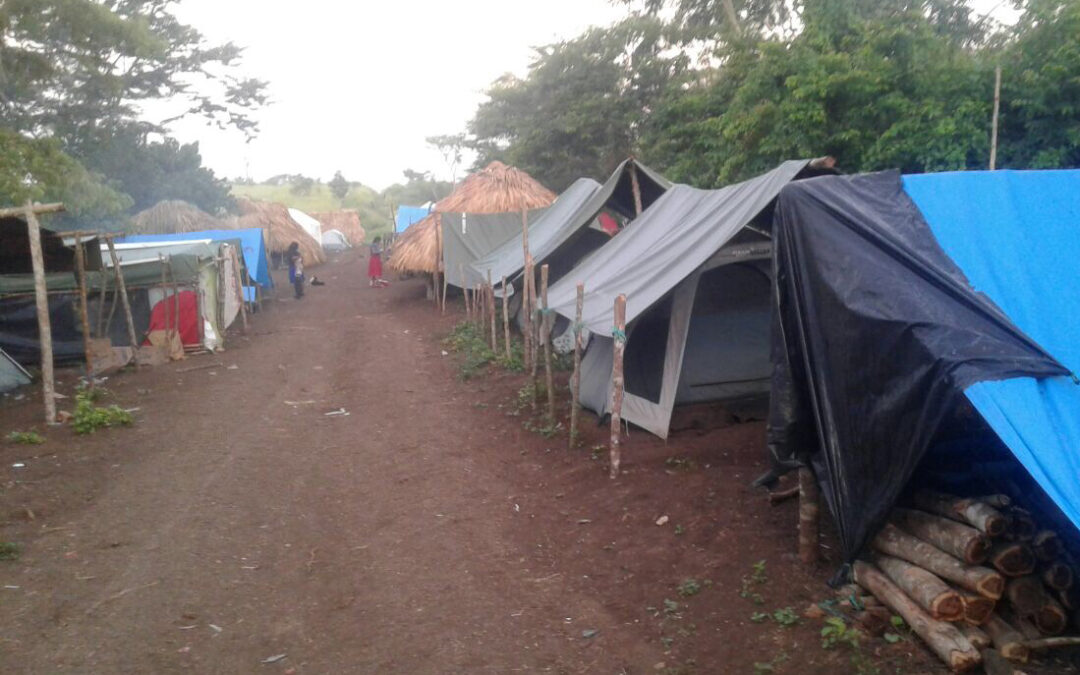
La CIJ visitó el 25 de julio del presente año a la comunidad de “Laguna Larga”, víctima de desalojo forzoso hace ya más de un año.
Las personas desplazadas, que actualmente viven en la circunscripción de El Desengaño, municipio de Candelaria, Estado de Campeche, a la intemperie en carpas y “champas” en una zona rural de la franja fronteriza entre Guatemala y México, continúan en condiciones inhumanas y en una situación de riesgo, que pone en peligro su vida e integridad.
El 8 de septiembre de 2017, la Comisión Interamericana de Derechos Humanos (CIDH) decretó medidas cautelares a favor de los Pobladores desalojados y desplazados de la comunidad Laguna Larga (Resolución 36/2017, Medidas Cautelares No. 412-17), instando a las autoridades guatemaltecas a adoptar las “medidas necesarias para proteger los derechos a la vida y la integridad personal de las personas beneficiarias, a través de medidas dirigidas a mejorar, entre otros aspectos, las condiciones sanitarias y de salud, en especial de los niños, niñas, mujeres y personas mayores”.
Hasta la fecha las autoridades guatemaltecas no han acatado las medidas cautelares.
La CIJ pudo constatar que la única medida adoptada por el Estado de Guatemala ha sido la asignación a la comunidad desplazada de dos maestras para impartir clases a los niños.
No obstante, la CIJ pudo constatar igualmente que las instalaciones educativas son precarias y demasiado calientes y obscuras, lo cual dificulta la impartición de clases.
Ninguna medida de orden sanitario o en materia de salud ha sido implementada por las autoridades guatemaltecas.
El pasado 24 de julio, una niña murió apenas treinta horas después de nacida, aparentemente, por falta de atención médica.
Igualmente ninguna de las medidas cautelares relativas a la alimentación, acceso al agua potable y vivienda, ha sido atendida por las autoridades guatemaltecas.
La CIJ expresa su honda preocupación por el hecho de que el Estado de Guatemala no haya cumplido ninguno de los requerimientos de la CIDH y que, después de un año, los derechos a la vida e integridad personal de los pobladores desplazados de la Comunidad Laguna Larga se encuentren en una situación de gravedad y urgencia de riesgo de un daño irreparable.
Ante la inacción de las autoridades guatemaltecas, los miembros de “Laguna Larga”, con el apoyo de organizaciones no gubernamentales, tanto mexicanas como guatemaltecas, han logrado implementar varios proyectos para abastecerse de agua potable, energía eléctrica, alimentación y salud.
No obstante, la CIJ pudo constatar que toda esta importante ayuda humanitaria que “Laguna Larga” ha recibido de parte de la sociedad civil, resulta insuficiente dada la gravedad de la crisis.
Si bien el esfuerzo y el trabajo desplegado por los miembros de la Comunidad de “Laguna Larga” y las organizaciones no gubernamentales guatemaltecas y mexicanas, constituyen un ejemplo de organización y participación de la sociedad civil, ello en modo alguno exonera, sustituye o disminuye la responsabilidad del Estado guatemalteco de garantizar los derechos a la vida y la integridad personal de la población desplazada y de implementar las medidas cautelares decretadas por la CIDH.
La CIJ concluye que toda esta falta de respuesta por parte de las autoridades en todos los ámbitos de la medida cautelar de la CIDH, constituyen actos y tratos inhumanos, crueles y degradantes, que afectan gravemente la dignidad del ser humano y que han causado daños irreparables a los miembros de la comunidad “Laguna Larga”.
Ramón Cadena, Director de la CIJ para Centroamérica expresó:
“Ante toda esta situación, la Comisión Internacional de Juristas demanda que las autoridades del Estado de Guatemala cumplan con la medida cautelar 412-17 de la Comisión Interamericana de Derechos Humanos de forma inmediata, para evitar más daños a la comunidad “Laguna Larga” y que se retome el diálogo iniciado antes del desalojo. Según los estándares internacionales, el Estado deberá reparar todos los daños y perjuicios causados.”
Jul 26, 2018 | News, Op-eds
An opinion piece by Kingsley Abbott, ICJ Senior Legal Adviser in Bangkok, Thailand.
Over recent decades, international observers have tended to view the human rights and political situation in Cambodia as a series of predictable cycles that does not warrant too much alarm.
The conventional wisdom has been that Prime Minister Hun Sen and his government routinely tightens their grip on the political opposition and civil society in advance of elections before relaxing it again after victory has been secured.
But that analysis is no longer valid.
The reason is simple: During the course of ensuring it will win the national election scheduled for this Sunday (29 July), Hun Sen’s ruling Cambodian People’s Party (CPP) has, since the last election, systematically altered the country’s constitutional and legal framework – and these changes will remain in place after the election has passed.
Through the passage of a slew of new laws and legal amendments inconsistent with Cambodia’s obligations under international law, and the frequent implementation of the law to violate human rights, the legal system has been weaponized to overwhelm and defeat the real and perceived opponents of the CPP, including the political opposition, the media, civil society, human rights defenders and ordinary citizens.
This misuse of the law is a significant development in the history of modern Cambodia and represents a determined move away from the vision enshrined in the historic 1991 Paris Peace Agreements that ended years of conflict and sought to establish a peaceful and democratic Cambodia founded on respect for human rights and the rule of law.
And it risks cementing the human rights and rule of law crisis that now exists within Cambodia for years to come.
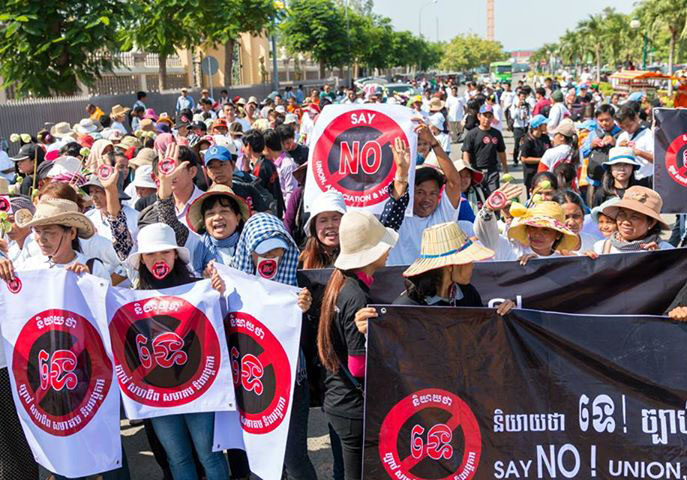
To facilitate the closure of civil society space, and contrary to international law and standards, in 2015 the Law on Associations and Non-Governmental Organizations (LANGO) was passed, which requires the mandatory registration of all NGOs and Associations, provides the government with arbitrary powers to deny or revoke registration, and places a vaguely worded duty on NGOs and associations to “maintain their neutrality towards political parties”.
The biggest blow to the political opposition has been the amendment last year of the Law on Political Parties (1997), amended twice within four months, which empowers the Supreme Court to dissolve parties, and four election laws, which permits the redistribution of a dissolved party’s seats in the country’s senate, national assembly, and commune and district councils.
Last November, the Supreme Court, presided over by a high-ranking member of the CPP, used the amended Law on Political Parties to dissolve the main opposition party, the Cambodia National Rescue Party (CNRP), which had received just under 44% of the vote – or about 3 million votes – in communal elections held in June 2017.
After the CNRP’s dissolution, the amended election laws were then used to redistribute CNRP seats at every level of government, from the commune to the senate, to the CPP and minor parties.
To silence the media, the country’s media and taxation laws have been invoked – local radio stations have been ordered to stop broadcasting Radio Free Asia and Voice of America “in order to uphold the law on media” and the independent Cambodia Daily was forced to close after being presented with a disputed US $6.3 million tax bill which the Daily claimed was “politically motivated” and not accompanied by a proper audit or good faith negotiations.
To curb the exercise of freedom of expression, the Constitution has received vaguely worded amendments placing an obligation on Cambodian citizens to “primarily uphold the national interest” while prohibiting them from “conducting any activities which either directly or indirectly affect the interests of the Kingdom of Cambodia and of Khmer Citizens”.
Meanwhile individual journalists, members of the political opposition including the CNRP’s leader, Kem Sokha, human rights defenders and an Australian documentary filmmaker have been charged with any number of a kaleidoscope of crimes ranging from intentional violence and criminal defamation to treason and espionage.
And Cambodia lacks an independent and impartial judiciary.
In 2014, three “judicial reform laws” were passed which institutionalized the prosecution and judiciary’s lack of independence from the executive.
At the same time, the government perversely uses the doctrine of the “rule of law” to justify its actions.
Just hours after the Supreme Court dissolved the CNRP, Hun Sen announced that the decision was made “in accordance with the rule of law.”
When members of the diplomatic community and senior UN officials meet government officials to express concern at the increasing misuse of the law they receive an absurdist legal lecture on the “importance of the rule of law”.
What is happening in Cambodia is the opposite of that.
The International Commission of Jurists, UN authorities and others have been defining the rule of law since the Universal Declaration of Human Rights was pronounced in 1948.
All agree that that the rule of law entails passing and implementing laws consistent with a country’s international human rights obligations.
It is time for the international community to recognize that a frank and fresh analysis of the situation in Cambodia is urgently required which acknowledges the way the country’s underlying legal and constitutional framework has been deliberately altered, and the way in which this will impact the country adversely long past this month’s election.
This acknowledgment must be accompanied by a coherent and, where possible, joint, plan of action that clearly sets out, with a timeline, what is required to bring Cambodia back on track with the agreed terms of the Paris Peace Agreements – including necessary legal and justice sector reforms – and the political and economic consequences for not doing so.
As long as Hun Sen’s Government deploys increasingly sophisticated justifications for its repressive actions, a more refined, multilayered and vigorous response from the international community is required – grounded on a proper application of the rule of law and Cambodia’s international human rights obligations.