Jul 9, 2018 | News
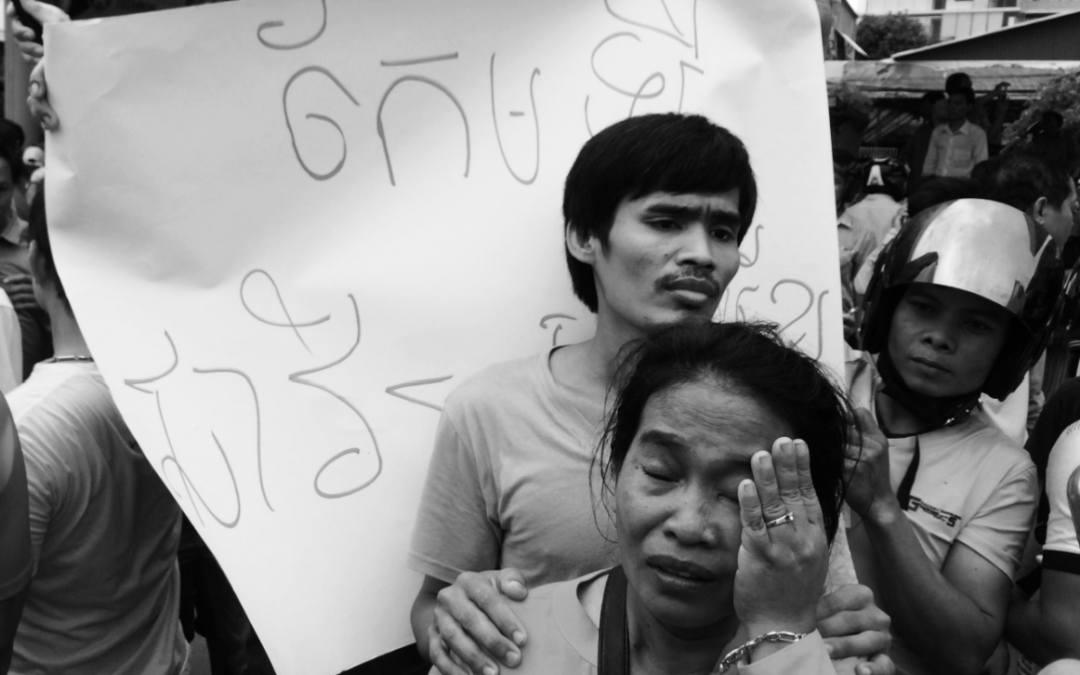
Today, in advance of the second anniversary of the killing of political commentator and human rights defender, Kem Ley, the ICJ reiterates its call for the creation of a independent and impartial Commission of Inquiry to investigate his killing.
The ICJ remains deeply concerned at the apparent lack of progress in investigating the case, as well as the inadequacy of the investigation and prosecution of Oeuth Ang, the only person yet charged or convicted in relation to Kem Ley’s killing.
“The trial of Oeuth Ang left many unanswered questions about the investigation and the killing itself which Cambodia has an duty to resolve as part of the family and public’s right to know the truth,” said Kingsley Abbott, Senior Legal Adviser at the ICJ, who attended the trial.
“The fact that the killing occurred against the backdrop of escalating attacks against human rights defenders and the political opposition and in the context of a history of well-documented apparent extra-judicial killings makes the establishment of an independent and impartial Commission of Inquiry all the more pressing.”
On 7 July 2017, ahead of the one-year anniversary of Kem Ley’s killing, the ICJ and other organizations released a joint letter highlighting crucial concerns about the lack of progress in the investigation of his case, and calling on the Cambodian Government to establish a Commission of Inquiry to carry out an independent, impartial, effective and transparent investigation in line with international law and standards.
These include the International Covenant on Civil and Political Rights and the revised Minnesota Protocol on the Investigation of Potentially Unlawful Death (2016).
Background
At approximately 08:30 on 10 July 2016, Kem Ley, a prominent political commentator and human rights defender, was shot and killed at a petrol station on Monivong Boulevard in Phnom Penh.
Soon afterwards, Cambodian police arrested a suspect approximately two kilometers from the crime scene. The suspect identified himself as “Chuob Samlab”, from Banteay Meanchey province. “Chuob Samlab” means “Meet to Kill” in Khmer.
In a leaked video, “Chuob Samlab” reportedly “confessed” to shooting Kem Ley over a debt the political commentator allegedly owed him – a fact reportedly disputed by Kem Ley’s widow and “Chuob Samlab”’s own wife.
“Chuob Samlab” was later identified as Oeuth Ang from Siam Reap province, according to identity records.
On 23 March 2017, the Phnom Penh Municipal Court found Oeuth Ang guilty of the premeditated murder of Kem Ley on 10 July 2016 and sentenced him to life imprisonment.
The ICJ observed the trial which took place on 1 March 2017, following which it identified eight significant gaps in the investigation which had not been adequately addressed at trial.
Following the verdict, Oeuth Ang’s lawyer told journalists the court had created a new case-file to investigate two men named Pou Lis and Chak who may be relevant to the killing of Kem Ley.
Very little information has been revealed publicly about these possible new case-files.
Oeuth Ang appealed his sentence and, on 4 May 2018, the Court of Appeal reportedly heard the appeal.
There are no reports yet of a judgment being delivered.
Pursuant to international law binding on Cambodia, including the International Covenant on Civil and Political Rights (ICCPR) to which Cambodia is a State Party, Cambodia has a duty to promptly, independently, impartially, and effectively investigate all deaths suspected of being unlawful.
Investigations must seek to identify not only direct perpetrators but also all others who may have been responsible for criminal conduct in connection with the death.
Principle 11 of the UN Principles on the Effective Prevention and Investigation of Extralegal, Arbitrary and Summary Executions calls for the establishment of a Commission of Inquiry when ‘the established investigative procedures are inadequate because of lack of expertise or impartiality, because of the importance of the matter or because of the apparent existence of a pattern of abuse, and in cases where there are complaints from the family of the victim about these inadequacies.’
Read also
ICJ et al, ‘Cambodia: request to create a commission of inquiry into the killing of Kem Ley’
ICJ, HRW, Amnesty International, ‘Cambodia: Significant Questions Remain After Guilty Verdict in Kem Ley Trial’
ICJ, ‘Cambodia: Kem Ley’s killing demands immediate credible and impartial investigation’
Contact
Kingsley Abbott, ICJ Senior Legal Adviser, e: kingsley.abbott(a)icj.org
Jul 8, 2018 | News
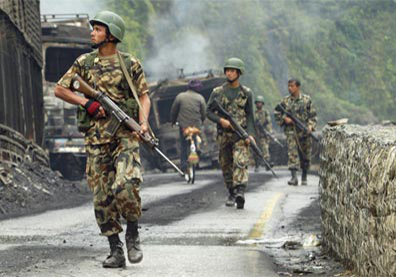
As the government begins a process of consultations around proposed amendments to the transitional justice mechanisms, the ICJ and Human Rights Watch have called on authorities to ensure the amendments comply with international human rights standards.
The government must also take into account concerns of all stakeholders, the organizations said.
The current draft law fails to address the many gaps in Nepali law that make it difficult to prosecute, especially at senior levels, for international crimes such as torture and crimes against humanity.
The Nepal government has ensured an extension of its two transitional justice commissions while also committing to future amendments to comply with international standards and Supreme Court rulings, the groups said.
The government is holding consultations around a proposed Commission on the Investigation of Enforced Disappeared Persons (CEIDP) and the Truth and Reconciliation Commission (TRC) (Amendment) Bill.
“While Nepal has engaged in a transitional justice process over the last few years, with official commissions collecting complaints, holding meetings and generic consultations throughout the country, this is still without any tangible result, and victims say it has left them confused,” said Brad Adams, Asia Director at Human Rights Watch.
“For a successful, internationally accepted process, the authorities in Nepal should focus on providing justice to victims, and not engage in trying to get perpetrators off the hook,” he added.
Human Rights Watch and the ICJ issued the statement after the Nepal government shared a draft bill purportedly to amend flaws in the laws of the CEIDP and TRC Acts.
Ahead of submitting further analysis and recommendations in the consultative process, the organizations said that Nepal authorities should take into account concerns of all stakeholders, including the groups representing victims of serious crimes by all sides during the civil war, other civil society organizations, the National Human Rights Commission (NHRC) and the United Nations Office of the High Commissioner for Human Rights (OHCHR).
Nepal’s new government under Prime Minister Khadga Prasad Oli of the Nepal Communist Party promised that the Nepali law on transitional justice would be brought into conformity with international law and standards as had been directed several times by the Supreme Court.
After years of previous governments failing to comply with the Supreme Court rulings, the new attorney general had announced that reforms to the law were underway, which victims’ groups said gave new hope, and as explicitly requested by the United Nations Human Rights Council (UNHRC) and human rights organizations.
While positive changes are noticeable including in relation to reparations, the proposed law authorizes the two transitional justice commissions to authorize prosecutions without strengthening the commissions themselves, proposes a special court without clear guidelines on impartial investigations, and includes a section permitting non-custodial sentences for the most serious crimes.
These raise concerns that the proposed draft may not meet international standards of justice and accountability.
The two commissions, which experts say require crucial bolstering, have conducted country-wide hearings and gathered nearly 60,000 cases between them.
Victim groups complain that the process has been arbitrary and confusing.
The organizations also noted a number of continuing obstacles to justice, which the bill has not addressed.
These include the continued failure to incorporate specific crimes into Nepali law that are serious crimes under international law, including torture, enforced disappearance, war crimes, and crimes against humanity.
In addition, the bill provides for the wholly inadequate sanction of short-term community service as an alternative punishment for those convicted of serious crimes, which may constitute effective impunity.
Nor does the bill address the question of command and superior responsibility for such crimes, leaving doubt as to whether those at the highest levels of authority will be held accountable for these crimes.
The international organizations were invited to a meeting with the attorney general and other stakeholders on June 21 but did not have a translated draft available ahead of the discussion.
However, during the consultation, the groups stressed the need for meaningful consultations on the bill.
The organizations noted also that universal jurisdiction, which allows for any state to prosecute those believed to have engaged in torture, enforced disappearance, or other serious crimes under international law, will remain an available option for victims to seek justice in cases of serious abuses during the civil war.
“Without a justice process that meets international standards for prosecuting the most serious crimes, such as torture and enforced disappearances, anyone suspected of such crimes in Nepal risks arrest, extradition, and prosecution in the many countries that are committed to prosecuting such crimes,” said Ian Seiderman, ICJ Legal and Policy Director.
“It is very welcome that the Nepal government is finally looking to address longstanding demands of war victims and should use this opportunity to abide by its obligations, draw up security sector reforms, and pave the way to end impunity,” he added.
Full text in English (PDF): Nepal-ICJ-HRW-Transnational-justice-reform-News-Press-releases-2018-ENG
Jul 6, 2018 | Advocacy, News, Non-legal submissions
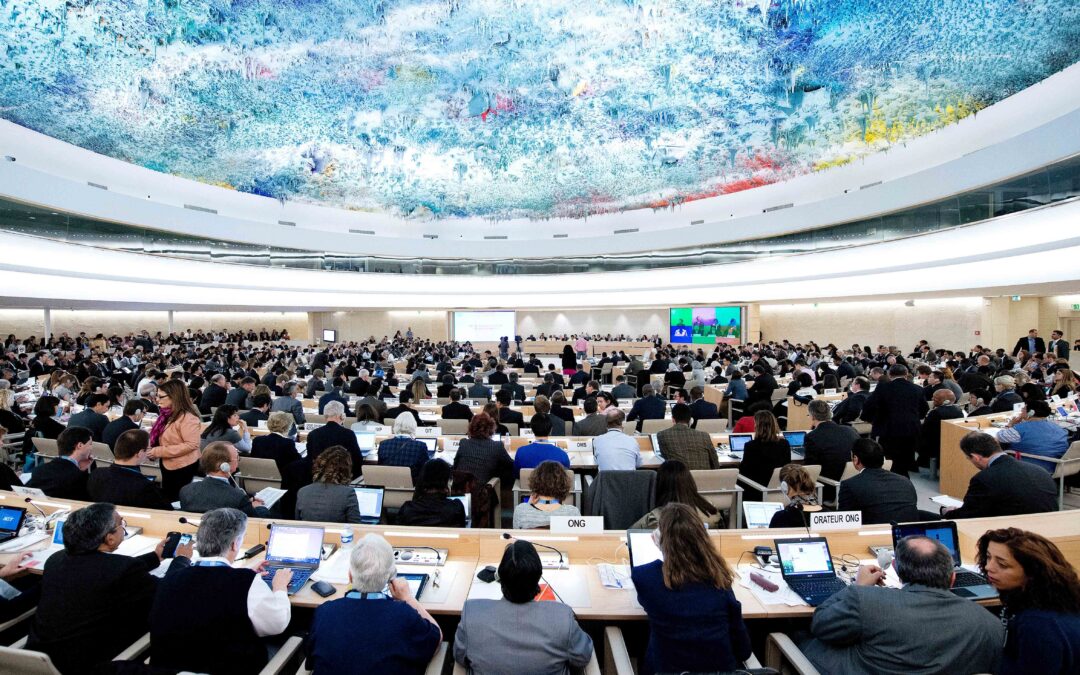
The ICJ today joined other NGOs in highlighting key outcomes of the 38th ordinary session of the UN Human Rights Council.
The statement, delivered by International Service for Human Rights (ISHR) at the end of the session, read as follows (text in italics was not read aloud due to the limited time available):
“Our organisations welcome the adoption of the resolutions on civil society space, peaceful protest, on violence against women and girls and on discrimination against women and girls and the Council’s rejection of attempts to impede progress on protecting civic space, peaceful protest and the rights to sexual and reproductive health.
On civil society space, the resolution recognizes the essential contribution that civil society makes to international and regional organisations and provides guidance to States and organisations on improving their engagement with civil society. On peaceful protest, it sets out in greater detail how international law and standards protect rights related to protests.
On violence against women and on discrimination against women, we consider that ensuring sexual and reproductive health and rights are vital in efforts to combat violence and discrimination against women, online and offline, as well as to ensure targeted and specific remedies to victims. We appreciate that the work of women human rights defenders towards this is recognised.
We consider the adoption of the resolution on the contribution of the Council to the prevention of human rights violations as an important opportunity to advance substantive consideration on strengthening the Council’s ability to deliver on its prevention mandate.
Following challenging negotiations, we welcome the adoption by consensus of the resolution on human rights and the Internet, reaffirming that the same rights that people have offline must also be protected online, and calling on States to tackle digital divides between and within countries, emphasising the importance of tools for anonymity and encryption for the enjoyment of human rights online, in particular for journalists, and condemning once more all measures that prevent or disrupt access to information online.
We welcome continued Council attention to Eritrea‘s abysmal human rights record. This year’s resolution, while streamlined, extends expert monitoring of, and reporting on, the country and outlines a way forward for both engagement and human rights reform. We urge Eritrea to engage in long-overdue meaningful cooperation.
We welcome the renewal of the mandate of the Special Rapporteur on Belarus under item 4 with an increased vote – as it is still the only independent international mechanism to effectively monitor human rights violations in Belarus – while remaining concerned over a narrative to shift the mandate to item 10 in the absence of any systemic change in Belarus.
We welcome the consensus resolution on the DRC, putting in place continued monitoring and follow up on the expert’s recommendations on the Kasais. However, given violations and abuses throughout several regions in the country, occurring against the backdrop of an ongoing political crisis, delayed elections, and the brutal quashing of dissent, we urge the Council to promptly move towards putting in place a country-wide mechanism that can respond to events on the ground as they emerge.
We welcome the strong resolution on Syria, which condemns violations and abuses by all parties, and appropriately addresses concerns raised by the COI about the use of chemical weapons, sexual and gender-based violence, and the need to address situations of detainees and disappearances. The Council cannot stay silent in the face of continued atrocities as the conflict continues unabated into its seventh year.
We welcome the joint statements delivered this session on Cambodia, the Philippines, and Venezuela. We urge Council members and observers to work towards increased collective action to urgently address the dire human rights situations in these countries.
On the Philippines, we emphasise that the Council should establish an independent international investigation into extrajudicial killings in the ‘war on drugs’ and mandate the OHCHR to report on the human rights situation and on moves toward authoritarianism.
The joint statement on Cambodia represents a glimmer of hope after the Council’s failure to take meaningful action against clear sabotage of democratic space ahead of elections. Close scrutiny of the human rights situation before, during and after the elections is paramount and the Council must take immediate action on current and future human rights violations in this regard.
We welcome the joint statement delivered by Luxembourg calling on the HRC President to provide oral updates on cases of alleged intimidation or reprisal, including actions taken, at the start of the Item 5 general debate of each Council session and also provide States concerned with the opportunity to respond.
Finally, the new Council member to replace the United States of America should demonstrate a principled commitment to human rights, to multilateralism and to addressing country situations of concern by applying objective criteria.
Signatories:
- Asian Forum for Human Rights and Development (FORUM-ASIA)
- The Association for Progressive Communications
- The Center for Reproductive Rights (CRR)
- CIVICUS: World Alliance for Citizen Participation
- DefendDefenders (the East and Horn of Africa Human Rights Defenders Project)
- Human Rights House Foundation (HRHF)
- International Commission of Jurists (ICJ)
- The International Lesbian, Gay, Bisexual, Trans and Intersex Association (ILGA)
- International Service for Human Rights (ISHR)
Jul 5, 2018
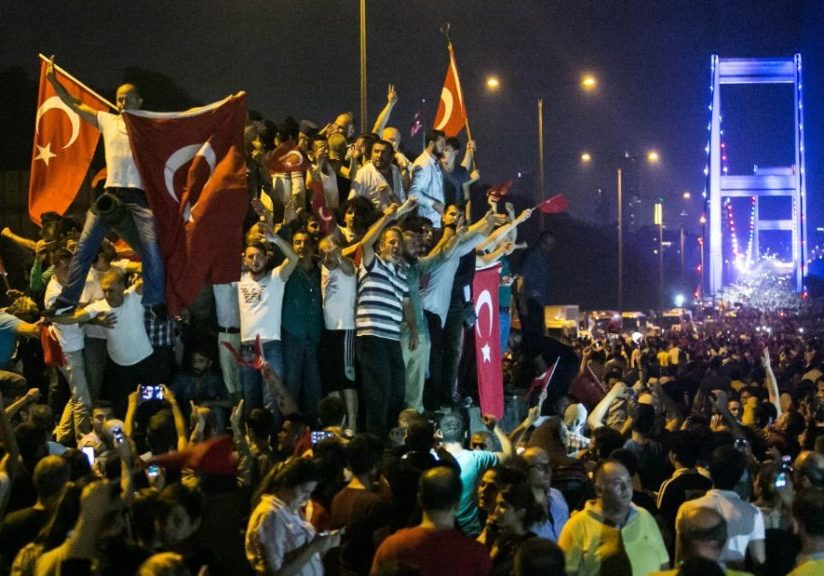
On 25 June, the ICJ and Human Rights Joint Platform (IHOP) filed their joint submission to the UN Committee against Torture (Committee).
The Committee will consider it during the adoption of a list of issues prior to reporting (LOIPR) for the examination of the Fifth Periodic Report of Turkey under Article 19 of the Convention against Torture and Other Cruel, Inhuman or Degrading Treatment or Punishment (CAT).
During its 65th session, from 12 November to 7 December 2018, the Committee will prepare and adopt a LOIPR on Turkey.
Once adopted, the LOIPR will be transmitted to the State party. Turkey’s formal response to the LOIPR will then constitute its Fifth Periodic Report under article 19 of the Convention.
The ICJ and IHOP’s joint submission to the Committee highlights a number of ongoing concerns with respect to the country’s implementation of and compliance with the provisions of the CAT.
In addition, the joint submissions formulates certain questions and recommends that the Committee should include them in its LOIPR and address them to the Government of Turkey, including on the following pressing issues:
- allegations of abduction;
- immunity from prosecution for torture and cruel, inhuman or degrading treatment or punishment;
- remedies and reparations for victims of torture;
- fundamental legal safeguards and access to a lawyer;
- conditions of detention;
- civil society organizations; and
- national human rights institution and national preventive mechanism.
Turkey-LOIPR-ICJ&IHOP-June2018-final (download the submission)
Turkey-LOIPR-ICJ&IHOP-June2018-statement-ENG
 This project is funded by the European Union
* This article does not necessarily reflect the view of the European Union
Jul 5, 2018 | Advocacy, Non-legal submissions
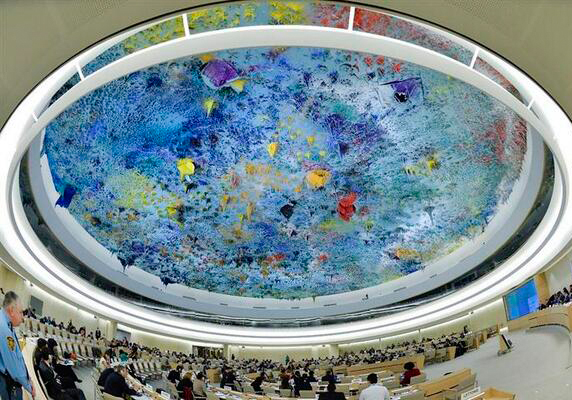
The ICJ today joined other NGOs in urging open discussion and debate about countries at the UN Human Rights Council in Geneva, including in discussions of cooperation, despite attempts by some States to interrupt and suppress debate.
The statement was delivered in a General Debate on items 2 and 10 of the Council, by Asian Forum for Human Rights and Development (FORUM-ASIA) on behalf of the group of NGOs. It read as follows:
“Thank you, Mr. President. While we appreciate the importance of technical cooperation, we wish to stress that a debate on technical cooperation will be incomplete if it does not address non-cooperation and country situations that have worsened despite technical cooperation. We are alarmed by efforts to restrict discussion on such situations by some states under Agenda Item 10, including for instance by (the Bolivarian Republic of) Venezuela earlier today.
While we recognise that all delegations including NGOs are required to speak on the topic under discussion, we are deeply concerned when NGOs making relevant statements are interrupted and not given a chance to explain the relevance of their statement, and in some cases are even prevented from finishing the statement. This has happened even when an NGO is speaking specifically on concerns addressed by UN reports listed for discussion in the relevant debate. Statements on Cambodia during the March session of the Council are recent examples.
The concept of international cooperation should never be invoked to shut down any criticism of human rights situations in individual countries. Cooperation cannot succeed without accountability. To be effective, debates on technical assistance and capacity building must be open to frank discussion of the true gravity, character and extent of on-going violations in the country in question, as well as the impact or lack of impact of any assistance already undertaken.
Thank You”
Asian Forum for Human Rights and Development (FORUM-ASIA)
Cairo Institute for Human Rights Studies
Conectas Direitos Humanos
Freedom House
Human Rights House Foundation
Human Rights Watch
International Commission of Jurists
International Humanist and Ethical Union (IHEU)
International Service for Human Rights (ISHR)