Jun 22, 2018 | Advocacy, Non-legal submissions
The ICJ today issued a statement on online violence against women and girls.
The statement was issued on the occasion of an interactive dialogue at the UN Human Rights Council, with the UN Working Group on discrimination against women. The ICJ was unable to read the statement due to the limited time provided for NGO statements. The statement is as follows:
“International Commission of Jurists (ICJ) welcomes the Report of the Special Rapporteur focusing on online violence against women and girls.
This is timely considering the noted rise in incidents of women being attacked online for expressing their opinions. In many countries, women political dissenters and women human rights defenders, who express their views through social media, face backlash from the subjects of their criticisms and their supporters. They are persecuted and are threatened with sexual and physical violence. Many of the attacks against them clearly embody harmful gender stereotypes.
The ICJ notes that these harmful stereotypes exist in many countries around the world and they hinder women from accessing justice. Unfortunately, technology and social media play a role in spreading and proliferating these harmful gender stereotypes.
The ICJ continues to assist in strengthening the capacities of formal justice actors such as judges to help women access justice and to eliminate gender stereotypes. In 2016, the ICJ engaged with judges from the Philippines, Thailand, Timor Leste, and Indonesia when they developed and adopted the Bangkok General Guidance for Judges in Applying a Gender Perspective.
The ICJ joins the Special Rapporteur’s recommendation for States to provide training for all justice actors, including judges, to ensure their ability to bring perpetrators of cases of online and ICT-facilitated violence to justice. The ICJ offers the General Guidance as a tool for justice actors to consider evidence in these cases without resorting to gender stereotypes and to decide cases based on the principle of equality under international human rights standards.
The ICJ shall persist in its work to enable women to access justice and to eliminate gender-based violence and discrimination.”
Jun 21, 2018 | Events, News
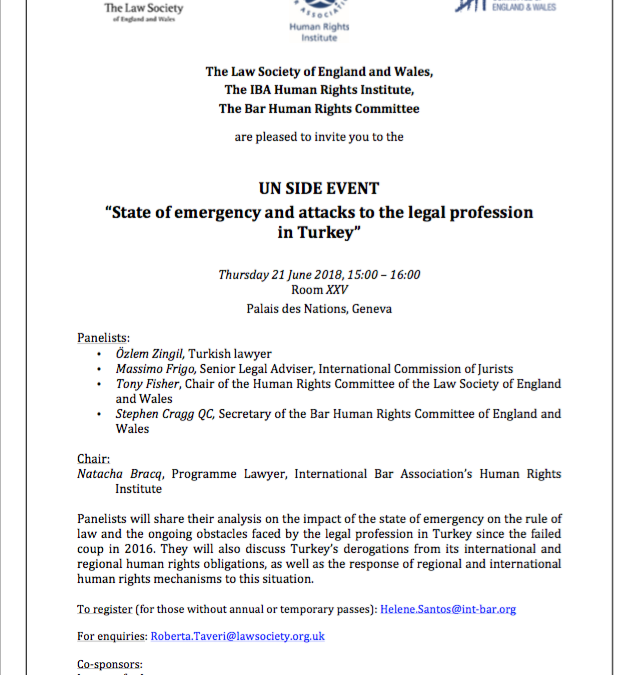
The ICJ will participate today in the side event “State of emergency and attacks on the legal profession in Turkey” organized by IBAHRI, the Law Society, and the Bar Human Rights Committee of England and Wales.
This side event at the Human Rights Council takes place on Thursday, 21 June, 15:00-16:00, room XXV of the Palais des Nations.
It is co-sponsored by Lawyers for Lawyers, Union Internationale des Avocats, Lawyers’ Rights Watch Canada.
In this side event, panelists will share their analysis on the impact of the state of emergency on the rule of law and the ongoing obstacles faced by the legal profession in Turkey since the failed coup in 2016.
They will also discuss Turkey’s derogations from its international and regional human rights obligations, as well as the response of regional and international human rights mechanisms to this situation.
Panelists:
- Özlem Zingil, Turkish lawyer;
- Massimo Frigo, International Commission of Jurists;
- Tony Fisher, Chair of the Human Rights Committee of the Law Society of England and Wales;
- Stephen Cragg QC, Secretary of the Bar Human Rights Committee of England and Wales;
- Natacha Bracq, Programme Lawyer, International Bar Association’s Human Rights Institute.
Geneva-SideEvent-StateofEmergencyLawyersTurkey-IBAHRI&others-June2018-ENG (download the flyer)
Jun 20, 2018 | Advocacy, Non-legal submissions
The ICJ issued a statement today on the occasion of an interactive dialogue with the UN Special Rapporteur on the human rights of migrants, on an effective accountability mechanism for the European Border and Coast Guard Agency.The ICJ was not able to read the statement during the interactive dialogue due to the limited time provided for NGO statements. The statement was as follows:
“The International Commission of Jurists (ICJ) welcomes that the report (A/HRC/38/41) of the Special Rapporteur on the human rights of migrants recognizes the importance of monitoring mechanisms, access to justice, and accountability in the context of returns (para 78).
The ICJ, which is a member of the Frontex Consultative Forum on Fundamental Rights, shares the conclusion of the Special Rapporteur that the current implementation of an individual complaints mechanism for Frontex is “rather ineffective, since it largely relies on the discretionary powers of internal oversight bodies” and deficient in its follow-up procedure (para 84).
Furthermore, the ICJ considers that giving the Executive Director of Frontex competence to decide the merits of complaints creates a reasonable perception of bias. This, together with the lack of any requirement to publish its decisions, mean the existing complaint mechanism cannot constitute an effective remedy for human rights violations.
The ICJ is particularly concerned at these shortcomings in light of, as the Special Rapporteur noted, the “externalization of States’ obligations through the actions of international or regional organizations during return procedure” (para. 82). Such externalisation prevents victims of human rights violations from accessing effective remedies.
Finally, the ICJ notes that actions such as the closure of harbours to ships rescuing migrants, including refugees, are in clear breach of the international law of the sea and effectively prevent any access to legal remedies. Such actions should be condemned by this Council.
The ICJ supports the Special Rapporteur’s recommendation that States and international and regional organisations must ensure accountability for human rights violations and invites him to explore further such organisations’ responsibility in this regard under human rights law.”
Jun 20, 2018 | News
The Trump administration’s broader rejection of multilateralism and rule of law, its actual practices, and paralysis of other States, are the real issues, says the ICJ.
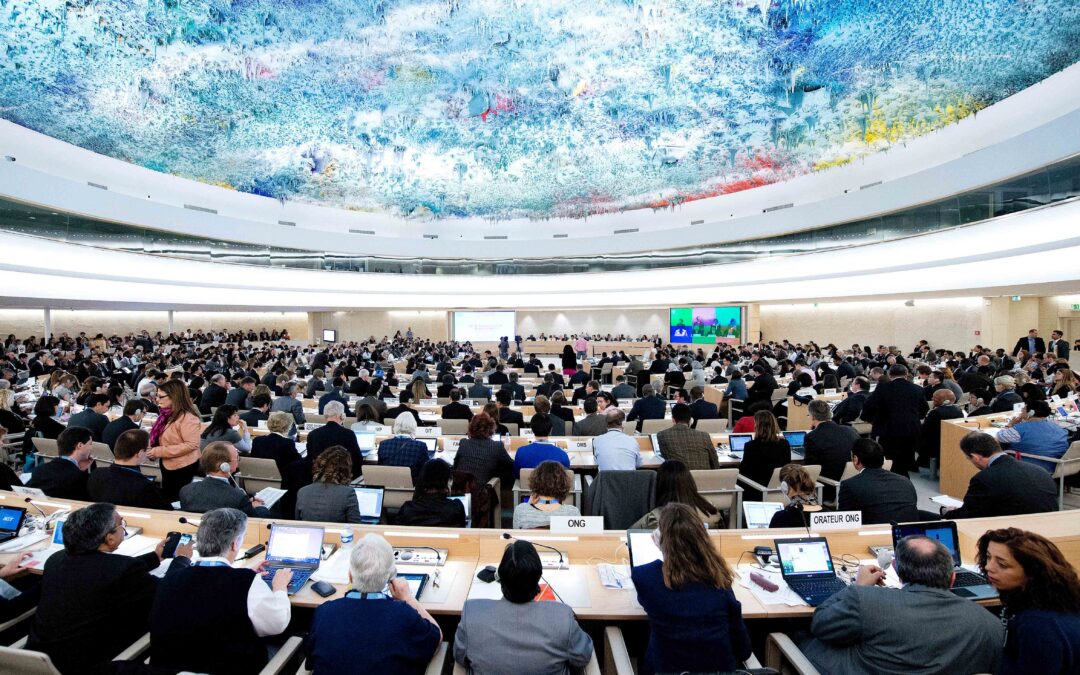
On the evening of 19 June, the United States of America announced it was formally abandoning its membership of the UN Human Rights Council.
“The withdrawal of the United States from the United Nations Human Rights Council is symptomatic of its broader rejection of multilateralism and rule of law, and how it acts in practice, both at home and abroad,” said ICJ Secretary General Sam Zarifi in reaction.
The inhuman caging of thousands of migrant and refugee children, and turning a blind eye to the grave human rights violations in North Korea, are but two recent and glaring examples, along with a recent highly critical report by the UN Special Rapporteur on extreme poverty and human rights, Philip Alston, following his visit to the US last year.
Even more concerning, the US retreat comes at the same time as openly racist and nationalist authoritarianism rises across Europe. Even where they are not immediately succeeding in coming to power, such movements are slowly paralyzing Europe at exactly the time its moderating or progressive influence on world affairs in general, and human rights in particular, is most needed.
The US in fact is cooperating in New York with the very same countries it publicly condemns, to cut the funding and mandate for the day-to-day human rights work of the UN – whether through the Office of the High Commissioner for Human Rights, the Secretary General’s Rights up Front Initiative, or UN country offices. And many many other countries are complicit in that exercise by their silence.
With moves by other powerful States to seize and dilute the UN’s human rights machinery, it has never been more important for other States sincerely committed to defending human rights and the rule of law to step into the empty seats the US is leaving behind.
Jun 20, 2018 | Advocacy, Non-legal submissions
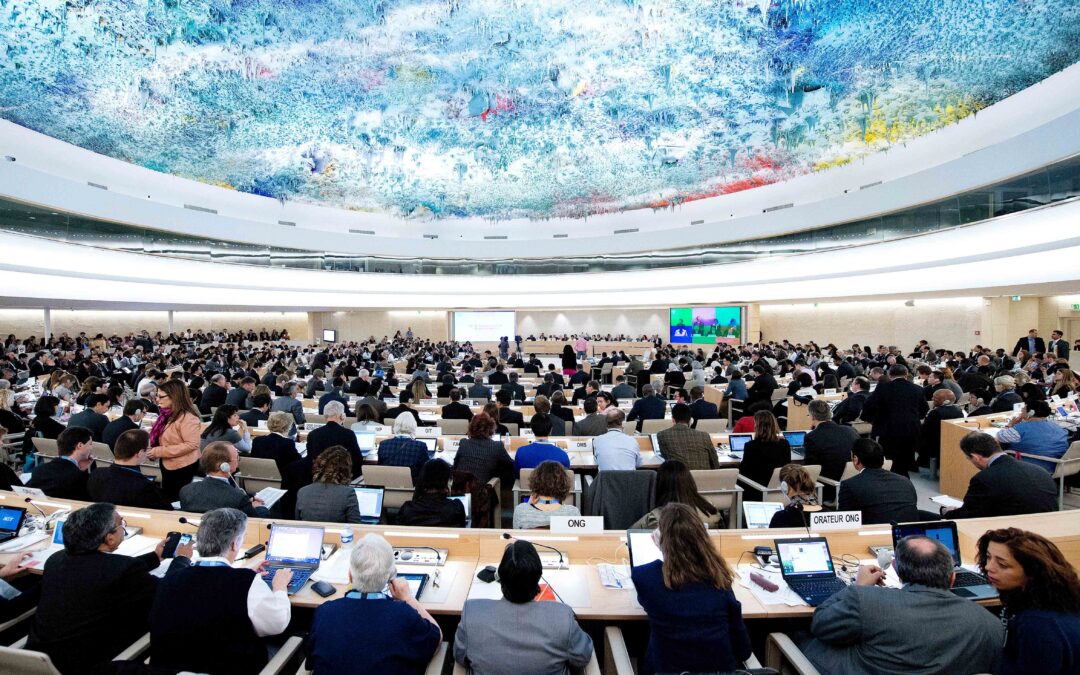
At the UN the ICJ today addressed abuse of laws in Southeast Asia to restrict freedom of expression.The statement was made in an interactive dialogue with the UN Special Rapporteur on Freedom of Expression, at the UN Human Rights Council in Geneva. It read as follows:
“The ICJ welcomes the report of the Special Rapporteur on Freedom of Expression (A/HRC/38/35), on online expression. Such concerns are reflected in the continued weaponization of laws to criminalize and unduly restrict freedom of expression in Southeast Asia. Increasingly, laws are misused to harass and intimidate civil society, journalists, politicians and ordinary individuals.
For example, in Cambodia, three persons were arrested – two charged and detained in May, and one reportedly arrested this past weekend – for sharing content on Facebook in alleged violation of a recent lèse majesté law. Another man was similarly detained, and a woman extradited from Thailand to Cambodia and imprisoned, for Facebook posts deemed critical of the government. An inter-ministerial order signed last month now allows government agencies to monitor and censor information on websites and social media.
Another example is Vietnam, where as well-known bloggers remain in jail, last week lawmakers adopted a cybersecurity law that will compel companies to store users’ data in-country, pass personal data to government authorities, and censor information online when directed to do so by the government.
A further example is Thailand, where this year alone at least 132 people were charged for “illegal assembly” after protesting for elections to be held – 27 were also charged with a sedition-like offence carrying a maximum penalty of seven years’ imprisonment. Last week, arrest warrants were reportedly issued alleging dissemination of false information on Facebook, which may lead to charges under the Computer Crimes Act carrying a maximum penalty of five years’ imprisonment, despite international standards precluding imprisonment as an appropriate penalty.
The ICJ urges all States to implement the recommendations in the report of the Special Rapporteur, and to ensure the right to freedom of expression by revoking or amending all laws, orders, policies or other actions which unjustifiably restrict this fundamental freedom.”