Jun 20, 2018 | Advocacy, News
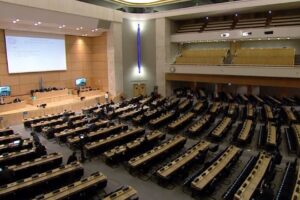
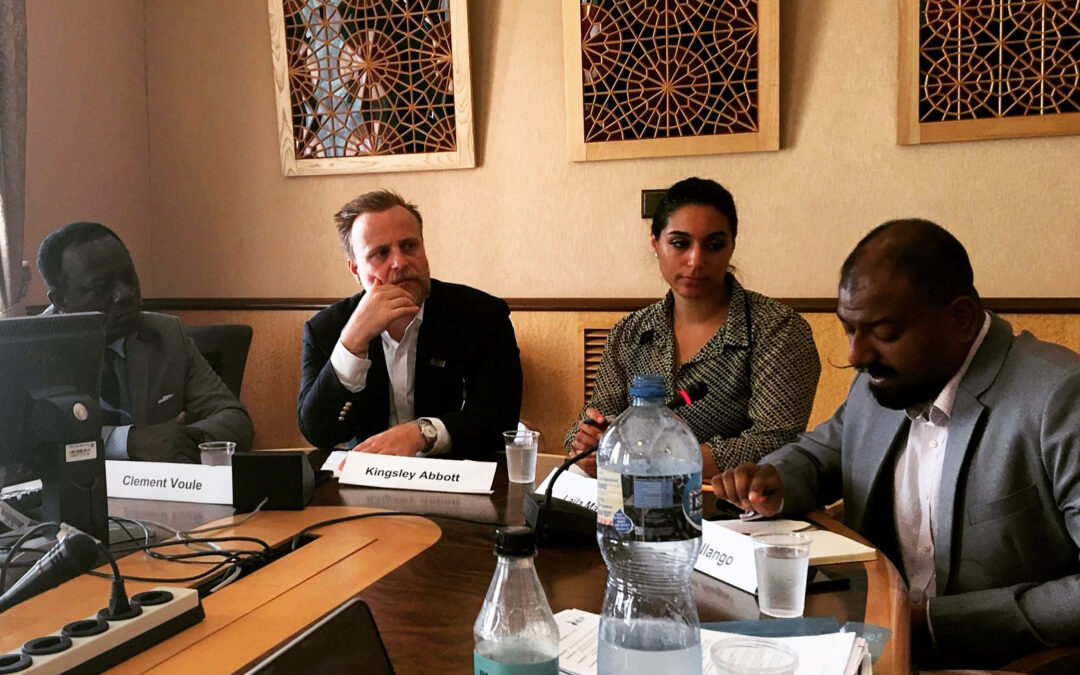
Today, the ICJ held a joint side event at the 38th Regular Session of the Human Rights Council on freedoms of expression, association and assembly in the context of elections in Asia.
The event was co-organized by the ICJ, in collaboration with Forum Asia and Human Rights Watch.
Kingsley Abbott, ICJ Senior Legal Adviser, spoke at the event, highlighting the regression in human rights and the rule of law in the Southeast Asian region, focusing on Thailand and Cambodia in the lead up to elections.
He identified recent developments in the misuse of the law to violate human rights in Thailand and Cambodia, and called for a necessary push back against the weaponization of the law and the misuse of the principle of the ‘rule of law’ in both countries.
Other speakers at the event included Iniyan Ilango, from Forum Asia, who spoke about fundamental freedoms in the context of elections in Bangladesh and the Maldives and other countries in Asia; and UN Special Rapporteur on the rights to freedom of peaceful assembly and of association, Clément Nyaletsossi Voule, who addressed the event more broadly on the protection and promotion of freedom of assembly and association in the context of elections.
The event was moderated by by Laila Matar, Deputy Director, United Nations, Human Rights Watch.
Contact
Kingsley Abbott, Senior Legal Adviser, ICJ Asia Pacific Regional Office, t: +66 94 470 1345, e: kingsley.abbott(a)icj.org
Thailand-Cambodia-Side-event-HRC38-Freedoms-of-Expression-Advocacy-2018-ENG (full speech in PDF)

Jun 19, 2018 | Advocacy, Non-legal submissions
The ICJ today joined other NGOs in calling for the UN Human Rights Council to establish an international investigation into extrajudicial killings in the ‘war on drugs’ in the Philippines.The call came in a joint oral statement to the Council, delivered by Franciscans International on behalf of the group of NGOs. The statement, part of the general debate on a global update provided to the Council by the High Commissioner for Human Rights, read as follows:
“Mr President, we welcome the High Commissioner’s update. We are pleased to hear about positive developments that several States have made in granting access to Special Procedures. However, we deeply regret that this is not the case for the Philippines, a member of the Human Rights Council, which has refused access to the Special Rapporteur on extrajudicial executions, in spite of the thousands of killings in the government’s ongoing ‘war on drugs’, and the lack of independent and impartial investigations in the country.
We are further concerned that the lack of cooperation with Special Procedures has been further compounded by the Philippine President’s threats and verbal attacks against several mandate holders and the High Commissioner himself. In the absence of cooperation with Special Procedures, we call on the Council to establish an independent international investigation into extrajudicial killings in the ‘war on drugs’ in the Philippines.
As this was the last update of the High Commissioner to the Council, we would like to express deep appreciation for his hard work and dedication over his four year term, and the attention he has drawn to threats to human rights defenders and their work in the Philippines. We call on the Council to follow up on this work by mandating the OHCHR to monitor the deterioration in the situation of human rights and attacks on democratic institutions, as well as the Philippine government’s moves toward authoritarianism, and ask the OHCHR to report on this to the Human Rights Council.”
In 2016 the ICJ released a briefing paper on investigation of extrajudicial executions in the Philippines, which among other things called for an independent commission of inquiry, after having earlier written directly to President Duterte.
Jun 19, 2018 | Адвокаси
МКЮ приветствует предложение Парламентской ассамблеи Совета Европы (ПАСЕ) в своей Рекомендации 2121 (2018), в которой содержится призыв к разработке Конвенции Совета Европы о профессии юриста.
МКЮ считает, что такая Конвенция может внести важный вклад в укрепление верховенства права и защиты прав человека в регионе Совета Европы, основываясь на существующих стандартах Совета Европы и юриспруденцией Европейского суда по правам человека.
МКЮ особенно приветствует призыв ПАСЕ к созданию эффективного механизма контроля, который будет создан в соответствии с новой Конвенцией, поскольку недавние события в ряде государств-членов Совета Европы показывают значительный пробел в осуществлении стандартов Совета Европы в отношении независимости и безопасности юристы.
Юристы, наряду с судьями и прокурорами, являются одним из столпов, на которых опирается защита верховенства права и прав человека через систему правосудия.
Признавая это, МКЮ с момента своего основания в 1952 году работала над защитой находящихся под угрозой юристов и разрабатывала международные стандарты независимости, роли и целостности профессии.
Последовательные заявления МКЮ, принятые ведущими юристами из всех регионов мира, подтвердили, что роль юридической профессии является «первостепенной задачей в защите прав человека и верховенства закона» (Декларация МКЮ 2008 года о закреплении верховенства закона, роли судей и юристов во времена кризиса.
В любой правовой системе юридическая профессия играет ключевую роль в обеспечении доступа к правосудию и эффективных средствах правовой защиты и ответственности за нарушения прав человека, а также отстаивании права на справедливое судебное разбирательство, права на свободу и права на свободу от пыток и других видов жестокого обращения в процессе уголовного правосудия.
Защищая уголовные дела, консультируя и представляя жертв нарушений прав человека и их родственников или оспаривая в суде национальное законодательство или политику, противоречащие правам человека, юристы оказывают практическое воздействие на гарантии прав человека и принципы верховенства права.
Важность этой роли была признана международными стандартами, а также судебной практикой Европейского суда по правам человека, в которой подчеркивается «особый статус юристов [имеющих] центральную позицию в отправлении правосудия в качестве посредников между обществом и судами”.
Таким образом, принципиально важно, чтобы адвокаты могли выполнять свои профессиональные обязанности без вмешательства. Как отметил Европейский суд по правам человека, «преследование и домогательство членов юридической профессии наносят удары по самой сути системы Конвенции».
Полный текст на английском, PDF: Europe-Drafting-a-EU-Convention-on-the-Profession-of-Lawyer-2018-ENG
Jun 19, 2018
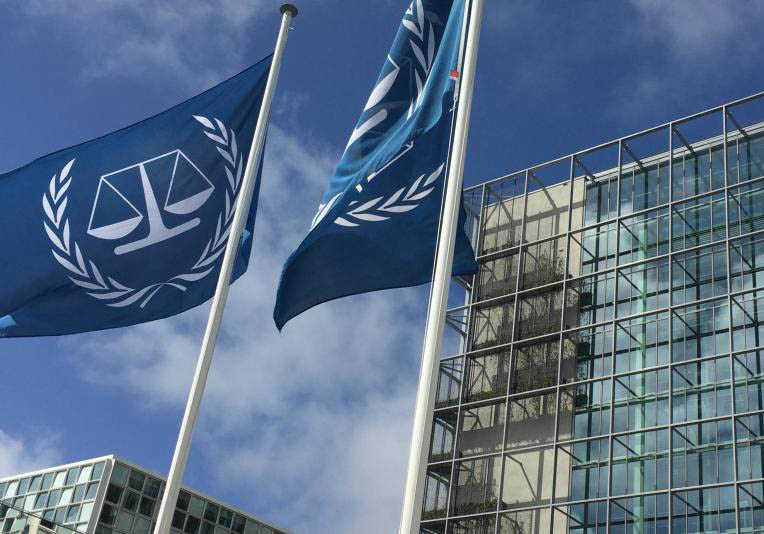
On 18 June 2018, the ICJ submitted an Amicus Curiae (friend of the court) Brief to the International Criminal Court (ICC).
The ICJ submitted the Amicus pursuant to the Prosecution’s Request (ICC-RoC46(3)-01/18) for “a ruling on the Court’s jurisdiction under article 12(2)(a) — specifically, to verify that the Court has territorial jurisdiction when persons are deported from the territory of a State which is not a party to the Statute directly into the territory of a State which is a party to the Statute”.
The Prosecutor made the Request following the alleged deportation of hundreds of thousands of Rohingya people from Myanmar into Bangladesh.
In summary, the ICJ submitted that:
(1) The crossing of an international border is a fundamental constitutive element for the crime of deportation. This position is supported by customary international law, international human rights law and is reflected in the domestic laws of Bangladesh; and
(2) The Court has territorial jurisdiction over the crime of deportation. This position is supported by international principles of territoriality, which are also reflected in the domestic laws of Bangladesh.
The Amicus was filed in light of the ICJ’s global mandate to seek the progressive development of international law with a view to ending impunity and ensuring accountability for gross human rights violations.
The ICJ regularly intervenes in judicial proceedings in domestic, regional and international jurisdictions around the world in an amicus curiae or other third party capacity.
Contact
Kingsley Abbott, ICJ Senior Legal Adviser, t: +66 (0)94 470 1345 ; e: kingsley.abbott@icj.org
Myanmar-Amicus observations-Advocacy-legal submission-2018-ENG (full amicus brief, PDF)
Jun 19, 2018 | Advocacy
The ICJ welcomes the proposal of the Parliamentary Assembly of the Council of Europe (PACE) in its Recommendation 2121(2018) calling for the development of a Council of Europe Convention on the Profession of Lawyer.
The ICJ believes that such a Convention could make an important contribution to strengthening the rule of law and the protection of human rights in the Council of Europe region, building on existing Council of Europe standards and jurisprudence of the European Court of Human Rights.
The ICJ particularly welcomes PACE’s call for an effective control mechanism to be put in place under a new Convention, as recent developments in a number of Council of Europe Member States show a significant gap in implementation of Council of Europe standards on the independence and security of lawyers.
Lawyers, along with judges and prosecutors, are one of the pillars on which protection of the rule of law and human rights through the justice system rests.
Recognizing this, the ICJ, since its foundation in 1952, has worked to protect lawyers under threat and to develop international standards for the independence, role and integrity of the profession.
Successive ICJ Declarations, adopted by leading jurists from all regions of the world, have affirmed that the role of the legal profession is “paramount in safeguarding human rights and the Rule of Law” (2008 Declaration on Upholding the Rule of Law and the Role of Judges and Lawyers in Times of Crisis (ICJ 2008 Declaration).
In any legal system, the legal profession plays a pivotal role in ensuring access to justice and effective remedies and accountability for violations of human rights, as well as upholding the right to fair trial, right to liberty and freedom from torture and other ill-treatment in the criminal justice process.
In defending criminal cases, in advising and representing victims of human rights violations and their relatives or in challenging before the courts national legislation or policy that is contrary to human rights , lawyers give practical effect to human rights guarantees and rule of law principles.
The importance of this role has been recognized by international standards as well as in the jurisprudence of the European Court of Human Rights, which has emphasized the “specific status of lawyers [having] a central position in the administration of justice as intermediaries between the public and the courts”.
It is thus of fundamental importance that lawyers are able to fulfill their professional duties without interference. As the European Court of Human Rights has held, “persecution and harassment of members of the legal profession strikes at the very heart of the Convention system.”
Full text in ENG (PDF): Europe-Drafting-a-EU-Convention-on-the-Profession-of-Lawyer-2018-ENG