May 30, 2018 | Advocacy, Non-legal submissions
The ICJ today made a submission for an upcoming report by the UN Secretary General on recent developments concerning human rights in the administration of justice.
In 2016, the UN General Assembly requested the Secretary General “to submit to the General Assembly at its seventy-third session a report on the latest developments, challenges and good practices in human rights in the administration of justice, including on efforts to ensure equal access to justice for all through the independent, impartial and effective administration of justice, and on the activities undertaken by the United Nations system as a whole”.
The UN is in the process of preparing the report, which will cover developments during the last two years since the previous report of the Secretary General.
The ICJ’s submission can be downloaded in PDF format here: UN-GA-AdminJustice-2018
May 29, 2018
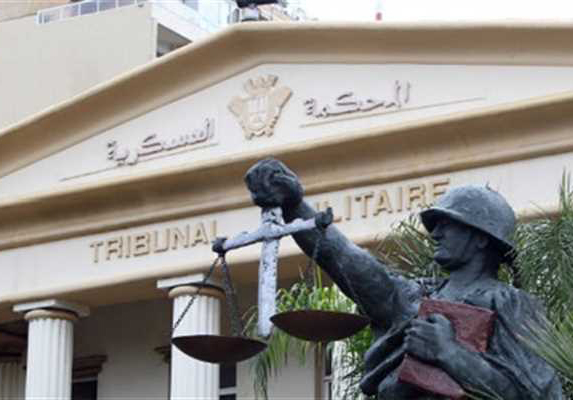
In a memorandum published today, the ICJ urged the Lebanese authorities to introduce comprehensive legal reforms to ensure the independence and impartiality of military courts and to restrict their jurisdiction to cases involving members of the military for alleged breaches of military discipline.
The country should transfer the competence of military courts to civilian, ordinary courts in all cases involving civilians and all cases involving human rights violations and non-military offences committed by members of security and armed forces, the ICJ added.
“Lebanese military courts have a long history of prosecuting civilians, including those critical of the military and the government, in trials that fall short of international standards,” said Said Benarbia, ICJ MENA Director.
“Lebanese authorities must prohibit military courts from exercising jurisdiction over civilians, even where the target or victim of the offence is military, as well as over all persons under the age of 18, with no exceptions,” he added.
The ICJ also called for legal and institutional reforms to be introduced with a view to ensuring the independence and impartially of military courts and the fairness of their procedures, including by ensuring that the selection, appointment, transfer and evaluation of military judges are based on transparent procedures and objective criteria, and that any disciplinary action against them is only pursuant to well-defined standards and respectful of all due process guarantees.
In the memorandum, the ICJ formulates recommendations for amending the Code of Military Justice with a view to enhancing due process guarantees, including by providing that individuals convicted by military courts have the right to appeal their conviction and sentence to the civilian courts of the ordinary court system, and that the nature of the review is to be substantive and based both on sufficiency of the evidence and of the law and to allow for due consideration of the nature of the case.
“Limiting the jurisdiction of the military courts and enhancing their independence and impartiality and the fairness of their procedures is required not only to establish and uphold judicial independence, but also to restore public faith and confidence in the integrity of the Lebanese justice system,” said Benarbia.
Contact
Rola Assi, Associate Legal Adviser, ICJ MENA Programme, t: +96170821670 ; e: rola.assi(a)icj.org
Lebanon-Memo re army courts-Advocacy-Analysis Brief-2018-ENG (full memo in English)
Lebanon-military courts memo launch-News-2018-ARA (full story in Arabic)
Lebanon-Memo army courts-Advocacy-Analysis Brief-2018-ARA (full memo in Arabic)

May 29, 2018 | Comunicados de prensa, Noticias
La CIJ expresa su profunda preocupación, por las diferentes acciones que se vienen dando en contra de la Jueza Erika Aifán.
La Jueza Erika Aifán se ha caracterizado siempre por ser recta en sus decisiones; honesta y apegada al Derecho en todos los casos que ha conocido; independiente, objetiva e imparcial en todas sus decisiones.
Para la CIJ, en los casos contra la Jueza Erika Aifán, existe un riesgo inminente de afectar la Independencia Judicial.
La CIJ considera que la independencia de jueces y juezas, es imprescindible en un Estado de Derecho, para que dichos funcionarios públicos puedan garantizar efectivamente, mediante una recta administración de justicia, el acceso a la justicia de las víctimas de violaciones a los derechos humanos.
Por tal razón y con base en la Constitución Política de la República de Guatemala y Convenios y Tratados en materia de Derechos Humanos, la Corte Suprema de Justicia de Guatemala debería intervenir en la defensa de la independencia judicial.
Tal y como lo establece la misma Comisión Interamericana de Derechos Humanos, “el principio de independencia del Poder Judicial ha sido reconocido como costumbre internacional y principio general de derecho y ha sido consagrado en numerosos tratados internacionales”.
En tal sentido, la CIJ considera que la Corte Suprema de Justicia debe asumir un papel activo en la defensa de la independencia judicial en general y específicamente, en el caso de la Jueza Erika Aifán.
La Jueza Erika Aifán tiene a su cargo casos paradigmáticos en la lucha contra la impunidad y la corrupción y la CIJ considera que ese es el verdadero motivo de los ataques y cuestionamientos en su contra.
Grupos interesados en promover la impunidad desean apartarla o separarla del cargo.
La CIJ se permite recordar que la separación del cargo de un juez o jueza, debe obedecer exclusivamente a las causales permitidas por la ley, mediante un proceso disciplinario que reuna las básicas garantías inherentes al debido proceso, o cuando el funcionario judicial ha cumplido el término o período de su mandato.
En el caso de la jueza Erika Aifán, no existe ninguno de estos presupuestos, razón por la cual la CIJ concluye que se trata de un ataque contra la independencia e imparcialidad e independencia de la funcionaria judicial.
Ante el hostigamiento que sufren jueces y juezas independientes en Guatemala, la CIJ urge la presencia en el país del Relator de Naciones Unidas sobre la Independencia de Jueces y Abogados.
La CIJ considera, además, que el Procurador de los Derechos Humanos de Guatemala debería presentar este caso ante la Comisión Interamericana de Derechos Humanos, no sólo para que dicha Comisión otorgue medidas cautelares a favor de la Jueza Aifán, sino para que dicha Comisión verifique la violación flagrante a la independencia judicial en el país.
Desde ya, la CIJ solicita a la Comisión Interamericana de Derechos Humanos (CIDH), que invenga en el presente asunto.
Demás está decir, que la independencia de todo órgano que realice funciones de carácter jurisdiccional es un presupuesto indispensable para el cumplimiento de las normas del debido proceso en tanto derecho humano y su ausencia afecta el ejercicio del derecho de acceder a la justicia, aparte de generar desconfianza y hasta temor, que provoca que las personas no recurran a los tribunales de justicia por falta de credibilidad.
Ramón Cadena, Director de la CIJ para Centro América expresó: “Debemos apoyar a la Jueza Erika Aifán, ya que la garantía de la independencia judicial está siendo seriamente afectada. La Jueza Aifán es una de las más honestas y valientes y está llevando casos paradigmáticos que podrían ser afectados, en caso procedan las acciones legales en su contra.”
“Es una vergüenza que un Tribunal del Poder Judicial mismo, imponga una multa de Q.1000.oo a una profesional que está cumpliendo con su deber. Los magistrados de la Sala Tercera, son los que deberían de ser investigados por el Ministerio Público, debido a sus actuaciones en contra de la Independencia Judicial.”

May 29, 2018 | News
The ICJ is deeply concerned about the recent attacks against Judge Erika Aifán that put judicial independence in Guatemala at imminent risk. Judge Aifán has always been upright and honest in her rulings, which she bases on sound principles of the rule of law.
Ramon Cadena, Director of the Central American office of the ICJ stated today: “We must support Judge Aifán because the guarantee of judicial independence is under serious threat.”
“Judge Aifán is an honest and brave Judge presiding over emblematic cases, which could be put in jeopardy if the legal actions against her proceed,” he said.
“It is totally unacceptable that a Court imposes a fine against a professional carrying out their duty. The Judges of the Third Court who imposed this fine should be investigated by the Public Ministry on account of their actions, which constitute an attack on judicial independence,” he added.
The ICJ firmly believes that the independence of judges is essential to uphold the rule of law so that public officials can effectively guarantee access to justice for victims of human rights violations.
The Inter-American Commission of Human Rights (IACHR) has established that “the independence of the judicial power has been recognized as a general principle of law and enshrined in many international treaties”.
For that reason, and with reference to the Guatemalan Constitution and international human rights standards, the ICJ considers that the Guatemalan Supreme Court should take an active role in the defence of judicial independence and in this specific case concerning Judge Aifán.
The ICJ also urges the UN Special Rapporteur on the Independence of Judges and Lawyers to visit the country.
The ICJ also considers that the Guatemalan Prosecutor for Human Rights should submit the case to the IACHR so that that Commission can grant preventive measures to Judge Aifán and investigate this flagrant violation of judicial independence.
The ICJ also requests that the IACHR intervenes in the present situation.
The ICJ considers that the motives for the attacks against Judge Aifán are because she is currently presiding over emblematic cases in the fight against impunity and corruption.
Groups who are interested in maintaining a situation of impunity wish to see her removed from her position.
The ICJ recalls that a judge can only be removed from office for reasons established by law, following a disciplinary process that complies with the basic guarantees of a fair trial; or when a judicial officer has completed the term of their mandate.
Neither of these conditions is met in the case of Judge Aifán. Therefore, the ICJ can only conclude that the attacks against her are attacks on the independence and impartiality of the judiciary as a whole.
It is self-evident that the independence of every judicial body is indispensable for the fulfilment of fair trial standards without which the right of access to justice is undermined.
Furthermore, without judicial independence, people lack confidence in the courts or are fearful and therefore refrain from taking cases to justice.
May 28, 2018 | Advocacy, Non-legal submissions
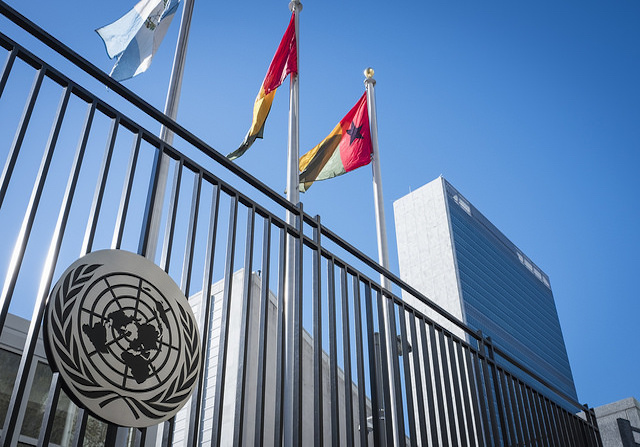
Today, the ICJ and 22 other rights organizations submitted a paper to the 30th meeting of Chairs of the human rights treaty bodies (Chairpersons meeting) in New York (28 May-1 June).
This paper is presented to the 30th meeting of Chairs of the human rights treaty bodies (Chairpersons meeting) by non-governmental organizations that contribute to many aspects of the work of the treaty bodies, including by encouraging and supporting national partners in their use of the system.
It focuses on existing good practices in treaty body working methods and makes recommendations for further discussions.
The signing NGOs hope that this submission will provide a basis for an effort by the treaty body Chairpersons to take stock of some of the important changes to working methods that the treaty bodies have undertaken and lead to further discussion on areas where greater alignment of working methods would make a particularly meaningful contribution to NGOs’ efforts to engage with the treaty bodies and promote better implementation by States of their human rights obligations.
Universal-Amnesty-Submission-to-the-30th-meeting-of-chairs-of-the-human-rights-treaty-bodies-Advocacy-non legal submission-May-2018-ENG (Full text in PDF)