Mar 22, 2018 | News
The ICJ has been awarded a grant from the Royal Norwegian Embassy in Mexico to continue its work in the area of independence of the judiciary in Guatemala.
This initiative titled “Strengthening the rule of law in Guatemala, Phase II” aims to strengthen domestic compliance with, and implementation of, international standards providing for judicial independence through the training of judges, raising awareness on this topic, as well as providing support to judges at risk.
The ICJ will be working together with the Mayan Association of Lawyers and Notaires of Guatemala as a partner in this action, through a sub grant of 1,622,801 NOK.
Guatemala-Grant Agreement with Norway-2018-ENG (full grant agreement, in PDF)
Mar 20, 2018 | Advocacy, Non-legal submissions
The ICJ today joined other NGOs in condemning and calling for proper investigation of the killing of human rights defender Marielle Franco in Brazil, at the Human Rights Council.
The statement read as follows:
“Protection of human rights defenders is key to the implementation of the Vienna Declaration on Human Rights.
City councilwoman Marielle Franco and Anderson Gomes were brutally killed on 14 March in Rio de Janeiro, Brazil. Her mandate focused on structural racism and police violence suffered by the poor, black and young in favelas, and on the empowering black women and the LGBTI community.
She was appointed as parliamentary rapporteur to oversee the abuses of the highly militarized federal intervention in Rio, decreed by the President, against the will of the community, and under concerns by the High Commissioner.
Many who speak truth to power in Brazil are facing unprecedented violence and stigmatization, as the country ranks at the top in defenders’ deaths. The defenders’ protection program remains underfunded and understaffed.
Marielle’s strength, engagement and sorority serve as a source of inspiration for the work on the promotion and protection of the rights of the most marginalized groups.
We urge Brazil to ensure a prompt, impartial and independent investigation, bringing those responsible to justice, by seriously exploring the hypothesis on an extrajudicial execution, and to provide effective protection to the survivors of this attack.”
The full statement together with a list of the organisations joining it, may be downloaded here: UN-HRC37-JointStatement-GD8-Brazil-2018
Mar 20, 2018 | News
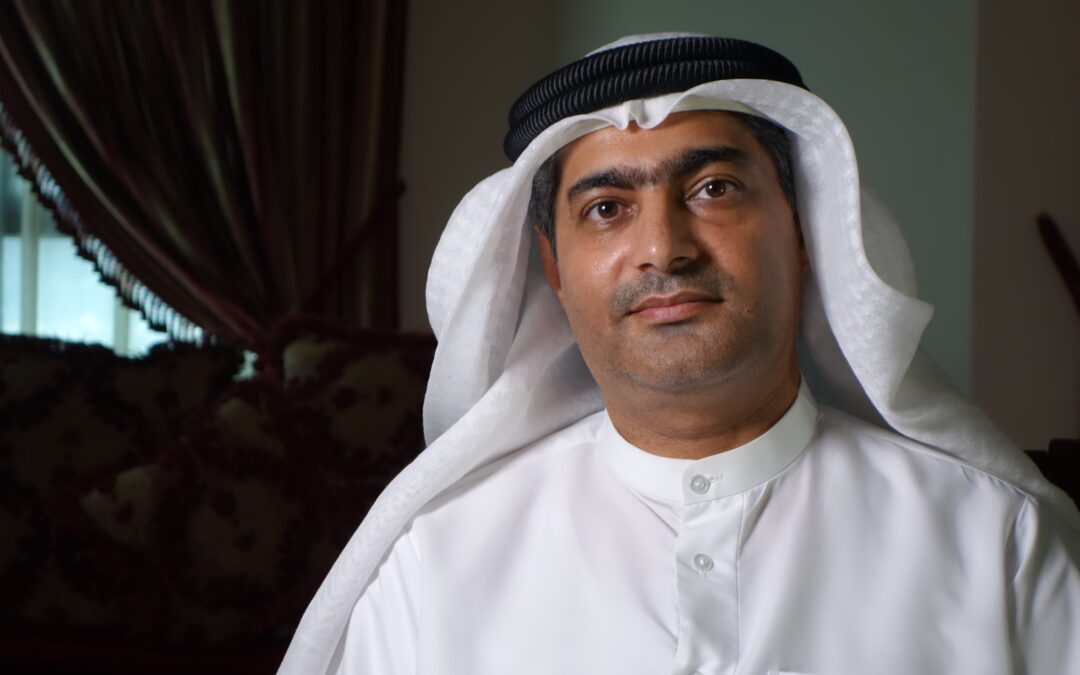
The authorities in the United Arab Emirates (UAE) should reveal the whereabouts of prominent human rights defender and citizen-journalist Ahmed Mansoor and release him immediately and unconditionally, two dozen human rights organizations, including the ICJ, said today.
Ahmed Mansoor is being held for his peaceful human rights work.
20 March 2018 marks one year since security forces arbitrarily arrested Mansoor, winner of the Martin Ennals Award for Human Rights Defenders in 2015, at his home in Ajman.
The UAE authorities have continued to detain him in an unknown location, despite condemnation from UN human rights experts and independent human rights organizations.
“The authorities have subjected Ahmed Mansoor to enforced disappearance since his wife last saw him in September 2017. They must reveal his whereabouts to his family and grant him immediate access to them and to a lawyer of his choosing,” said Khalid Ibrahim, Executive Director of the Gulf Centre for Human Rights (GCHR).
Following his arrest, the authorities announced that he is facing speech-related charges that include using social media websites to “publish false information that harms national unity.”
On 28 March 2017, a group of UN human rights experts called on the UAE government to release Mansoor immediately, describing his arrest as “a direct attack on the legitimate work of human rights defenders in the UAE.”
They said that they feared his arrest “may constitute an act of reprisal for his engagement with UN human rights mechanisms, for the views he expressed on social media, including Twitter, as well as for being an active member of human rights organizations.”
“Mansoor’s arbitrary detention is a violation of his right to freedom of expression and opinion. The UAE authorities must drop all charges against him and release him immediately,” said Carles Torner, Executive Director of PEN International.
Since his arrest, Mansoor has not been allowed to make telephone calls to his family and has been allowed only two short visits with his wife, on 3 April and 17 September 2017, both under strict supervision.
He was brought from an unknown place of detention to the State Security Prosecutor’s office in Abu Dhabi for both visits.
The authorities have refused to inform his family about his place of detention and have ignored their requests for further visits.
In February 2018, a group of international human rights organizations commissioned two lawyers from Ireland to travel to Abu Dhabi to seek access to Mansoor.
The UAE authorities gave the lawyers conflicting information about Mansoor’s whereabouts.
The Interior Ministry, the official body responsible for prisons and prisoners, denied any knowledge of his whereabouts and referred the lawyers to the police.
The police also said they had no information about his whereabouts. The lawyers also visited Al-Wathba Prison in Abu Dhabi following statements made by the authorities after Mansoor’s arrest, which suggested that he was being held there.
However, the prison authorities told the lawyers that there was nobody matching Mansoor’s description in prison.
“Pending his release, Mansoor must be granted immediate and regular access to his family, as well as to a lawyer of his choosing,” said Sima Watling, UAE Researcher at Amnesty International’s Middle East Regional Office.
UAE-one-year-Ahmed-Mansoor-remain-unknown-2018-ENG (Full text in PDF)
Mar 20, 2018
An opinion piece by Sean Bain, ICJ International Legal Adviser in Myanmar.
Australia now sits as a member of the UN Human Rights Council for the first time, sharing an enhanced responsibility to promote and protect human rights globally.
This commitment must be robustly pursued in neighboring Southeast Asia, where human rights are under assault and states are reluctant to call each other out on international law violations.
The ASEAN-Australia Special Summit this past weekend brought regional leaders to Sydney, including Myanmar’s de facto civilian leader Daw Aung San Suu Kyi.
Alongside talks on business and counterterrorism, the Australian government is duty bound to vigorously raise human rights concerns. Australia should also re-evaluate defense cooperation in the region, particularly in Myanmar.
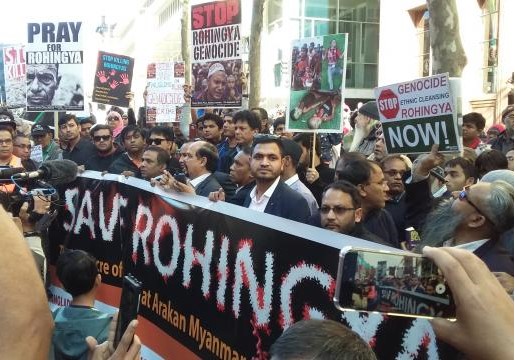
The scale and intensity of rights violations against Rohingya civilians, perpetrated by Myanmar’s military, rates among the worst ASEAN has seen in recent memory.
The Rohingya plight has been of regional concern for some time, largely due to effects of refugee movements. The commission of acts constituting crimes under international law has escalated the situation to a global level.
On March 12, UN experts tasked with fact finding presented more horrific reports to the Human Rights Council. The UN High Commissioner for Human Rights says acts of genocide may have occurred and that ethnic cleansing continues.
Crimes against humanity of murder, forcible transfer, persecution, and rape are among those attributed to the military in Rakhine state and in the conflict-affected north.
Both the civilian and military branches of Myanmar’s government staunchly contest claims of widespread or systematic rights violations. They argue the military campaign is an appropriate response to attacks on police by Rohingya militants, who are voraciously labeled as terrorists.
Humanitarian agencies, independent media, and UN investigators are denied access to areas of concern.
Disregarding the state’s obligation to duly investigate and prosecute crimes, Myanmar diplomats have asked for “concrete evidence” of violations.
It’s an absurd request given the ongoing prosecution of two Reuters journalists for investigative work, and the substantial body of evidence collected by the UN and nongovernment organizations, despite restricted access.
Australia continues modest but symbolically significant defense cooperation with the Myanmar military, a stance at odds with European and North American allies, who have mostly cut these ties.
Persistent military involvement in international crimes demands a re-evaluation of this support.
The “quiet diplomacy” approach, by its nature hard to measure for efficacy, appears to have failed, as the ferocity of security operations is unchanged by recent years of renewed defense cooperation. Given the scale and intensity of violations in Myanmar, Australian engagement that does not at its core address human rights violations will inevitably be self-defeating.
At minimum, future assistance must address the policies and practices that encourage or enable rights violations at the operational and tactical levels.
Myanmar’s invocation of its Counter Terrorism Law as cover for indiscriminate and unlawful killings gives further reason for caution (a counter terrorism conference accompanied the summit in Sydney). Broad democratic gains and wider reforms are seriously threatened by military impunity and a lack of government accountability.
Defense cooperation is now patently indefensible without addressing accountability and redress in line with international law.
Placing human rights at the center of engagement would better position the Australian government to implore neighbors to address the crisis caused by Myanmar’s military.
An application of regional pressure would serve as a critical motivator for the Myanmar government to recognize the crimes and to address cyclical patterns of violations. Myanmar’s state media regularly trumpets signs of regional support for its obstinacy.
Take for instance the theatrical example of Senior General Min Aung Hlaing’s recent trip to Thailand, where he received the award, “Knight Grand Cross of the Most Exalted Order of the White Elephant.”
Recently the military chief, unanswerable to the elected government under constitutional arrangements, was welcomed by ASEAN defense chiefs at another meeting in Singapore. But outside these overt public displays, there is discontent in ASEAN with Myanmar’s handling of the crisis and with the unwanted instability this brings.
While ASEAN is generally viewed as reticent on human rights, linked to a principle of “noninterference” in the affairs of its member states, divergence from this has occurred when rights concerns take an international dimension.
This has particularly been the case for Myanmar: in 2006 the government abdicated its inaugural ASEAN chair in response to regional pressure on rights, and more recently Malaysian Prime Minister Najib Razak publicly contemplated intervention to protect Rohingyas (a significant move regardless of potential domestic motives). Yet regrettably the bloc has been mostly silent on the current crisis.
This lack of regional pressure, an existence of discontent, and the precedents for rights talk within ASEAN, open space for and demand Australian leadership.
As a strategic partner of ASEAN but outside the bloc itself, and as a member of the Human Rights Council, Australia is both well positioned and duty bound to robustly engage on the human rights situation in Myanmar, with a view to convince ASEAN members and the responsible authorities to reign in the military and fulfill obligations under international human rights law.
The Australian government must speak forthrightly on human rights, and match this by reviewing defense assistance to states that flout international law.
Failure to publicly address and push accountability for crimes of the scale seen in Myanmar would embolden perpetrators of human rights violations throughout the region.
Mar 20, 2018 | Advocacy, Non-legal submissions
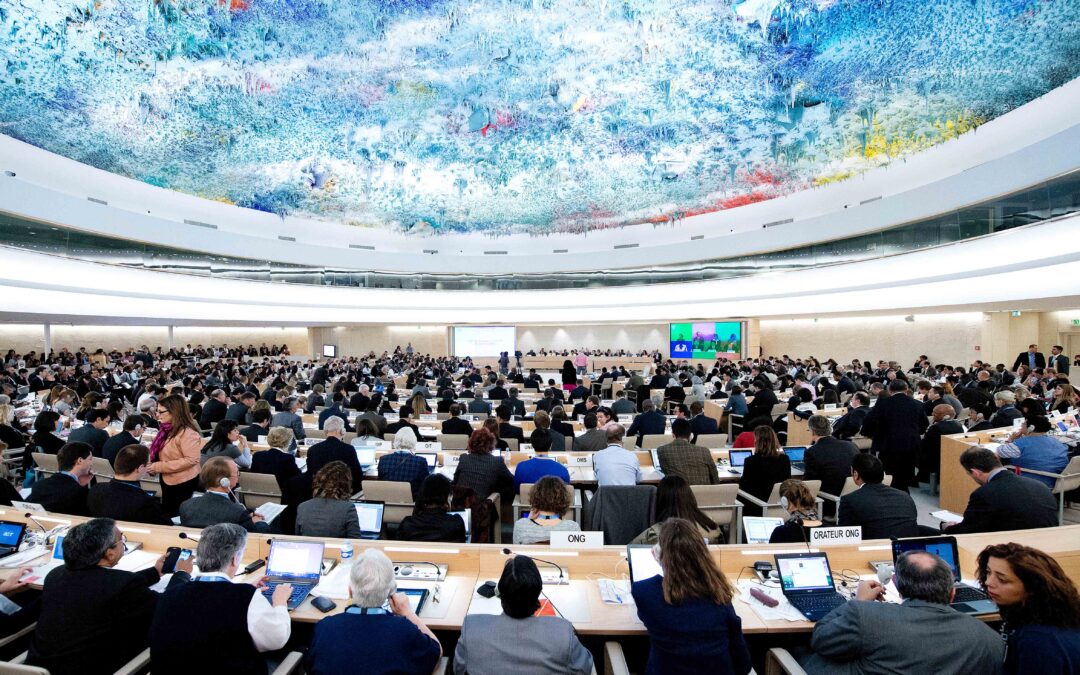
The ICJ today spoke at the Human Rights Council about the creation of a UN database of business enterprises involved in Israeli settlements in the Occupied Palestinian Terrority (OPT).
The statement, delivered in general debate under item 7 of the Council agenda, read as follows:
“Regarding the Report on a Database of business enterprises involved in listed activities in the settlements on the Occupied Palestinian Territory (A/HRC/37/39), the ICJ recognizes that considerable progress has been made, but considers that the normative and methodological frameworks of the database would benefit from incorporating an analysis of corporate complicity under international law, in addition to the existing references to the UN Guiding Principles on Business and Human Rights.
The ICJ stresses that a transparent process and strong due process safeguards in relation to companies alleged to be involved are essential and notes the efforts of the OHCHR in this regard.
All States, including the home States of the companies involved, have a responsibility to prevent companies from operating in breach of international law. Businesses themselves should see the database as an opportunity to more proactively incorporate respect for human rights within their policies and operations.
The database should contribute to global efforts to hold all business enterprises accountable for their role in violations of human rights and humanitarian law. Indeed, the ICJ urges all States, including those that have supported the creation of this database, to support and give due attention to addressing the human rights impacts of businesses in their own territories as well as global operations of businesses for which they are the home State.”
Video of the statement is available here: