Mar 5, 2018 | News
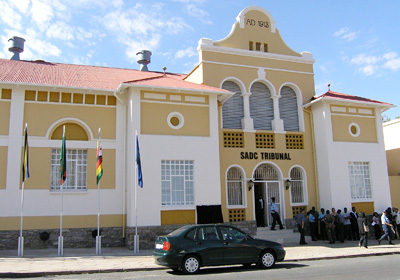
The ICJ has welcomed last Thursday’s judgment of the Pretoria High Court which declares the South Africa’s involvement in shutting down the South African Development Community Tribunal “unlawful, irrational, arbitrary and therefore unconstitutional”.
ICJ’s Africa Director, Arnold Tsunga described the judgment as a “triumph for the rule of law in Southern Africa and an opportunity for governments in the SADC region to commit to immediate restoration of the Tribunal”.
The SADC Tribunal has been inactive since 2012, when SADC Member States suspended its operations and removed individual access to the Tribunal, including in cases involving human rights violations.
The action was widely seen as a backlash for several judgments against Zimbabwe in relation to land programmes implemented during the administration of former President Robert Mugabe.
In a unanimous judgment delivered by High Court Judge President D Mlambo, the Court held that “any act which detracted from the SADC Tribunal’s exercise of its human rights jurisdiction at the instance of individuals, was inconsistent with the SADC Treaty itself and violated the rule of law”.
Describing former President Zuma’s decision to sign the replacement 2014 Protocol of the SADC Tribunal as one such act, the Court held that the rule of law in South Africa’s constitutional dispensation required prior Parliamentary approval for the Executive to lawfully participate in a decision to curb the powers of the Tribunal or withdraw South Africa from its obligations under the SADC Treaty and the Protocol establishing the Tribunal.
“A restoration of the SADC Tribunal to its original character will facilitate individual access to a much needed accountability mechanism and greatly enhance regional confidence in human rights and the rule of law”, said Arnold Tsunga.
In line with articles 14 and 15 of its 2000 Protocol, the SADC Tribunal had exercised supervisory jurisdiction over the human rights commitments of SADC Member State under the SADC Treaty.
The ICJ called on the governments of Southern Africa’s other 14 SADC Member States to take immediate and concrete steps to restore the SADC Tribunal and recommit to rebuilding, staffing and funding it to ensure its effectiveness.
Contact
Arnold Tsunga, ICJ Africa Director; t: +27716405926, or +254 746 608 859 ; e: arnold.tsunga(a)icj.org
Solomon Ebobrah, Senior Legal Adviser, ICJ Africa Regional Programme, t: +234 8034927549; e: solomon.ebobrah(a)icj.org
Mar 5, 2018 | Advocacy, Non-legal submissions
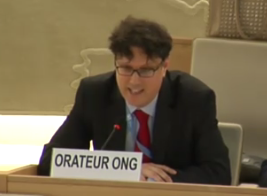
The ICJ today delivered an oral statement to the UN Human Rights Council, on transitional justice, prevention and impunity, highlighting the continuing problem of impunity in Nepal.
The statement, which was made during a clustered interactive dialogue with the Special Rapporteur on the promotion of truth, justice, reparation and guarantees of non-recurrence and the Special Adviser of the Secretary-General on the Prevention of Genocide, read as follows:
“The International Commission of Jurists (ICJ) remains deeply concerned by continuing impunity for gross human rights violations in many parts of the world, which undermines the potential for transitional justice to contribute to prevention as outlined in the Joint Study (A/HRC/37/65).
For example, in Nepal, more than ten years after the civil war, political expediency has trumped calls for justice and accountability. There has been near absolute impunity for those responsible for serious crimes under international law.
Transitional justice mechanisms – the Truth and Reconciliation Commission (TRC) and Commission on Investigation of Disappeared Persons (CoID) – have fallen short of international standards, both in their constitution and their operation, despite repeated orders by the Supreme Court of Nepal to enforce the standards.
The Commissions’ deeply flawed mandates, among other problems, allow them to recommend amnesties for gross human rights violations. In addition, their non-consultative, uncoordinated and opaque approach to their work has also created distrust with all major stakeholders, including conflict victims and members of civil society.
The Government continues to flout its obligation, both pursuant to the Supreme Court’s orders and under international law, to enact domestic legislation to criminalize serious crimes in accordance with international standards.
As highlighted by in the Joint study, turning a blind eye on past atrocities signals that some perpetrators are above the law, which further discredits State institutions and “breeds a (long-standing) culture of impunity in which atrocities may become ‘normalized’, rendering prevention significantly more difficult.” (para 43)
That, indeed, is the experience in Nepal: continuing impunity for gross human rights violations perpetrated during the conflict is one of the major obstacles to the creation of a stable and legitimate democratic government and lies at the heart of the rule of law crisis in the country. Ending impunity is essential to preventing further violations.”
Video of the statement is available here:
The delegation of Nepal exercised its right to reply later in the day. Its reply is here:
The ICJ oral statement complements a related written statement by the ICJ at the session.
Mar 3, 2018 | Agendas, Events, News
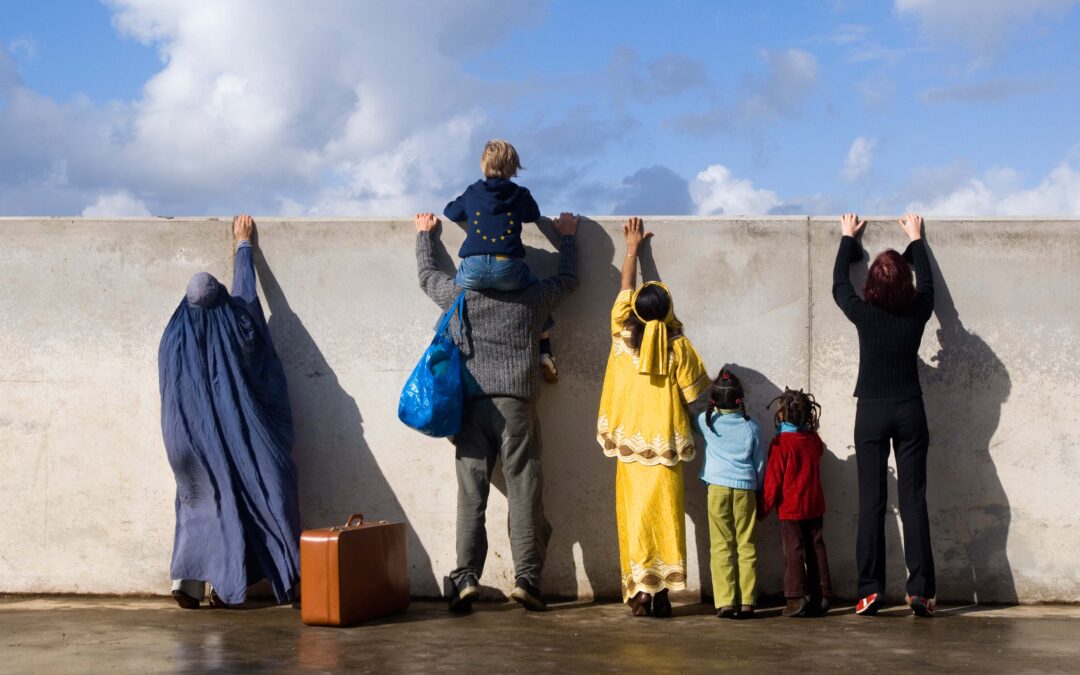
Today begins in Istanbul (Turkey) a two-day training for lawyers and CSO practitioners representing and working with migrants, refugees and asylum-seekers.
This event is organized by ICJ, in cooperation with its partners Refugee Rights Turkey, the European Council on Refugees and Exiles (ECRE), Mülteci-Der (MD) and ICJ-EI, as part of the EU co-financed project Fostering Access to Rights for Migrants, Refugees and Asylum-Seekers in Turkey.
30 lawyers and civil society practitioners – representing nine different bar associations and relevant organisations from the Ankara area and other nearby key migration and asylum locations – are taking part in the training on 3 and 4 March.
The training aims to update lawyers and CSOs on the international and national law on the rights of refugees, migrants and asylum-seekers in order to be effective in their work at both the national and international levels. It aims at an effective implementation of the Turkish legal framework on asylum and migration.
The main thematic areas to be discussed will be the principle of non-refoulement, international protection, detention and access to economic, social and cultural rights.
The training will use as a basis the draft training materials prepared by the ICJ and its partners (to be published an the end of 2019) and, among other sources, the ICJ Practitioners Guide no. 6: Migration and International Human Rights Law.
The project “Fostering Access to Rights for Migrants, Refugees and Asylum-Seekers in Turkey” is funded by the European Instrument for Democracy and Human Rights (EIDHR) of the European Union.
Turkey-Training-Istanbul2-MigrationAsylum-Agenda-2018-tur (download the agenda in Turkish)
Mar 2, 2018 | Advocacy, Non-legal submissions
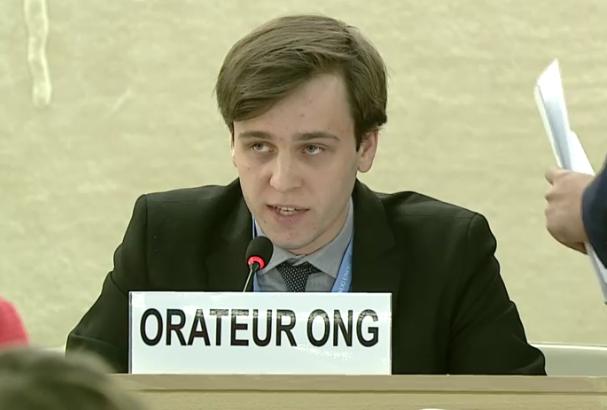
The ICJ today delivered an oral statement to the UN Human Rights Council urging it to take action on the situation in Eastern Ghouta in the Syrian Arab Republic.
The statement, which was made during an urgent debate at the UN Human Rights Council convened with a view to adoption of a resolution, read as follows:
“The International Commission of Jurists (ICJ) urges the Council to adopt a strong resolution today. The resolution should fully reflect the gravity, magnitude and character of the violations and abuses taking place, demand their immediate cessation, and set out specific measures for accountability of those responsible.
The ICJ highlighted these concerns in a statement one week ago. Every further day of delay costs lives. It is imperative that the Council act immediately and that the relevant forces move quickly to implement Security Council resolution 2401 and any resolution of the Human Rights Council. An immediate end to all attacks on civilians and civilian objects is paramount.
We welcome references to accountability, and urge the Council to explicitly call on States to make use of all means available in this regard, including in their national legal systems, as well as at the regional and international level.
All forces on the ground must respect international humanitarian law and human rights law and standards and be held accountable for failures in this regard. In particular, the Syrian Arab Republic and Russian Federation must comply with Security Council resolutions, ensure the effective protection of civilians, and create conditions in which rapid and unimpeded passage of humanitarian relief can actually take place.”
The Council did not complete the adoption of the resolution on 2 March, but ultimately did so on 5 March.
Mar 2, 2018
An opinion editorial by Róisín Pillay, Director of the ICJ Europe Programme.
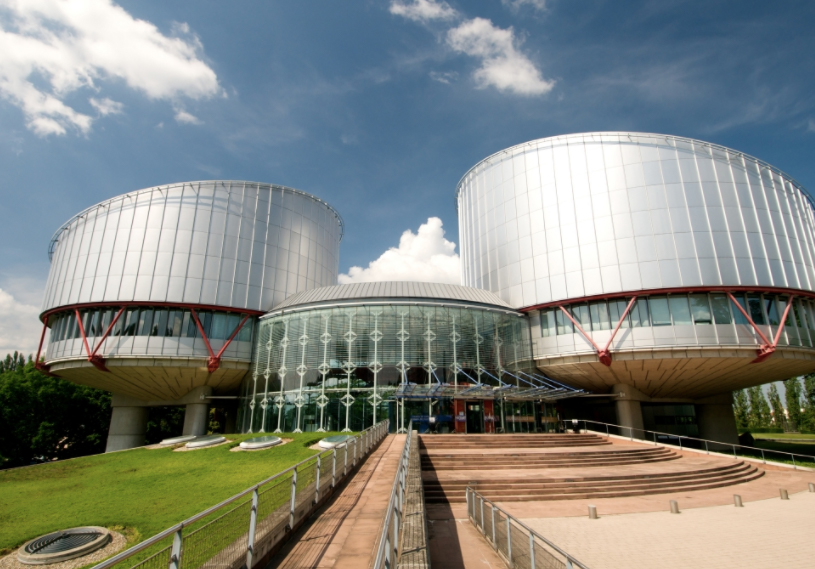
The European Court of Human Rights is once more facing a political challenge to its role, in proposals for a new political declaration put forward by the Danish Presidency of the Council of Europe.
That the Court’s extraordinary success in advancing human rights protection in Europe provokes the dissent of certain governments is nothing new. Neither is this the first time that the eight year long reform process – instigated by the Interlaken Declaration of 2010 in order to deal with the overwhelming caseload of the Court – has been the forum for political resistance to the Court’s perceived intrusion into national affairs.
The reform process has constantly navigated delicate questions of the respective powers of the Court and the Council of Europe Member States.
Notably, the UK government’s initial proposals for the 2012 Brighton Declaration Brighton Declaration posed serious threats to the independence and role of the Court, and to the right of individuals to petition it.
Ultimately, under pressure from some States as well as civil society, the most damaging of these proposals were not pursued.
However they did result in, amongst other things, the enshrining of a reference to the principles of subsidiarity and the “margin of appreciation” that states are considered to enjoy in protecting certain of the Convention rights, in the preamble to Protocol 15 to the Convention Since then, the Brussels Declaration of 2015 commendably re-directed attention to the problem that is the real root of the Convention system’s struggles: failings in effective national implementation of the Convention rights, which leave victims of human rights violations with no other recourse but to take their case to Strasbourg.
The Danish Government, which took on the rotating Presidency of the Council of Europe in 2017, has now proposed a new political declaration on the Convention system, to be agreed at a high-level conference of Council of Europe Member States in Copenhagen in April.
A draft of the Copenhagen Declaration was published in February. The text, while including some welcome re-affirmations of the need for enhanced national implementation measures and better execution of Court judgments, as well as strengthened selection processes for judges of the Court, also contains proposals that carry significant risks for the independence and role of the Court, and for the consistent protection of Convention rights across the Council of Europe region.
To assure the continued credibility and health of the Convention system, it needs to be significantly amended.
The draft Declaration has already faced sharp criticism, including from a coalition of international NGOs (including the ICJ) which made detailed proposals for amendments; from Danish NGOs and from academic commentators.
The Court itself has responded cautiously refraining from strong criticism, but drawing attention to the governing framework for the role of the Court under the ECHR and to principles of judicial independence which it notes must be respected by the Declaration.
Three main elements in the Declaration are of particular concern.
First, the draft Declaration emphasises the need for “better balance” between the respective roles of the Court and Member States, based on “shared responsibility” for the protection of the Convention rights (para.11).
The Convention certainly envisages complementary roles and responsibilities for national authorities and the Court within the Convention system: it is the obligation of Member States to respect and protect the Convention rights (Article 1 ECHR) and the role of the Court to supervise this obligation.
The Court’s role is clearly set out in Article 19 of the Convention, as “to ensure the observance of the engagements undertaken” by States under the Convention.
Article 32 establishes that the Court’s jurisdiction in doing so extends to “all matters concerning the interpretation and application” of the Convention rights. The much contested doctrine of the “margin of appreciation” developed in the Court’s jurisprudence applied by the Court in respect of certain rights or aspects of rights only, does not in any way displace or diminish this jurisdiction.
The draft Declaration however, seems to allow for more qualified role, based on an unduly wide interpretation of principles of subsidiarity and the margin of appreciation.
The draft emphasises that the Convention rights should not only be secured at national level, but also “determined” there (para.10) and that rights should be protected “predominantly at national level by State authorities in accordance with their constitutional traditions and in light of national circumstances,” a proposition that appears to leave room for varying standards in the protection of the Convention rights, contrary to the principle of universality.
Startlingly, given the only too evident, continuing occurrence of sometimes grave and systematic human rights violations within the Council of Europe region, the draft Declaration confidently asserts that this new emphasis on national adjudication is a “natural step in the evolution of the Convention system” given that the Convention is now well embedded in national legal systems (para.10).
The second aspect of the draft Declaration worthy of particular scrutiny is proposals addressing the “subsidiary rule of the Court”. The principle of the subsidiary nature of the Convention system is long established in the jurisprudence of the Court.
It recognises that national authorities are best placed to evaluate local needs and conditions in the implementation of human rights, but also that such implementation must always be subject to the Court’s review.
The draft Declaration posits a notion of subsidiarity that appears to restrict the Court’s role, however, stating (without qualification as to the nature of the rights or aspects of rights concerned) that: “the Court … should not take on the role of States Parties whose responsibility it is to ensure that Convention rights and freedoms are respected and protected at national level.” (para.22) Singling out asylum and migration cases, it asserts that where national procedures in these cases operate fairly and in respect for human rights, the court should only intervene “in the most exceptional circumstances”. (para.26) In the context of a political declaration, such language appears to question the scope of the Court’s role under Article 19 of the Convention.
It is all the more concerning because it is followed by direct calls on the Court to apply more “robustly” the principles of subsidiarity and the margin of appreciation.
These are principles of judicial interpretation, whose application should be a matter for the Court alone; in seeking to direct the Court as to their nature and scope, the draft Declaration fundamentally misconstrues the role of the judiciary under the rule of law.
Finally, the most disturbing passages of the draft Declaration are those that promote the idea of a “dialogue” between Member States and the Court.
The draft declaration proposes “an ongoing constructive dialogue between States Parties and the Court on their respective roles in applying and developing the Convention” (para.31) and “an ongoing dialogue in which states and their populations are actively involved” (para.32).
Such dialogue would “give a clearer picture of the general views and positions of governments and other stakeholders, thereby solving some of the challenges of developing the Convention over time [and…] anchor the development of human rights more solidly in European democracies.”
Although the draft also stipulates that such dialogue should take place “with respect for the independence of the Court and the binding character of its judgments”, this qualification rings hollow against the background of the proposals made; the risk that that they could facilitate inappropriate political pressure on the Court regarding specific cases, principles or standards, is clear, and is difficult to avoid.
Of course, the Convention system already allows space for the views of Member States on regional human rights standards to be expressed – a “dialogue” of sorts – within the bounds of constitutionalism.
First, Member States can continuously shape and develop Council of Europe human rights standards through standard setting in the Committee of Ministers.
In individual cases before the Court, they also have wide powers to put forward their views through third party interventions.
“Dialogue” between governments and an independent court outside of these spheres is however no more appropriate than it would be within a national system.
The court’s proper interlocutors in any exchange of views between the national and regional levels are national courts, with which it has already established fruitful dialogues.
It is disappointing to see basic principles of the rule of law such as the independence of the judiciary being called into question within a regional human rights system designed precisely to defend such standards – and which has been so effective in upholding these standards in the region.
It is a cause for continuing concern that regional human rights systems – not only the European Convention system but also notably the Inter-American Court and Commission – increasingly face such challenges arising from the hyper-nationalist politics of their Member States.
The draft of the Declaration is of course still in its early stages and it is to be hoped that the Member States will heed the warning voices and substantially amend the Declaration. How should they transform it? The European Convention system undoubtedly needs the political support that a high level political declaration could bring.
First and foremost, it needs a Declaration that would contain clear, specific and practical commitments from the Member States on national implementation and on execution of judgements (drawing on the language in the Brussels declaration).
This, combined with better national processes for the often complex exercises involved in executing European Court judgments, would considerably lessen the caseload of the Court.
Second, the Declaration should provide the elements the court needs to be effective in exercising its supervisory role: strong political re-affirmation of support for its role and independence; commitments for sufficient additional resources to deal with its caseload effectively, and improved judicial selection procedures that will ensure that the best candidates can be appointed to the Court and can carry forward its vital work.
It is this last point, as ICJ and OSJI have argued in a recent report on selection of judges for regional human rights courts, can truly ensure that future of the system is strengthened from within.
These issues are already addressed by the Copenhagen Declaration – they should be placed at its heart, and the text that threatens the independence and role of the Court should be discarded.
As negotiations on the Declaration continue, there is still time for it to make a positive contribution to the future of the Convention system.
This opinion editorial can also be found on opiniojuris.org