Feb 6, 2018 | News
The ICJ today condemned the Maldivian Government’s assault on the Supreme Court and its judges and the suspension of human rights protections under the state of emergency.
“President Yameen and his Government have dealt a grave blow to the rule of law and independence of the judiciary in the Maldives,” said Ian Seiderman, ICJ’s Legal and Policy Director.
“The actions by the government are a wildly unjustifiable and disproportionate response to the decision of the Supreme Court”, he added.
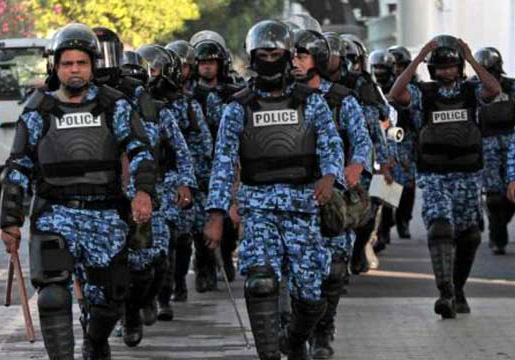
On 5 February, the Maldivian Government declared a 15-day state of emergency under Article 253 of the Constitution, suspending a range of human rights protections.
The declaration of emergency followed a Supreme Court judgment on 1 February that ordered the release of at least nine members of opposition parties, who were in detention on a number of charges.
The Government, however, refused to implement the Supreme Court’s judgment, which resulted in the outbreak of protests in the country.
The national defense forces also reportedly entered the premises of the Supreme Court and arrested at least two senior judges, including Chief Justice Abdulla Saeed.
“Summarily suspending basic rights protections and arresting judges whose decisions the President disagrees with is itself a display of sweeping lawlessness in the country,” Seiderman said.
According to the President’s office, the state of emergency was imposed because the Supreme Court order resulted in “disruption of the functions of the executive power, disruption of the functions of the state institutions…and infringement of national security and public interest.”
According to an unofficial translation of the emergency decree received by the ICJ, the constitutionally and internationally protected rights that have been suspended in part or in full during the state of emergency include, among others, the right to liberty; the right to freedom of assembly; the right to privacy; and the right to obtain remedy from the courts.
Basic safeguards surrounding arrest, detention, search and seizures have also been suspended.
In addition, laws providing certain immunities to judges and the right of judges to be informed if any action is taken against them have also been suspended.
“The complete suspension of constitutional protections for human rights such as the right to liberty and right to free assembly goes far beyond anything that could be justified by the alleged grounds cited by the government,” Seiderman added.
The ICJ notes that international law strictly regulates attempts by governments to suspend or otherwise derogate from human rights on the grounds of emergency.
The International Covenant on Civil and Political Rights (ICCPR), to which the Maldives is a State Party, expressly permits derogations only for certain human rights, and then only ‘in time of public emergency which threatens the life of the nation’.
Measures of derogation may only be taken to the extent necessary to meet a specific threat to the life of the nation.
“Maldivian authorities have not even come close to explaining how the current situation constitutes a threat to the ‘life of the nation’, the high threshold set by international law for the derogation of rights in times of emergency,” Seiderman said.
The ICJ urges the Government to immediately lift the state of emergency, release judges of the Supreme Court, implement the ruling of the Supreme Court and ensure the independence of the judiciary.
Contact
Ian Seiderman, ICJ Legal and Policy Director, T: +41 22 979 38 37 ; e: ian.seiderman@icj.org
Reema Omer, ICJ International Legal Adviser for South Asia (London), t: +447889565691; e: reema.omer@icj.org
Additional information
Under international standards, including the UN Basic Principles on the Independence of the Judiciary, it is the duty of all governmental and other institutions to respect and observe the independence of the judiciary.
This means that there shall not be any inappropriate or unwarranted interference with the judicial process and judges shall be free to decide cases without any restrictions, pressures, threats or interferences.
In August 2015, following a joint fact-finding mission to the Maldives, the ICJ and South Asians for Human Rights (SAHR) documented the breakdown of the rule of law and human rights in the Maldives in a 35-page report, Justice Adrift: Rule of Law and the Political Crisis in the Maldives.
Feb 3, 2018 | Agendas, Events, News
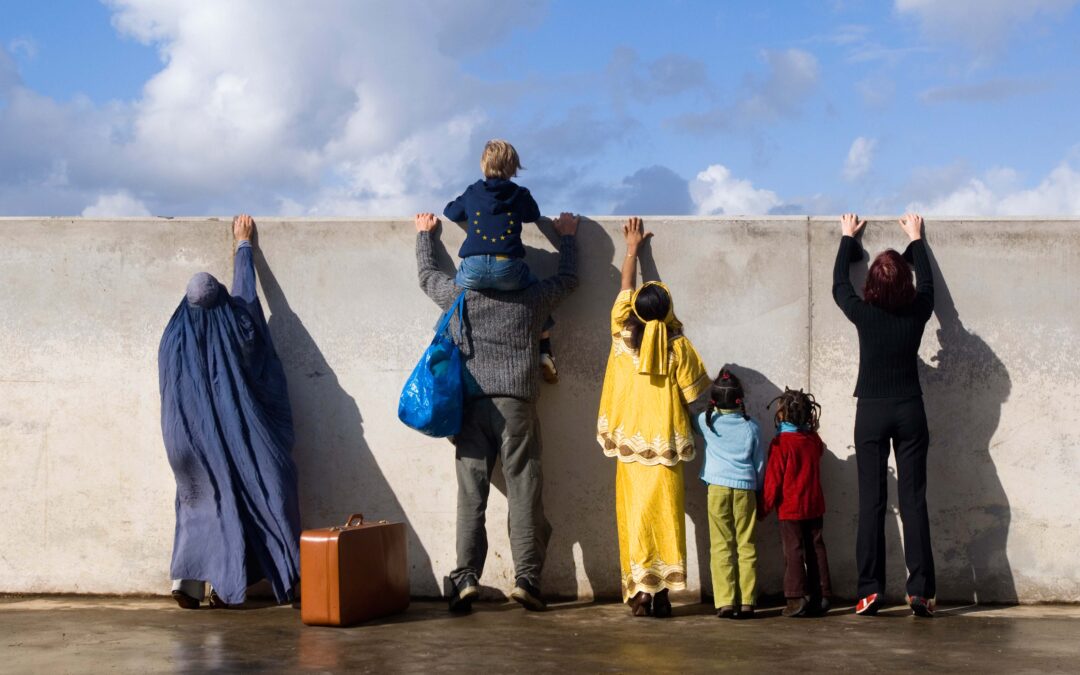
Today begins in Ankara (Turkey) a two-day training for lawyers and CSO practitioners representing and working with migrants, refugees and asylum-seekers.
This event is organized by ICJ, in cooperation with its partners Refugee Rights Turkey, the European Council on Refugees and Exiles (ECRE), Mülteci-Der (MD) and ICJ-EI, as part of the EU co-financed project Fostering Access to Rights for Migrants, Refugees and Asylum-Seekers in Turkey.
30 lawyers and civil society practitioners – representing nine different bar associations and relevant organisations from the Ankara area and other nearby key migration and asylum locations – are taking part in the training on 3 and 4 February.
The training aims to update lawyers and CSOs on the international and national law on the rights of refugees, migrants and asylum-seekers in order to be effective in their work at both the national and international levels. It aims at an effective implementation of the Turkish legal framework on asylum and migration.
The main thematic areas to be discussed will be the principle of non-refoulement, international protection, detention and access to economic, social and cultural rights.
The training will use as a basis the draft training materials prepared by the ICJ and its partners (to be published an the end of 2019) and, among other sources, the ICJ Practitioners Guide no. 6: Migration and International Human Rights Law.
The project “Fostering Access to Rights for Migrants, Refugees and Asylum-Seekers in Turkey” is funded by the European Instrument for Democracy and Human Rights (EIDHR) of the European Union.
Turkey-Training-Ankara-MigrationAsylum-Agenda-2018-tur-eng (download the agenda in Turkish and English)
Feb 2, 2018 | News
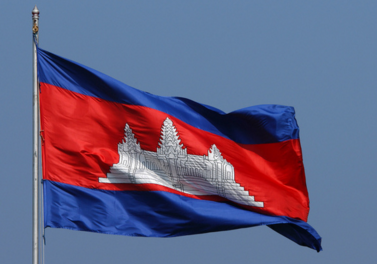
Cambodia should halt efforts to radically limit the right to freedom of expression through adoption of lèse-majesté legislation which would criminalize the exercise of some expression, said the ICJ today.
The Spokesperson for the Cambodian Council of Ministers, Phay Siphan, reportedly announced on Facebook today that the Council of Ministers had approved an amendment to the Cambodian Criminal Code which would make it a crime to insult the Cambodian King, carrying a penalty of one to five years imprisonment and/or a fine of two million Riel (USD 500) to ten million Riel (USD 2,500).
“The Cabinet’s approval of a lèse-majesté law appears to be a further attempt by the Government to ‘weaponize’ the country’s legislation against its perceived opponents,” said Kingsley Abbott, ICJ’s Senior International Legal Adviser.
“The Government’s ongoing misuse of the law is particularly concerning given the lack of independent and impartial judges to provide appropriate checks and balances on its power,” he added.
The ICJ has previously raised concerns about abuses arising from the lèse-majesté law in neighboring Thailand to curb freedom of expression.
Exercises of expression which are critical to a democratic society under the rule of law, including commenting on public policy and political questions, are sometimes stifled and punished under these laws.
The right to freedom of expression is protected under international law and should never be subject to criminal penalties, let alone imprisonment, which is a manifestly disproportionate penalty for the exercise of the fundamental right to free expression, the ICJ said.
Contact
Kingsley Abbott, Senior International Legal Adviser, ICJ Asia Pacific Regional Office, t: +66 94 470 1345, e: kingsley.abbott(a)icj.org
Background
Article 19 of the International Covenant on Civil and Political Rights (ICCPR), to which Cambodia is a State party, protects the right to freedom of expression. This right includes the “freedom to seek, receive, and impart information and ideas of all kinds.”
In its General Comment No. 34 on article 19, the United Nations Human Rights Committee (HRC), the body that monitors compliance of State parties with the ICCPR, expressed concern about the use of lèse-majesté laws and asserted that “imprisonment is never an appropriate penalty” for defamation.
The HRC further clarified that “all public figures, including those exercising the highest political authority such as heads of state and government, are legitimately subject to criticism and political opposition” and that “laws should not provide for more severe penalties solely on the basis of the identity of the person that may have been impugned”.
In February 2017, the United Nations Special Rapporteur on the promotion of freedom of opinion and expression, David Kaye, urged Thailand to refrain from using the lèse-majesté law as a “political tool to stifle critical speech” and asserted that “(l)esè-majesté provisions have no place in a democratic country”.
The legislative amendments ratified by the Council of Ministers will now be sent to the National Assembly, the lower house of the Parliament of Cambodia, for approval.
Upon approval by Parliament, the amendments would come into force when signed by the King.
At the same time as approving a lèse-majesté law, the Council of Ministers reportedly approved other constitutional amendments which appear to impose impermissible restrictions on the rights to free association and freedom of assembly, also protected under the ICCPR.
These legislative amendments reportedly include provisions that (i) the right to vote or the right to stand as an election candidate can be restricted by domestic legislation, (ii) the right to form a political party would require “placing the nation’s interests first”, (iii) prohibit individuals from “undermining the interests of the nation” and (iv) allow Secretaries of the State to be appointed by Royal Decree rather than by Parliamentary vote.
Read also
ICJ’s October 2017 Report: Achieving Justice for Gross Human Rights Violations in Cambodia
Feb 1, 2018
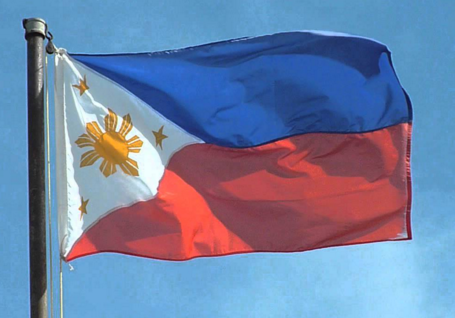
The ICJ today expressed its concern that a constitutional amendment under consideration by the House of Representatives’ Committee on Constitutional Amendments would, if adopted, severely restrict the rights to freedom expression and assembly in the country.
The proposed amendment would limit the constitutional protection of the exercise of these rights only to what State authorities deem to be “reasonable”.
In a letter to Representative Roger G. Mercado, the Chairperson of the Committee, the ICJ urged the removal of the phrase “responsible exercise” as a precondition for the exercise of the fundamental freedoms of expression and assembly.
The ICJ stressed that this limitation is incompatible with the obligations of the Philippines under international human rights law.
“Adding the phrase ‘responsible exercise’ is unacceptable since it gives those persons or government agencies tasked to execute the law unfettered discretion to restrict freedom of expression and assembly,” said Frederick Rawski, ICJ’s Regional Director for Asia and the Pacific.
“The restriction clearly impairs the essence of these rights and cannot meet the standard of legality,” he added.
Contact
Emerlynne Gil, Senior International Legal Adviser for Southeast Asia, t: +662 619 8477 (ext. 206) ; e: emerlynne.gil@icj.org
Background
The 1987 Philippine Constitution provides three ways by which it can be revised or amended. First, Congress can constitute itself, upon three-fourths vote of all its Members, to act as a Constituent Assembly. Second, Congress may call a Constitutional Convention by a vote of two-thirds of all its members or submit to the electorate, by a majority vote of all its members, the question of whether to call a convention or not. Third, at least 12% of all registered voters may sign a petition to propose amendments to the Philippine Constitution.
On 7 December 2016, President Duterte issued an Executive Order constituting a Consultative Committee to conduct consultations and to review the provisions of the 1987 Constitution. Their findings shall be submitted to the Philippine Congress.
On 16 January 2018, the House of Representatives voted to constitute Congress as a Constituent Assembly to commence the amendment of the Philippine Constitution. Thus, the Committee on Constitutional Amendments was created to draft the proposed changes to the Philippine Constitution.
One of the proposals considered is to amend Section 4, Article III of the Philippine Constitution, adding the following four-word qualifier (in bold text) to the existing provision, so that it would read: “No law shall be passed abridging the responsible exercise of the freedom of speech, of expression, or of the press, or the right of the people peaceably to assemble and petition the government for redress of grievances.”
Freedom of expression and peaceful assembly are protected respectively under Articles 19 and 21 of the International Covenant on Civil and Political Rights (ICCPR). They only may be restricted on narrowly specified grounds, such as where necessary to protect national security or public health. Overly broad and expansive limitations, such as protecting only expression exercised “reasonably”, goes well beyond these specified grounds.
Philippines-Congress Sub Committees-Advocacy-Open Letters-2018-ENG (Full letter in PDF)
Jan 31, 2018 | Advocacy, Non-legal submissions
The ICJ submitted a written statement on impunity and transitional justice, ahead of the March 2018 session of the UN Human Rights Council.
The written statement can be downloaded in PDF format below:
In English: UN-HRC37-WrittenStatement-NepalPeruImpunity-EN
In Spanish: UN-HRC37-WrittenStatement-NepalPeruImpunity-ESP