Jul 6, 2017 | News
The ICJ welcomed today’s judgment by the International Criminal Court (ICC) that South Africa had violated its legal obligations by failing to arrest Sudanese President Omar al-Bashir during his visit to the country in June 2015.
The ICC said the South Africa should have surrendered him to the ICC for prosecution.
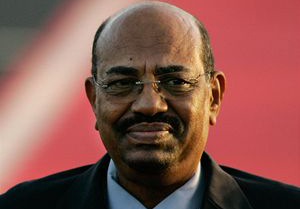
President al-Bashir (photo) had been indicted by the ICC for genocide, crimes against humanity and war crimes in connection with attacks against civilians in the Darfur region of the country.
“The judgment is a victory for international justice. It is an extremely important step toward tackling impunity in Sudan and worldwide,” said Arnold Tsunga, the ICJ Africa Regional Director.
The court said unequivocally that South Africa had a duty to arrest and surrender president Bashir to the ICC for prosecution.
It said that South Africa had a duty to recognize that head of state immunity did not apply to al Bahsir under the terms of the Rome Statute, and that leaving the question of immunity to South Africa’s voluntary discretion would have created “an insurmountable obstacle for the court to exercise its jurisdiction.”
The Court also said that Sudan itself had an obligation to remove and immunities for al-Bashir in respect to matters for which he was under indictment.
“The ICJ calls upon the Governments of South Africa and Sudan to respect the judgment of the Court, and urges all States to cooperate with the Court to bring President al-Bashir, and others indicted to justice,” Tsunga added.
The ICC also called on the UN Security and the Assembly of States Parties of the ICC to take appropriate measures to address the non-compliance by South Africa and Sudan.
Background
South Africa has been a party to the Rome Statute of the International Criminal Court since 27 November 2000.
States parties to the Rome Statute are obliged to cooperate with ICC, including by arresting and surrendering persons under indictment by the ICC who may be on their territory.
South Africa took measures to cooperate with the ICC by enacting the Implementation of the Rome Statute of the International Criminal Court Act, 2002.
Accordingly, South Africa had a duty to arrest President al-Bashir when he visited South Africa in 2015
President al-Bashir stands accused of serious crimes, with two warrants of arrest issued by the pre-trial chamber of the ICC.
They all are for war crimes, crimes against humanity and genocide, related to events in the Darfur region of Sudan.
Among the acts are widespread murder, rape and torture.
Read also:
South Africa appears before ICC for failure to arrest Sudanese President Bashir – The ICJ observes the hearing
Contact
Arnold Tsunga, ICJ Director for Africa, t +27716405926 ;
Thulani Maseko, ICJ Legal consultant, t: +268 7602 5165
Ian Seiderman, ICJ Legal & Policy Director, t: +41 22 979 3837
Jul 6, 2017 | News
The Turkish government should immediately release 11 people, including eight Turkish human rights defenders, who were detained yesterday in Istanbul, said the ICJ today.
The human rights defenders were arrested on unknown charges while attending a training in Istanbul on digital security and information management; also reported arrested were two trainers (reportedly a German and a Swedish national) and the owner of the training venue.
Amnesty International has reported that they were denied access to family members and lawyers, contrary to existing regulations.
“These arrests are an alarming setback to efforts to restore the rule of law in Turkey,” said ICJ Secretary General Sam Zarifi.
“Arrest and harassment of human rights defenders violates Turkey’s international legal obligations. Turkish authorities should be protecting human rights and supporting the important work of human rights defenders, but instead we have witnessed a continuing pattern of arrests on human rights defenders in the country,” he added.
On 6 June, Taner Kiliç, the President of Amnesty International Turkey was arrested.
He is currently detained on remand in what several international observers have qualified as baseless charges.
Turkey is currently under a State of Emergency enacted after the attempted coup d’etat of 15 July 2016.
While recognizing the serious attack suffered by Turkish institutions, the ICJ has repeatedly called for an end to this year-long state of emergency under which sweeping measures have been enacted that continue to erode human rights, including rights of fair trial, the right to liberty, and freedoms of expression and association.
“It is time to turn the page of the emergency and return to the rule of law,” said Sam Zarifi. “The work of human rights defenders, judges and lawyers is essential to a democratic society that upholds human rights.”
Background
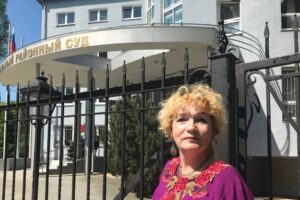
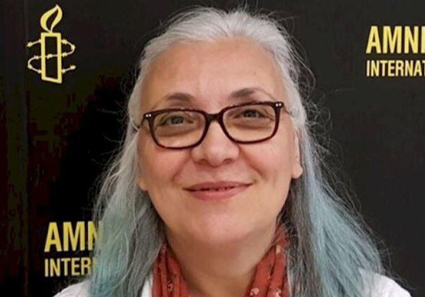
The human rights defenders arrested are Idil Eser (current Director of Amnesty International Turkey, photo), İlknur Üstün (Women’s Coalition), Günal Kurşun (Human Rights Agenda Association), Nalan Erkem (Citizens Assembly), Nejat Taştan (Equal Rights Watch Association) , Özlem Dalkıran (Citizens’ Assembly), Şeyhmuz Özbekli, and Veli Acu (Human Rights Agenda Association).
Contact
Olivier van Bogaert, ICJ Director of Media & Communications, t: +41 22 979 3808 ; e: olivier.vanbogaert(a)icj.org

Jul 3, 2017
The ICJ and other organizations call on the Vietnamese authorities to immediately order an independent, impartial and effective investigation into the circumstances surrounding the death of Hoa Hao Buddhist Nguyen Huu Tan, who died in police custody on 3 May 2017.
Vietnam-Death in custody-Advocacy-Open letters-2017-ENG (full text, in PDF)
Jun 30, 2017 | Advocacy
A Joint NGO Statement was issued on the occasion of the Twenty-ninth meeting of UN treaty body chairs 27-30 June 2017, New York
This statement includes some reflections and recommendations, by the undersigned organisations (see list on p.6-7), in relation to the programme of work for the 2017 annual meeting.
Some of the comments and recommendations stem from a two-day consultation involving representatives of NGOs, States, treaty body members, OHCHR and academics, which took place in Geneva on 23-24 May 20171.
The consultation focused on developing a strategy for the Treaty Body strengthening process.
A report will shortly be made public.
The comments and recommendations below are structured around the substantive treaty body chairs meeting agenda items.
Universal-MeetingTreatyBodies-Advocacy-2017-ENG (full text in PDF)
Jun 30, 2017 | Multimedia items, News, Video clips
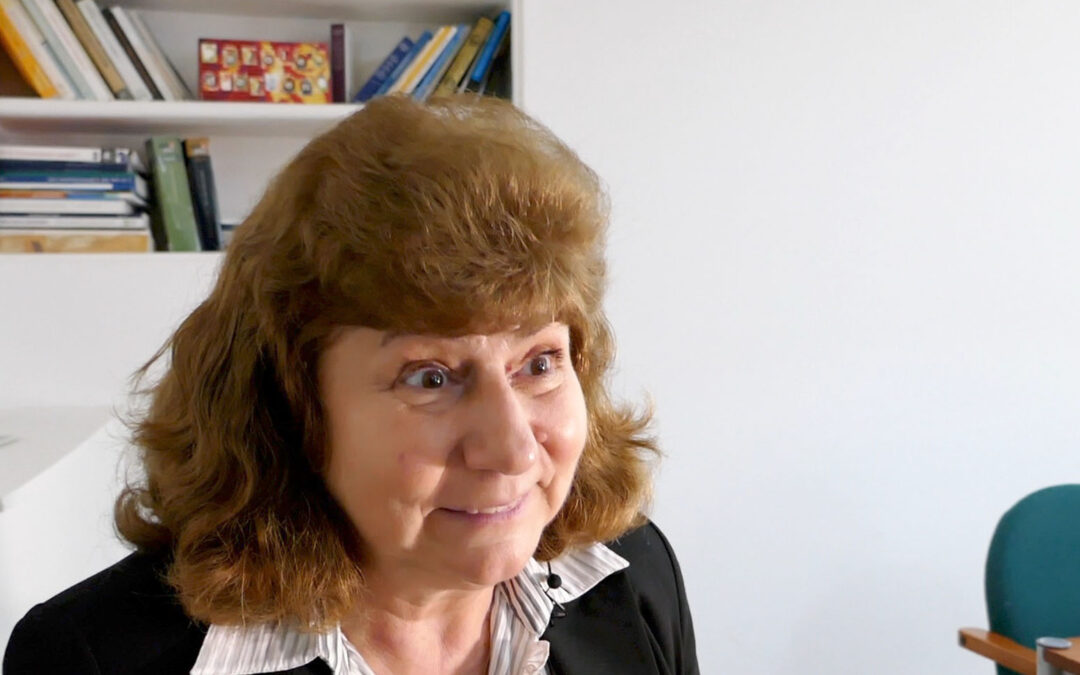
ICJ Commissioner Karinna Moskalenko talks about the vulnerabilities of human rights defenders in Russia, as part of the ICJ’s ongoing women profiles series.
Ms Moskalenko is a Russian lawyer who has been a Commissioner of the ICJ since 2003. In the early 1990s she founded, and was the former Director of, the International Protection Centre based in Moscow.
The Centre was founded after Russia had ratified the Human Rights Committee Mechanism with the Optional Protocol to the International Covenant on Civil and Political Rights. This provided an opportunity to be able to use international mechanisms to appeal against injustices.
Once Russia had ratified the European Convention it was also possible to use the European Court of Human Rights as another means to challenge incidences where domestic remedies were failing to protect the rights of people in Russia.
The Centre pursued many cases successfully and the credibility of the organization grew, which also increased demands for help. Karinna said that women have a strong role to play in human rights defence work in Russia and form the majority of the human rights community where they are well respected.
However, this is not reflected elsewhere in Russian society where, although women are visible in senior roles within the judiciary and the executive, they do not often play an important role in leadership positions or decision-making.
“Women in Russia are sometimes much more vulnerable than other groups of the population,” said Karinna. She identified the particular problem of domestic violence as one where women are unable to obtain legal protections because police are not very interested in the problem. In addition many people within society think that women already have enough protections so there is little public opposition for reducing protections and no support for enhancing these.
Karinna felt compelled to work as a human rights defender to protect the most vulnerable people but commented that many lawyers are not interested in this field of law. Instead, they prefer to build careers within official bodies of the judiciary or the government. Human rights activities are no longer very popular, she said.
Members of non-governmental organizations are often accused of being ‘foreign agents’ or ‘enemies of the State’. As many people do not understand the nature of human rights defence work, Ms Moskalenko said it can be frustrating and hurtful to have to defend yourself against these accusations. However, Karinna thinks that those working in human rights are the most patriotic people she knows because they care about the rights of each and every member of society.
Fortunately, the International Protection Centre has won so many cases for ordinary people that they have a very good reputation in society, but they do not have enough funding for their activities. They cannot accept international funds and domestically no funding is available. Many lawyers take on unpaid cases, but not everyone can afford to do so. The defence of human rights is a very difficult career.
“I cannot say that there is no fear. There is, of course. Some of my friends were killed because of their human rights activity.”
Ms Moskalenko said that human rights defence work is very important but in Russia defenders are not protected financially, legally, morally or physically. They are frequently threatened, persecuted and even killed.
However, although working as a human rights defender is difficult, Karinna says that “when you somehow help people, you want to continue that, you think that you believe that you must do that, you cannot stop and people come to you, how can you refuse?”
Watch the interview:
The series of profiles introducing the work of ICJ Commissioners and Honorary Members on women’s rights was launched on 25 November 2016 to coincide with the International Day to Eliminate Violence against Women and the first day of the 16 Days of Activism Against Gender-Based Violence Campaign.