May 25, 2017 | News, Training modules
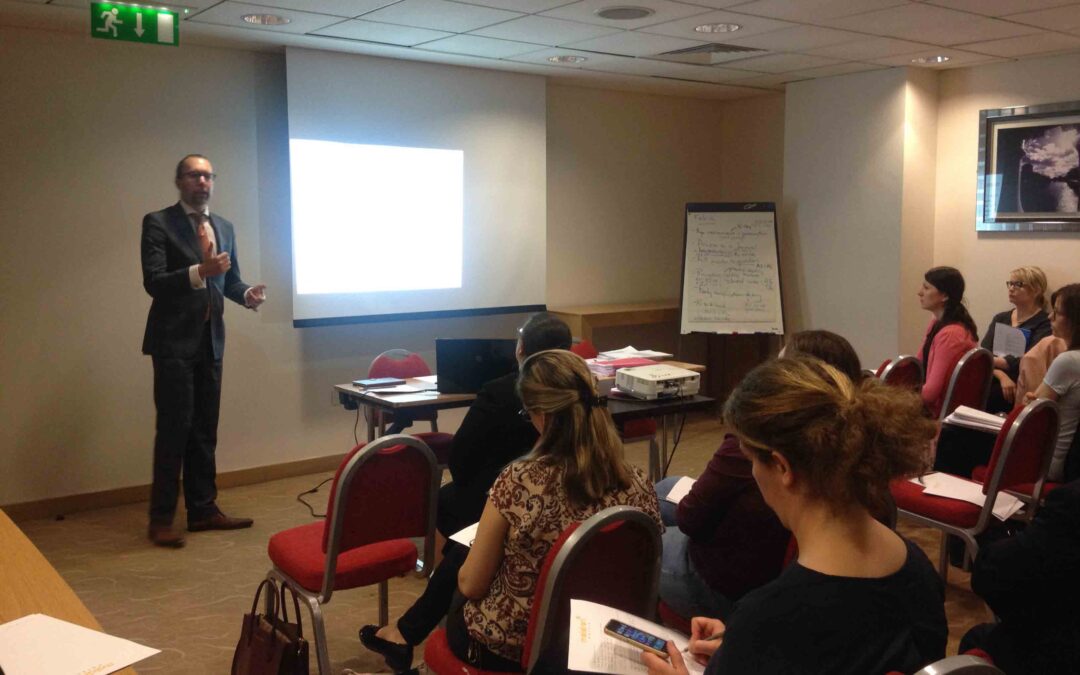
Today, the ICJ and the Immigrant Council of Ireland are holding a training for lawyers on the rights of migrant children and on accessing international human rights mechanisms in Dublin.
The training aims to support the strategic use of national and international mechanisms to foster migrant children’s access to justice.
The training will take place over the course of two days: 25-26 May 2017.
The training will focus on accessing the international mechanisms in order to protect and promote the rights of migrant children, the child’s procedural rights including the right to be heard, the right to family life, access to housing and education and immigration detention.
A practical case analysis will be part of the training. Trainers include Róisín Pillay, Director of ICJ’s Europe Programme, Dr. Patricia Brazil, BL and Joris Sprakel, Hague University.
The training is based on draft training materials prepared by the ICJ (to be published in the second half of 2017) and the ICJ Practitioners Guide no. 6: Migration and International Human Rights Law.
It is organized as part of the FAIR project co-funded by the Rights, Equality and Citizenship Programme of the European Union and OSIFE.
As part of the project, this training follows the trainings on the rights of migrant children in Spain, Italy, Bulgaria, Malta and Greece. Training in Germany and Strategic litigation Retreat will follow later this year.
Download the agenda here: Ireland-FAIRtraining-Event-agenda-2017-ENG

May 23, 2017
An opinion editiorial by Carlos Lopez, ICJ Senior Legal Adviser.
This would seem a rhetorical question and the answer self-evident.
Businesses, in particular big businesses, or their lawyers normally follow up closely key developments of policy and law at the international level that would have an impact in the way they operate.
So, why would they want to stay away from negotiations on global binding rules on respect for human rights? Surprisingly, some businesses (or their representatives) seem to think it wise to effectively boycott the process.
At a recent public panel at the Notre Dame University Gateway in London on possible and viable content of the prospective treaty now under discussion in the United Nations in Geneva, the argument was made that maybe businesses should not come to the table. That was astonishing.
The UN processes are by nature intergovernmental – only States vote and decide.
But non governmental organizations are formal stakeholders in these processes.
All NGOs accredited by the UN Economic and Social are entitled to engage at various levels with the UN Human Rights Councils and its bodies, including the Open Ended Working Group negotiating the Business and human rights treaty.
There are also means for non-ECOSOC accredited civil society groups and individuals to participate.
These non-governmental actors are allowed to speak in the meetings, raising issues, posing questions, making substantive proposals and formulating recommendations.
Although treaties are negotiated and adopted among States, it is a long established practice to have civil society at large and other key actors as participants in the process of formation and implementation of international law.
Businesses as profit seeking organizations do not have the same nature and objectives as non-governmental human rights organizations. But their participation and “buy in” is important.
There is no real obstacle to such participation.
Global and even domestic business associations can participate in UN debates, and they can do so with a delegation as sizeable as they wish it to be.
If necessary, some NGOs that work close with the business sector typically help businesses to have a place in the room.
So, there is no issue about not having access or a place in the discussions.
Then, why are now businesses worried and what is their demand?
Current business stance suggests that they want a special status and place in the negotiations.
The suspicion is that they would prefer the backroom and the direct lobbying to authorities in countries’ capitals to exert decisive pressure in States positions and vote during the negotiations.
Many business enterprises do not seem interested in taking part in open, transparent and democratic processes where their positions are exposed and subject to public scrutiny.
If such is the true attitude of the business community or even of a sector of them, it would be unfortunate and counterproductive.
Backroom lobbying and blackmailing to weak or corrupt States can only spur accusations of creeping “corporate capture” of governmental authority and accentuate the current public opinion distrust of big corporations and their tactics and feed into the current backlash against economic globalization.
The ICJ and other organizations have been trying for months to convince a group of business leaders to come to Geneva for meetings with States and civil society groups ahead of the official intergovernmental meeting of October 2017.
The meetings would be a unique opportunity to hear their views as to the contents of the future treaty. Very few have responded positively.
The reluctance by business sector actors to attend consultations with civil society and states is counterproductive.
They are missing the opportunity to exercise the “corporate citizenship” that they claim so often.
More importantly, they will lose the moral ground to complaint that they have not been consulted in the elaboration and negotiation of treaty texts.
If they willingly choose not to participate in the meetings and consultations, it will be difficult for them to complain later that they have not been consulted.
May 19, 2017 | Multimedia items, News, Video clips
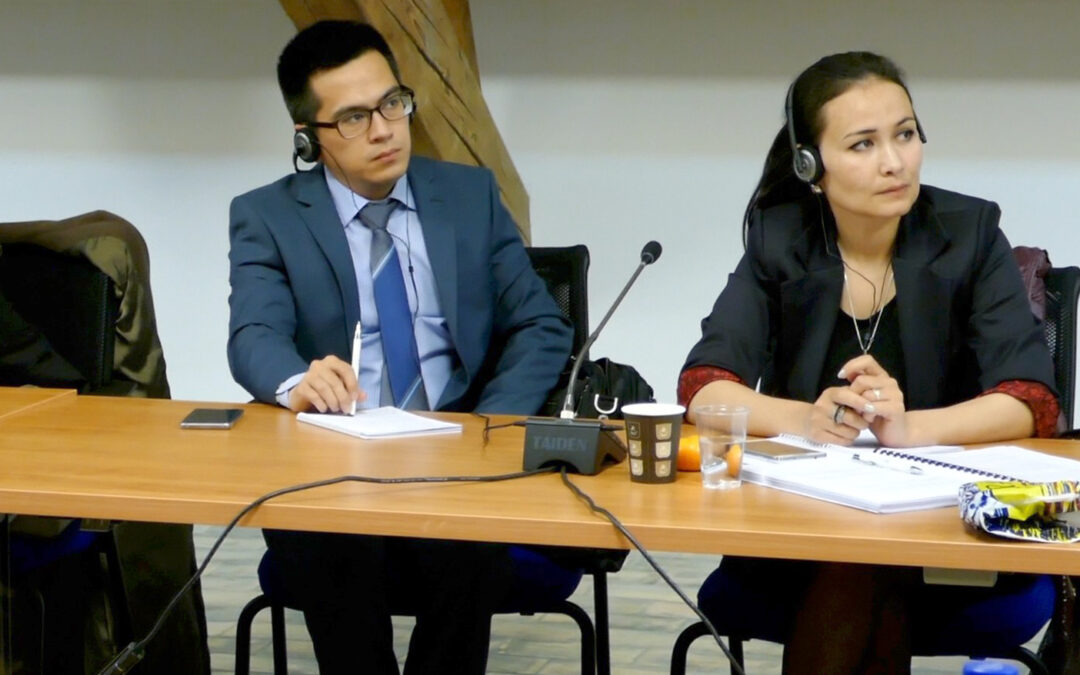
Zainab Kistabayeva, Iuliia Votslava, Shoira Sobirova and Daniyar Kanafin, four lawyers who have been trained at the Programme, and ICJ’s Legal Adviser Temur Shakirov, talk about this recent event.
Temur Shakirov
Zainab Kistabayeva
Iuliia Votslava
Shoira Sobirova
Daniyar Kanafin

May 19, 2017
The ICJ and Amnesty International expressed their concern at the district public prosecutor’s decision dated 8 May 2017 against appealing the Kavre District Court decision to acquit Major Niranjan Basnet in Maina Sunuwar’s murder case.
The two organizations call on the Attorney General to review the decision and pursue the appeal against the Kavre District Court judgment, as requested by Maina Sunuwar’s mother, Devi Sunuwar, in her letters to the district prosecutor and the AG’s office on 18 May 2017.
Full text of the letter here (in PDF): Nepal-AG letter Maina Sunuwar-Advocacy-Open letters-2017-ENG
Read also Nepal: need effective steps to enforce court verdicts