May 17, 2017 | News
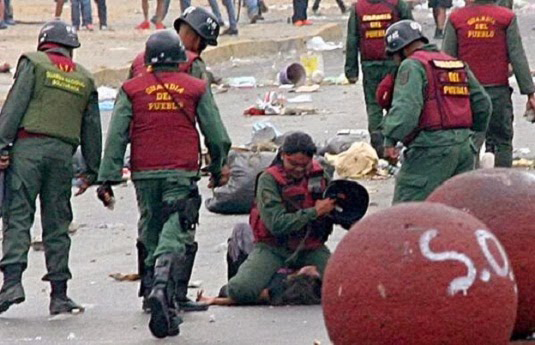
La CIJ condena enérgicamente la violenta represión de las manifestaciones por parte del Gobierno venezolano y sus cuerpos de seguridad, así como el juzgamiento de civiles por tribunales militares de ese país.
Entre el 4 de abril y el 16 de mayo de 2017, han fallecido de manera violenta más de 40 personas en el contexto de manifestaciones, por la acción de los cuerpos de seguridad del Estado venezolano y grupos armados de civiles afectos al Gobierno.
Asimismo, centenares de personas han sido detenidas arbitrariamente, muchas de las cuales han sido trasladadas a prisiones militares, instalaciones de organismos de seguridad o a cárceles de máxima seguridad.
Numerosos detenidos han denunciado golpizas, tratos crueles e inhumanos así como actos de tortura.
Igualmente, por lo menos 275 civiles están procesados por tribunales militares, acusados de delitos previstos en el Código Militar, como los de “rebelión” y “traición”.
En muchos casos, a los abogados defensores se les limita el acceso a las salas de audiencia, sólo están autorizados a hablar uno pocos minutos antes de las audiencias con sus defendidos y se les restringe el acceso al expediente penal.
La CIJ recuerda que todas estas prácticas vulneran derechos y libertades fundamentales y constituyen una violación flagrante por parte del Estado venezolano de sus obligaciones constitucionales e internacionales de garantizar y proteger los derechos humanos.
Desde hace varios años la CIJ ha venido siguiendo la situación en Venezuela y ha podido constatar el vertiginoso y sistemático deterioro de los derechos humanos y de las libertades fundamentales, la pérdida de independencia del Poder judicial y, en general, el ocaso del Estado de Derecho.
Al respecto ver los informes de la CIJ: Fortaleciendo el Estado de Derecho en Venezuela (2014) y Venezuela: el ocaso del Estado de Derecho (2015).
May 16, 2017 | News
Non-governmental organisations interested in participating in UN human rights mechanisms have until 1 June 2017 to submit an application for consideration during 2017.
The International Commission of Jurists, which itself has had consultative status with the UN since 1957, has been requested by the United Nations to disseminate the following information about the upcoming deadline for other interested NGOs to obtain UN consultative status:
1 June 2017 is the last day for Non-Governmental Organizations to apply for consultative status with the Economic and Social Council (ECOSOC), in order to have an opportunity to take part in UN deliberations. ECOSOC consultative status is governed by ECOSOC resolution 1996/31, which outlines the eligibility requirements for consultative status, rights and obligations of NGOs in consultative status, procedures for the withdrawal or suspension of consultative status, the role and functions of the ECOSOC Committee on NGOs, and the responsibilities of the UN Secretariat in supporting the consultative relationship. Consultative status is granted by ECOSOC upon recommendation of the ECOSOC Committee on NGOs, which is composed by Member States.
Who is eligible for applying?
Consultative relationships may be established with international, regional, sub regional and national non-governmental, non-profit public or voluntary organizations. NGOs affiliated to an international organization already in status may be admitted provided that they can demonstrate that their programme of work has direct relevance to the aims and purposes of the United Nations.
To be eligible for consultative status, an NGO must have been in existence (officially registered with the appropriate government authorities as an NGO/non-profit) for at least two years, must have an established headquarters, a democratically adopted constitution, authority to speak for its members, a representative structure, appropriate mechanisms of accountability and democratic and transparent decision-making processes. The basic resources of the organization must be derived in the main part from contributions of the national affiliates or other components or from individual members.
What are the benefits?
NGOs that are accredited with ECOSOC can participate in a number of events, including, but not limited to regular sessions of ECOSOC, its functional commissions and its other subsidiary bodies. NGOs may:
- Attend official meetings;
- Submit written statements prior to sessions;
- Make oral statements;
- Meet official government delegations and other NGO representatives;
- Organize and attend parallel events that take place during the session;
- Participate in debates, interactive dialogues, panel discussions and informal meetings.
Organizations established by governments or intergovernmental agreements are not considered NGOs.
Information about how to apply is available here: http://csonet.org/index.php?page=view&nr=377&type=230&menu=14
Please note that ICJ is not itself involved or in a position to assist with applications for UN consultative status and all queries should be directed to the UN.
May 11, 2017 | Advocacy
Today the ICJ presented its views on counter-terrorism, security and human rights in Europe, to the Committee on Civil Liberties, Justice and Home Affairs (LIBE) of the European Parliament, as part of a hearing on the EU’s Comprehensive Assessment of EU Security Policy.
The exchange of views, Chaired by the Chair of the LIBE Committee, Claude Moraes, included contributions by Commissioner Julian King of the European Commission, as well as representatives of national parliaments, civil society organisations and MEPs.
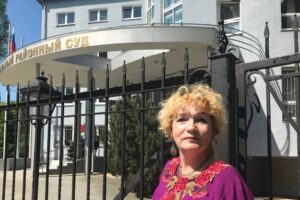
The ICJ presentation by Róisín Pillay (photo), Director of the ICJ Europe Programme, emphasised the need to make human rights and the rule of law central to EU security policy, to the development of EU legislation and its implementation at national level.”
The full text of the presentation can be downloaded here: Europe-Presentation LIBE-Advocacy-2017-ENG (in PDF)
More on LIBE
May 10, 2017 | Advocacy, News, Non-legal submissions
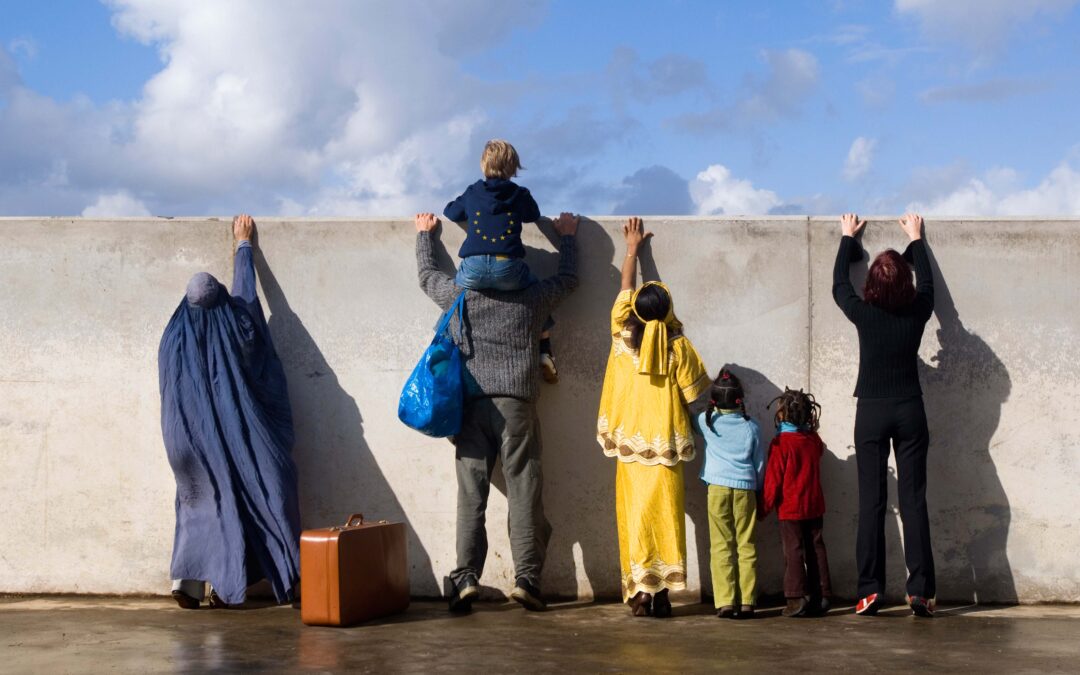
The ICJ emphasised the role of judges and lawyers in protecting human rights of migrants, during consultations at the UN in Geneva, as part of the preparatory process for a Global Compact on migration.
The informal consultation was convened by the UN General Assembly and held in Geneva on 8-9 May 2017. With a focus on human rights of migrants, it was the first thematic consultation to be held in connection with ongoing efforts by States to agree a UN global compact for safe, orderly and regular migration.
In addition to a written submission, the ICJ made statements during the main discussion, and as part of the concluding discussions.
The initial statement highlighted the recently published Principles on the Role of Judges and Lawyers in relation to Refugees and Migrants, developed by the ICJ in consultation with a wide range of relevant experts.
The concluding statement emphasised that effective protection of human rights, including of migrants, requires equal and effective access to impartial courts and independent lawyers, and urged States to ensure that the need for legal and practical guarantees for such access is reflected in the Global Compact eventually to be adopted. Indeed, the ICJ noted, access of individuals to a means of their enforcement is a key element distinguishing durable “rights” from, for instance, welcome but not necessarily permanent generosity.
For more information about the Principles on the Role of Judges and Lawyers in relation to Refugees and Migrants, click here.
May 8, 2017 | Advocacy
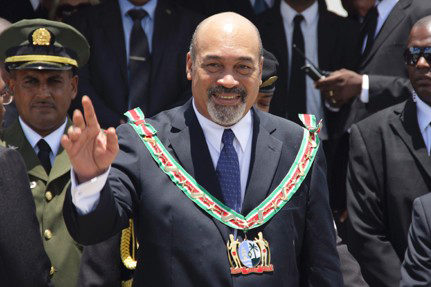
The following document updates a report issued by the ICJ on 29 May 2012 as part of an on-going trial observation mission concerning the trial of Suriname President Desiré Delano Bouterse, accused of crimes involving unlawful killings.
Download the update below:
Suriname-Justice delayed Bouterse case-Advocacy-2017-ENG (in PDF)