Mar 30, 2017
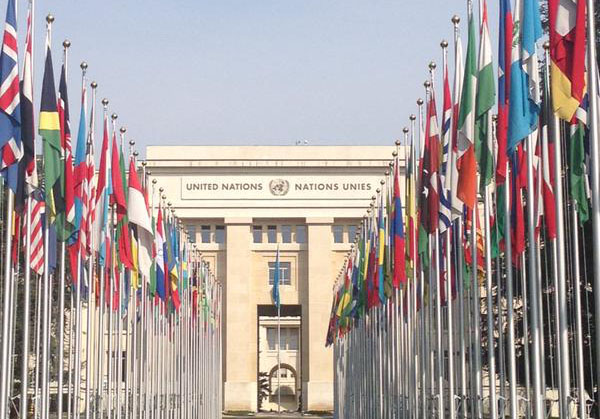
The ICJ and Human Rights Commission of Pakistan (HRCP) have made a submission to the Committee against Torture in advance of its examination of Pakistan’s initial report under the Convention against Torture and other Cruel, Inhuman or Degrading Treatment or Punishment.
ICJ and HRCP’s submission draws the Committee’s attention to concerns related to:
- Legal framework relevant to torture and other ill-treatment in Pakistan;
- Compatibility with the Convention, as well as other relevant international standards, of draft legislation purporting to incorporate the Convention against Torture into Pakistan’s domestic law;
- Allegations of torture and other ill-treatment of individuals facing trials before military courts in connection with terrorism-related offences;
- Prevalence of torture and other ill-treatment documented by HRCP; and
- Enforced disappearances as torture and other ill-treatment.
The Committee will examine Pakistan’s initial report during its 60th session, which will be held from 18 April to 12 May 2017.
Following the review, the Committee will adopt Concluding Observations setting out recommendations to the Pakistani Government.
Pakistan-CAT ICJ HRCP-Advocacy-legal submissions-2017-ENG (full text in PDF)

Mar 30, 2017 | Advocacy, Non-legal submissions
Today, the ICJ made a submission to the Universal Periodic Review of Pakistan.
The submission brings to the attention of the members of the Human Rights Council’s Working Group on the UPR issues concerning:
- Trials of civilians by military tribunals;
- Enforced disappearances;
- Torture and other ill-treatment;
- Blasphemy laws; and
- International human rights instruments.
With respect to each of the above-mentioned concerns, the ICJ calls upon the Working Group on the UPR and the Human Rights Council to make a number of recommendations to the Pakistani authorities.
Pakistan-ICJ UPR-Advocacy-non-legal submissions-2017-ENG (full text in PDF)
Mar 30, 2017 | Advocacy
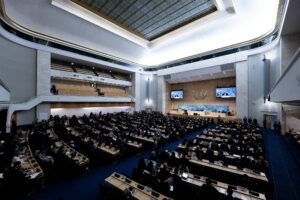
The ICJ submitted information to the UN Human Rights Council Working Group on the Universal Periodic Review (UPR) in advance of its review of Sri Lanka under the third cycle of the UPR mechanism during its 28th session in November 2017.
The ICJ submission focuses on concerns about Sri Lanka’s respect for its human rights obligations relating to ongoing issues of:
- Transitional justice;
- Enforced disappearance;
- Torture and other ill-treatment;
- Detention;
- Counter-terrorism; and
- Impunity.
SriLanka-UPR Submission March17-Advocacy-non legal submissions-2017-ENG (full text in PDF)

Mar 30, 2017 | News
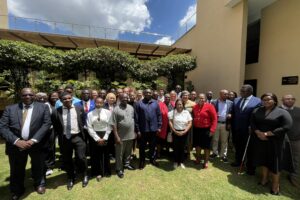
The ICJ expressed its hope today that an arrangement reached between four judges of the High Court and Botswanan President Ian Khama along with Chief Justice Dibotelo would serve to restore the effective functioning of the High Court and its critical role in the administration of justice.
The settlement resulted in Justices Key Dingake, Modiri Letsididi, Ranier Busang and Mercy Garekwe withdrawing a petition and letter they had written complaining about what they considered to be a range of deficiencies in the justice system, as well as a failure of leadership in judicial administration.
The President and executive, for its part, discontinued pursing allegations of misconduct and bringing the name of the judiciary into disrepute against the judges and disestablished the impeachment tribunal that had been set up to try them.
The ICJ had previously expressed its concern about the process of the impeachment of the judges and the impact of the impeachment proceedings on judicial independence and impartiality in Botswana.
The ICJ was also concerned that impeachment proceedings would not accord with the principles of the right to fair trial.
“This settlement paves the way for the four judges to resume their normal duties,” said Arnold Tsunga Director of the ICJ.
“The Botswana executive and judicial officials charged with administration of the justice can now focus their attention on addressing the very real challenges facing the justice system in the country,” Tsunga added.
The ICJ reminds the Botswana authorities of their duty to guarantee the independence, impartiality and accountability of the judiciary under international law, including the International Covenant on Civil and Political Rights and the African Charter on Human and Peoples Rights, treaties to which Botswana is a party.
Contact
Arnold Tsunga, ICJ Regional Director for Africa, t: +27 716405926or +263 777 283 249; e: arnold.tsunga(a)icj.org
Background
The ICJ recalls that the four judges were suspended under section 97 of the Botswana Constitution on allegations of misconduct and bringing the name of the judiciary into disrepute.
The suspension was precipitated by a signed petition directed to the Chief Justice. In the petition the judges objected, among other things, to alleged poor conditions of service, as well as disparaging comments the Chief Justice was said have made about another judge’s ethnicity and defamatory statements related to corruption.
The petition also advocated for the Chief Justice’s impeachment and was copied to all judges of the High Court.
The Chief Justice and the President took issue with the contents and tone of the petition, alleging it to be disrespectful of the Chief Justice and causing disrepute of the judiciary in the eyes of members of the public.
Mar 29, 2017
Nepal’s draft Criminal Code Bill must be revised in line with international human rights standards in order to ensure justice for victims of serious human rights violations, the ICJ said in a briefing paper released today.
The ICJ is calling on Nepal’s Parliament to make significant changes to the draft before it adopts this important legislation.
In its briefing paper Serious Crimes in Nepal’s Criminal Code Bill, 2014 the ICJ has evaluated the Criminal Code Bill, 2014, which aims to update Nepal’s criminal law and codify new crimes.
The ICJ has concluded that a number of provisions of the Bill are not in accordance with Nepal’s international obligations.
“While the Criminal Code Bill makes a nod towards addressing impunity for gross human rights violations, the draft law falls well short of what Nepal needs to do to hold abusers accountable for the most serious crimes”, said Nikhil Narayan, South Asia Senior International Legal Adviser for the ICJ. “For instance, the bill fails entirely to include war crimes, crimes against humanity and genocide.”
“It is crucial that Nepal revise the Criminal Code Bill in line with international standards in order to ensure justice and accountability for victims of these grave offences,” he added.
The briefing paper identifies several key shortcomings of the Bill, including an inadequate definition of the crime of enforced disappearance and the inappropriate inclusion of a statute of limitation for filing complaint of enforced disappearance, which would necessarily lead to impunity.
In respect of the crime of rape, there were numerous shortcomings as to the definition, discriminatory provisions on penalties for marital versus non-marital rape, inadequate provisions for reparation to rape victims and inappropriate limitations periods for filing complaints of rape.
The ICJ previously analyzed Nepal’s Torture and Cruel, Inhuman or Degrading Treatment (Control) Bill, 2014, criminalizing torture and other ill-treatment, and in that briefing paper too found several provisions of the soon-to-be-enacted anti-torture law to be inconsistent with Nepal’s international legal obligations.
The ICJ briefing paper on the Criminal Code Bill is released at a time when the Legislative Committee of the Legislature-Parliament has approved the draft Bill based on its sub-committee report and intends to table the Bill before the Parliament for debate and vote in the coming weeks.
“Many of the serious human rights abuses that systematically occurred during Nepal’s decade-long armed conflict have still not been criminalized under the country’s domestic law, denying justice to the many victims of that conflict,” Narayan said.
“This Criminal Code Bill is an opportunity for the Government of Nepal to demonstrate its commitment to ending the culture of impunity in the country by promulgating a strong law that ensures justice and accountability for serious crimes in line with its international human rights obligations,” he added.
In its briefing paper, the ICJ has made several recommendations for revision of the Criminal Code Bill, including:
- Amending the definition of enforced disappearances in line with Nepal’s international obligations and the Convention on the Protection of All Persons from Enforced Disappearance (CED);
- Revising the penalty provisions in the Criminal Code Bill to comply with relevant provisions of the CED and other international standards;
- Removing the statute of limitations for enforced disappearance cases;
- Amending the provisions on rape and sexual violence to ensure that they are gender neutral, and that both perpetrators and victims can be male, female, or “third-gender”, as defined by the Supreme Court of Nepal;
- Maintaining consistent penalties for both marital rape and non-marital rape;
- Revising the penalty for rape to reflect the seriousness of the crime and the long-lasting damage suffered by the victim, in line with international standards; and,
- Including provisions criminalizing genocide, crimes against humanity and war crimes, in line with international law and standards.
Contact
Nikhil Narayan, South Asia Senior International Legal Adviser, e: Nikhil.narayan(a)icj.org
Sam Zarifi, Asia-Pacific Regional Director, e: sam.zarifi(a)icj.org
Nepal-Serious Crimes Bill-Advocacy-Analysis Brief-2017-ENG (full paper, in PDF)