Feb 17, 2017
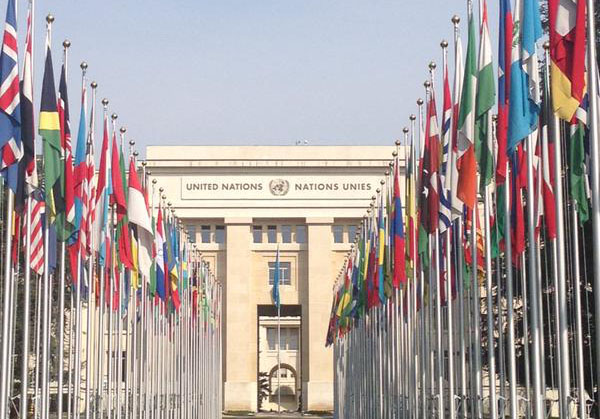
The ICJ and other NGOs have written to States urging action on human rights in China, at the upcoming March 2017 session of the UN Human Rights Council.
The joint letter highlights continuing concerns about arbitrary arrests, detentions, denial of access to lawyers, incommunicado and secret detention, and unfair trials of lawyers and other human rights defenders, as well as unjustified restrictions on freedom of expression, alongside other human rights issues in the country.
The letter calls on States at the Council to, among other things:
- Insist that China uphold its obligations to prevent, punish and remedy torture and other cruel, inhumane or degrading treatment or punishment, including by ordering prompt, impartial, independent investigations into reports of torture of detained lawyers and human rights defenders.
- Urge China to amend or repeal the Overseas NGO Management Law, which contradicts international human rights standards and undermines the independence of civil society.
- Call for the repeal or revision of the Counter-Terrorism Law, and speak out against the increasing use of national security legislation and draft ‘regulations on religious affairs’ to criminalise and harass those exercising freedom of thought, conscience and religion and freedom of expression.
The letter comes as the UN High Commissioner for Human Rights expressed similar concerns, stating that, “Lawyers should never have to suffer prosecution or any other kind of sanctions or intimidation for discharging their professional duties”, emphasising that lawyers have an essential role to play in protecting human rights and the rule of law, and urging the Government of China “to release all of them immediately and without conditions.”
The joint letter can be downloaded in PDF format here: UN-HRC34-China-JointLetter-Advocacy-2017
Feb 16, 2017 | Agendas, Events, News, Training modules
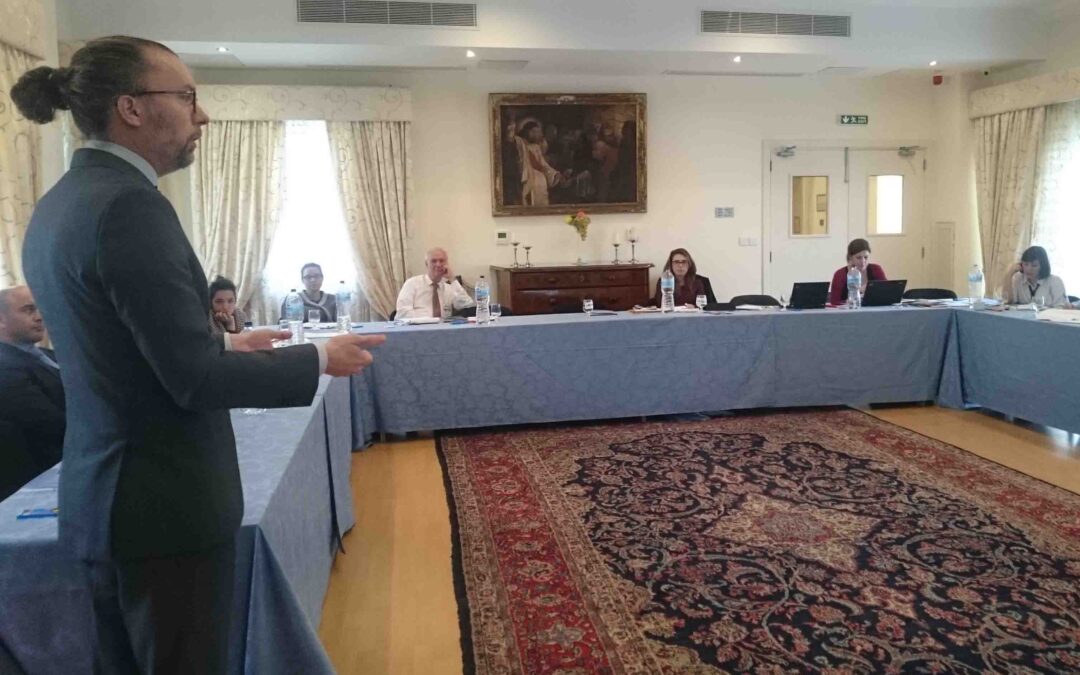
Today, the ICJ and Aditus are holding a training for lawyers on the rights of migrant children and on accessing international human rights mechanisms in Valetta.
The training aims to support the strategic use of national and international mechanisms to foster migrant children’s access to justice.
The training will take place over the course of two days 16-17 February 2017.
The training will focus on accessing the international mechanisms in order to protect and promote the rights of migrant children, the child’s right to be heard and economic, social and cultural rights.
A practical case analysis will be part of the training. Trainers include experts from the ICJ and the Hague University.
The training is based on draft training materials prepared by the ICJ (to be published in the second half of 2017) and the ICJ Practitioners Guide no. 6: Migration and International Human Rights Law.
It is organized as part of the FAIR project co-funded by the Rights, Equality and Citizenship Programme of the European Union and OSIFE.
As part of the project, this training follows the trainings on the rights of migrant children in Spain, Italy and Bulgaria, trainings in Germany, Greece and Ireland will follow this year.
Download the agenda in English here:
Malta-FAIR training-News-Agenda-2017-ENG
Feb 14, 2017
An opinion piece by Emerlynne Gil, ICJ Senior International Legal Adviser in Bangkok.
In the next few days, the House of Representatives may vote in plenary on the bill proposing to bring back the death penalty in the Philippines.
Curiously, when this bill was being heard at the Sub-Committee on Judicial Reforms in Congress, the Department of Justice (DOJ) and the Philippine National Police (PNP) presented scant evidence in support of the proposed measure.
It was as if they were confident that the bill would get passed anyway, regardless of the facts.
Even more curious is that the committee report on the hearings on this bill did not reflect the arguments presented by anti-death penalty groups.
In fact, the committee report did not discuss at all what transpired during the hearings.
I doubt that members of Congress really ruminated on both sides of the debate on this issue.
I think congressmen will vote to pass this bill not because they genuinely believe death penalty will deter crime, but it will be their sycophantic gesture to please President Rodrigo Duterte, who they think will grant them political favors if they do what he wants.
There will also be others who will vote for this bill because of pressure from the party leadership.
Nobody will openly admit this. They will point to public opinion. They will claim that Filipinos are clamoring for the death penalty. Hence, their support for the bill.
Looking at social media comments and online opinion polls, one could indeed get the impression that many Filipinos want the death penalty back. However, social media comments and online polls do not use valid scientific methodology for random selection of participants. Furthermore, even when appropriate methodologies are used, results can be easily affected by how the questions are framed.
In 2012, the Bar Council of Malaysia and the Death Penalty Project, a UK-based non-governmental organization, conducted a study on the public’s views on mandatory death penalty in Malaysia.
At the outset of the survey, majority of the respondents said that they were in favor of the death penalty – whether it was discretionary or mandatory.
Ninety-one percent (91%) said they were in favor of death penalty for murder, 74 percent to 80 percent were in favor of the death penalty for drug trafficking (depending on the drug concerned), while 83 percent were in favor of death penalty for the discharge of firearms during the commission of certain crimes.
However, when asked to ‘judge’ specific cases, there was a significant difference between support of the respondents at the beginning and their support after they have been faced with ‘real’ cases.
When respondents were asked whether they would still support the death penalty after being shown cases where innocent persons were executed, the numbers of those in favor of death penalty for murder drastically fell to 33 percent, for drug trafficking to 26 percent, and for the discharge of firearms to 23 percent.
Even leaving aside the unscientific nature of comment forums and online polls, there is no evidence that the members of the public responding to questions about the death penalty have had their initial beliefs tested in the ways set out above.
We simply do not know with any certainty what the well-informed public opinion on this question would be.
Political leadership, not public opinion, matters most in preventing the death penalty from being brought back.
President Duterte openly said he wants to bring death penalty back, but he, alone, is not the Philippines’ political leadership.
It is imperative for Philippine lawmakers to act as independent leaders now and show the public how death penalty is deeply incompatible with human dignity. They have to see that the imposition of the death penalty is a violation of the right to life and the absolute prohibition of torture and other cruel, inhuman or degrading treatment or punishment.
The ICJ has previously said that the imposition of the death penalty is a violation of the right to life and the absolute prohibition of torture and other cruel, inhuman or degrading treatment or punishment.
As a party to the Second Optional Protocol to the International Covenant on Civil and Political Rights (ICCPR), the Philippines has a legal obligation to ensure that no person within its jurisdiction will face execution.
If the Philippines adopts a law bringing back the death penalty, it will violate its commitments under international law and would stand in opposition to the international trend towards the abolition of the death penalty.
The Philippine Constitution was designed so that the country’s democracy will not be held hostage by one man.
This bill will be one of the very many tests in the next few years on how well established and how strong Philippine democracy has become.

Feb 13, 2017 | News
The ICJ today announces the establishment of an expert panel of jurists to study and provide guidance on the effectiveness of grievance procedures provided by businesses to address and remedy harms arising from their operations.
The Panel, composed of senior retired judges, academics and legal practitioners, will work with the support of a wider group of civil society organizations, lawyers, academic institutions and the legal profession.
Many large business enterprises and projects have their own internal procedures and mechanisms to address concerns affecting individuals and local communities that arise from their operations. Known as operational-level grievance mechanisms, these are an integral part of responsible business practices and a way to remedy real or perceived wrongs.
The use of operational-level grievance mechanisms is recommended by the United Nations Guiding Principles on Business and Human Rights and global institutions, such as the World Bank.
However, poor design and/or implementation of these grievance mechanisms can result in further problems, aggravating the harm to individuals and communities and impacting on the company’s or project’s own sustainability.
The ICJ initiative has been prompted by concerns about recent cases where people the mechanisms were meant to help have been unaware of their very existence, the procedures have been unfair or unclear and outcomes have been inadequate for the kind of harm experienced.
Most importantly some grievance mechanisms seem to stand in the way of meaningful access to justice for adversely affected people.
The panel members
The expert Panel is the think tank of the ICJ initiative. Besides holding wide consultations and site visits to specific projects, the Panel will advise the ICJ on preparation of a report and a guidance to support the work of practitioners and human rights defenders working in this field.
The members of the Panel, five of whom are ICJ Commissioners, are:
- Justice Ian Binnie (retired) formerly of Canada’s Supreme Court
- Sheila Keetharuth, Lawyer in Mauritius and currently UN special rapporteur on the human rights in Eritrea
- Justice John O’Meally (retired) formerly of the District Court of New South Wales and the Dust Diseases Tribunal in Australia
- Alejandro Salinas Rivera, lawyer and former legal advisor to the Government of Chile
- Professor Marco Sassoli, professor of international law at the University of Geneva
- Justice Ajit Prakash Shah (retired), formerly of the High Court of Delhi and presently Chair of the Law Commission in India
The Panel and the ICJ will receive advice for this work from a wider Consultative Group of practitioners and members of the legal profession.
The Consultative Group includes individuals of long-standing experience and recognised expertise on the functioning of grievance mechanisms at the project or operations level.
This initiative adds to the growing attention paid to remedy systems available to individuals and communities affected by business operations.
The final outcome of this initiative will be to provide guidance to making effective the remedial procedures systems available in cases of business-related human rights abuses in way that truly helps victims attain justice.
Feb 13, 2017 | News
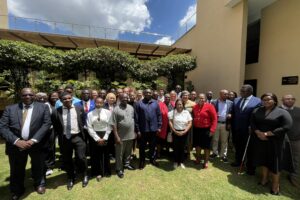
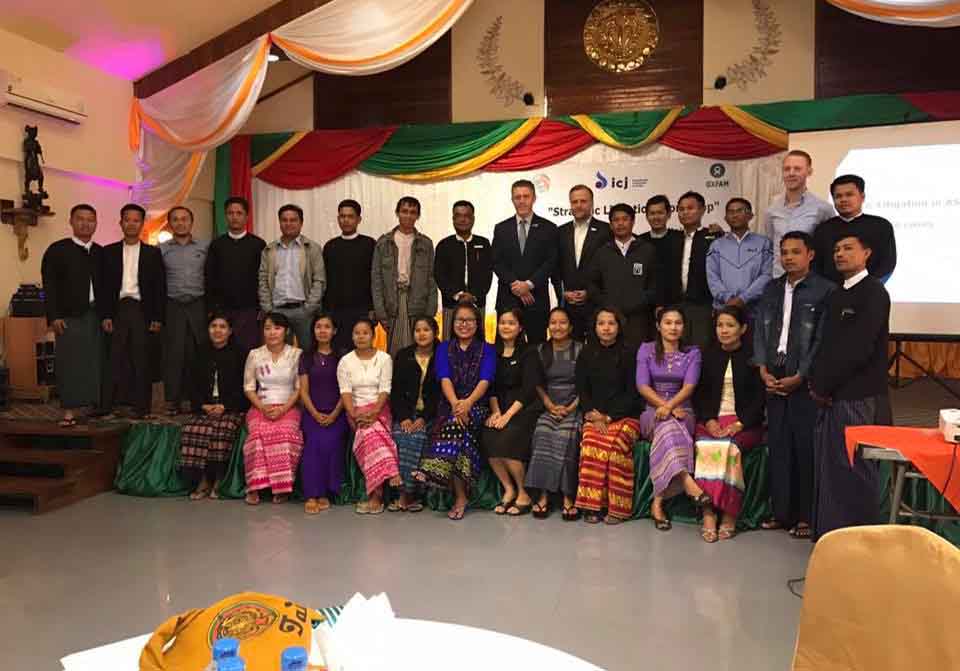
The workshop, held from 11-12 February in Sittwe, brought lawyers and civil society together to discuss of experiences of strategic litigation elsewhere in Myanmar and the region, and consider potential public purpose litigation cases in Rakhine State.
Dr Daniel Aguirre, the ICJ’s International Legal Adviser in Myanmar, provided an introduction to strategic litigation as a method for promoting accountability in a time of transition in governance.
He noted the critical role of independent lawyers in protecting human rights, by representing clients from all communities in Rakhine State.
And he emphasized the importance of strategic litigation as a means to prevent violations and abuses of human rights, or to seek reparations where violations and abuses have occurred.
Kingsley Abbot and Jintana Sakulborirak, from the ICJ’s Asia Regional Office in Thailand, discussed strategic litigation cases from the region, including in northern Thailand where community members have launched an action to appeal the legality of land acquisition for a planned SEZ in Tak Province.
The cases highlighted how media engagement is a critical part of strategic litigation, to raise public attention on human rights issues and demands for accountability in the implementation of investment projects.
Daw Aye Mon Thu, advocate from Dawei Pro Bono Lawyers Network presented the experiences of Heinda Mine cases from Dawei Region, Southern Myanmar, emphasizing the importance of trust-building and cooperation with local community as stake-holder. Such a strategic litigation cases are extremely rare in Myanmar.
Discussions followed about potential cases for strategic litigation from Kyauk Phyu and Sittwe, including issues related to land acquisition for railways construction and an SEZ appear to have been carried out unlawfully in violation of human rights.
Participants discussed the principle of undertaking litigation for broader advocacy objectives rather than solely focusing on actually winning the case in the court.
They also reflected on the challenges and limitations for Myanmar lawyers to undertake strategic litigation.
Highlighting the vital role of lawyers, speakers encouraged participants to consider strategic litigation as a means to challenge unlawful acts that violate or abuse human rights, particularly accompanying business enterprises.
Rakhine State is among Myanmar’s poorest and most isolated provinces, where lawyers and CSOs have had limited exposure to concepts of human rights and international laws.
This workshop, the first of its kind to be held in Rakhine State, is part of efforts to address this gap by building legal literacy on international human rights law and lawyers to consider litigation as a strategy to protect human rights.