Jan 25, 2017 | Новости, Статьи
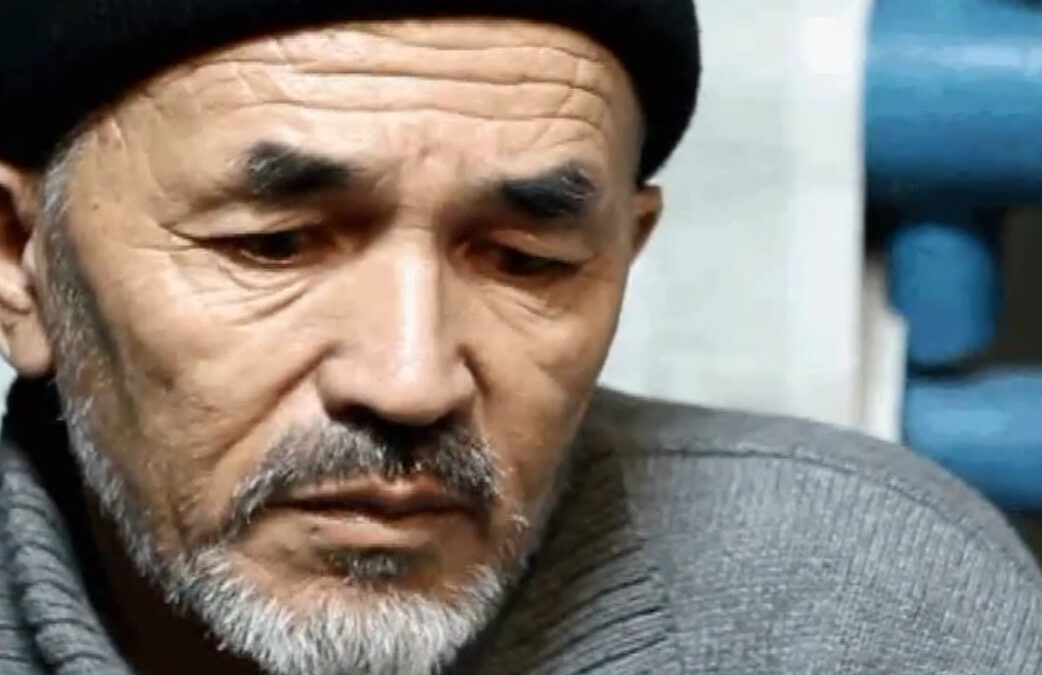
Решение Чуйского областного суда Кыргызстана от 24 января 2017 года об оставлении в силе приговора, по которому правозащитнику Азимжану Аскарова было назначено наказание в виде пожизненного лишения свободы, является судебной ошибкой, которая усугубляет и без того многочисленные нарушения прав человека в отношении правозащитника, заявила сегодня МКЮ.
Данное решение было вынесено вопреки позиции Комитета по правам человека ООН, признавшего ряд грубых нарушений.
МКЮ призывает власти Кыргызской Республики к соблюдению своих международноправовых обязательств в области прав человека по данному делу.
Азимжану Аскарову должна быть предоставлена безотлагательная возможность эффективного обжалования решений Чуйского областного суда.
Нарушения, допущенные в отношении правозащитника, должны быть исправлены, с выплатой справедливой компенсации.
В 2011 году Азимжан Аскаров был осужден за соучастие в убийстве, организацию массовых беспорядков и разжигание этнической ненависти.
Он был приговорен к пожизненному лишению свободы в результате несправедливого судебного разбирательства, после того как необоснованно содержался под стражей и подвергался пыткам.
Пересмотр его дела в Чуйском областном суде последовал за вынесением решения Комитета по правам человека ООН, признавшего, что задержание, содержание под стражей и судебное разбирательство по делу Аскарова составили нарушение правовых обязательств Кыргызстана по Международному пакту о гражданских и политических правах (МПГПП), в том числе запрета пыток и иных видов жестокого обращения, запрета произвольного содержания под стражей, а также права на справедливое судебное разбирательство.
МКЮ внимательно наблюдала за данным делом. Ее представители присутствовали на ряде судебных заседаний, в том числе в ходе пересмотра дела.
МКЮ с сожалением констатирует, что пересмотр дела Азимжана Аскарова не привел к исправлению нарушений прав человека, о которых говорится в решении Комитета по правам человека.
Суд не произвел тщательного исследования доводов обеих сторон, как стороны обвинения, так и защиты.
Представляется, что суд слепо согласился с позицией прокуратуры, тем самым нарушив презумпцию невиновности и принцип равенства сторон.
Многочисленные ходатайства защиты были отклонены в отсутствие какого-либо обоснования или же вообще не рассматривались.
К ним относится ходатайство об оценке судом выводов КПЧ ООН, которые стали решающим основанием для возобновления производства по делу Верховным Судом.
Чуйский областной суд не просто не исследовал позицию Комитета по правам человека, но отмахнулся от выводов Комитета о том, что Азимжан Аскаров был задержан в произвольном порядке, содержался под стражей в бесчеловечных условиях и подвергался пыткам.
В своем решении суд усомнился в достоверности заявления Аскарова, что его неоднократно пытали, на том основании, что три психиатра (представители государственных учреждений) пришли к выводу о том, что он «лжив и угодлив», а защита не представила свидетельских показаний или иных доказательств в опровержение данного вывода.
Суд допросил несколько свидетелей, показавших, что ранее они оговорили Аскарова, так как им угрожали или же они подвергались жестокому обращению.
Суд не принял никаких действий, чтобы инициировать проверку по данным жалобам.
В ходе пересмотра дела Азимжан Аскаров находился в зале суда в железной клетке и не мог общаться со своим защитником свободно и непосредственно.
Будучи носителем узбекского языка, Аскаров испытывал заметные сложности с тем, чтобы изъясняться покиргизски, однако переводчик ему предоставлен не был.
Общие сведения
В декабре 2011 года известный правозащитник Азимжан Аскаров был признан виновным в убийстве и разжигании этнической ненависти и приговорен к пожизненному лишению свободы.
Главным пунктом обвинения было соучастие в убийстве милиционера Мыктыбека Сулайманова в ходе этнических столкновений на юге Кыргызстана в 2010 году. 20 декабря 2011 года МКЮ наблюдала за апелляционным заседанием по делу Аскарова в Верховном Суде.
По итогам миссии и с учетом материалов дела МКЮ опубликовала подробный Доклад «О задержании, заключении под стражу и судебном разбирательстве по делу Азимжана Аскарова».
В марте 2016 года Комитет по правам человека ООН принял решение по жалобе Аскарова, констатировав нарушения статьи 7 (свобода от пыток), статьи 9 (запрет произвольного содержания под стражей), статьи 10 (право на гуманное обращение во время содержания под стражей) и статьи 14 (право на справедливое судебное разбирательство) Международного пакта о гражданских и политических правах.
Комитет по правам человека призвал отменить приговор в отношении Аскарова и при необходимости провести новый процесс по делу с соблюдением принципов справедливого судебного разбирательства, презумпции невиновности и иных процессуальных гарантий.
12 июля 2016 года Верховный Суд принял решение о пересмотре дела в порядке апелляции, по итогам которого приговор и наказание в отношении Аскарова были оставлены в силе.
Защита заявила о намерении обжаловать решение от 24 января в Верховный Суд Кыргызской Республики. Кыргызстан является участником МПГПП и в силу этого обязан гарантировать права, закрепленные в Пакте, и предоставлять эффективные средства защиты в случае их нарушения.
Решение Комитета является авторитетным толкованием положений МПГПП, которое может быть представлено в суд в качестве доказательства и выводы которого не могут не приниматься во внимание.
Kyrgyzstan-Askarov-failure to remedy-News-Web story-2017-RUS (полный текст на русском, PDF)
Jan 25, 2017 | News
The decision by the Chuy Regional Court of Kyrgyzstan on 24 January 2017 to uphold the life sentence of human rights defender Azimzhan Askarov constitutes a miscarriage of justice, and has compounded the multiple violations of his human rights, the ICJ said today.
The Court ruling was made in defiance of a decision of the UN Human Rights Committee, which had affirmed these serious violations.
The ICJ calls on the authorities of the Kyrgyz Republic to respect its international human rights obligations in this case.
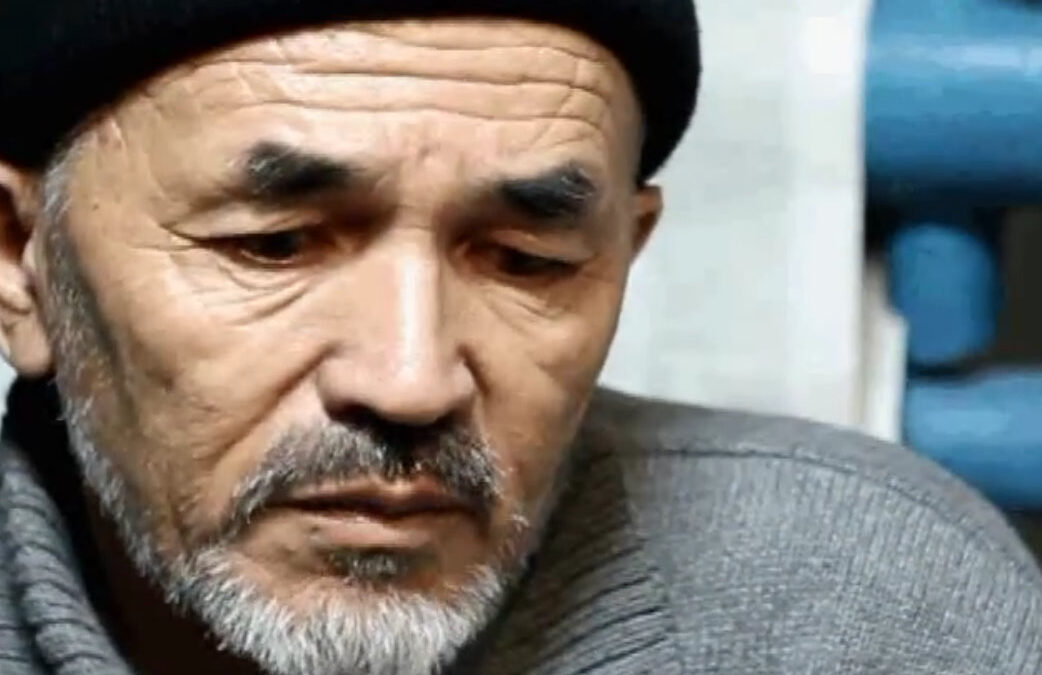
Azimzhan Askarov (photo) should have access to an immediate and effective appeal against the decision of the Chuy Regional Court.
Violations of his rights should be remedied and just compensation provided.
Azimzhan Askarov was convicted of participation in murder, organization of mass disturbances and incitement to ethnic hatred and sentenced to life imprisonment in 2011, following an unfair trial, arbitrary detention and torture.
The re-hearing of the case before the Chuy Regional Court followed the findings of the UN Human Rights Committee that his arrest, detention and trial breached Kyrgyzstan’s legal obligations under the International Covenant on Civil and Political Rights (ICCPR), including the prohibition on torture or other ill-treatment, the prohibition on arbitrary detention, and the right to fair trial.
The ICJ has closely monitored the case. Representatives of the ICJ observed several court hearings, including during the re-examination.
The ICJ regrets that the re-examination of Azimzhan Askarov’s case did not remedy the violations of his human rights found by the Human Rights Committee.
The court failed to undertake a rigorous study of both defence and prosecution cases.
Rather, it appeared to take the prosecution case at face value, thus undermining the presumption of innocence and the principle of equality of arms.
Many motions of the defence remained unaddressed or were rejected without cause.
These included a motion asking that the findings of the UN Human Rights Committee be evaluated by the Court, as they were crucial for the re-opening the case by the Supreme Court.
The Chuy Regional Court not only failed to examine the findings of the Human Rights Committee, but summarily rejected the Committee’s findings that Azimzhan Askarov had been arbitrarily arrested, held in inhumane conditions and subjected to torture.
The Court in its decision doubted the truth of Azimzhan Askarov’s statement that he had been repeatedly tortured, on the basis that three State psychiatrists concluded that he was “deceitful and subservient” and the defence had not produced witnesses or other evidence to rebut this point.
The Court heard several witnesses who stated that they had initially given false statements implicating Azimzhan Askarov because they were intimidated or subjected to ill-treatment.
The Court did not take any action to investigate these allegations.
During the re-examination of his case Azimzhan Askarov was kept in a metal cage and had no immediate opportunity to speak without hindrance with his lawyer.
Askarov, an Uzbek speaker, visibly struggled to speak in Kyrgyz, but no interpretation was provided for him.
Background
Azimzhan Askarov, a prominent human rights defender, was convicted of murder and incitement to ethnic hatred and sentenced to life imprisonment in December 2011.
The central charges concerned allegations of his participation in a murder of Myktybek Sulayamanov, a police officer, during the 2010 ethnic clashes in the South of Kyrgyzstan.
The ICJ observed the appeal hearing in the case before the Supreme Court on 20 December 2011.
Based on the results of the mission as well as the documents of the case, the ICJ published a detailed report on the arrest, detention and trial of Azimzhan Askarov.
In March 2016, the UN Human Rights Committee issued a decision in regard to Askarov’s complaint and found violations of Articles 7 (freedom from torture), Article 9 (prohibition of arbitrary detention); Article 10 (right to humane treatment in detention), Article 14 (right to a fair trial) of the International Covenant on Civil and Political Rights.
The Human Rights Committee, which in March 2016 heard a complaint brought by Askarov, called for his conviction to be quashed and if necessary a new trial to be held in line with the principles of fair trial, presumption of innocence and other procedural safeguards.
On 12 July 2016, the Supreme Court ordered a further reconsideration of the case on appeal, which resulted in upholding Askarov’s verdict and sentence.
Following the decision of 24 January, the defence said they would appeal this decision of the Chuy Court in the Supreme Court of the Kyrgyz Republic. Kyrgyzstan is a party to the ICCPR and as such is bound by this treaty to guarantee the rights it enshrines and to provide effective remedies when these rights are violated.
The decision of the Committee is an authoritative interpretation of the ICCPR which may serve as evidence in court and whose findings should not be ignored.
Kyrgyzstan-Askarov-failure to remedy-News-Web story-2017-RUS (full text in Russian, PDF)
Jan 23, 2017
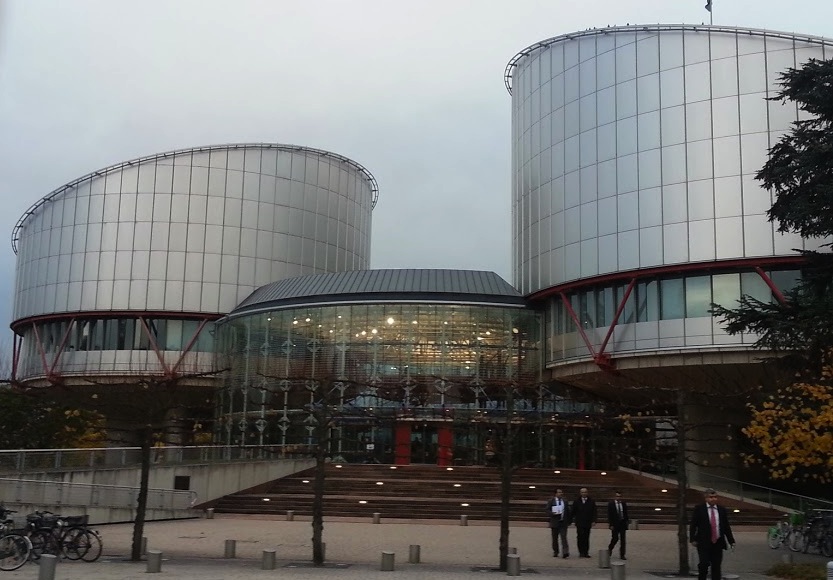
On 16 January 2017, the ICJ with other civil society organizations submitted a third-party intervention in the case of E.S. v. Spain before the European Court of Human Rights.
The case (application no. 13273/16) arose from the attempted removal of a gay asylum applicant to Senegal. The third-party submissions focus on the relevance of the Refugee Convention — as interpreted by a number of domestic courts — and of the EU asylum acquis and the EU Charter of Fundamental Rights to the determination of the scope and content of non-refoulement obligations under Article 3 of the European Convention on Human Rights (ECHR) of those Contracting Parties that are also EU Member States.
The submissions, in particular, address the following:
- Enforced concealment of one’s same-sex sexual orientation constitutes persecution under refugee law and is incompatible with the ECHR, in particular, Article 3;
- The criminalization of consensual same-sex sexual conduct gives rise to a real risk of Article 3 prohibited treatment, thus triggering non-refoulement obligations under that provision of the Convention; and
- The risk of persecution based on sexual orientation in Senegal.
The comments drew upon the European Court’s case-law; authoritative interpretation of other applicable sources of international law and comparative international law.
The ICJ made the submissions jointly with the Human Dignity Trust, the European Council on Refugees and Exiles, the European Region of the International Lesbian, Gay, Bisexual Trans and Intersex Association (ILGA-Europe) and the AIRE Centre (Advice on Individual Rights in Europe).
SPAIN-ECtHR joint amicus in ES v SPAIN-Advocacy-LegalSubmission-2017-ENG
Jan 21, 2017 | Agendas, Events, News, Training modules
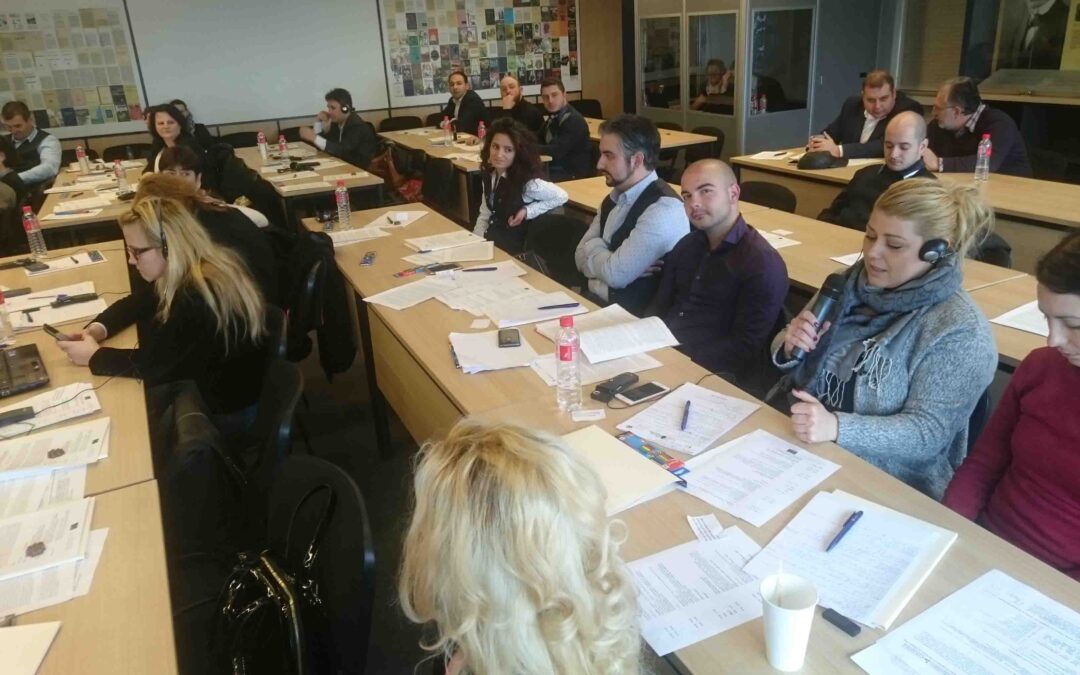
Today, the ICJ and Legal Clinic for Refugees and Immigrants are holding a training for lawyers on the rights of migrant children and on accessing international human rights mechanisms in Sofia.
The training aims to support the strategic use of national and international mechanisms to foster migrant children’s access to justice.
The training will take place over the course of two days from 21-22 January 2017.
The training will focus on accessing the international mechanisms in order to protect and promote the rights of migrant children, the child’s right to be heard and the best interests of the child principle.
A practical session on communication with child clients for lawyers as well as practical case studies will be part of the training.
Trainers include experts from the ICJ, Child Law Clinic of the University College Cork and Foundation for Access to Rights.
The training is based on draft training materials prepared by the ICJ (to be published in the second half of 2017) and the ICJ Practitioners Guide no. 6: Migration and International Human Rights Law.
It is organized as part of the FAIR project co-funded by the Rights, Equality and Citizenship Programme of the European Union and OSIFE.
Download the agenda in English here: Bulgaria-FAIR training-Events-Agenda-2016-ENG

Jan 19, 2017 | News
The Sri Lankan government must deliver on the clear demand for justice from Sri Lankans nationwide by implementing the Consultation Task Force recommendations without further delay, the ICJ said today.
Among these recommendations, the calls for a special court with international judges and a bar against amnesties for crimes under international law are of particular importance, the ICJ added.
The Consultation Task Force on Reconciliation Mechanisms (CTF), a panel of 11 independent eminent persons appointed by Prime Minister Ranil Wickremesinghe in January 2016, publicly released its final report on 3 January 2017.
The report, reflecting the views of people across the country gathered through island-wide public consultations on transitional justice, highlights the lack of public confidence in the justice system’s capacity and will to deliver justice for victims of Sri Lanka’s nearly 30-year armed conflict that ended in 2009.
“The CTF report highlights a widespread lack of trust among Sri Lankans across the country, regardless of region, ethnicity, religion or language, in the ability of the criminal justice system in its current form to address serious human rights abuses stemming from the conflict,” said Nikhil Narayan, the ICJ’s South Asia senior legal adviser.
The report also calls upon the Government of Sri Lanka to take necessary steps to ensure a credible transitional justice process in line with the October 2015 UN Human Rights Council resolution 30/1 that it co-sponsored.
“If the Sri Lankan government wants to restore public confidence in the system, it must seriously consider victims’ voices and implement the CTF recommendations on truth, justice and reparation consistent with the commitments it voluntary undertook at the Human Rights Council,” Narayan added.
Importantly, the CTF report reiterates the commitments pledged in HRC resolution 30/1, calling for active international participation in a special judicial mechanism established to deal with accountability for human rights abuses committed during the conflict by both sides, and for a bar against amnesties for international crimes.
According to the ICJ, the Sri Lankan government took an important first step towards reconciliation when it adopted the UN resolution and later established the CTF to carry out public consultations to hear a cross section of voices on transitional justice.
“Unfortunately, since then, it has been disappointing in its lack of urgency in implementing much of those stated promises and in its apparent disregard for the CTF recommendations,” Narayan said.
Several members of the government have dismissed the CTF’s recommendations, especially with regard to the inclusion of at least one international judge on every bench of the special judicial mechanism.
The Minister of Foreign Affairs recently spoke of the need for “an independent and credible domestic mechanism” without alluding to any international participation, as has been reiterated by those seeking redress as a crucial element to ensure faith in the justice mechanism.
The ICJ has in the past highlighted Sri Lanka’s culture of impunity in the justice system looking at a number of emblematic cases, and called into question the State’s capacity and political will to use the criminal justice system and other ad-hoc measures to deliver justice and accountability to victims and survivors of serious human rights abuses.
“As the situation of Sri Lanka comes before the UN Human Rights Council again this March, the Sri Lankan government is in a position to demonstrate both to the UN Member States but more importantly to its own people at home its seriousness in pursuing truth, justice, reparation and non-recurrence for conflict victims who have been waiting for justice for decades. It must seize this opportunity before it is one more of many missed opportunities,” Narayan added.
Contact:
Nikhil Narayan, ICJ South Asia senior legal adviser, t: +91-8939325204 (Chennai); +94-758898067 (Sri Lanka); +1-562-261-3770 (Whatsapp) ; e: nikhil.narayan(a)icj.org
Download the full text with additional background info, in PDF:
Sri Lanka-CTF recommendations-News-Press release-2016-ENG