Nov 11, 2016 | News
The ICJ today condemned efforts by a group of States led by the African Group of the UN Members States to halt the work of the UN Independent Expert charged with protecting people from discrimination and violence based on sexual orientation and gender identity (SOGI).
The organization said that the move constituted an unwarranted interference with the independence and capacity of the Human Rights Council to discharge its mandate for the promotion and protection of all human rights and fundamental freedoms for all, without discrimination.
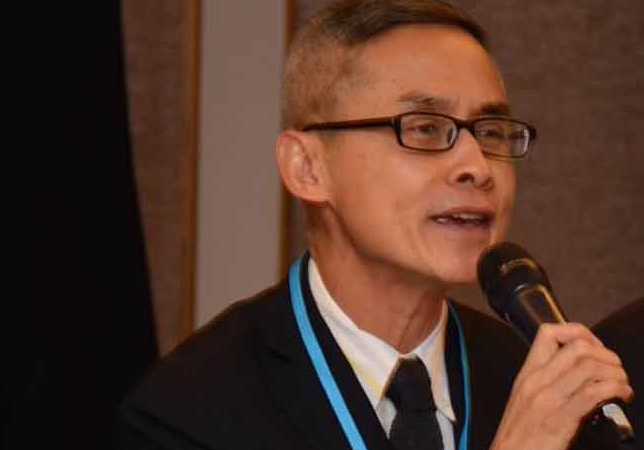
On 3 November 2016 Botswana on behalf of the African Group introduced a draft resolution before the Third Committee of the UN General Assembly in New York questioning the authority for the mandate of the Independent Expert Vitit Muntarbhorn (photo) and deferring action indefinitely on confirming the mandate’s establishment.
The ICJ is calling on the African Group to withdraw its draft resolution.
If a vote on the resolution does go ahead, the ICJ said that States must resoundingly reject it and send a signal to the world that the rights of all persons must be protected on an equal basis and that the UN Human Rights Council is capable of acting to secure such protection.
The ICJ considers that adoption of the resolution would represent a dramatic setback to the Human Rights Council’s efforts to tackle violence and discrimination based on SOGI.
Each year, the Third Committee of the UN General Assembly considers the Human Rights Council’s annual report.
This year, that report contains Human Rights Council resolution 32/2 on Protection against violence and discrimination based on sexual orientation and gender identity.
The Human Rights Council’s adoption of resolution 32/2 on 30 June 2016 made history by establishing the first-ever mandate of an Independent Expert of the Human Rights Council on protection against violence and discrimination based on SOGI.
In September this year the Human Rights Council appointed Prof. Vitit Muntarbhorn of Thailand to discharge this mandate.
Since then, Prof. Muntarbhorn has duly taken up his position and has begun fulfilling this work.
The draft resolution that the African Group has tabled at the Third Committee questions the basis in international law for the establishment of the Independent Expert’s mandate on SOGI and seeks to defer action on Human Rights Council resolution 32/2 indefinitely.
Since the Human Rights Council was set up in 2006, none of its resolutions mandating the establishment of a Special Procedure has ever been challenged by the General Assembly.
The ICJ considers that the adoption of the African Group’s resolution would set an extremely detrimental and regressive precedent by blocking the Human Rights Council from carrying out its own mandate.
It would undermine the UN’s preeminent human rights body’s overall authority by sapping its independence and ability to fulfil its mandate for the promotion and human rights for all without discrimination as it sees fit.
Contact
Livio Zilli, ICJ Senior Legal Adviser and UN Representative, t: +41 22 979 38 23 ; e: livio.zilli(a)icj.org
Read also
What is the Future of the SOGI Mandate and What Does it Mean for the UN Human Rights Council?
Nov 11, 2016 | Agendas, Events
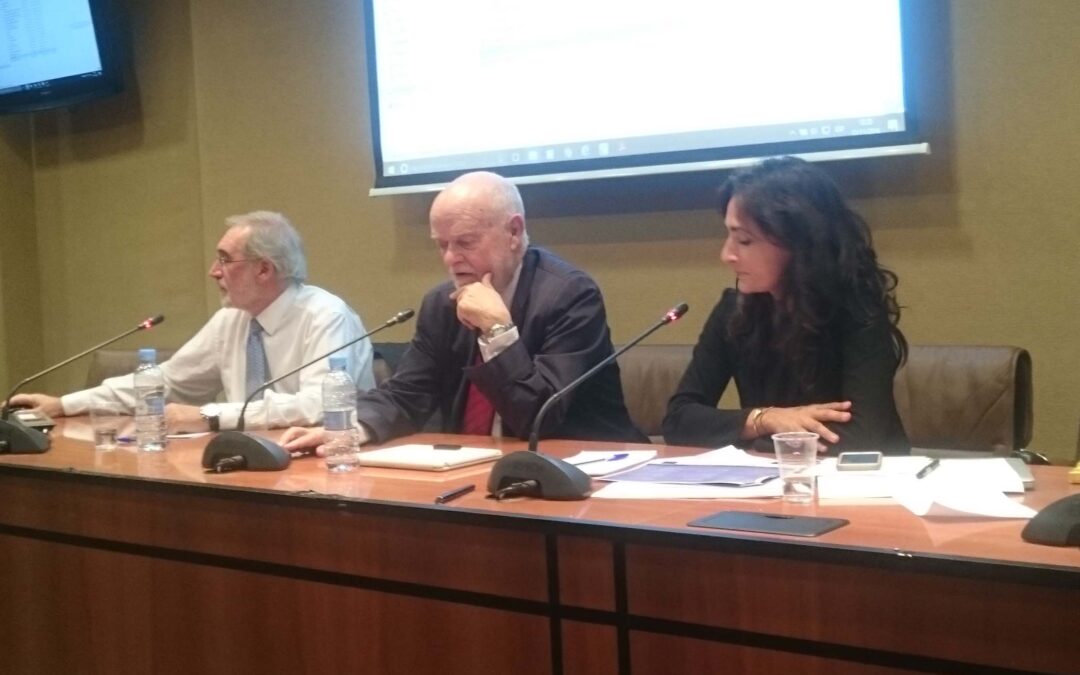
The ICJ and Foundation Raices are holding a training on the rights of migrant children and on accessing international human rights mechanisms from 11 to 12 November in Madrid (Spain).
The training aims to support the strategic use of national and international mechanisms to foster children’s access to justice.
The training will focus on accessing the international mechanisms in order to protect and promote the rights of migrant children, the child’s right to be heard and related procedural rights, the best interests of the child, age assessment and the presumption of minority.
Trainers will include representatives of the ICJ and Foundation Raices, as well as experts from the Committee on the Rights of the Child, the Spanish Constitutional Court and the office of the Spanish Ombudsman.
The training is based on draft training materials prepared by the ICJ (to be published in the second half of 2017) and the ICJ Practitioners Guide no. 6: Migration and International Human Rights Law.
The training is organized as part of the FAIR project co-funded by the Justice and Equality Programme of the EU and OSIFE.
Download the agenda of the training here:
spain-fair-training-events-agenda-2016-eng (in PDF)
Nov 9, 2016
The ICJ has called on the Tunisian authorities to adopt effective measures to ensure that the newly established Specialized Criminal Chambers (SCC) deliver meaningful justice for victims of human rights violations.
In a memorandum published today the ICJ stressed that the SCC had been given a critical role in holding all those responsible for such violations to account in line with international law and standards.
However, the ability for the SCCs to effectively fulfil that role would depend on the willingness of the Tunisian authorities to adopt a number of measures, as set out in recommendations contained in the memorandum.
The memorandum analyses the guarantees for the selection and appointment of the SCC judges; the SCC’s jurisdiction over gross human rights violations; and the legal and practical obstacles that may hinder the SCC’s capacity to deliver justice effectively.
The ICJ has recognized the importance of State initiatives to establish mechanisms and measures to address past human rights violations under the framework of “transitional justice”, such as the Instance Vérité et Dignité (IVD) in Tunisia.
“But mechanisms of this kind and particularly the SCC must not undermine justice and accountability and must be complementary to the ordinary justice system rather than a substitute for it,” said Said Benarbia, Director of the ICJ Middle East and North Africa Programme.
The ICJ stressed that for the SCC to be effective, the authorities need to act to clearly set out the procedures before the SCC; ensure that such procedures are consistent with international fair trial rights; establish specialized investigation and prosecution services; and provide for witness and victims protection units in line with international standards.
Obstacles potentially impeding accountability efforts in Tunisia include flawed definitions of crimes and of superior responsibility in the Criminal Code; the application of limitation periods in cases of serious human violations, and uncertainty over whether victims have direct access to lodge complaints before the SCC.
The ICJ identified measures for adoption by the Tunisian authorities to eliminate these obstacles and to ensure the effective functioning of the SCC. These steps include:
- introducing a clear framework regulating the mandate of the SCC and their relation with the ordinary justice system institutions and the IVD;
- ensuring that all alleged human rights violations are investigated and prosecuted, including allegations that are not transferred by or submitted to the IVD;
- ensuring that impunity for gross human rights violations is not facilitated by the application of limitation periods;
- ensuring that Tunisian laws are not construed to allow an individual responsible for a gross human rights violation to rely on an order received from a superior officer or public authority to escape criminal responsibility; and
- ensuring that the SCC contribute to the full realization of the victims’ right to effective, prompt remedy and reparation in all its forms recognized under international law.
Contact
Theo Boutruche, Legal Adviser of the ICJ Middle East and North Africa Programme, tel: +96 170 888 961, e-mail: theo.boutruche(a)icj.org
tunisia-scc-memo-news-press-releases-2016-ara (full story in Arabic, PDF)
tunisia-memo-on-scc-advocacy-analysis-brief-2016-eng (full memo in English, PDF)
tunisia-memo-on-scc-advocacy-analysis-brief-2016-ara (full memo in Arabic, PDF)
Nov 9, 2016 | News
The ICJ welcomes the judgment of the European Court of Human Rights in Schukurov v Azerbaijan, finding that the right to petition the Court had been violated by the search of a lawyer’s premises and seizure of documents.
The ICJ submitted a third party intervention in the case, outlining international law and standards relevant to legal professional privilege and the seizure of legal documents.
The case files were seized as part of a criminal investigation opened against the lawyer, Intigam Aliyev, who was representing the applicants in the case. The Court found that the search and seizure by the Azeri authorities had violated article 34 of the Convention, which stipulates that States must not hinder in any way the effective exercise of the right of individual application to the Court.
The ICJ notes that the Court’s judgment follows its earlier finding of a violation of article 34 in the case of Annagi Hajibeyli v Azerbaijan, which arose from the same incident.
The ICJ stresses that these searches of lawyers’ premises are contrary to international standards on the role of lawyers. It is particularly worrying that they form part of a pattern of harassment of lawyers in Azerbaijan, including abusive disciplinary proceedings and criminal prosecutions. Such harassment damages the ability of lawyers to protect human rights through the judicial process, and undermines the independence of the legal profession.
The decision of the Court should now be fully and promptly executed, the ICJ said.
Nov 8, 2016
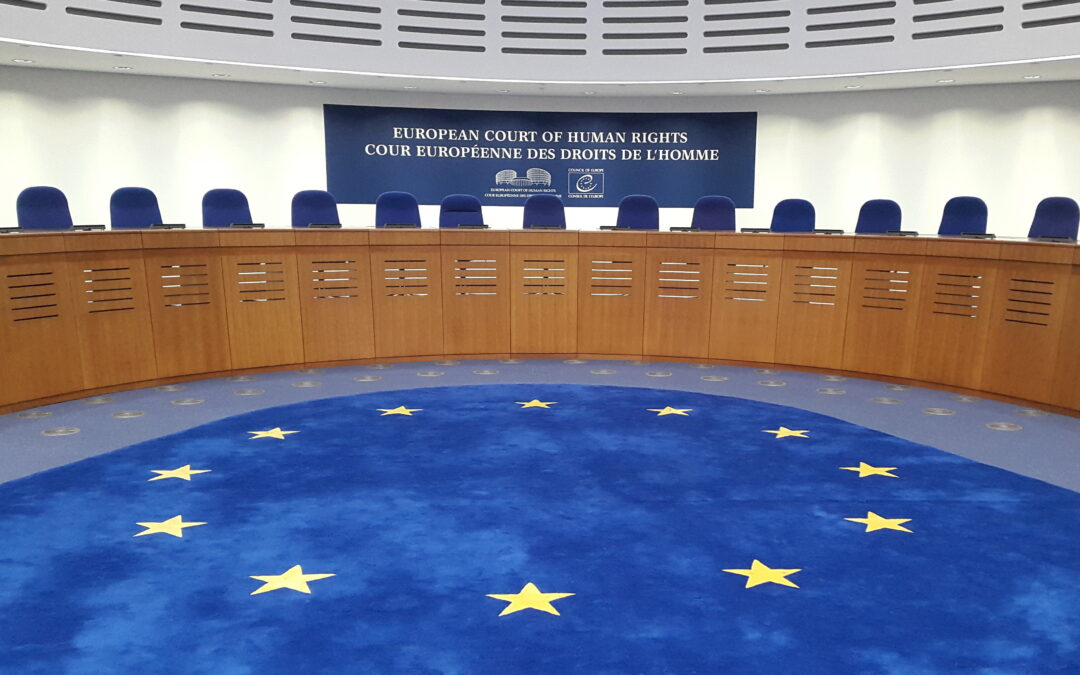
The ICJ intervened today before the European Court of Human Rights in the cases of three human rights lawyers who had been denied Bar membership because of their human rights activity.
The cases concern the compliance of the procedures of admission to and disbarment from the Bar Association of Azerbaijan of human rights lawyers Annagi Hajibeyli, Khalid Bagirov and Intigam Aliyev.
In its submissions, the ICJ stressed that, while lawyers have to perform their professional functions in conformity with ethical standards, the legal profession’s systems of admission and discipline must not enforce such obligations in a way that impairs the exercise of human rights by lawyers or their capacity to effectively represent their clients.
Based on the jurisprudence of the European Court of Human Rights, as well as international standards governing the legal profession, the ICJ submission addresses:
- permissible restrictions of lawyers’ rights to respect for private (including professional) life under article 8 ECHR and to freedom of expression under article 10 ECHR,
- procedural safeguards required to apply such restrictions under article 6 ECHR.
- key findings of a recent ICJ fact-finding mission to assess the compliance of the governance of the legal profession in Azerbaijan with international law and standards.
icj-bagirovothers-amicusbrief-azerbaijan-2016-final (download the third party intervention)