Oct 11, 2016 | Multimedia items, News, Video clips
Selected by a jury of 10 global human rights organizations, including the ICJ, Ilham Tohti has worked for two decades to foster dialogue and understanding between Uyghurs and Han Chinese. Detained in China, he could not travel to collect his prize in Geneva.
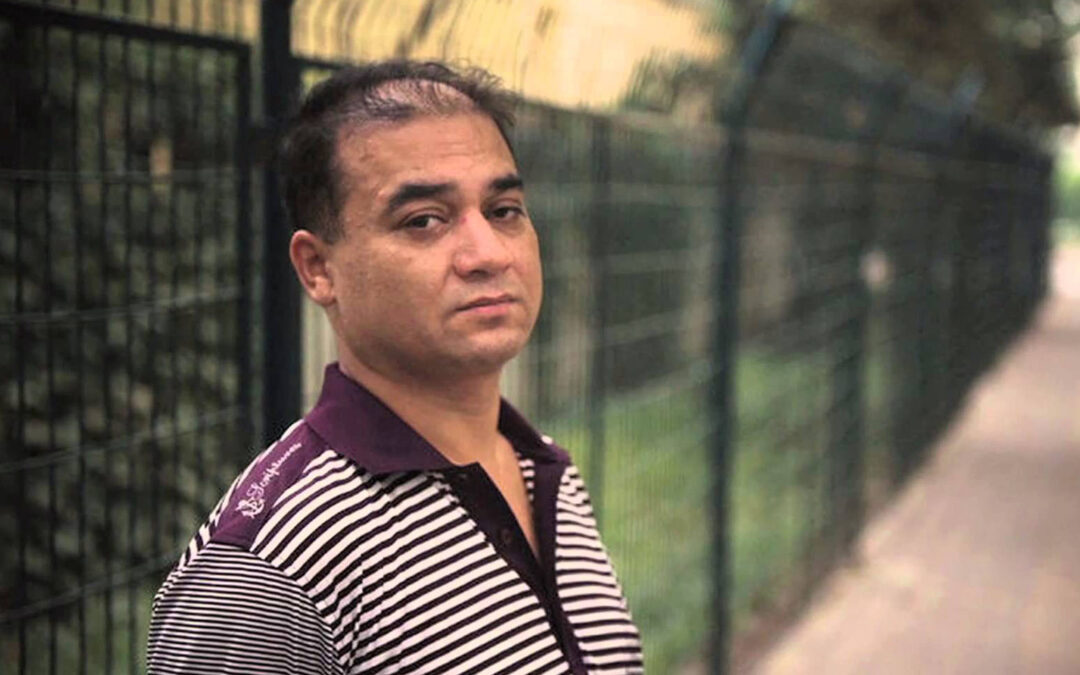
A renowned Uyghur intellectual in China, Ilham Tohti (photo) has rejected separatism and violence, and sought reconciliation based on a respect for Uyghur culture, which has been subject to religious, cultural and political repression in the Xinjiang Uyghur Autonomous Region.
In 1994 he began to write about problems and abuses in Xinjiang, which led to official surveillance.
From 1999 to 2003 he was barred from teaching.
Since then the authorities have also made it impossible for him to publish in normal venues.
As a response, he turned to the Internet to broaden public awareness of the economic, social and developmental issues confronting the Uyghurs.
In 2006 he established Uyghurbiz.net, a Chinese-language site, to foster dialogue and understanding between Uyghurs and Han Chinese.
Over the course of its existence, it has been shut down periodically, and people writing for it have been harassed.
In 2009, he was arrested for several weeks after posting information on Uyghurs who had been arrested, killed and “disappeared” during and after protests.
In the following years he was periodically subjected to house arrest, and in 2013, while bound to take up a post as a visiting scholar at Indiana University, USA, he was detained at the airport and prevented from leaving China.
On January 15, 2014, Ilham Tohti was arrested on charges of separatism and sentenced to life imprisonment, after a two-day trial.
Numerous statements were issued by Western governments and the European Union condemning his trial and sentence, and in early 2016 several hundred academics petitioned the Chinese leadership for his release.
Upon his nomination as a Finalist for the Martin Ennals Award earlier this year, his daughter stated: “My father Ilham Tohti has used only one weapon in his struggle for the basic rights of the Uyghurs of Xinjiang: Words; spoken, written, distributed, and posted. This is all he has ever had at his disposal, and all that he has ever needed. And this is what China found so threatening. A person like him doesn’t deserve to be in prison for even a day.”
Martin Ennals Foundation Chair Dick Oosting said: “The real shame of this situation is that by eliminating the moderate voice of Ilham Tohti the Chinese Government is in fact laying the groundwork for the very extremism it says it wants to prevent.”
The two other finalists received Martin Ennals Prizes.
Zone 9 Bloggers (Ethiopia) are nine young activists who called themselves ‘Zone 9’ as a symbol for Ethiopia as a whole (Kality prison in Ethiopia, has 8 zones and holds many journalists and political prisoners).
They document human rights abuses and shed light on the situation of political prisoners in Ethiopia.
Six of its members were arrested and charged with terrorism.
Although they have now been released, three are in exile while four of the six remaining in Ethiopia are still facing charges and banned from travel.
Razan Zaitouneh (Syria) has dedicated her life to defending political prisoners, documenting violations, and helping others free themselves from oppression.
She founded the Violations Documentation Center (VDC), which documents the death toll and ill-treatment in Syria’s prisons.
She had started to cover all sides in the conflict when she was kidnapped, alongside with her husband and two colleagues, on 9 December 2013. Her whereabouts remain unknown.
Background
The “Nobel Prize of Human Rights”, the Martin Ennals Award for Human Rights Defenders (MEA) is a unique collaboration among ten of the world’s leading human rights organizations to give protection to human rights defenders worldwide.
Strongly supported by the City of Geneva, the award is given to Human Rights Defenders who have shown deep commitment and face great personal risk. Its aim is to provide protection through international recognition.
The Jury is composed of the following NGOs: ICJ, Amnesty International, Human Rights Watch, Human Rights First, Int’l Federation for Human Rights, World Organisation Against Torture, Front Line Defenders, EWDE Germany, International Service for Human Rights, and HURIDOCS.
Contact:
Michael Khambatta, Director, Martin Ennals Foundation, t: +41 79 474 8208, e: khambatta(a)martinennalsaward.org
Olivier van Bogaert, Director, ICJ Media and Communications, and ICJ Representative on the MEA Jury, t: +41 22 979 38 08, e: olivier.vanbogaert(a)icj.org
china-mea-laureate-2016-news-press-releases-2016-chi (full text in Chinese, PDF)
Watch the Martin Ennals Award Ceremony 2016:
Watch the Ilham Tohti movie:
Oct 11, 2016 | News
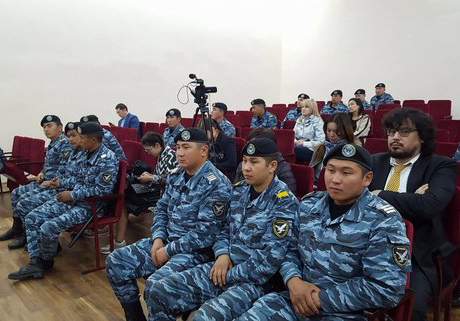
Today, the ICJ observed a hearing in the case of Azimzhan Askarov, a prominent human rights defender in Kyrgyzstan, convicted in 2011 of murder and incitement to ethnic hatred, after an unfair trial, and sentenced to life imprisonment.
Azimzhan Askarov is appealing against his conviction following a decision of the UN Human Rights Committee.
The Chuy Court began the appeal hearing in the case on 4 October, following the findings of the UN Human Rights Committee that Azimzhan Askarov’s arrest, detention and trial violated the International Covenant on Civil and Political Rights (ICCPR), including the prohibition on torture or other ill-treatment, the prohibition on arbitrary detention, and the right to fair trial.
As a result, the Supreme Court ordered a reconsideration of the case earlier this year.
At today’s hearing a witness who was Askarov’s former cellmate confessed that he beat Askarov up in detention, which is the first time that direct testimony about Askarov’s torture or other ill-treatment has been presented to the Court.
Previously such allegations were refuted by the prosecution.
The next hearing is scheduled for 18 October. The ICJ will continue monitoring the case in future hearings.
Contact
Róisín Pillay, e: roisin.pillay(a)icj.org
Dmitry Nurumov, e: dmitry.nurumov(a)icj.org
Background
Azimzhan Askarov, a prominent human rights defender, was convicted of murder and incitement to ethnic hatred and sentenced to life imprisonment in December 2011.
The charges concerned allegations of his participation in a murder of Myktybek Sulayamanov, a police officer, during the 2010 ethnic clashes in the South of Kyrgyzstan.
The ICJ observed the appeal hearing in the case before the Supreme Court on 20 December 2011.
Based on the results of the mission as well as the documents of the case, the ICJ published a detailed report on the arrest, detention and trial of Azimzhan Askarov.
In March 2016, the UN Human Rights Committee issued a decision in regard to Askarov’s complaint and found violations of Articles 7 (freedom from torture), Article 9 (prohibition of arbitrary detention); Article 10 (right to humane treatment in detention), Article 14 (right to a fair trial) of the International Covenant on Civil and Political Rights.
On 12 July 2016, the Supreme Court ordered a further reconsideration of the case on appeal.
The Chuy Regional Court is currently considering the case.
kyrgyzstan-askarov-trial-obs-news-web-story-2016-rus (full story in Russian, PDF)
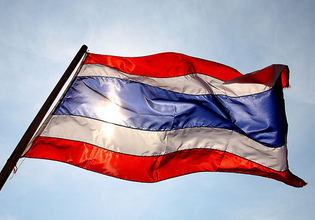
Oct 11, 2016 | News
Thailand should immediately end the use of Article 44 of the Interim Constitution which gives the Head of the military junta sweeping, unchecked powers contrary to the rule of law and human rights, said the ICJ today.
Despite widespread international condemnation of Article 44, its use has increased every year since the Interim Constitution was promulgated on 22 July 2014 following the coup d’état of 22 May 2014.
The Head of the National Council for Peace and Order (NCPO), Prayut Chan-o-cha, has issued at least 107 Orders under Article 44 (available in the public domain): at least one in 2014; 44 in 2015; and 62 in 2016 to date – with 37 Orders being issued since June 2016 alone.
“The Head of the NCPO’s increasing willingness to use extraordinary powers to make ad hoc, arbitrary changes to existing laws and regulations without judicial oversight should be alarming to everyone, including the business sector,” said Wilder Tayler, Secretary General of the ICJ.
“Article 44 places law making power in the hands of one man, while Articles 47 and 48 of the Interim Constitution block judicial review or access to remedies and reparation. This is entirely inconsistent with the three fundamental pillars of the rule of law, equality, accountability and predictability, and should be revoked immediately,” he added.
The Article 44 orders range from those restricting the civil rights of all people in Thailand to those aimed at seemingly minor and ordinary bureaucratic processes.
To date, Article 44 has been used to introduce a raft of revisions into existing Thai law without observing proper process or practice, including providing for the acquisition of land for the establishment of Special Economic Zones bypassing the usual environmental and social checks and balances provided for in domestic legislation; granting military officers sweeping powers of investigation, arrest and detention; and prohibiting the gathering of five or more persons for political purposes.
“It is long past time for Thailand to revoke Article 44 and all others laws, orders and announcements issued since the military coup that are inconsistent with the rule of law and human rights,” Tayler said.
“The justifications the military presented for such measures were never valid or credible, and certainly not so after more than two years of direct military rule.”
All Orders issued under Article 44 – and all other NCPO Orders and Announcements – will continue to remain in force under the draft Constitution that was accepted at a public referendum on 7 August 2016, and may only be repealed or amended by an Act.
Last week, Deputy Prime Minister Wissanu Krea-ngam announced that the NCPO was considering converting many of the hundreds of orders issued by the NCPO into legislation, including those issued under Article 44.
thailand-art-44-ncpo-news-press-releases-2016-eng (full text with background, in PDF)
thailand-head-of-ncpo-orders-advocacy-2016-eng (full list of all publicly available Head of NCPO Orders, in PDF)
thailand-art-44-ncpo-news-press-releases-2016-tha (full text in Thai, PDF)

Oct 10, 2016 | Events, News
The ICJ, OSCE and Group 484 are holding a training on migration and international human rights law starting on From 10 to 13 October in Zlatibor (Serbia).
The training has been organised by the Organisation for Security and Cooperation in Europe (OSCE) and the Serbian NGO “Group 484” and will be given by the International Commission of Jurists.
It will focus on international protection of migrants and asylum seekers, access to territory and asylum and the principle of non-refoulement, in light of the current migrants and refugee crisis and drawing from the jurisprudence of the European Court of Human Rights, of the UN human rights systems and from EU law.
The training will be centred on the ICJ Practitioners Guide no. 6: Migration and International Human Rights Law.
serbia-jointtrainingmigrationhr-events-2016-eng (download the agenda)

Oct 7, 2016 | Новости, Статьи
Сегодня МКЮ выразила обеспокоенность в связи с приговором суда, которым таджикские адвокаты Бузургмехр Ёров и Нуриддин Махкамов были признаны виновными в разжигании вражды и призывам к экстремизму и приговорены к 23 и 21 годам лишения свободы соответственно.
«Данный приговор продолжает серию преследований в отношении адвокатов страны и только ухудшит обстановку, которая и так не способствует независимости адвокатуры в Таджикистане,» – отметила Роушин Пиллей, директор Региональной программы МКЮ по Европе и СНГ.
«МКЮ призывает правительство Таджикистана обеспечить право адвокатов на обжалование приговоров в рамках справедливой процедуры в независимом суде,» – добавила она. – «Следует исключить возможность использования уголовного преследования исполнительной властью в качестве средства ограничения возможностей адвокатов по выполнению своих профессиональных обязанностей, а также обеспечить, чтобы адвокаты не подвергались актам возмездия из-за того, что их отождествляют с интересами подзащитных».
6 октября Суд города Душанбе признал адвокатов виновными по ряду обвинений, в том числе по обвинениям в разжигании вражды, призывам к насильственному изменению конституционного строя и экстремистской деятельности, приговорив их к лишению свободы.
Кроме того, адвокатов лишили права заниматься адвокатской деятельностью в течение пяти лет по истечении срока лишения свободы.
Бузургмехр Ёров, руководитель коллегии адвокатов «Сипар», был задержан 28 сентября 2015 г. Нуриддин Махкамов, адвокат этой коллегии, взят под стражу 22 октября 2015 года. Н
а момент задержания оба адвоката представляли интересы членов Партии исламского возрождения Таджикистана (ПИВТ).
В ходе судебного разбирательства, которое было закрыто для публики, кроме родственников обвиняемых, адвокаты отрицали обвинения и настаивали на том, что дело является политически мотивированным и связано с тем, что они защищали членов ПИВТ.
По сообщениям СМИ, Бузургмехр Ёров показал в суде, что за защиту членов ПИВТ он взялся не из-за симпатий к партии, а из чувства профессионального долга.
Данный приговор вызывает серьезную обеспокоенность по международному праву в области прав человека, а также международных стандартов, касающихся роли юристов.
Основополагающий принцип, в соответствии с которым адвокаты ни при каких обстоятельствах не должны отождествляться со своими клиентами и с интересами своих клиентов в результате выполнения профессиональных обязанностей, является необходимым условием соблюдения права на справедливое судебное разбирательство и гарантируется международными стандартами, касающимися роли юристов.
Кроме того, Основные принципы ООН, касающиеся роли юристов, устанавливают обязанность правительства обеспечить, чтобы адвокаты «могли выполнять все свои профессиональные обязанности в обстановке, свободой от угроз, препятствий, запугивания или неоправданного вмешательства» (принцип 16).
Данное дело также поднимает вопрос о соблюдении права на справедливое судебное разбирательство, закрепленное в статье 14 Международного пакта о гражданских и политических правах, участником которого является Таджикистан.
«Данные нападки продолжают волну арестов и уголовных дел, возбужденных в отношении адвокатов в Таджикистане,» – заявила г-жа Пиллей.
«Они оказывают «запугивающий эффект» с точки зрения надлежащего выполнения профессиональных обязанностей другими членами адвокатуры, что угрожает соблюдению права на справедливое судебное разбирательство и подрывает судебную систему, – добавила она. – Поэтому МКЮ призывает правительство принять срочные меры по предупреждению подобных нападок на адвокатов в будущем».
Контакты:
Роушин Пиллей, директор Региональной программы МКЮ по Европе, roisin.pillay(a)icj.org
Тимур Шакиров, правовой советник Региональной программы МКЮ по Европе, temur.shakirov(a)icj.org
Дополнительная информация:
Бузургмехр Ёров был задержан 28 сентября 2015 г. Первоначально он обвинялся в мошенничестве. Впоследствии в ходе досудебного содержания под стражей ему были предъявлены дополнительные обвинения. Адвокат приговорен к 23 годам лишения свободы по обвинению в разжигании национальной, расовой, религиозной и местнической розни (статья 189 Уголовного кодекса (УК)), мошенничестве (статья 247 УК), публичных призывах к насильственному изменению конституционного строя (статья 307 УК), публичных призывах к осуществлению экстремистской деятельности (статья 3071 УК), подделке, изготовлении и сбыте поддельных документов, государственных наград, штампов, печатей, бланков (статья 340 УК).
Нуриддин Махкамов был задержан 22 октября 2016 г. Первоначально обвинялся в мошенничестве. В ходе досудебного содержания под стражей адвокату были предъявлены дополнительные обвинения. Признан виновным в разжигании национальной, расовой, религиозной и местнической розни (статья 189 Уголовного кодекса (УК)), мошенничестве (статья 247 УК), публичных призывах к насильственному изменению конституционного строя (статья 307 УК), публичных призывах к осуществлению экстремистской деятельности (статья 3071 УК).
В 2015 году Верховный Суд Таджикистана объявил ПИВТ террористической организацией и наложил запрет на ее деятельность. Руководители партии были приговорены к длительным срокам лишения свободы в результате закрытых судебных процессов по обвинению в терроризме, экстремизме и посягательствах на изменение конституционного строя.
Начиная с 2014 года в Таджикистане были взяты под стражу и признаны виновными несколько известных адвокатов. Некоторые из них вышли на свободу, другие остаются в заключении. В числе последних Шухрат Кудратов, адвокат бывшей министра энергетики Зайда Саидова, признанный виновным в мошенничестве и даче взятки в 2015 году.
tajikistan-yorov-makhkamov-news-web-story-2016-rus (полный текст на русском, PDF)