Oct 3, 2019 | Advocacy, Non-legal submissions
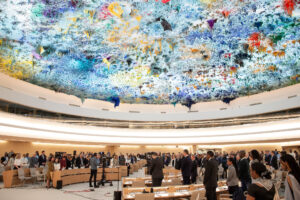
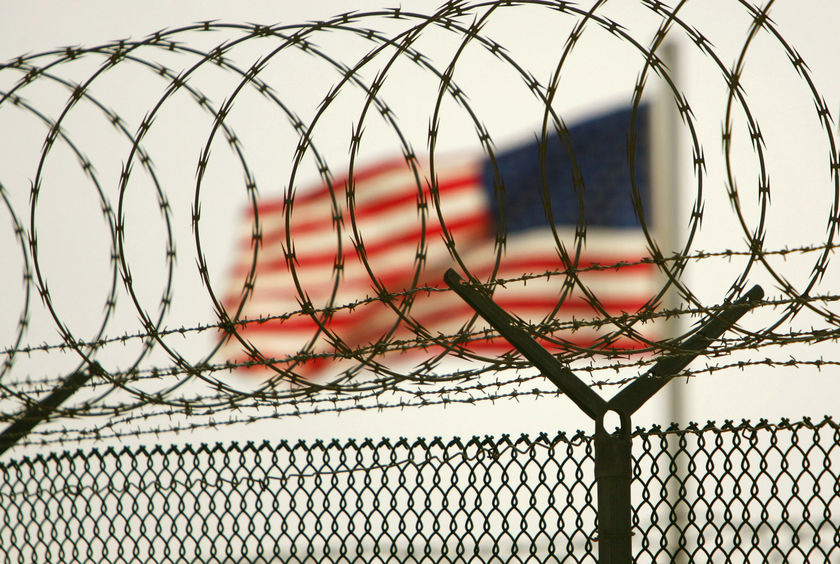
Today, the ICJ, jointly with the World Organisation against Torture (OMCT) and REDRESS, made a submission to the UN Universal Periodic Review (UPR) of the United States of America.
The joint submission focusses on the United States’ longstanding failure to:
(1) provide effective remedy and redress, including medical care, and
(2) guarantee fair trials to the “High Value Detainees” who are still held in Guantánamo, including Mr. Mustafa al Hawsawi.
Through a system of classifications, isolation, detention and counter-terrorism related policies the United States’ government is preventing a category of victims of torture and other ill-treatment from obtaining redress, fair trials and is securing impunity for perpetrators, contrary to recommendations in the previous UPR cycles.
For 18 years, the United States government has been violating numerous international human rights treaties it has ratified, first and foremost the Convention against Torture and Other Cruel, Inhuman or Degrading Treatment or Punishment and the International Covenant on Civil and Political Rights. Such violations deserve serious attention in the upcoming UPR review.”
USA-UPR Review-Advocacy-non-legal submissions-2019-ENG (submission in PDF)
Oct 3, 2019 | Новости, Статьи
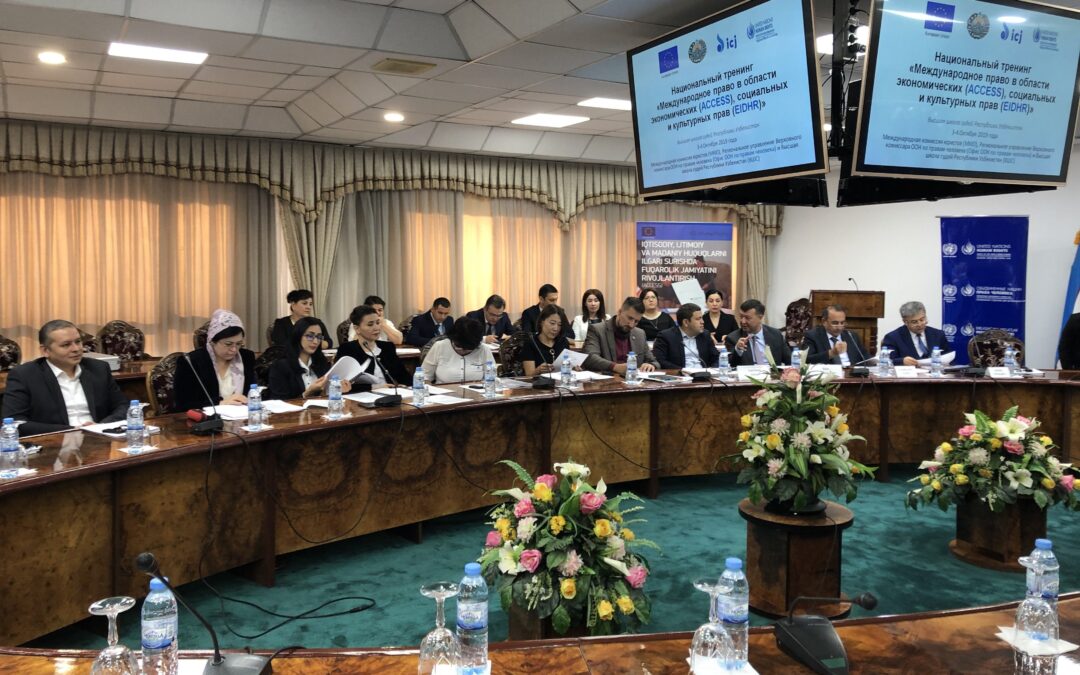
Сегодня Международная комиссия юристов (МКЮ), Региональное отделение Верховного комиссара ООН по правам человека (УВКПЧ) для Центральной Азии и Высшая школа судей Республики Узбекистан (ВШС) организуют национальный тренинг на тему «Международные стандарты в области экономических, социальных и культурных прав (ЭСК)».
Этот двухдневный тренинг является одним из ряда подобных тренингов, проводимых в 2019 и 2020 годах, которые будут посвящены международному праву по таким вопросам, как право на здравоохранение, образование, жилье и право на труд.
Целью данного тренинга является укрепление потенциала судей, адвокатов, прокуроров, ученых-юристов и других представителей гражданского общества в области международных стандартов по ЭСК правам с тем, чтобы они могли обмениваться передовым опытом в области соблюдения государствами своих международных обязательств, в том числе посредством судебной практики, связанной с обеспечением доступа к правосудию в защите ЭСК прав. Учебные тренинги создают возможность конструктивного взаимодействия сотрудников судебных органов и других практикующих юристов. Каждый тренинг состоит из четырех модулей: (1) введение в международное право об ЭСК правах; (2) Международные обязательства, касающиеся доступа к правосудию и средствам защиты ЭСК прав в национальных судах; сравнительные примеры положительной практики; (3) ЭСК права детей и (4) ЭСК права женщин.
Глава Представительства ЕС в Узбекистане, Посол Эдуард Стипрайс отметил: «Узбекистан берет на себя важные международные обязательства по приведению своего законодательства в соответствие с международными нормами и практикой. Согласно Конституции Узбекистана, эти международные обязательства имеют приоритет над национальным законодательством. Приверженность этих обязательств будет способствовать укреплению прав граждан Узбекистана и международных инвесторов. Это, в свою очередь, будет стимулировать экономическое и социальное развитие страны, но в то же время возникают высокие требования к судебной системе для обеспечения того, чтобы ее решения полностью соответствовали международным нормам и предоставляли средства правовой защиты от всех нарушений».
Ришард Коменда, региональный представитель УВКПЧ для Центральной Азии, отметил, что «Узбекистан с 1995 года взял на себя обязательство обеспечить выполнение положений Международного пакта об экономических, социальных и культурных правах (МПЭСКП). На сегодняшний день Узбекистан уже представил три национальных периодических доклада об осуществлении положений Пакта. Третий национальный доклад был представлен в июне 2019 года и будет рассмотрен после 2020 года. Комитет ООН, которому поручено контролировать соблюдение государствами своих обязательств по МПЭСКП, выпустил ряд рекомендаций для Узбекистана. Многие из них подчеркивают инструментальную роль тренинга в области экономических, социальных и культурных прав как средства для наращивания потенциала государственных субъектов в отношении уважения, защиты и реализации прав человека. Только благодаря всестороннему пониманию содержания каждого права и пониманию того, что все права человека взаимосвязаны, неделимы и взаимозависимы, можно будет гарантировать целостное выполнение существующих международных обязательств Узбекистана в области прав человека».
«Эти тренинги являются важной частью наращивания потенциала, который необходим для обеспечения эффективности реформы судебной системы», – сказал Роушин Пиллэй, директор программы по Европе и Центральной Азии Международной комиссии юристов. «Чрезвычайно важно наращивать потенциал различных участников системы правосудия: представителей судебных органов, правоохранительных органов, юристов и гражданского общества, чтобы обеспечить большие изменения. Вместе с УВКПЧ и Высшей школой судей и большой поддержкой Представительства ЕС в Узбекистане, мы могли бы предоставить пространство, необходимое для изучения международного права в области прав человека и, в частности, различных аспектов, касающихся экономических, социальных и культурных прав», – добавила она.
Директор Высшей школы судей кратко рассказал о деятельности Высшей школы судей (ВШС), а также отметил недавний визит Специального докладчика ООН по вопросу независимости судей и адвокатов г-на Диего Гарсиа Саяна, который наряду с другими судебными реформами в Узбекистане особое внимание обратил на создание ВСШ. «Международный семинар, на котором мы собрались сегодня, дает нам возможность укрепить связи с другими организациями и органами посредством продвижения экономических, социальных и культурных прав. Обмен идеями и опытом вызван нуждами современного мира для конструктивного развития судебной системы, образования и общества в целом», – сказал Ходжи-Мурод Исаков, директор Высшей школы судей.
Национальные тренинги организованы в рамках проекта «Усиление роли гражданского общества в продвижении стандартов в области экономических, социальных и культурных прав (ACCESS)», финансируемого ЕС через Европейский инструмент демократии и прав человека (EIDHR). В 2020 году будет проведено еще два аналогичных тренинга, и в конце все учебные материалы будут переведены на русский и узбекский языки для дальнейшего использования. Кроме того, учебные материалы будут доступны для общественности в 2020 году для более широкого охвата и продвижения международного права и стандартов ЭСК прав.
За более подробной информацией просим обращаться:
Дилфуза Куролова, Консультант по правовым вопросам (МКЮ), Тел.: +998 90 9050099 ; e: dilfuza.kurolova(a)icj.org
Uzbekistan-National Training ESCR-News-2019-RUS
Международные стандарты в доступе к правосудию в области экономических, социальных и культурных прав. Национальный тренинг
Oct 3, 2019 | News
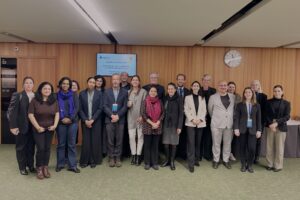
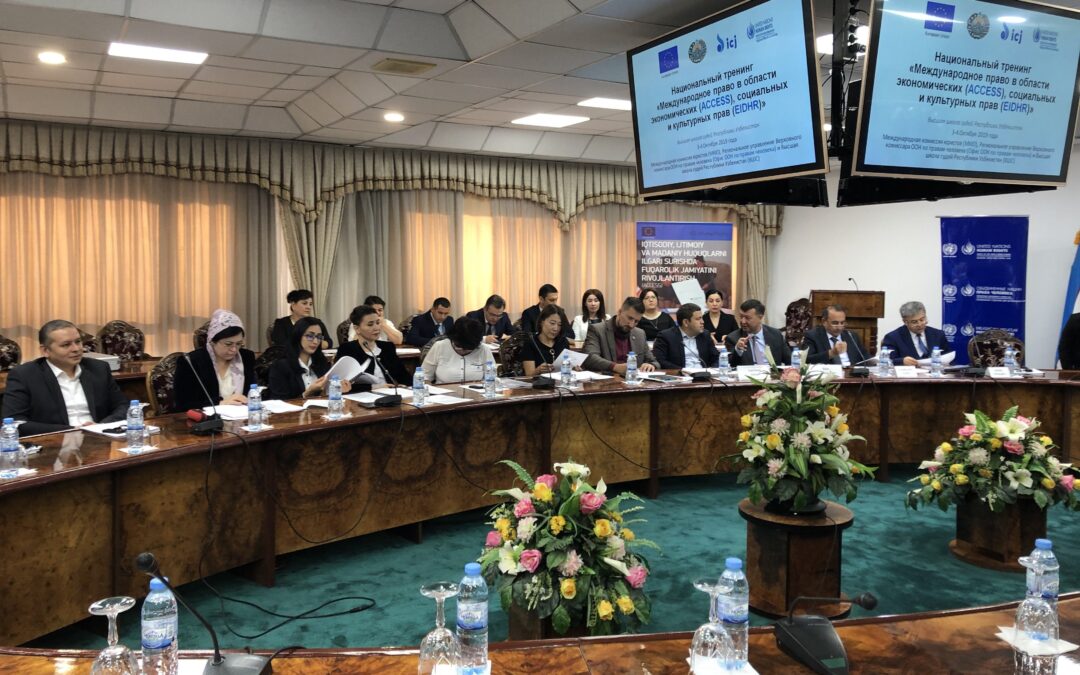
Today, the ICJ, the Regional office of the UN High Commissioner for Human Rights (OHCHR) for Central Asia and the High School of Judges of the Republic of Uzbekistan (HSJ) are organizing a national training on “International law on economic, social and cultural (ESC) rights.”
This two-day training is one of series of similar trainings, held in 2019 and 2020, that will address international law on issues including rights to healthcare, education, housing and rights in the workplace.
The training sessions aim to build the capacity of judges, lawyers, prosecutors, legal academics and other representatives of the civil society on international standards on ESC rights, to share best practices on compliance by States with their international obligations, including through judicial practices related to ensuring access to justice for ESC rights.
The training sessions ensure diversity and networking opportunities between members of the judiciary and others legal practitioners.
Each training consists of four modules on (1) introduction to international law on ESC rights; (2) International obligations concerning access to justice and remedies for ESC rights in national courts; comparative examples of good practice; (3) Children’s ESC rights and (4) Women’s ESC rights.
Head of the EU Delegation in Uzbekistan Ambassador Eduards Stiprais pointed out, “Uzbekistan is taking serious international commitments to align its legislation with international norms and practices. Under Uzbekistan Constitution, these international commitments take precedence over the national law. They will reinforce the rights of Uzbekistan citizens and international investors. This will boost the economic and social development of the nation, but it will also put high demands to the judiciary system to ensure that its decisions fully comply with international norms and offer remedies against all breaches.”
Ryszard Komenda, OHCHR Regional Representative for Central Asia, noted that “Uzbekistan since 1995 has committed itself to ensure implementation of provisions of the International Covenant on Economic, Social and Cultural Rights (ICESCR).
To date, Uzbekistan has already submitted three national periodic reports on implementation of the Covenant. The third national report was submitted in June 2019 and will be reviewed after 2020.
The UN Committee, tasked to oversee states’ compliance with their commitments under the ICESCR, has issued a number of recommendations for Uzbekistan.
Many of them highlight the instrumental role of training on economic, social and cultural rights as a means to build capacity of state actors to respect, protect and fulfil human rights.
Only through comprehensive understanding of the content of each right and realizing that all human rights are interrelated, indivisible and interdependent, it will be possible to guarantee holistic implementation of existing international human rights obligations of Uzbekistan”.
“These trainings are an important part of capacity building which is essential in ensuring the effectiveness of the reform of the judiciary,” said Róisín Pillay, Europe and Central Asia Programme Director of the ICJ.
“It is vital to build capacity of different actors of the justice system: members of the judiciary, law enforcement agencies, lawyers and civil society, to ensure a greater impact. Together with the OHCHR and the Supreme School of Judges and the great support of the EU Delegation in Uzbekistan, we could provide the space necessary for learning about international human rights law and, in particular, its various aspects related to economic, social and cultural rights,” she added.
The Director of the Higher School of Judges briefly spoke about the activities of the Supreme School of Judges (SSJ), and also noted the recent arrival of the UN Special Rapporteur on the independence of judges and lawyers, Mr. Diego Garcia Sayan, who paid special attention to the establishment of the SSJ, along with other judiciary reforms in Uzbekistan.
“The international seminar in which we have gathered today gives us the opportunity to establish networking with other organizations and bodies through promotion of economic, social and cultural rights. The exchange of ideas and experience in the necessity of the modern world, for the mutual development of the judiciary, education and the society as such,” said Khodji-Murod Isakov, the Director of the Higher School of Judges.
The national trainings are organized in the framework of project “Advancing Civil Society in Promoting ESCR Standards (ACCESS)” funded by EU through the European Instrument for Democracy and Human Rights (EIDHR).
There will be two more similar trainings in 2020 and all trainings materials at the end will be translated into Russian and Uzbek languages for further reference and use. Moreover, the trainings materials will be publicly available in 2020 for wider outreach and promotion of international law and ESC rights standards.
Contact
Dilfuza Kurolova, ICJ Legal consultant, t: +998 90 9050099 ; e: dilfuza.kurolova(a)icj.org
Download
Uzbekistan-National Training ESCR-News-2019-ENG (full story in PDF)
International law on economic, social and cultural (ESC) rights (4 training modules in Russian – PDF).
Oct 3, 2019 | News
Today, ICJ and the Defender Center for Human Rights (DCHR) filed a submission to the Human Rights Council’s Working Group on the Universal Periodic Review in advance of its review of Libya’s human rights record in May 2020.
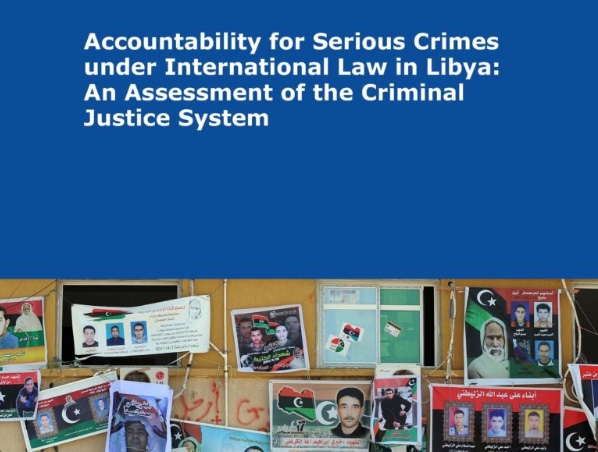
Information provided in the submission was based on the ICJ report titled Accountability for Serious Crimes under International Law in Libya: an Assessment of the Criminal Justice System, published in July 2019.
In the submission, the ICJ and DCHR drew the attention of the Working Group on the UPR to the following concerns with respect to Libya:
- Impunity for crimes under international law committed by State and non-State actors;
- The insufficient penalization of crimes under international law;
- The lack or inadequacy of investigations and prosecutions of crimes under international law;
- The systemic failure to guarantee the right to liberty and fair trial rights at pre-trial and trial stages.
The ICJ and DCHR called on the Working Group and the Human Rights Council to urge the Libyan authorities to take the following actions:
With regard to insufficient penalization of crimes under international law:
- Enact laws criminalizing war crimes, crimes against humanity and arbitrary deprivations of life (in particular arbitrary and summary executions) in line with international law;
- Amend Law No. 10 of 2013 to bring the definition of torture in line with the Convention Against Torture and the definition of enforced disappearance in line with the International Convention for the Protection of All Persons from Enforced Disappearance, and criminalize other acts of cruel, inhuman or degrading treatment or punishment consistent with international law;
- Amend article 425 of the Penal Code to include a definition of the crime of slavery consistent with international law;
- Amend articles 407 and 408 of the Penal Code to criminalize rape in line with international law and standards; enact laws criminalizing all forms of sexual and gender-based violence; and repeal article 424 of the Penal Code which extinguishes a conviction for rape or indecent assault and grants a stay of execution of the penalty imposed against the perpetrator if they marry the victim; and
- Amend (or repeal) Law No. 35 of 2012, Law No. 38 of 2012 and Law No. 6 of 2015 to exclude all crimes under international law from the scope of amnesties.
With regard to the obligation to independently and impartially investigate crimes:
- Amend article 3 of the Code of Criminal Procedure (CCP) to remove the requirement that an investigation can only be commenced upon the receipt of a criminal complaint, extend the three-month deadline for victims to file a complaint and remove the deadline entirely for crimes under international law and for other serious crimes under domestic law;
- Amend article 7 of the CCP to grant victims’ family members the right to file a complaint with a view to ensuring the commencement of an investigation;
- Repeal article 224 of the Penal Code to remove the power of the Minister of Justice to control and direct investigations and prosecutions by the Prosecutor’s Office; and
- Repeal Decree 388 of 2011 granting the “Supreme Security Committee” investigative powers and article 2 of Law No. 38 of 2012 permitting the use of information and evidence collected by “revolutionaries” during investigations and at trial.
With regard to the systemic failure to guarantee the right to liberty and fair trial rights at pre-trial and trial stages, amend the CCP in order to:
- Exclude the possibility of detaining an accused on the sole ground that she or he does not have a fixed place of residence;
- Set a maximum duration of pre-trial detention, and specify that any such detention should be employed as last resort only when necessary, proportionate and reasonable according to the circumstances of the case;
- Ensure that detainees are brought before an independent and impartial judicial authority promptly following arrest, and no later than 48 hours in any event;
- Include a provision recognizing the right to habeas corpus, and the right to compensation and other reparations for unlawful detention;
- Provide for the right to legal counsel from the moment of arrest in all circumstances, and repeal the provision requiring a lawyer to seek authorization from the investigating judge to speak during the interrogation of the accused;
- Require the disclosure of all evidence to the accused and allow them to make copies of the case file before a case is referred to court for prosecution; and
- Grant individuals the right to appeal any conviction and sentence on alleged errors of law and fact and to reconsideration of a conviction upon discovery of a new fact.
Download
Libya-UNHCR submission final-advocay-non legal submission-2019-ENG (submission in PDF)
Oct 2, 2019 | News
This support comes as the ICJ documents failure of criminal justice system on human rights accountability with its report Accountability for Serious Crimes under International Law in Libya: An Assessment of the Criminal Justice System.
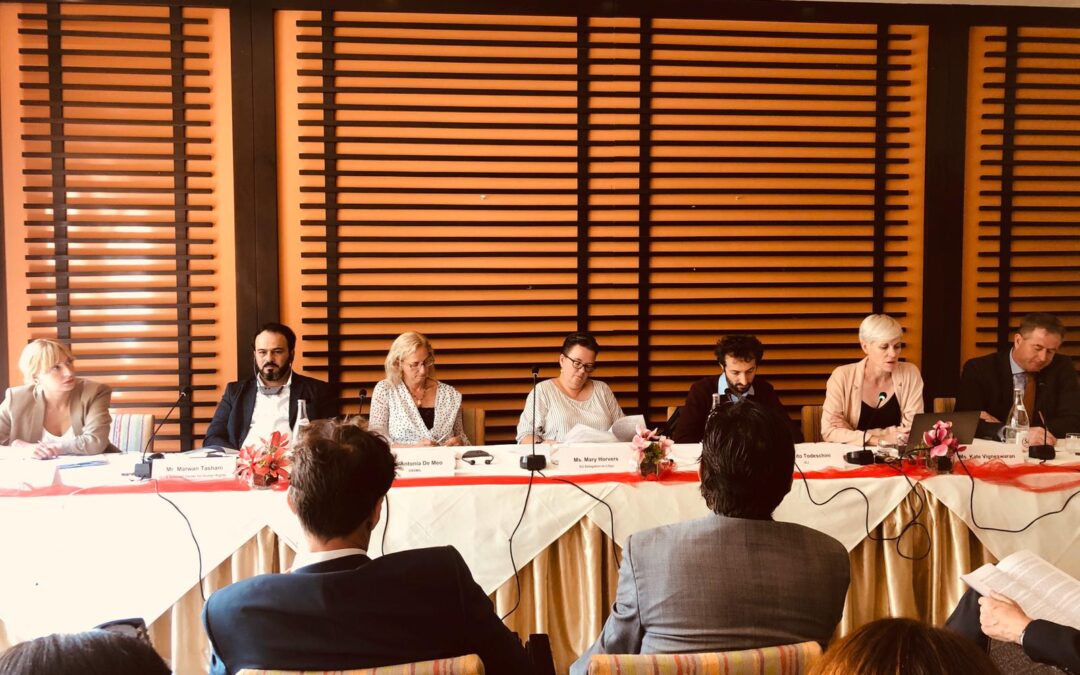
At today’s launch of the publication, the UN Support Mission in Libya (UNSMIL), the Delegation of the European Union to Libya (EUDEL) and the European Union Border Assistance Mission (EUBAM) supported calls for the establishment of a UN Commission of Inquiry for Libya.
The ICJ’s report examines the criminal justice framework in Libya and finds that investigations and prosecutions of crimes under international law have been limited to a handful of cases, and that future cases are unlikely meet international standards necessary to ensure fair and effective justice, in particular the rights to liberty and a fair trial and the prohibition on torture and ill-treatment.
The support by international actors echoes the ICJ’s call for the establishment of a Commission of Inquiry or similar mechanism to monitor, document and report on human rights violations in order to identify perpetrators, and gather and preserve evidence for future prosecutions, either national or international.
UNSMIL, the EU and a number of States expressed their support for the establishment of a Commission of Inquiry or similar mechanism at the 42nd session of the Human Rights Council.
The ICJ also advocated for such a mechanism in its statement to the Council on 25 September.
At the launch, ICJ Senior Legal Adviser Kate Vigneswaran said that “it’s time for States to stop working on the premise that the Libyan criminal justice system can effectively ensure accountability for crimes committed by State and non-State Actors and instead look at options for ensuring they don’t go unpunished.”
The ICJ’s report also calls on States and UN actors to ensure they adopt human rights-compliant terms in their engagement with Libya and to refrain from entering into or implementing agreements with Libyan authorities that could give rise to support for or complicity in violations of international law.
Kate Vigneswaran stated: “Human rights and accountability should underpin any agreements and engagement with Libyan actors entered into by States, rather than being sidelined in the interests of a political solution. Time has shown that the absence of human rights at the forefront of dialogue and engagement with stakeholders has failed to ensure the cessation of egregious human rights violations and abuses being perpetrated throughout the country.”
The launch, which was held in partnership with the Embassy of the Netherlands in Libya, was opened by the Netherlands’ Ambassador, H. E. Mr. Lars Tummers.
Kate Vigneswaran discussed the key findings and recommendations contained in the report. A panel comprised of ICJ Commissioner Marwan Tashani and representatives of EUDEL, EUBAM and UNSMIL responded to the report and provided insights into their work in Libya.