Aug 10, 2016 | News
A law in Belize that disproportionately affects gay men was today ruled unconstitutional by the country’s Supreme Court after a three-year wait for the judgment.
Section 53 of Belize’s Criminal Code, an old British colonial law, banned ‘carnal intercourse against the order of nature’ and thereby made consensual gay sex between adult men in private illegal in Belize. Today the legal provision has been ruled ‘unlawful’ to the extent that it can be applied to same-sex activity.
In handing down the judgment, Chief Justice Kenneth Benjamin agreed that Section 53 amounts to a violation of the constitutional rights to dignity, privacy, equality and non-discrimination on grounds of sex. He found that there was no justification in the form of ‘public morality’ and therefore the law must be modified. He awarded costs to the Claimaint, Caleb Orozco.
The case is the culmination of years of work by a Caribbean-led coalition of lesbian, gay, bisexual and trans (LGBT) activists, academics and legal experts. The individual claimant is Caleb Orozco, a Belizean gay man and prominent LGBT human rights advocate.
Today Orozco said: “This is the first day of my life in which it is legal for me to be me. This is a history-making judgment for Belize, the country which I am proud to call home. Our judicial system has been proven to be robust and unprejudiced. This judgment should give other oppressed minorities the confidence to speak up and stand up for themselves in situations of human rights abuse in the way I have. Our courts really are there to protect us all. In striking down Section 53, Belize has also rejected a poisonous remnant of colonial rule. We have reaffirmed ourselves as a society built on dignity and respect for all our people. This is a proud day.”
Simone Hill, President of the United Belize Advocacy Movement (UNIBAM) said before the judgment: “This is about our human rights. As citizens of this country our rights should be respected without fear or favour. Win or lose, we will continue the fight to ensure the victory of the protection of our rights.”
The case was heard in May 2013 and presided over by Chief Justice Kenneth Benjamin. Today’s ruling – some three years and three months later – upholds Belize’s LGBT (lesbian, gay, bisexual and trans) community’s human rights to privacy, equality, dignity and non-discrimination, all of which are protected under the country’s constitution.
A group of churches, namely the Roman Catholic Church of Belize, the Belize Church of England Corporate Body, and the Belize Evangelical Association of Churches were admitted as ‘Interested Parties’ in the case opposing Mr Orozco’s claim and seeking to maintain the criminalisation of gay men in Belize.
Meanwhile, the International Commission of Jurists, the Commonwealth Lawyers Association and the Human Dignity Trust were joint ‘Interested Parties’ in support of Mr Orozco.
Téa Braun, Legal Director of the Human Dignity Trust, said:
“This is a great victory for human rights and the rule of law.
Intimacy in private between two adults of their own free will should not be a matter for the law. The only outcome of such laws is to blight the lives of members of the LGBT community by fostering a climate of oppression and state-sponsored discrimination. The bravery and resilience of colleagues across the Caribbean who have worked tirelessly on this case is an inspiration. Caleb Orozco is a hero and a trailblazer. The Human Dignity Trust is immensely proud to have worked alongside him and his legal team.”
Alex Ward, President of the Commonwealth Lawyers Association, which passed a resolution on the ‘Decriminalisation of Sexual Orientation’ in 2009, said: “This is a sound and just ruling which we whole heartedly welcome. It is the CLA’s mandate to uphold the rule of law across the Commonwealth and today marks a considerable success in maintaining the integrity of the Belizean Constitution and protecting its citizens’ fundamental rights.”
Livio Zilli, Senior Legal Adviser at the International Commission of Jurists (ICJ), said: “The ICJ hails the courage, commitment and tenacity of the entire LGBT movement in Belize, and Caleb Orozco’s in particular, and salutes this decision as a critical contribution to upholding people’s human rights whatever their sexual orientation or gender identity.”
While convictions under Section 53 in Belize were rare, the law carried a sentence of up ten years’ imprisonment effectively for consensual homosexual sex.
There are still 76 legal jurisdictions across the world that make same-sex intimacy between consenting adults a crime. Of these, 38 countries are, like Belize, members of the Commonwealth.
The Interested Parties that joined in support of the case were represented by Godfrey Smith SC and Debevoise & Plimpton led by Lord Goldsmith QC. Tim Otty QC, founder of the Human Dignity Trust, Tristan Jones, Jessica Gladstone, Nicola Leslie, Conway Blake, were key members of the victorious legal team.

Aug 8, 2016 | News
The ICJ has deplored a suicide attack at a hospital in Quetta, which killed dozens of people today, in the deadliest attack ever on lawyers in Pakistan and among the worst anywhere.
Many of those killed were lawyers, who had been gathered at a hospital in Quetta following the killing of former president of the Balochistan Bar Association, Bilal Anwar Kasi, in a shooting incident earlier in the day.
“This attack targeted mostly lawyers and intellectuals (many of them from the Pashtun community) who had gathered at the hospital to mourn the loss of one of their own,” said Sam Zarifi, ICJ’s Asia Director.
“As such, it constituted a serious loss for the legal community and increases existing pressure on the independence of the bar.”
The ICJ calls on the Pakistani Government to conduct an immediate, impartial and thorough investigation into the attack and to bring those responsible to justice, including anyone who ordered or was otherwise complicit the crime.
The ICJ also urges the Government to take urgent measures to guarantee the security of lawyers, which should include effective measures of protection against attempts on their lives and lives of their family members.
The UN Basic Principles on the Role of Lawyers affirm that“[w]here the security of lawyers is threatened as a result of discharging their functions, they shall be adequately safeguarded by the authorities.”
“If lawyers are under constant fear of violence, they cannot ensure the functioning of an independent and impartial legal profession – an indispensible requirement for rule of law,” Zarifi added.
Contact:
Sam Zarifi, ICJ Asia Pacific Regional Director (Bangkok), t: +66 807819002; e: sam.zarifi(a)icj.org
Reema Omer, ICJ International Legal Adviser for Pakistan (London), t: +44 7889565691; e: reema.omer(a)icj.org
Aug 1, 2016 | Адвокаси, Юридические заявления
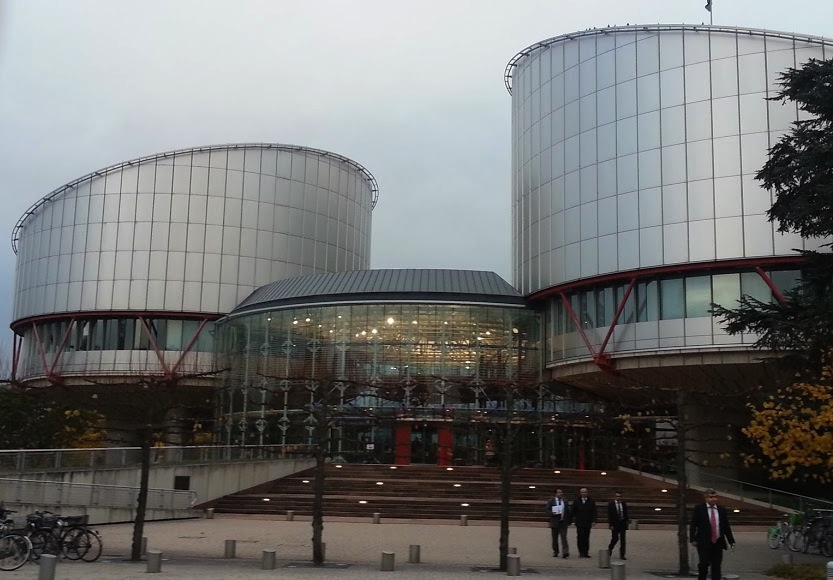
29 июля 2016 года МКЮ и другие группы представили стороннее вмешательство в совместные делаНиколай Алексеев и Движение за брачное равноправие против России, а такжеНиколай Алексеев и другие против России в Европейском суде по правам человека.
Случаи касаются отказов российских властей в регистрации ассоциаций, защищающих права гомосексуалистов.
В своих письменных материалах, представленных Европейскому суду по правам человека, МКЮ, Европейский центр по защите прав человека (ЕЦЗПЧ) и Европейский регион Международной ассоциации лесбиянок, геев, бисексуалов, трансгендеров и интерсексуалов (ILGA-Europe), были сосредоточены на законные ограничения права на свободу ассоциации для защиты морали, в частности, в отношении права на уважение частной жизни в соответствии со статьей 8 Европейской конвенции о защите прав человека.
В комментариях речь шла о прецедентном праве Европейского суда; авторитетное толкование других применимых источников международного права и сравнительного международного права.
RUSSIA-INTERVENTION ALEKSEYEV ECtHR-LEGALINTERVENTION-2016-ENG (Английский)
Aug 1, 2016
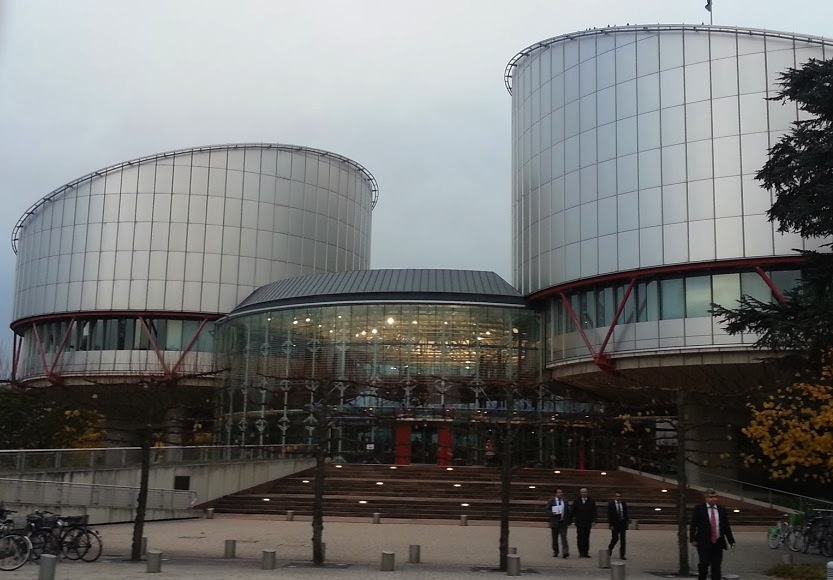
On 29 July 2016, the ICJ and other groups submitted a third-party intervention in the joint cases of Nikolay Alekseyev and Movement for Marriage Equality v. Russia and Nikolay Alekseyev and Others v. Russia before the European Court of Human Rights.
The cases concern the Russian authorities’ refusals to register associations defending the rights of homosexuals.
In their written submissions to the European Court of Human Rights, the ICJ, the European Human Rights Advocacy Centre (EHRAC) and the European Region of the International Lesbian, Gay, Bisexual Trans and Intersex Association (ILGA-Europe) focused on the extent of legitimate restrictions on the right to freedom of association for the protection of morals having regard, in particular, to the right to respect for private life under Article 8 of the European Convention on Human Rights.
The comments drew upon the European Court’s case-law; authoritative interpretation of other applicable sources of international law and comparative international law.
RUSSIA-INTERVENTION ALEKSEYEV ECtHR-LEGALINTERVENTION-2016-ENG
Jul 30, 2016 | News
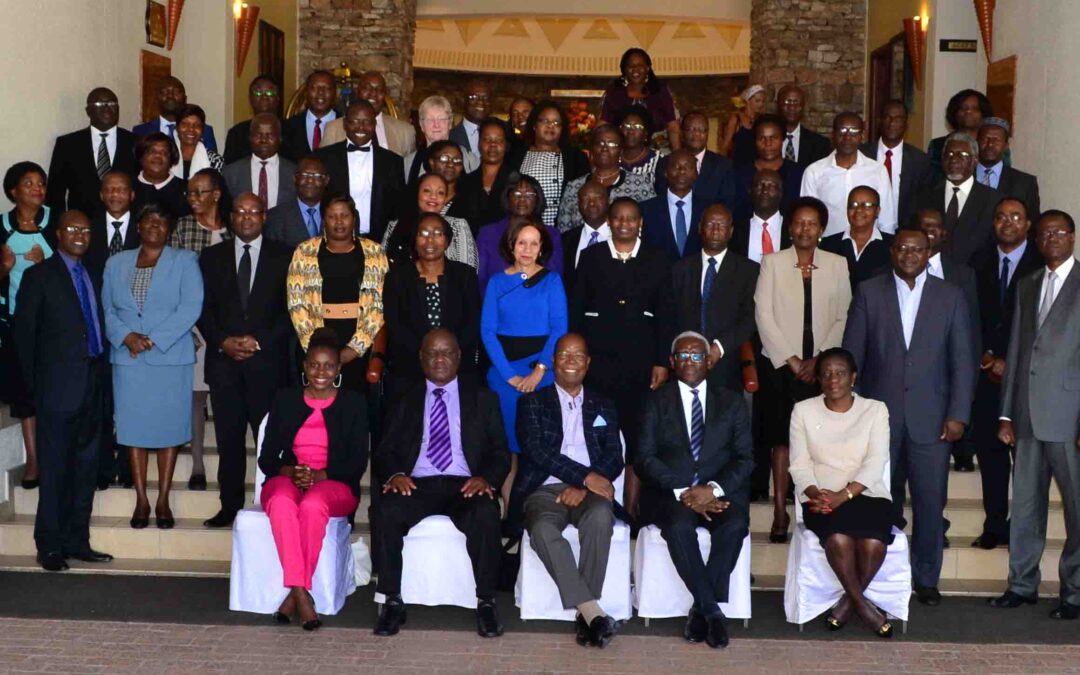
The ICJ and the Judicial Service Commission of Zimbabwe, held a two-day Judicial Symposium for the end of the Second Term, at the Elephant Hills Hotel, Victoria Falls.
The subjects for discussion chosen by the judges reflect areas where judges felt the need for enlightenment.
In his opening remarks, the Deputy Chief Justice Malaba said that the purpose of this Symposium was to provide an opportunity for the judges to discuss and share ideas on the subjects chosen at the recreational environment.
The Symposium would serve to equip every judge with skills to feel confident in presiding over and disposing of cases fairly and expeditiously.
The former Chief Justice of South Africa Sandile Ngcobo delivered the keynote address which focused on Continued Judicial Education. Chief Justice Ngcobo stated that it was the collective responsibility of the judiciary to ensure it is sufficiently equipped to meet the demands of society and for the efficient dispensation of justice.
This would be achieved through continued judicial education.
Chief Justice Ngcobo was of the view that the importance of Continued Judicial Education lay beyond improving quality of justice but for the qualification of justice