Jul 13, 2016 | News
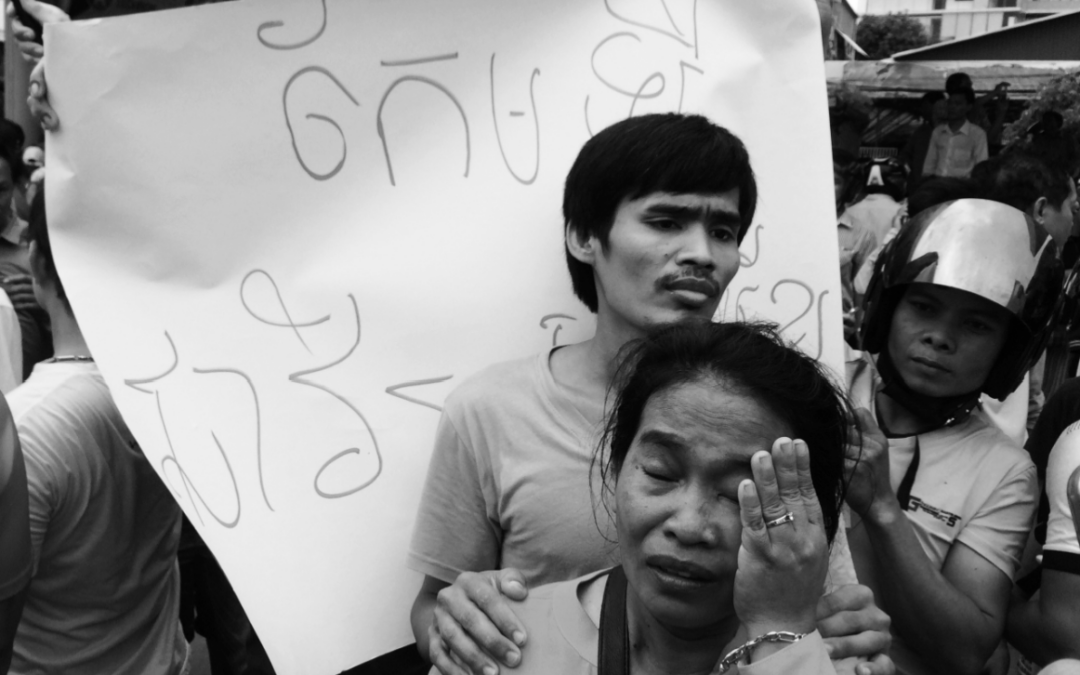
The ICJ deplores the killing of Kem Ley, an outspoken human rights defender, political analyst and organizer of grassroots community activists, and calls on the Government to carry out a prompt, impartial and effective investigation to identify and bring to justice those responsible.
Shortly after the killing, Cambodian police arrested a suspect approximately two kilometers from the crime scene who “confessed” on a leaked video to killing Kem Ley for failing to repay a personal loan.
“Kem Ley, a prominent political commentator and human rights defender, was killed against a backdrop of escalating attacks on civil society and the political opposition,” said Kingsley Abbott, ICJ Senior International Legal Adviser.
“In the context of Cambodia’s long history of impunity in cases of allegedly politically motivated killings, and even though a suspect is already in custody, the authorities must continue the investigation in a transparent and methodical manner until all potential lines of inquiry have been exhausted,” he added.
There are already concerns about certain events that took place immediately after the killing which may have harmed the investigation.
For example, shortly after news spread of Kem Ley’s death, the authorities observed a large crowd gather in and around the courtyard of the petrol station in which he was killed, potentially compromising important sources of evidence from this wider area and the vehicles within it.
The large gathering effectively served to block medical vehicles from removing Kem Ley’s body from the scene, which may have prevented a forensic autopsy from taking place.
Later the same afternoon a large procession accompanied his body from the crime scene through the streets of Phnom Penh to Wat Chas pagoda, where his body remains lying in wake.
“Where it lacks capacity, Cambodia should seek technical assistance from States and international organizations particularly in the specialized areas of Closed Circuit Television (CCTV) and telecommunication data analysis which may assist in establishing the identification and movements of the perpetrator and whether he or she acted alone or with others,” Abbott said.
The ICJ calls on the Cambodian authorities to:
1. Ensure that the investigating judge and investigators are – and are seen to be – impartial and independent of undue influence, and are free to perform their professional functions objectively without intimidation, hindrance, harassment or improper interference.
2. Ensure that the investigation process and its outcome are transparent and open to scrutiny by the victims and the general public.
3. Protect the rights of the victims including by ensuring Kem Ley’s family:
- receive regular information about the progress of the investigation and their rights;
- receive all necessary support and assistance; and
- are protected from any ill-treatment, intimidation, or sanction as a result of their participation in the investigation.
4. Protect anyone who provides information to the authorities from ill-treatment, intimidation or sanction.
5. Actively seek out and accept offers of assistance from States and international organizations including in the areas of:
- the analysis of any CCTV and telecommunication data; and
- the forensic examination of Kem Ley’s body, crime scenes and vehicles.
Background
At approximately 0830 on 10 July 2016, Kem Ley was shot and killed at a petrol station cafe on Phnom Penh’s Monivong Boulevard. Shortly afterwards, the authorities apprehended a man nearby in connection with the killing who identified himself as “Chuob Samlab”.
On a leaked video, the man reportedly “confessed” to the killing claiming he shot Kem Ley over a debt the political commentator allegedly owed him, a fact reportedly disputed by Kem Ley’s widow and the suspect’s wife.
Under Article 12 of the United Nations Declaration on Human Rights Defenders, States are required to take all necessary measures to ensure the protection of human rights defenders against any violence, threats, and retaliation.
Contact:
Kingsley Abbott, ICJ Senior International Legal Adviser for Southeast Asia, t: +66 94 470 1345 ; email: kingsley.abbott(a)icj.org

Jul 12, 2016 | News
The International Commission of Jurists (ICJ) has issued a joint statement condemning increasing acts of harassment and intimidation against journalists in Lesotho.
The joint statement expresses concern about a number of incidents threatening freedom of expression, exemplified by the recent shooting of the editor of the Lesotho Times newspaper, and have called on Lesotho Authorities to ensure the right to freedom of expression is protected.
In addition to the ICJ, the statement has also been signed by: amaBhungane Centre for Investigative Journalism; Amnesty International; Freedom of Expression Institute; Institute for Democracy; Lawyers for Human Rights; Lawyer for Human Rights (Swaziland); Media Institute for Southern Africa – Zimbabwe Chapter; Media Monitoring Africa; Open Society Initiative for Southern Africa; PEN Afrikaans; PEN South Africa; Rights 2 Know Campaign; SOS Coalition; Southern Africa Human Rights Defenders Network; Southern AFrican Litigation Centre; Transformation Resource Centre; Zimbabwe Human Rights NGO Forum; and Zimbabwe Lawyers for Human Rights.
Lesotho-Joint statement-Freedom of expression-Advocacy-2016-ENG (full text in PDF)
Jul 12, 2016 | News
The Indian Supreme Court’s recent decision reiterating the importance of accountability for human rights violations by police and security forces, in particular where unnecessary or excessive force is alleged to have been used, is a welcome step and must be immediately implemented.
In the case of EEVFAM v Union of India, petitioners alleged that 1,528 killings by the police and security forces in the Indian state of Manipur had amounted to unlawful extrajudicial executions. Manipur is the site of a long-running armed insurgency.
In 2013, a court-appointed commission – the Santosh Hegde Commission – conducted an inquiry into six of the cases mentioned in the petition, and found all the six killings to be unlawful.
“This judgment is a strong signal from the Court that human rights violations by security forces will not be tolerated in the name of national security or anti-terror policies,” said Sam Zarifi, the International Commission of Jurists (ICJ) Asia Director.
“It’s crucial for the government now to follow through on this ruling to bring the families of the victims of these and other extra judicial executions mentioned in this petition closer to truth, justice and accountability”.
The killings mentioned in the petition all took place in areas considered “disturbed” under the Armed Forces Special Powers Act (AFSPA). Once an area is declared “disturbed” under the AFSPA, armed forces are given a range of “special powers”, which include the power to arrest without warrant, to enter and search any premises, and in certain circumstances, use force, to cause death.
Under the AFSPA, governmental permission, or sanction, is required before any member of the armed forces can be prosecuted for crimes in a civilian court, thus effectively shielding armed forces from accountability for human rights violations.
“These, and other allegations, of human rights violations under the AFSPA only reiterate the urgent need to repeal this draconian and undemocratic law,” Zarifi said. “The allegations in this case are evidence of the culture of impunity that the AFSPA has perpetuated”.
In the present judgment, the Supreme Court made some welcome observations:
- It emphasized the need for accountability for human rights violations by security forces, reiterating the principles laid down in previous landmark cases. It said “every death caused by the armed forces, including in the disturbed area of Manipur should be thoroughly enquired into if there is a complaint or allegation of abuse or misuse of power”.
- It dismissed the government’s argument that legal safeguards would not fully apply to anyone considered an “enemy” under Indian law. The Court held that at least all Indian citizens were equally entitled to the enjoyment of the fundamental rights in the Constitution, stating “If members of our armed forces are deployed and employed to kill citizens of our country on the mere allegation or suspicion that they are ‘enemy’, not only the rule of law but our democracy would be in grave danger”.
- It noted that it did not have sufficient information about each of the 1,528 cases mentioned in the petition. It has directed parties to present detailed information about the status of each case.
“This judgment references India’s obligations under international human rights law, which requires the government to respect and protect the right to life and ensure access to effective remedies,” Zarifi said. “Accountability for all human rights violations is a key aspect of these rights”.
The ICJ called for independent, impartial and thorough investigations into all the cases mentioned in the petition, in line with international standards.
It said that persons responsible should be brought to justice in fair trials in civilian courts, and the family of victims should be accorded an effective remedy and reparation for any violations.
The ICJ will continue to follow the case, which will continue in four weeks. Several key issues remain to be addressed, which the court will look at in subsequent hearings.
First, how should the specific cases be investigated? The petitioners have asked for the constitution of a Special Investigation Team, comprising police officers from outside the state of Manipur, to investigate the allegations, to ensure that the enquiry is fair, independent and thorough.
Second, in what forum should trials take place? The Indian Army Act allows for army personnel on active duty to be tried by a court martial (military court) instead of a civilian court for all offences, including gross human rights violations.
International standards call for military personnel accused of gross human rights violations to be put on trial before a civilian court. The Court has left this question open for the allegations in the present petition, stating: “The law is therefore very clear that if an offence is committed even by Army personnel, there is no concept of absolute immunity from trial by the criminal court”.
Third, the Court will also consider the efficacy of the National Human Rights Commission; in particular whether its guidelines are binding or only advisory. Under Indian law, the NHRC has limited jurisdiction where human rights violations by the armed forces are concerned.
Contact
Sam Zarifi, ICJ Asia Pacific Regional Director (Bangkok), t: +66 807819002; e:sam.zarifi(a)icj.org
Jul 7, 2016
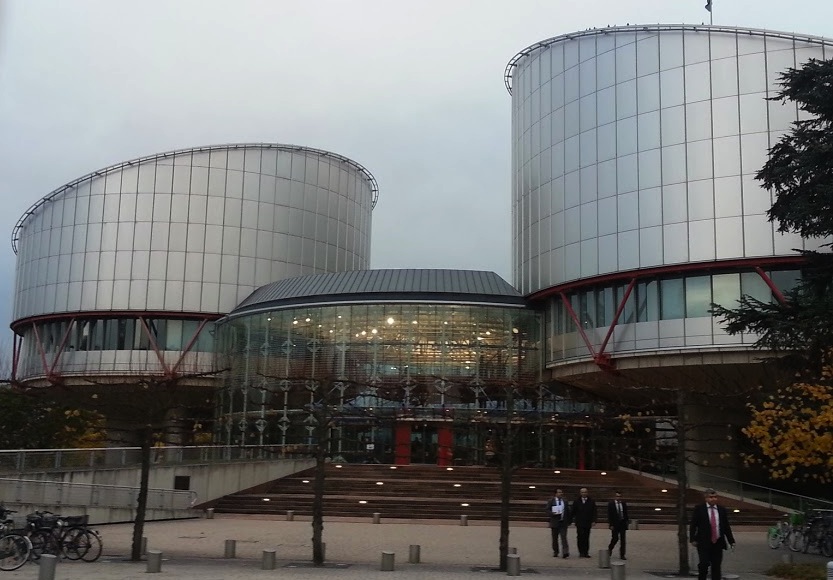
On 5 July 2016, the European Court of Human Rights, in its judgment in O.M. V. Hungary ruled that the immigration detention of an LGBT asylum-seeker had violated Article 5 of the European Convention of Human Rights, enshrining the right to liberty and security of person.
In particular, the Court found that the Hungarian authorities had failed to make an individualized assessment or take into account the applicant’s vulnerability within the detention facility because of his sexual orientation.
The ICJ, alongside the AIRE Centre, ILGA-Europe and ECRE had intervened in this case.
The Court’s judgment has, once again, recognized the fundamental right of asylum-seekers to protection – no matter their sexual orientation or gender identity.
Background
O.M. is an Iranian national who requested asylum in Hungary after travelling to Europe via Serbia.
On arriving in Hungary in early 2014 he was arrested and placed in a detention facility, where he was kept for 58 days.
He claimed asylum based on his homosexuality and the fact that were he to be returned to Iran he faced severe penalties because of his sexual orientation, including the death penalty.
During his time in detention, O.M. repeatedly asked the asylum authority to release him from the detention facility or transfer him to an open facility due to the harassment he faced because of prejudice against his sexual orientation.
His was eventually released on 22 August 2014 and in October 2014 he was recognized as a refugee.
The Court made a strong statement in favour of the rights of LGBT asylum seekers: “…when asylum seekers claim to be a part of a vulnerable group in the country which they had to leave, the authorities should exercise particular care in order to avoid situations which may reproduce the plight that forced these persons to flee in the first place. In the present case, the authorities failed to do so when they ordered the applicant’s detention without considering the extent to which vulnerable individuals –for instance, LGBT people like the applicant – were safe or unsafe in custody among other detained persons”.
Jul 7, 2016 | News
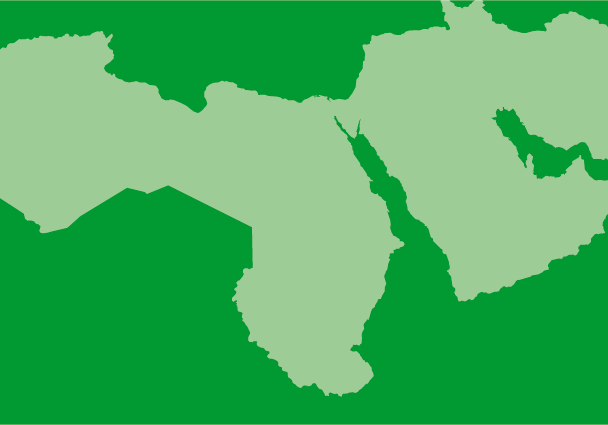
Following reports that Saif al Islam Gadhafi has been released from prison in Libya, the ICJ today called for him to be promptly arrested and surrendered to the International Criminal Court (ICC).
Saif al Islam Gadhafi was convicted by the Tripoli Criminal Court in July 2015 and sentenced, along with eight other former officials of the Moammar Gadhafi regime, to the death penalty.
At the time, the ICJ expressed its concern that the trial had not been fair, expressed its opposition to the death penalty, and called on the Libyan authorities to surrender Saif al Islam Gadhafi to the ICC.
In 2011, the ICC issued an arrest warrant for Gadhafi, who faces two counts of Crimes against Humanity including murder and persecution of civilians, allegedly conducted as part of an orchestrated campaign against demonstrators during the uprising in Libya in 2011.
Gadhafi was reportedly released from a prison in Zintan in April 2016, following instructions from the Minister of Justice to the city’s chief prosecutor. The instructions were reportedly based on a general amnesty law that was promulgated by the Libyan House of Representatives in August 2015.[1]
“Granting amnesty for crimes such as those for which Saif al Islam Gadhafi was allegedly responsible is totally incompatible with the rule of law, the right of victims to justice, and Libya’s international human rights obligations”, said Said Benarbia, Director of the MENA programme at the International Commission of Jurists.
“Instead of shielding him from accountability, the Libyan authorities should ensure that all those responsible for past and ongoing gross violations of international human rights law and serious violations of international humanitarian law are brought to justice in fair and effective criminal trials. A first step in this direction would be for the Libyan authorities to arrest Saif al Islam Gadhafi and surrender him to the ICC as a matter of urgency.”
The ICJ believes that impunity for gross human rights violations and war crimes, including impunity resulting from amnesties, is not conducive to peace, political stability and national reconciliation in Libya.
Indeed, such impunity may be perceived by those who continue to systematically violate rights and freedoms as a signal that they may never be criminally held to account.
At the same time, the ICJ absolutely opposes the death penalty, which it considers inherently to violate the right to life and the right not to be subjected to cruel, inhuman or degrading punishment.
Gadhafi would not face the death penalty in any ICC trial.
Saif al Islam Gadhafi’s lawyer has reportedly indicated that he will argue to the ICC that it should drop its proceedings, on the basis of article 20 of the Statute of the ICC, which addresses the circumstances in which a person who has already been tried for certain conduct by another court, may subsequently be tried by the ICC.
The ICJ stresses that any hearing to consider such arguments should not in any way suspend Libya’s obligation immediately to implement the ICC arrest warrant and to surrender Saif al Islam Gadhafi to the ICC.
“Libya should comply with its obligations under international law and dismantle the structural impunity that continues to prevail in the country, including by putting an end to politicized judicial proceedings and ensuring that prosecutors carry out their functions independently, impartially, and in defence of human rights,” added Benarbia.
[1] Law No. 6 of 2015
Contact
Doireann Ansbro, Associate Legal Adviser, ICJ Middle East and North Africa Programme, t: +216 71 841 701, e: doireann.ansbro(a)icj.org
Libya-Saif al Islam Gadhafi-News-Press Releases-2016-ARA (full press release in Arabic, PDF)