Dec 16, 2015 | Advocacy, Events
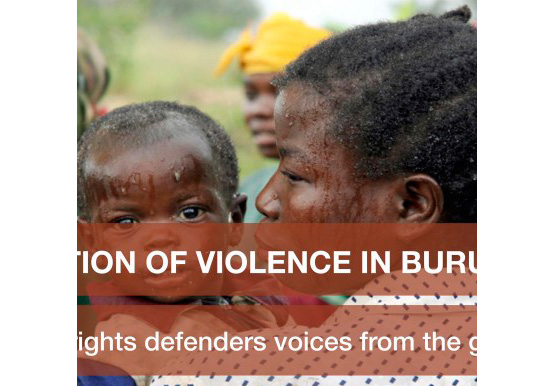
The ICJ joins other non-governmental organisations in co-sponsoring “Escalation of Violence in Burundi: Human rights defenders voices from the ground”, a side event to the Human Rights Council’s special session on Burundi, 17 December 2015.
The event will take place Thursday 17 December – 9.00-10.00 am in Room XII, Palais des Nations, Geneva
Panelists:
Mr Pierre Claver Mbonimpa, Association for the Protection of Human Rights and Incarcerated Persons (APRODH)
Ms Margaret Barankitse, Maison Shalom
Mr Anschaire Nikoyagize, Ligue ITEKA
Ms Carina Tertsakian, Human Rights Watch
The event will be moderated by Nicolas Agostini of FIDH.
The event will be webcast live by the International Service for Human Rights (ISHR).
Follow on twitter using the hash-tag #BurundiHRDs
A flyer for the event is available here: Burundi-UNHRC-Advocacy-SideEvent-2015
Dec 16, 2015 | E-bulletin on counter-terrorism & human rights, News
Read the 98th issue of ICJ’s monthly newsletter on proposed and actual changes in counter-terrorism laws, policies and practices and their impact on human rights at the national, regional and international levels. The E-Bulletin on Counter-Terrorism and Human...

Dec 14, 2015
The Australian Section of the ICJ, in Victoria, has called for a human rights based approach to countering the threat of violent extremism within the counter-terrorism strategy of the Australian Government.
ICJ Victoria’s Position Paper addresses the current approach of the Australian Government, proposing that this risks aggravating, rather than mitigating, the social causes of violent extremism; and that an effective counter-terrorism strategy must include prevention, deradicalisation and rehabilitation programmes in order to be effective and just. It concludes with recommendations to those ends.
Australia-DeradicalisationRehabilitationPrevention-ICJVictoria-2015-EN (download Position Paper in PDF)

Dec 11, 2015
The ICJ, jointly with other human rights NGOs, has presented comments on the measures needed to strengthen implementation of European Court of Human Rights judgments, in a submission to the Council of Europe ad hoc Working Party on Reform of the European Convention System.
The NGO comments to the Committee of Ministers Working Party on Reform of the European Convention System (GT‐REF.ECHR) analyse the measures that need to be taken under Chapter C of the Brussels Declaration and Action Plan on Implementation of the European Convention on Human Rights, agreed by Council of Europe Member States in March 2015.
They recommend inter alia that where a state fails to fully execute a judgment, a greater variety of graduated measures should be identified, sequenced, and applied, including measures under Article 46(4) ECHR.
Europe-Brussels Declaration Chapter C.-Advocacy-analysis brief-2015-ENG (full text in PDF)
Dec 11, 2015 | Events, News
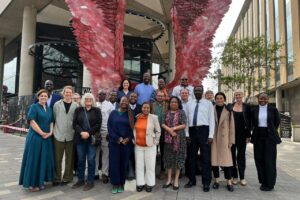
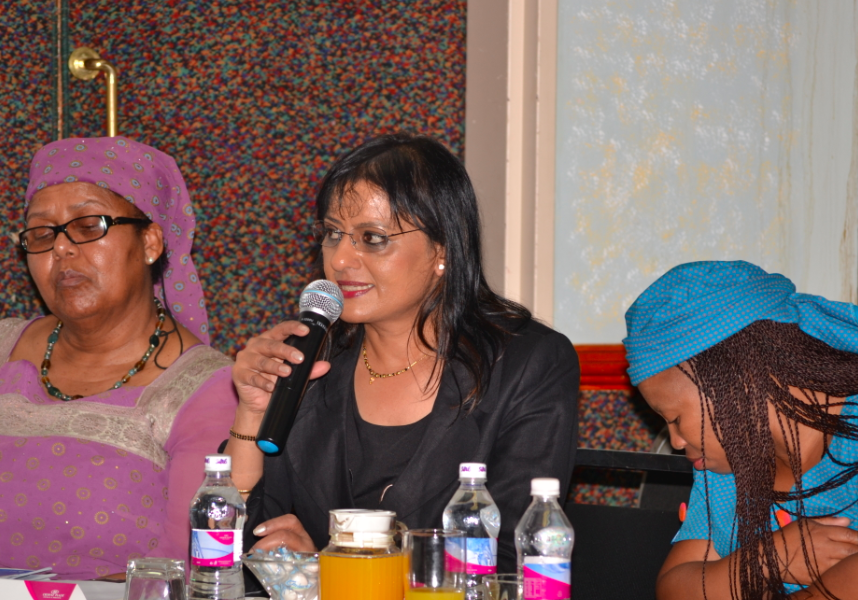
On 10-11 December, the ICJ gathered leading jurists and human rights defenders in Harare, Zimbabwe to discuss measures needed to implement legal reform and change attitudes to eliminate sexual and gender based violence.
For International Human Rights Day (10 December), the ICJ organized high level panel discussions, chaired by ICJ Commissioner Justice Qinisile Mabuza.
Justice Mabuza, who is also a judge for the High Court of Swaziland and for the Common Market for Eastern and Southern Africa (COMESA) Court of Justice, set the tone for the discussions that followed in setting out the extent of the problem of sexual and gender based violence not only within Africa but also on a global scale.
One panel consisted of Judge Lillian Tiabtemwa-Ekrikubinza, Supreme Court Judge of Uganda; Magistrate Asha Ramlal of South Africa; Judge Lavender Makoni, High Court Judge of Zimbabwe; and Magistrate Polo Banyane from Lesotho.
This panel provided a judicial perspective from magistrates and judges from across the region, sharing their experiences and common problems encountered in tackling sexual and gender based violence in their jurisdictions.
The judges spoke about the need to adopt a gender analysis in judicial decision-making and to be conscious of the way in which pervasive gender stereotypes can influence even seemingly gender neutral decisions.
They also spoke of the practicalities in implementing domestic violence and sexual offences legislation as well as the challenges involved when this legislation does not exist.
Welekazi Stifole from Tshwaranang Legal Advocacy Centre; Kelvin Hazangwi from Padare (Men’s Forum on Gender) and Lisa Gormley, ICJ Consultant on women’s rights participated in a second panel.
The participants shared their perspectives and insights concerning reviewing legislation, identifying problems with evidence gathering, analyzing the international and regional frameworks covering gender based violence and in working with perpetrators and within communities to change cultural attitudes.
The second day of the gathering featured a consultative meeting on the ICJ’s forthcoming Practitioner’s Guide on Women’s Access to Justice for Gender-Based Violence.
ICJ expert consultant Lisa Gormley presented the Guide and participants shared their experiences in relation to its content, as well as developing strategies for its future implementation.
Representatives of civil society, judges, lawyers and law students participated in both events, contributing to a broader understanding of sexual and gender based violence issues and strengthening national and international networks of defenders of women’s rights.