Sep 18, 2019
The ICJ has issued its Annual Report 2018, which offers a concise summary of the work carried out by the ICJ over the past year.
The ICJ’s long-standing work to uphold the international framework underlying human rights protection has never been so important as in the current climate of wholesale assault upon this framework and the very concept of the rule of law.
Many of the current challenges to human rights stem from the same issues that we have been dealing with in recent decades. However, there are also new challenges that come from States that would not have been predicted 15 years ago.
The rise of democratically elected, self-styled populist leaders who embrace and espouse authoritarian, nationalistic and xenophobic policies has led to almost unprecedented levels of licence to engage in attacks and incitement against some of the most marginalized in society, including immigrants, asylum seekers and minorities.
These leaders have also attacked human rights defenders, civil society organizations, the civilian judiciary, the media, and have arrested opposition leaders and at times have cynically used counter-terrorism laws against and military courts to try peaceful protesters.
Such practices are exquisitely antithetical to and utterly destructive of the rule of law and the rights-based system that the ICJ has sought to promote and protect over the years.
While these new challenges to human rights are particularly insidious and damaging, the ICJ is well-placed to deal with them by virtue of our unique approach which focuses on the transformative role and potential of the law, of justice institutions and of justice actors.
Our ability to influence legal and institutional reform and individual justice actors is unparalleled and this reinforces the relevance and effectiveness of the ICJ.
Accordingly, rule of law issues on the international and regional levels continued to dominate the ICJ’s core work in 2018.
As indicated in this Report, the ICJ helped to protect the European Court of Human Rights from proposed ‘reforms’ that would have undermined its ability to operate effectively, and contributed to the UN Global Compact for Safe, Orderly and Regular Migration, which recognizes the need to observe human rights in the context of large movements of peoples.
As part of our global and regional efforts to strengthen independent and accountable judicial systems, the ICJ contributed to the elaboration of the Lilongwe Principles on the Appointment of Judicial Officers and was actively engaged with the UN Global Judicial Integrity Network.
In addition, we continued our work on traditional and customary justice systems and the opportunities they offer for enabling access to justice consistent with internationally recognized fair trial standards.
Finally, it is worth noting that 2018 marked the 70th anniversary of the Universal Declaration of Human Rights.
Given the current climate, it is altogether fitting to recall and reflect on why this seminal document was adopted and why it envisions that human rights be protected by the rule of law.
Accordingly, the ICJ will continue to work vigorously to uphold the rule of law around the world, always mindful that what we do is ultimately intended to benefit all rights holders in all places and in all contexts.
Download
Universal-ICJ Annual Report 2018-Publications-Reports-Annual Report-2019-ENG (full report in PDF)
Sep 18, 2019 | Events, News
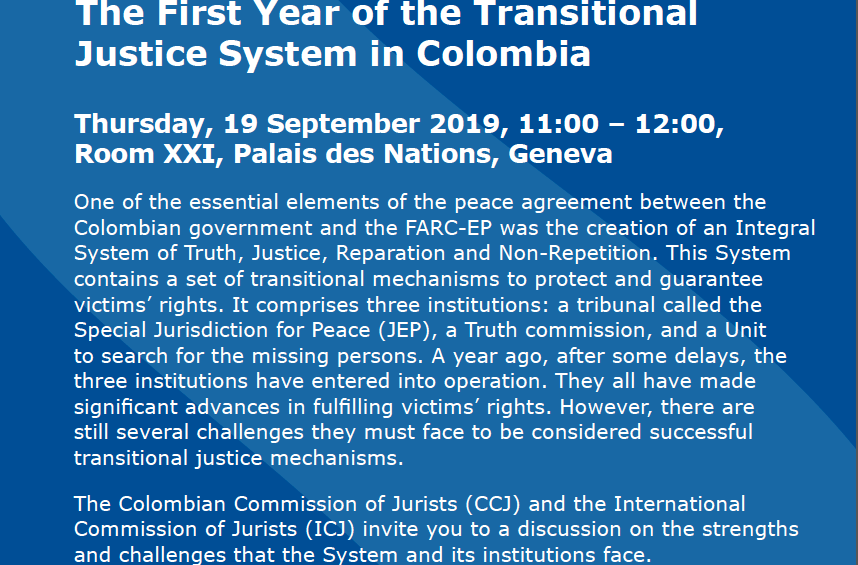
The Colombian Commission of Jurists (CCJ) and the ICJ invite you to a discussion on the strengths and challenges that the System and its institutions face. The event takes place Thursday, 19 September 2019, at 11:00 – 12:00, room XXI, in the Palais des Nations.
One of the essential elements of the peace agreement between the Colombian government and the FARC-EP was the creation of an Integral System of Truth, Justice, Reparation and Non-Repetition. This System contains a set of transitional mechanisms to protect and guarantee victims’ rights. It comprises three institutions: a tribunal called the Special Jurisdiction for Peace (JEP), a Truth commission, and a Unit to search for the missing persons. A year ago, after some delays, the three institutions have entered into operation. They all have made significant advances in fulfilling victims’ rights. However, there are still several challenges they must face to be considered successful transitional justice mechanisms.
The panel will feature:
Moderator:
- Sam Zarifi, ICJ Secretary General
Speakers:
- Philippe Texier, former judge of the Court of Cassation of France and ICJ commissioner.
- Edinson Cuéllar, Colectivo Sociojurídico Orlando Fals Borda
- Ana María Rodríguez, CCJ Senior Legal Adviser
- Rocío Quintero, ICJ Legal Adviser
Printed copies of the ICJ report “Colombia: Jurisdicción Especial para la Paz, análisis a un año y medio de su entrada en funcionamiento” will be available. (Full version in Spanish and Executive Summary in English)
A flyer for the event is available here.
Sep 17, 2019 | Advocacy
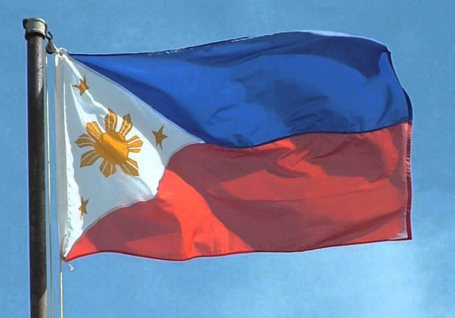
In a statement issued today, the ICJ and other human rights groups, as well as lawyers and members of the legal profession, expressed deep concern over the increasing attacks against lawyers under President Duterte’s administration.
Find the full statement available as PDF here: Philippines-attacks against lawyers escalating-advocacy-2019-ENG
Sep 17, 2019 | Advocacy
The ICJ welcomes the final report of the FFM (Independent International Fact Finding Mission).
Having monitored justice and human rights in Myanmar for over 50 years, the ICJ has an established presence in the country, and supports justice sector actors to implement reforms necessary to protect human rights through the rule of law.
With this experience, the ICJ concurs with conclusions of the FFM and the Special Rapporteur: particularly those highlighting the pervasive damage of unchecked military power and impunity on human rights, the rule of law, and development of an inclusive democratic society.
Myanmar’s Government has failed to fulfill international law obligations to investigate, prosecute and punish perpetrators of rights violations. In this context, the launch of an IIMM (Independent Investigative Mechanism for Myanmar) is necessary, and welcome. Myanmar should cooperate with the Mechanism, whose files may enable future prosecutions of individual criminals.
But this Mechanism is not a court: all States, particularly Myanmar, must work toward holding criminal trials, in competent jurisdictions, inline with international standards – noting that prosecutions target criminals, not the country.
Other immediate opportunities for Myanmar to protect human rights include: amending the National Human Rights Commission Law to expand its mandate and independence; amending laws that facilitate impunity such as the 1959 Defence Services Act; enacting an anti-discrimination law; and reviewing the 1982 Citizenship Law. These legislative reforms are urgent and possible steps that are necessary to demonstrate if the Government is genuine about its international law obligations. Any constitutional reform must also expand rights protections.
As the FFM’s mandate is ending, the ICJ would like to ask the experts: how can States best monitor and implement your recommendations, particularly related to international criminal accountability?
See also:
ICJ, Achieving Justice for Gross Human Rights Violations in Myanmar, January 2018
Terms of Reference for the UN Independent International Mechanism for Myanmar (unofficial Burmese translation), 16 January 2019, available here.
Statement to the Human Rights Council by Mr. Nicholas Koumjian, Head of the Independent Investigative Mechanism for Myanmar (unofficial Burmese translation with accompanying English text), 9 September, available here.