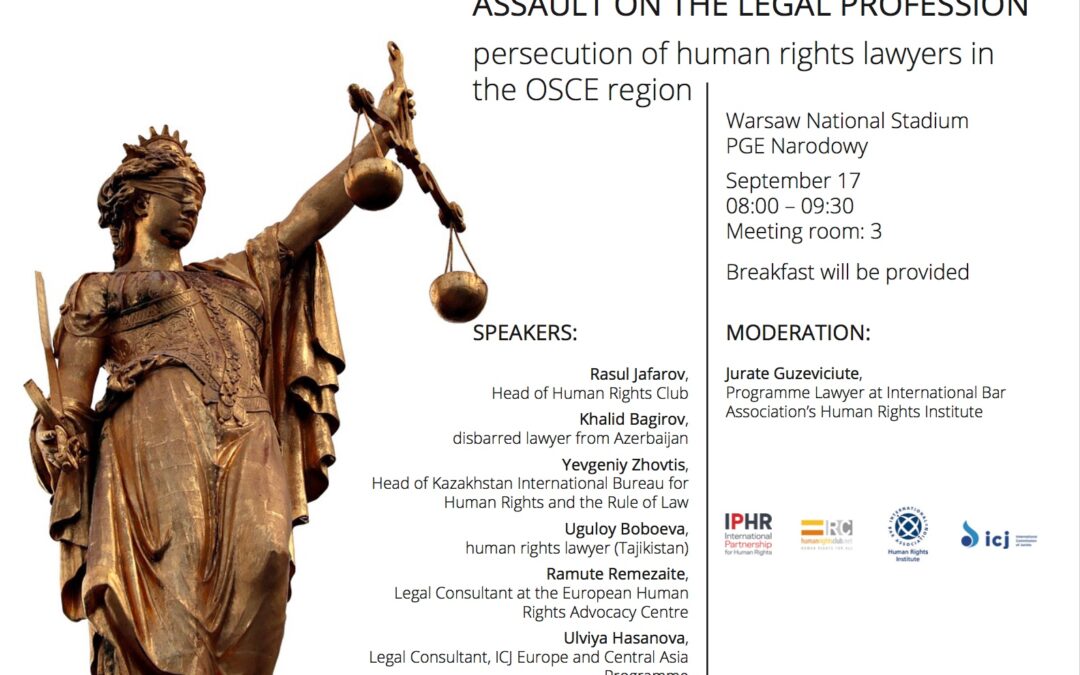
Event: assault on the legal profession
This event held in Warsaw, Poland, will provide an overview of the ongoing challenges human rights lawyers in the OSCE region are facing in their daily work.
A flyer for the event is available here.

This event held in Warsaw, Poland, will provide an overview of the ongoing challenges human rights lawyers in the OSCE region are facing in their daily work.
A flyer for the event is available here.

Antonio Guterres should publicly condemn China’s widespread violations of the rights of its Muslim minority citizens, especially in Xinjiang Province, the ICJ demanded in a joint letter submitted along with Amnesty International, the International Federation for Human Rights (FIDH), Human Rights Watch, and the World Uyghur Congress.
The joint letter urged the UN Secretary-General to call for an end to widespread arbitrary detention of Muslim and minority communities through the immediate closure of Xinjiang’s ‘political education’ camps. Reports by the United Nations and human rights organizations have estimated that more than one million Muslims have been interned in extra-legal ‘political education’ detention camps.
“In the past few years, China’s violations in Xinjiang, including arbitrary detention, ill-treatment, pervasive surveillance and political indoctrination of Turkic Muslims, have intensified, and continue to worsen,” said Sam Zarifi, ICJ’s Secretary General.
“Quiet diplomacy has not worked. Mr. Guterres must exercise the full extent and power of his mandate as leader of the United Nations to demand and ensure protection of the rights of everyone in China, including all individuals in Xinjiang.”
The joint letter urged the UN Secretary-General to publicly support the creation of a UN fact-finding mission to assess the scale and nature of crimes under international law and human rights violations in Xinjiang. It further called on the UN Secretary-General to refrain from unqualified praise of China’s ‘Belt and Road’ Initiative – an investment initiative in which Xinjiang is a centerpiece – and to meet with representatives from the Uyghur community to hear first-hand of their plight.
“China has exerted immense and often inappropriate political pressure on individuals, governments and organizations criticizing its human rights violations,” said Zarifi. “The United Nations must push back against China’s political pressure and provide principled and steadfast leadership to end China’s political and cultural repression, and ongoing human rights violations in Xinjiang.”
Public criticism of China’s actions in Xinjiang has been growing. In August 2018, a member of the UN Committee on the Elimination of Racial Discrimination noted that China’s treatment of its Muslim minority citizens in Xinjiang had turned the region into a “‘no rights’ zone” with individuals being treated as “enemies of the State based on nothing more than their ethno-religious identity”. In March 2019, the UN High Commissioner for Human Rights, Michelle Bachelet, highlighted the need for her office to gain full access to facilitate independent and impartial investigation into ‘wide patterns of enforced disappearances and arbitrary detentions’ in the region. On 10 July 2019, 25 countries issued a joint statement calling on China to refrain from subjecting Uyghurs and other Muslim and minority communities in Xinjiang to arbitrary detention, surveillance and restrictions on freedom of movement.
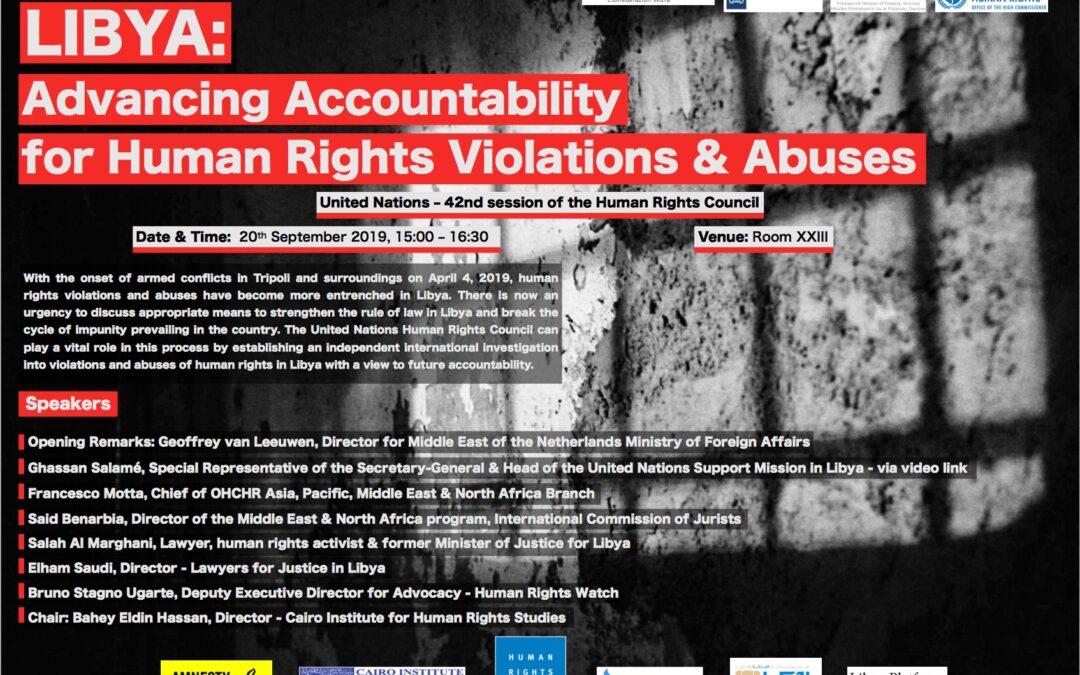
The ICJ, together with the Netherlands, Finland and Swiss missions to Geneva, OHCHR and other NGOs invite you to a panel discussion on Advancing accountability for human rights violations and abuses in Libya at the UN Human Rights Council in Geneva.
The event takes place on Friday 20 September 2019, at 15:00 – 16:30, Room XXIII, in the Palais des Nations.
With the onset of armed conflicts in Tripoli and surroundings on April 4, 2019, human rights violations and abuses have become more entrenched in Libya. There is now an urgency to discuss appropriate means to strengthen the rule of law in Libya and break the cycle of impunity prevailing in the country. The United Nations Human Rights Council can play a vital role in this process by establishing an independent international investigation into violations and abuses of human rights in Libya with a view to future accountability.
The event will be opened by Geoffrey van Leeuwen, Director for Middle East of the Netherlands Ministry of Foreign Affairs, moderated by Bahey Eldin Hassan, Director of the Cairo Institute for Human Rights Studies, and feature:
–Elham Saudi, Director – Lawyers for Justice in Libya
–Ghassan Salamé, Special Representative of the Secretary-General & Head of the United Nations Support Mission in Libya – via video link
–Francesco Motta, Chief of OHCHR Asia, Pacific, Middle East & North Africa Branch
–Said Benarbia, Director of the Middle East & North Africa program, International Commission of Jurists
–Salah Al Marghani, Lawyer, human rights activist & former Minister of Justice for Libya
–Bruno Stagno Ugarte, Deputy Executive Director for Advocacy – Human Rights Watch
A flyer for the event is available here.
The ICJ today put the spotlight the increase and “normalisation” of enforce disappearances and abductions worldwide, with examples about Turkey, Egypt and Saudi Arabia, speaking at the UN Human Rights Council in Geneva.
The statement, made during the general debate, reads as follows:
The International Commission of Jurists (ICJ) shares concerns highlighted by the Working Group on Enforced and Involuntary Disappearances in its report (UN doc. A/HRC/42/40) at the “increasing use of extraterritorial abductions” and at the “normalization of these practices” globally. ICJ previously documented such practices in our 2017 report, Transnational Injustices.
The killing of Jamal Khashoggi by Saudi Arabia is an example of particular concern, as is the reported abduction, by Turkish authorities, of persons they claim to be linked to “terrorist organisations.” Several of these people, who later reappeared in Turkish prisons, are currently facing serious challenges in mounting a proper legal defence. Complaints of the families have not been properly investigated.
In Egypt, the National Security Agency (NSA) has been abducting and forcibly disappearing hundreds as a technique to suppress dissent. This year, the ICJ and Adalah reported on the disappearance of 138 detainees for between 10 to 219 days, many of whom were subjected to torture.
The ICJ urges the Council to address these worrying developments and calls on all countries:
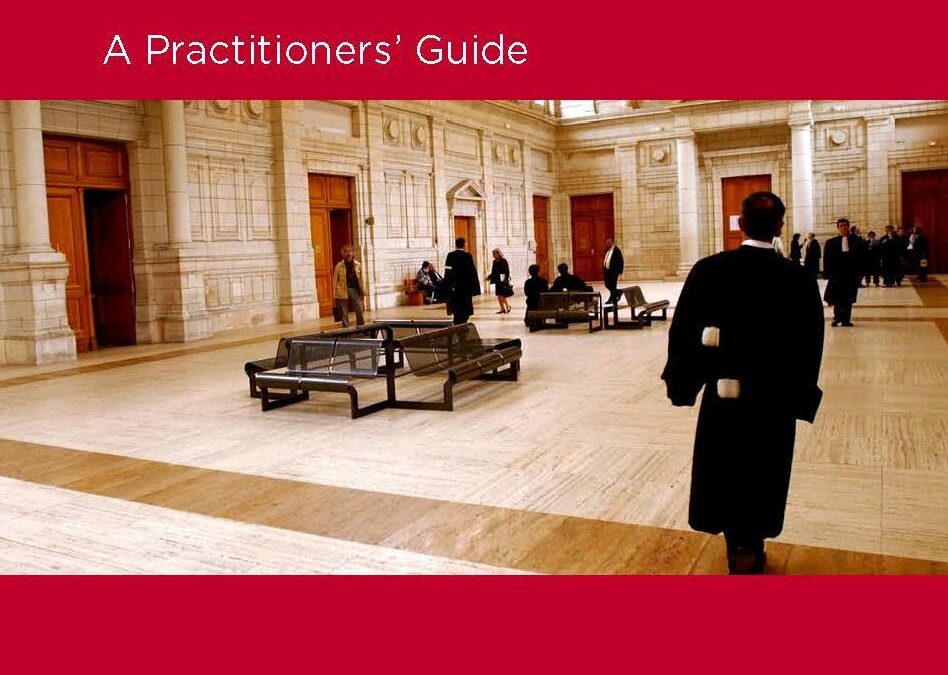
ICJ Practitioners’ Guide no. 14 Investigation and Prosecution of Potentially Unlawful Death aims to help legal practitioners ensure that potentially unlawful death is investigated in a manner that respects international human rights law and, where responsibility is identified, that appropriate measures of accountability ensue.
At the heart of the Guide is the Minnesota Protocol on the Investigation of Potentially Unlawful Death (2016), which was published by the Office of the United Nations High Commissioner for Human Rights (OHCHR) in 2017.
The revised Minnesota Protocol (2016) is the Revised United Nations Manual on the Effective Prevention and Investigation of Extra-legal, Arbitrary and Summary Executions, the revision of which involved expertise from the International Commission of Jurists and other leading organizations.
It is a companion document to the UN Principles on the Effective Prevention and Investigation of Extra-legal, Arbitrary and Summary Executions (1989), and sets a common standard of performance in investigating potentially unlawful death and a shared set of principles and guidelines for States, as well as for institutions and individuals who play a role in death investigations.
Topics covered by the Practitioners’ Guide include:
This Practitioners’ Guide builds on earlier Guides, especially:
– International Law and the Fight Against Impunity: ICJ Practitioners’ Guide no. 7
The Practitioners’ Guide would not have been possible without the financial support of the Ministry of Foreign Affairs of Finland and was produced as part of the ICJ’s Global Accountability Initiative.
Download the full report
Universal-PG 14 Unlawful death-Publications-Reports-Practitioners Guides series-2019-ENG (PDF of English version)
Universal-PG 14 Unlawful death-Publications-Reports-Practitioners Guides series-2021-THA (PDF of Thai version)
Universal-PG 14 Unlawful death-Publications-Reports-Practitioners Guides series-2020-SPA (PDF of Spanish version
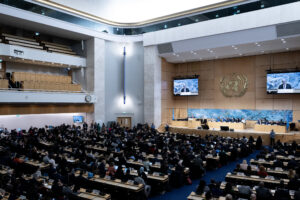 HRC61: Oral statement of The ICJ in the interactive dialogue with the Special Rapporteur on the Rights of Persons with Disabilities
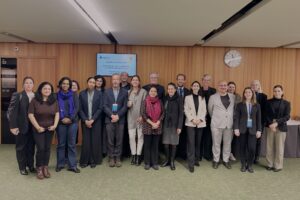 ICJ Convenes Global Forum to Strengthen Non-Criminal Justice Pathways for Redress
 Thailand: Draft Domestic Violence Act should be revised in line with international standards
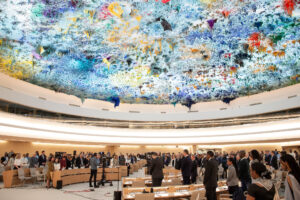 HRC61: ICJ Statement on attacks against the rule of law and independent legal professionals — highlighting situations in Afghanistan and Guatemala