Mar 15, 2015
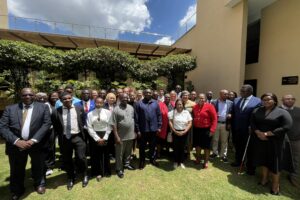
El 13 y 14 de marzo, en Lima y Ayacucho (Perú), la CIJ y el Equipo Peruano de Antropología Forense (EPAF) realizaron dos seminarios sobre los crímenes de desaparición forzada y de ejecución extrajudicial.
Con ocasión a estos Seminarios la CIJ hizo el lanzamiento de su nueva Guía para profesionales No. 9 Desaparición forzada y ejecución extrajudicial: Investigación y sanción.
Ambos Seminarios abordaron, desde la perspectiva del Derecho internacional y de experiencias comparadas, diferentes aspectos de la investigación y sanción de los crímenes de desaparición forzada y de ejecución extrajudicial, con especial énfasis en el papel de la antropología forenses y demás disciplinas científicas en la investigación de estos crímenes y en la búsqueda e identificación de las víctimas y localización y restitución de sus cuerpos.
En Lima, el Seminario contó con la participación de César Landa (Comisionado peruano de la CIJ), Wilder Tayler (Secretario General de la CIJ), Gisela Ortiz (Directora de operaciones del EPAF) Diana Ramírez (Instituto Nacional de Medicina Legal y Ciencias Forenses de Colombia), Oscar Loyola (EPAF), Gloria Cano (APRODEH), Carlos Rivera (Instituto de Defensa Legal), Ronald Gamarra (Abogado de la CIJ) y Federico Andreu (Representante para Suramérica de la CIJ). El Seminario de Ayacucho contó con la participación de José Pablo Baraybar (Director del EPAF), Gisela Ortiz, Diana Ramírez, José Suasnavar (Fundación de Antropología Forense de Guatemala), Ronald Gamarra y Federico Andreu.
A ambos eventos asistieron, entre otros, magistrados, jueces, fiscales, representantes del Instituto de Medicina Legal de Perú y de la Defensoría del Pueblo, miembros de las organizaciones no gubernamentales de derechos humanos y de asociaciones de víctimas, autoridades locales, representantes de la comunidad diplomática y periodistas.
Universal-Desaparición forzada y ejecución extrajudicial PG9-Publications-Practitioners’ guide series-2015-SPA (informe en Español)
Universal-Enforced Disappearance and Extrajudicial Execution PGNo9-Publications-Practitioners’ guide series-2015-ENG (full report in PDF, English)
Mar 13, 2015 | Advocacy, Non-legal submissions
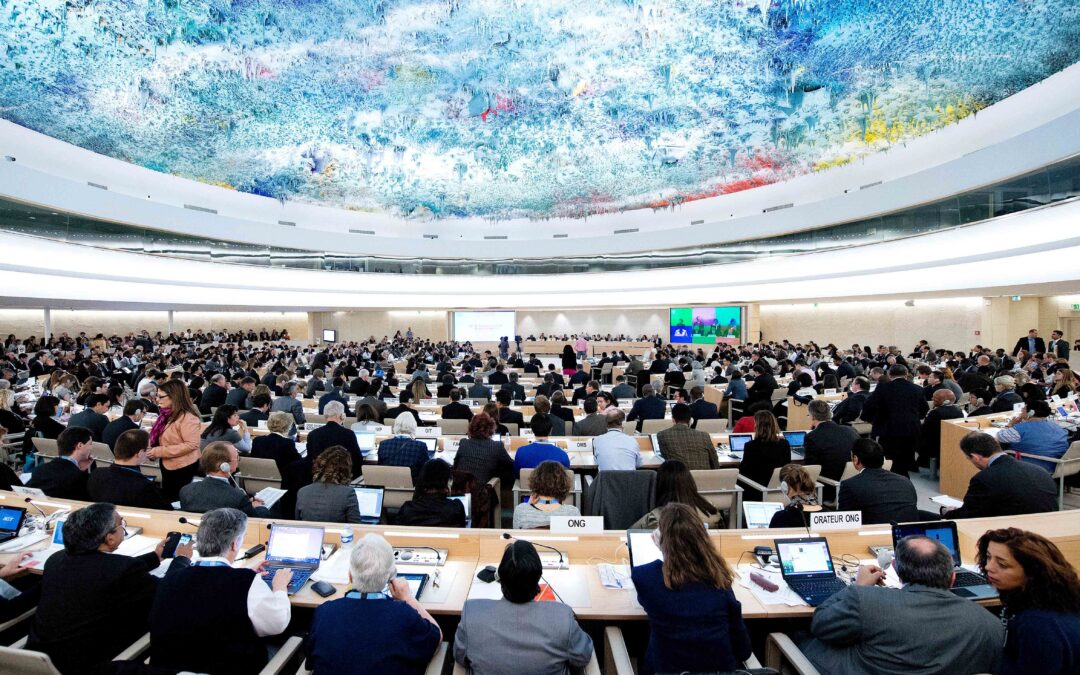
The Colombian Commission of Jurists, an affiliate of the ICJ, today called for the UN Human Rights Council to uphold the use of civilian courts, rather than military tribunals, to try civilians and to adjudicate claims for human rights violations.
An oral statement to the UN Human Rights Council highlighted that:
- military tribunals should as a matter of principle have no jurisdiction to try civilians or to adjudicate claims of serious human rights violations;
- These matters should be the domain of civilian courts; and
- The jurisdiction of military tribunals should be restricted to specifically military offenses committed by military personnel.
The oral statement emphasised to the global reach of the issue, referring by way of example to the military commissions established by the United States of America at Guantánamo Bay, as well as recent negative developments in Colombia, Egypt, Thailand and Pakistan.
The statement noted that the Principles Governing the Administration of Justice Through Military Tribunals presented to the Commission on Human Rights by Emmanuel Decaux in 2006 (UN Doc E/CN.4/2006/58), are widely referenced, but have yet to receive full recognition by the Human Rights Council. The statement added its support to the calls by the Special Rapporteur on Independence of Judges and Lawyers, the Working Group on Arbitrary Detention, and others, for the Council to endorse and seek implementation of the Principles without further delay.
The statement responds to an expert consultation on the administration of justice through military tribunals convened by the Council (UN Doc A/HRC/28/32).
The full oral statement can be downloaded in pdf format here: Advocacy-HRC28-MilitaryCourts-OralStatement-2015
Said Benarbia, Director of ICJ’s Middle East North Africa Programme participated in the expert consultation.
His statement can be found here: MENA-Military Courts HRC28-Advocacy-2015-ENG (full text in PDF).
Thailand exercised its right of reply, which can be viewed in the UN webcast archive, here.
Mar 13, 2015 | Advocacy
The ICJ today supported, with 91 other NGOs from around the world including a number of ICJ national sections and affiliates, an oral statement calling on the UN Human Rights Council to establish a Special Rapporteur on Privacy at its current session.
The UN General Assembly, the UN High Commissioner for Human Rights, existing special procedure mandate holders, and many states and civil society organisations have recognized the pressing need to provide continuous, systematic and authoritative guidance on the scope and content of the right to privacy as enshrined in article 12 of UDHR and article 17 of ICCPR. Significantly, all of them have identified the need to assess and monitor the ongoing implementation of this right. The creation of a Special Rapporteur would fill this long-standing gap.
Although the initiative has its origins in concerns about online and telecommunications surveillance, the call is for the creation of a Special Rapporteur with a mandate to look at all aspects of the right to privacy, in all contexts, including issues relating to private sector practices.
The text of the oral statement, delivered by Article 19, can be downloaded here: Advocacy-HRC28-Privacy-JointOralStatement-2015

Mar 12, 2015 | News
Pakistan’s decision to fully reinstate the death penalty puts at imminent risk of execution more than 500 people on death row who have exhausted all avenues of appeal, with another 8000 facing death penalties, said the ICJ today.
“The total abandonment of the moratorium on the death penalty is a disaster for human rights in Pakistan,” said Sam Zarifi, ICJ’s Asia director. “We fear a major acceleration in the flow of executions we have seen over the past few months—none of which do anything to protect the rights of the Pakistani people.”
25 people have been executed since 16 December 2014, when Pakistan lifted a moratorium on executions in cases of capital punishment related to terrorism. The decision to partially lift a six-year unofficial moratorium on executions was in response to an attack on a school in Peshawar, killing 150 people, almost all of them children. Pakistan Tehreek-e-Taliban claimed responsibility for the attack.
In January, Pakistan also amended the Constitution and the Army Act, 1952, empowering military courts to try civilians for terrorism related offences.
“The Pakistani people face a very real threat from terrorist attacks, but there is no indication that the death penalty will decrease this threat,” said Zarifi. “Instead, the government is targeting hundreds of people on death row whose convictions had nothing to do with terrorism-related offenses.”
In Pakistan, capital punishment is prescribed for 27 different offences, including blasphemy, sexual intercourse outside of marriage, kidnapping or abduction, rape, assault on the modesty of women and the stripping of women’s clothes, smuggling of drugs, arms trading and sabotage of the railway system. Many of these crimes do not meet the threshold of ‘most serious crimes’ stipulated by Article 6 of the International Covenant on Civil and Political Rights (ICCPR).
Pakistan ratified the ICCPR in 2010. Article 6 of the ICCPR, guaranteeing the right to life, requires that states restrict capital punishment to only the ‘most serious crimes’. The UN Special Rapporteur on extrajudicial, summary or arbitrary executions has clarified that in the context of the death penalty, the definition of the ‘most serious crimes’ is limited to those cases in which there was an intention to kill, which resulted in the loss of life.
In December 2014, the UN General Assembly adopted a resolution, that emphasizes that that the use of the death penalty undermines human dignity and that calls on countries that maintain the death penalty to establish a moratorium on its use with a view to its abolition. An overwhelming majority of 117 UN Member States voted in favor of the call for a worldwide moratorium on executions, as a step towards abolition of the death penalty.
Pakistan should reinstate a moratorium on the death penalty, with a view to definitively abolishing the practice in law,” said Zarifi.
ICJ opposes capital punishment in all cases without exception. The death penalty constitutes a violation of the right to life and the right not to be subjected to cruel, inhuman or degrading punishment.
Contact
Sam Zarifi, ICJ Asia Pacific Regional Director (Bangkok), t: +66 807819002; email: sam.zarifi(a)icj.org
Reema Omer, ICJ International Legal Advisor for Pakistan (London), t: +447889565691; email: reema.omer(a)icj.org

Mar 12, 2015 | News
Thailand must live up to its repeated promises to bring justice to the case of Somchai Neelapaijit, who was forcibly disappeared eleven years ago today, said the ICJ.
In multiple statements since Somchai Neelapaijit was abducted on a street in central Bangkok, the Royal Thai Government has pledged to resolve the case.
Before the United Nations Human Rights Council in May 2008, the Royal Thai Government pledged “to do its utmost and leave no stone unturned in order to bring to justice the case of Mr Somchai.”
In April 2014, Thailand gave assurances to the UN Committee that monitors the implementation of the Convention Against Torture in Geneva that the Department of Special Investigations (DSI) was continuing to investigate Somchai Neelapaijit’s case without any interference.
“Despite the passage of eleven years, Thai authorities have not carried out a comprehensive investigation or exhausted the possible sources of evidence,” said Sam Zarifi, ICJ’s Regional Director for Asia and the Pacific. “What is required is the DSI’s real and determined effort to identify the perpetrators and bring them to justice.”
Thailand signed, but has not yet ratified, the Convention Against Enforced Disappearance in January 2012.
Pending the ratification, Thailand must desist from any acts that would defeat the objective and purpose of the Convention, which among other things places an obligation on State Parties to make enforced disappearance a criminal offence, to thoroughly and impartially investigate cases, bring those responsible to justice and treat family members of a ‘disappeared’ person as victims in their own right.
Promisingly, the Ministry of Justice is in the process of drafting a Torture and Enforced Disappearance Prevention and Suppression Bill, which, in its current form, defines and criminalizes enforced disappearance and torture in Thailand.
“This new law must ensure there is no statute of limitations on enforced disappearance, which is not only a serious human rights violation but also a crime under international law,” added Zarifi. “Somchai’s fate and whereabouts remain unresolved, and his family continue to demand truth and justice from the authorities.”
To mark the 10-year anniversary of Somchai Neelapaijit’s “disappearance”, the ICJ released a report Ten Years Without Truth: Somchai Neelapaijit and Enforced Disappearances in Thailand, in which it documented the tortuous legal history of the case.
The report highlighted several key problems, such as poor use of forensic evidence, failure to follow and develop leads, unduly restrictive interpretation of national and international law, and above all, a lack of political will to resolve a case that remains emblematic of the culture of impunity in Thailand.
Contact
Sam Zarifi, ICJ Asia-Pacific Regional Director, (Bangkok), t:+66 807819002, e-mail: sam.zarifi(a)icj.org