Oct 10, 2014 | Advocacy, Cases, Legal submissions
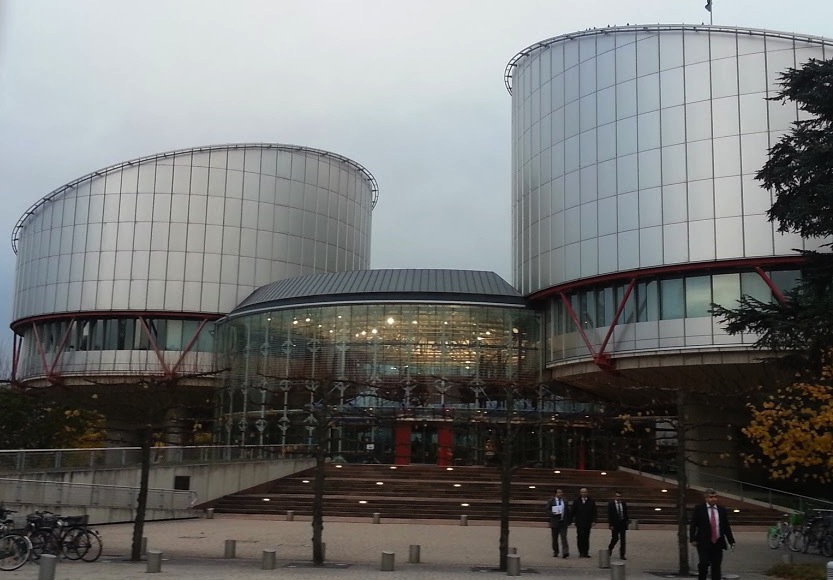
Today, the AIRE Centre (Advice on Individual Rights in Europe), the European Council on Refugees and Exiles (ECRE) and the ICJ presented joint written observations to the Grand Chamber of the European Court of Human Rights in the case of F.G. v. Sweden (Application No. 43611/11).
The case arises from the Swedish authorities’ dismissal of an asylum application. The submissions focus on:
- the obligation for Parties to the ECHR to ensure that the risk upon removal is addressed in such a way as to guarantee that the Convention’s protection is practical and effective;
- whether requiring coerced, self-enforced suppression of a fundamental aspect of one’s identity, which enforced concealment of one’s religion entails, is compatible with Convention obligations;
- the relevance and significance of the EU asylum acquis and Court of Justice of the EU’s jurisprudence on these matters; and
- the relevance and significance of the 1951 Geneva Refugee Convention.
SWEDEN-ECHR amicus FG vs Sweden-Advocacy-Legal Submission-2014-ENG (full text in PDF)
Oct 10, 2014 | News
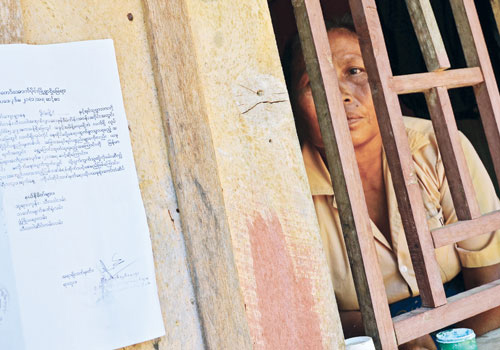
As Thai Prime Minister General Prayut Chan-Ocha visits Myanmar to revive the stalled Dawei Special Economic Zone (SEZ), the governments of Thailand and Myanmar should cooperate to establish a legal framework protecting the human rights of the area’s residents, said the ICJ.

Oct 10, 2014 | Artículos, Noticias
La CIJ también pide la ratificación del Segundo Protocolo Opcional al Pacto Internacional de Derechos Civiles y Políticos.
En el marco de la conmemoración del Día Mundial contra la Pena de Muerte, la CIJ considera oportuno recordar que ésta representa una pena cruel, inhumana y degradante, que viola el derecho a la vida consagrado en la Declaración Universal de los Derechos Humanos.
Lamentablemente, mientras que en el mundo existe una tendencia generalizada hacia la abolición de la pena capital, el Estado de Guatemala mantiene la pena de muerte.
En efecto, la Constitución Política de Guatemala regula y limita la aplicación de la pena de muerte en su artículo 18.
Sin embargo, faculta al Congreso de la República a abolirla, lo cual es congruente con la tendencia mundial a favor de la abolición.
En ocasiones los hechos de extrema violencia que se viven en Guatemala han llevado a sectores de la opinión pública guatemalteca a volcarse a favor de la pena de muerte.
Algunos sectores políticos aprovechan este fenómeno, para incluir en sus programas de trabajo la aplicación de la pena de muerte, con el objetivo de captar los votos de un pueblo cansado de violencia e impunidad.
Por su parte grupos particulares y funcionarios públicos aún se pronuncian a favor de la aplicación de la pena de muerte, aún cuando se ha demostrado que su eficacia para prevenir el delito es casi nula.
En el año 2012, la Cámara Penal de la Corte Suprema de Justicia conmutó la totalidad de las sentencias de muerte por cadena perpetua, sentando un importante precedente en materia judicial y de apoyo a la abolición de la pena máxima en Guatemala.
Por su parte, el Organismo Ejecutivo no se ha pronunciado acerca de la necesidad de aplicar la pena de muerte para combatir la violencia imperante, lo cual es un signo positivo.
Ante estos hechos, en el marco de la conmemoración del Día Mundial contra la Pena de Muerte, la CIJ insta al Congreso de la República a abolir la pena de muerte y ratificar el Segundo Protocolo Opcional al Pacto Internacional de Derechos Civiles y Políticos.
Al respecto, Ramón Cadena, Director de la CIJ para Centroamérica expresó: “Cabe recordar que el Examen Periódico Universal (EPU) examinó durante el año 2012 al Estado de Guatemala. Varios Estados le recomendaron la abolición total de la pena de muerte y la ratificación del Segundo Protocolo Opcional al Pacto Internacional de Derechos Civiles y Políticos. La facultad de abolir totalmente la pena de muerte le corresponde al Congreso de la República y la ratificación del Protocolo Opcional le corresponde al Organismo Ejecutivo y al Congreso de la República. Esperamos una acción pronta para cumplir con estas recomendaciones.”

Oct 10, 2014 | News
La CIJ también pide la ratificación del Segundo Protocolo Opcional al Pacto Internacional de Derechos Civiles y Políticos.

Oct 9, 2014
The ICJ has submitted information to the UN Committee on Economic, Social and Cultural Rights in preparation for the Committee’s examination of the initial periodic report of Uganda under the International Covenant on Economic, Social and Cultural Rights (ICESCR).
During its pre-sessional working group meeting in December 2014, the Committee will adopt a ‘List of Issues’ for the examination in June 2015 of the initial periodic report of Uganda under ICESCR.
In this submission, the ICJ draws the Committee’s attention to the detrimental impact of the adoption and enforcement of the Anti-Homosexuality Act 2014, as well as the effect of pre-existing and extant criminalization of consensual same-sex sexual conduct on the respect for and the protection and realization of certain Covenant rights.
The organization considers that those laws violate the following Covenant rights of Uganda’s population generally, and in particular of lesbian, gay, bisexual, transgender and intersex persons, living or working in Uganda:
- The principle of non-discrimination (article 2(2));
- The right to work (article 6) and to just and favourable conditions of work (article 7);
- The right to an adequate standard of living, including adequate housing (article 11);
- The right to the enjoyment of the highest attainable standard of physical and mental health (article 12);
- The right to education (article 13).
Uganda-CESCR_LOI-legalsubmission-2014-ENG