Nov 5, 2013 | News
The ICJ welcomes the release on 1 November of lawyer Zinaida Mukhotorova, from a psychiatric facility in Astana, Kazakhstan.
The lawyer was forcibly detained in the psychiatric facility, the “Medical Centre of the Problems of Psychiatric Health”, for almost three months.
Despite her release, the results of the psychiatric examination were said to be pending.
“While this release is welcome, the ICJ remains concerned that Zinaida Mukhotorova’s detention represented a reprisal for her legitimate exercise of her professional duties as a lawyer, in violation of her right to liberty as well as the UN Basic Principles on the Role of Lawyers,” said Róisín Pillay, Director of the ICJ Europe Regional Programme. “It must now be ensured that Zinaida Mukhotorova can challenge the legality of her detention through fair procedures, and receive appropriate measures of reparation for any violation of her human rights” she added.
Zinaida Mukhtorova was placed in the psychiatric facility on 9 August after she was forcibly taken from her house by several police officers and medical personnel.
Among the reasons given for her detention were her “possibly querulous” and “litigious” activity.
The ICJ previously raised concern that her psychiatric detention was being justified on grounds consisting in the exercise of her legitimate professional functions as a lawyer.
The ICJ continues to monitor the case, including ongoing legal challenges in the Kazakhstan courts to the lawfulness of Zinaida Mukhtorova’s detention in psychiatric facilities on this and another previous occasion.
In this regard, the ICJ calls on the government to ensure fairness of the proceedings challenging her detention.
Contact:
Róisín Pillay, Director, ICJ Europe Programme, roisin.pillay(a)icj.org
Temur Shakirov, Legal Adviser, ICJ Europe Programme, temur.shakirov(a)icj.org
Kazakhstan-Mukhtorova statement-news-webstory-2013-Rus (full text in pdf)
Nov 1, 2013 | News
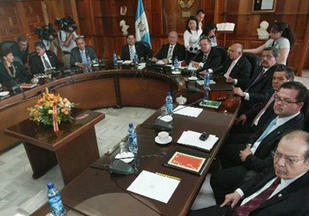
Jueces europeos y centroamericanos expresaron en Tegucigalpa su preocupación por la falta de independencia del sistema judicial en países como Honduras, Guatemala y El Salvador.
Instaron a los Estados a tomar medidas para garantizar la autonomía de esa rama del poder público.
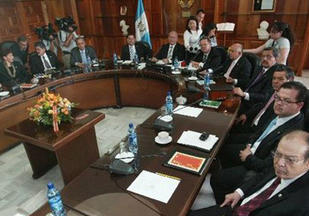
El 31 de octubre y 1 de noviembre se llevó a cabo en la ciudad de Tegucigalpa (Honduras) el foro denominado “Encuentro de Juristas Europeos y Centroamericanos: experiencias sobre la defensa de la independencia judicial”.
Durante el mismo, se tuvo la oportunidad de intercambiar experiencias en torno a las amenazas que hoy día persisten en contra de la independencia judicial y las medidas que los estados de Centroamérica deben tomar para fortalecer los diferentes sistemas de justicia en la región.
El foro reconoce el papel fundamental que tienen todos los jueces y juezas en la construcción y consolidación de la Democracia y el Estado de Derecho en Centroamérica; las y los participantes expresan su preocupación porque aún existen serias amenazas a la independencia judicial, entendiéndose dicha independencia como una garantía para los ciudadanos y ciudadanas.
En tal sentido, los estados centroamericanos deben respetar plenamente la independencia del Poder Judicial.
Honduras-Foro Jueces Independencia en CA-news-web story-2013-spa (full text in pdf)
Nov 1, 2013 | Artículos, Noticias
Jueces europeos y centroamericanos expresaron en Tegucigalpa su preocupación por la falta de independencia del sistema judicial en países como Honduras, Guatemala y El Salvador.
Instaron a los Estados a tomar medidas para garantizar la autonomía de esa rama del poder público.
El 31 de octubre y 1 de noviembre se llevó a cabo en la ciudad de Tegucigalpa (Honduras) el foro denominado “Encuentro de Juristas Europeos y Centroamericanos: experiencias sobre la defensa de la independencia judicial”.
Durante el mismo, se tuvo la oportunidad de intercambiar experiencias en torno a las amenazas que hoy día persisten en contra de la independencia judicial y las medidas que los estados de Centroamérica deben tomar para fortalecer los diferentes sistemas de justicia en la región.
El foro reconoce el papel fundamental que tienen todos los jueces y juezas en la construcción y consolidación de la Democracia y el Estado de Derecho en Centroamérica; las y los participantes expresan su preocupación porque aún existen serias amenazas a la independencia judicial, entendiéndose dicha independencia como una garantía para los ciudadanos y ciudadanas.
En tal sentido, los estados centroamericanos deben respetar plenamente la independencia del Poder Judicial.
Honduras-Foro Jueces Independencia en CA-news-web story-2013-spa (Texto completo en PDF)
Oct 29, 2013
The report explains how the historic system of statutory immunities in Nepal, compounded by the lack of political will, has prevented victims of human rights violations from obtaining effective remedy and reparation for their injuries.
The ICJ released its new 117-page report Authority without Accountability: The struggle for justice in Nepal today in Kathmandu.
During Nepal’s decade-long civil war, serious human rights abuses were committed by government security forces as well as the armed Maoist insurgents, with an estimated 17,000 persons killed, many unlawfully, and over 1,300 subject to enforced disappearance.
Despite an explicit commitment to provide for effective justice in the peace agreement between the Maoists and the government, to date, no one has been prosecuted or convicted for any conflict-related human rights violations.
Three successive governments between 2008 and 2012 have withdrawn more than 1055 criminal cases in the district courts, with many cases involving allegations of unlawful killings, torture and ill-treatment, including rape and other sexual violence.
“The political identity of the government has changed but the culture of impunity remains the same,” said Sheila Varadan, ICJ South Asia legal advisor. “Political parties continue to exploit the well-established system of political privilege and embedded impunity for personal interest and political gain.”
Numerous public officials continue to enjoy impunity for alleged violations of human rights in Nepal. For instance, Colonel Raju Basnet, suspected of being involved in the systematic enforced disappearance and torture in 2003, was promoted to Brigadier General in October 2012.
Inspector General of Police Kuber Singh Rana, who was allegedly involved in the extra-judicial killing of five students, has been promoted twice and is now the most senior police officer in the country and in charge of implementing urgent reforms that focus on accountability.
Bal Krishna Dhungel, leader of the Unified Communist Party of Nepal-Maoist (UCPN-M), was convicted of murder and sentenced to life imprisonment in 2011, but continues to be an active politician and will contest in the November 2013 parliamentary election.
Agni Sapkota, another UCPN-M Central Committee member, allegedly involved in the unlawful killing of Arjun Bahadur Lama, was appointed as Minister of Information and Communication in May 2011, despite a March 2008 Supreme Court order directing police to investigate the allegations against him.
The ICJ notes that none of the major political parties have made any tangible commitments to address accountability for human rights meaningfully, including in political manifestos in the lead up to the Constituent Assembly election in November.
“The major political parties seem unwilling to address the systemic impunity prevalent in Nepal, both for past violations and present conduct,” Varadan added.
“If there is to be lasting peace and political stability in Nepal, the people of Nepal must be afforded their right under international law to an effective remedy and reparations for violations of human rights,” Sheila Varadan said. “The Nepali people have consistently demanded justice. It’s time the politicians and military listened and delivered.”
The ICJ calls on the major political parties in Nepal to publicly pledge that, if elected, they will commit to implement the following:
(1) Ensure the new constitution does not permit any State official to grant an official pardon, withdraw a case or grant an amnesty to anyone suspected or convicted of an offence constituting a gross human rights violation or crime under international law;
(2) Enact legislation to ensure that any parliamentarian or State official against whom there are credible allegations of responsibility for gross violations of human rights or crimes under international law are suspended from service in public office, including armed forces personnel representing Nepal in international peace-keeping operations, at least pending the outcome of an independent and impartial investigation and fair trial;
(3) Limit the application of Section 5.2.7. of the Comprehensive Peace Agreement to ensure that only those cases brought during the course of the conflict and up to – and not after – the signing of the Peace Agreement are eligible for withdrawal, while also ensuring that cases involving credibly allegations of gross human rights violations are not withdrawn;
(4) Implement the decisions of the Supreme Court issuing instructions to the Attorney General and all relevant law enforcement personnel to proactively and vigorously pursue all cases alleging serious violations of international human rights law;
(5) Review the Public Security Act, 2046 (1989), the Police Act, 2012 (1955), the Armed Police Act, 2058 (2001), and the Army Act 2006, in order to remove any immunity afforded to State officials for gross violations of human rights.
Contact:
Ben Schonveld (Kathmandu), ICJ South Asia Director, t: +977 9804596661; email: ben.schonveld(a)icj.org
Sheila Varadan (Kathmandu), ICJ South Asia Legal Advisor, m: +977 9803654599 ; email: sheila.varadan(a)icj.org
Sam Zarifi (Bangkok), ICJ Asia Pacific Regional Director, m: +66 807819002 ; email: sam.zarifi(a)icj.org
Nepal-SUMMARY-Authority without Accountability-Publication-report summary-2012 (full text in pdf)
Nepal-FULL-Authority without accountability-publications-report-2012 (full text in pdf)