Jul 8, 2019 | News
The ICJ welcomes the report issued today by the United Nations Office of the High Commissioner for Human Rights (OHCHR) documenting human rights violations and abuses in Indian administered Kashmir and Pakistan administered Kashmir.
The ICJ called upon both India and Pakistan to take immediate measures to implement the Report’s main recommendations, and to hold security forces as well as non-state actors accountable for human rights violations and abuses.
The Report follows a June 2018 report that documented similar violations, as well as the widespread impunity for human rights violations by Indian security forces and armed groups allegedly supported by Pakistan. The Indian Government has rejected both reports as a violation of its “sovereignty and territorial integrity”. The Pakistan government has welcomed the report and called for the establishment of a United Nations Commission of Inquiry.
“It is unfortunate that India has again refused to acknowledge the facts set out in the OHCHR report, or to pledge action on its recommendations,” said Frederick Rawski, Asia Pacific Director for the ICJ.
“This is an opportunity for India, a member of the Human Rights Council, to lead by example. It can start by repealing the Armed Forces Special Powers Act and launching an investigation into rights abuses in line with international standards and the guidelines set out by the Indian Supreme Court,” he added.
The Report documents human rights violations by Indian security forces including extrajudicial killings, arbitrary detentions, unlawful custodial deaths, enforced disappearances, and ill-treatment and torture, including rape and sexual violence, in Indian-administered Kashmir.
According to the Report, based on data from civil society organization Jammu and Kashmir Coalition of Civil Society (JKCCS), 71 extrajudicial killings were allegedly committed by security forces in 2018 (for a total of 1081 between 2008 and 2018). Between 2016 and 2018, 1253 people have been blinded by pellet guns.
The Report highlights how the extraordinary powers granted to security forces by the Armed Forces (Jammu and Kashmir) Special Powers Act, 1990 has been wielded arbitrarily and led to near total impunity from prosecution. In addition, it documents human rights abuses committed by non-state armed groups in Indian-administered Kashmir including kidnappings, killings and rape.
The Report also documents rights violations in Pakistan-administered Kashmir, including restrictions on freedom of expression and opinion, assembly and association, and the abuse of vague and overbroad anti-terrorism laws in contravention of international human rights law.
The Report documents cases of arbitrary arrest by local authorities and intelligence agencies, including charging 19 activists with treason for organizing a rally in November 2018, and the arbitrary detention of 30 members of the Jammu Kashmir National Students Federation in March 2019 by Pakistani law enforcement. The Report notes the particular vulnerability of journalists to threats, harassment and arbitrary arrest.
“While we commend Pakistan for welcoming the Report, the fact remains that the Government has done little to prevent the continuation of human rights violations by its security forces, or to implement the recommendations of the previous report,” Rawski said.
“Pakistan must take action to hold perpetrators of rights violations accountable, and take action to end threats and violence targeted at human rights defenders and journalists,” he added.
The ICJ called on both Pakistan and India to grant unconditional access to the OHCHR and Special Procedures of the UN Human Rights Council, and to ensure that human rights defenders and journalists can carry out their work without threats or reprisals from security forces and non-State armed groups.
The ICJ also underscores the importance of the OHCHR recommendation that the United Nations set up an independent commission of inquiry into allegations of rights violations by all parties to the conflict.
The ICJ urged both the Indian and Pakistan governments to respect, protect and fulfill their international human rights obligations in Kashmir, to accept the Report’s findings and take immediate and effective action to implement its recommendations.
Jul 8, 2019
1316 NGOs working on diverse human rights issues from 174 States and territories around the world are calling the #HRC41 for the renewal of the mandate of the Independent Expert on violence and discrimination on the basis of sexual orientation and gender identity.
Universal-HRC41general-debateAdvocacy-open letters-2019 ENG (full statement, in PDF)

Jul 8, 2019 | Artículos, Noticias
La CIJ anuncia que llevará a cabo una misión para observar el proceso de elección de magistrados de Corte Suprema de Justicia y Salas de Apelaciones. Para el efecto, ya se encuentra en el país, el Comisionado de nacionalidad chilena Alejandro Salinas (foto), quien permanecerá en el país, hasta el viernes 12 de julio.
La misión tendrá reuniones con el Procurador de Derechos Humanos, Diputados del Frente Parlamentario por la Transparencia y contra la Corrupción y miembros del Sector Académico, Gremio de Abogados y representantes del Sector de Justicia, que participarán en las próximas comisiones de postulación.
El objetivo de esta misión es promover la mayor transparencia del proceso de elección de las y los magistrados de la Corte Suprema de Justicia y Salas de Apelaciones, para que dichos procesos de elección logren que los próximos magistrados/as sean electos por méritos y no por compadrazgos políticos y así, que exista la mayor independencia posible en el Poder Judicial y por lo tanto, mayor respeto de los derechos humanos.
Se espera que la misión haga públicas sus conclusiones el viernes 12 de julio, después de implementar la agenda respectiva.
Además, el 11 de julio, llevará a cabo un foro público, para estimular el debate social sobre la necesidad de un Poder Judicial independiente, que cuente con magistrados imparciales, idóneos y honestos.
Ramón Cadena, Director de la CIJ para Centroamérica expresó: “En las elecciones del año 2009, las acciones de la Comisión Internacional contra la Impunidad en Guatemala (CICIG), conjuntamente con las de la sociedad guatemalteca, permitieron que el proceso en sí mismo, se constituyera en un mecanismo de depuración, ya que el Congreso de la República tuvo que dar marcha atrás y no nombrar como Magistrados de Corte Suprema de Justicia a tres personas. En 2014, la CICIG conjuntamente con el Ministerio Público, llevaron a juicio después de las elecciones, a tres magistrados de Corte Suprema de Justicia, recién electos, que tuvieron que renunciar al cargo. Las elecciones de este año, estarán marcadas por la ausencia de la CICIG, lo cual significará enfrentar mayores desafíos para lograr avances en la lucha contra la impunidad, durante todo el proceso de elección.”
Jul 5, 2019 | Advocacy, Non-legal submissions
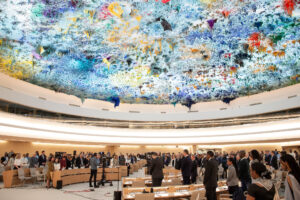
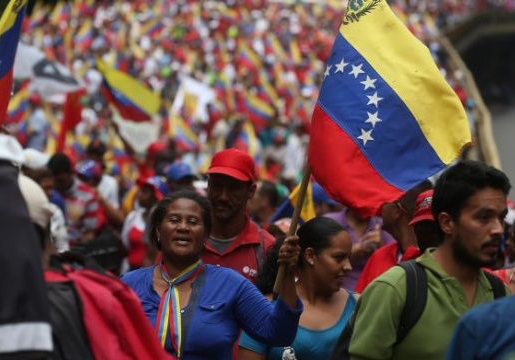
The ICJ today highlighted the role of the “National Constituent Assembly” in Venezuela in contributing to the destruction of the rule of law in the country, in an oral statement to the UN Human Rights Council.
The statement, delivered during an Enhanced Interactive Dialogue on the situation for human rights in Venezuela, in the presence of the UN High Commissioner for Human Rights, read as follows:
“Madame High Commissioner,
Next week the International Commission of Jurists (ICJ) will publish a detailed report on the “National Constituent Assembly” of Venezuela (NCA) mentioned briefly in your report (A/HRC/41/18, para 34).
The NCA was created unilaterally by the President, without popular endorsement through a referendum, in blatant violation of the Constitution.
As your report notes (footnote 26), the NCA has purported to act as a de facto Parliament. In this it has unlawfully usurped legislative powers clearly assigned by the Constitution to the already-existing National Assembly. Among other things, it has called early presidential elections and removed the Attorney General. It was the NCA that actually rescinded legislative immunity for National Assembly representatives, enabling their arrest and prosecution, after the Supreme Court purported to authorize it to do so (para 37).
Furthermore, as ICJ has extensively documented and your report recognizes, the Venezuelan judiciary has been deprived of its independence and impartiality (paras 56 and 76).[1] Lack of access to justice for widespread gross human rights violations by security forces is pervasive (paras 39 to 59, 77 to 79).
In this context, the NCA essentially operates as an unchecked instrument of the President, unilaterally modifying the legal system, declaring itself above the Constitution, and contributing to the destruction of the rule of law.
We therefore particularly welcome the recommendations in your report to restore the independence of the justice system and impartiality of the Attorney General (81(j)), to bring perpetrators of gross human rights violations to justice (81(c)), and for a renewed focus by the Council on accountability (para 83).
The ICJ further urges that the NCA must be abolished and the National Assembly allowed to operate normally with its full powers, if the rule of law is to have any chance of being restored in Venezuela.
We support calls for the Human Rights Council to establish a Commission of Inquiry or similar mechanism.
Thank you.”
[1] See, among other ICJ reports: Venezuela: The Sunset of the Rule of Law (2015); The Supreme Court of Justice of Venezuela: an Instrument of the Executive Branch (2017); and Achieving Justice for Gross Human Rights Violations in Venezuela (2017).
Jul 4, 2019 | News
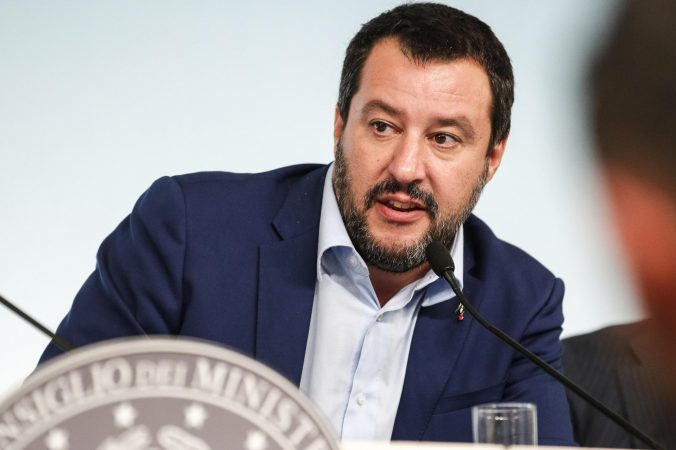
The ICJ called today on the Italian Government to reject the incendiary statements issued by Matteo Salvini, Vice-President of the Council of Ministers and Minister of Interior, calling for the “reform” of the judiciary after a court issued a judgement with which he did not agree.
On 2 and 3 July, Minister Salvini issued a series of press statements and tweets that accused a judge in Agrigento of having made a “political judgment” for having ordered the release of the captain of the rescue boat SeaWatch3, Carola Rackete.
She is alleged to have rammed a boat of the law enforcement officers of the Guardia di Finanza in an effort to rescue 53 migrants stranded at sea for more than two weeks.
Minister Salvini followed his complaints with a direct request “to reform the judiciary, select and promote those who administer it in Italy and change the criteria of appointment, because this is not the justice that is useful for a country that wants to grow.”
“The declarations by Minister Salvini are unbecoming of a representative of an Executive and constitute a direct threat to the independence of the Italian judiciary” said Massimo Frigo, Senior Legal Adviser of the ICJ Europe Programme.
“Calling for a reform of the system of appointments and dismissal of judges in the wake of pernicious accusations of “politicization” are a clear threat to the independence of the judiciary and to any judge that would rule against the wishes of Mr Salvini,” he added.
“The Italian Government should publicly reject the threats by Matteo Salvini and ensure that any justice reform is fully in compliance with international and national constitutional standards on the independence of the judiciary”, said Frigo.
The ICJ emphasizes that international standards on the independence of the judiciary forbid such inappropriate interference with judicial process by the exective.
In that connection, the Committee of Ministers of the Council of Europe, which includes Italy, has affirmed that “[i]f commenting on judges’ decisions, the executive and legislative powers should avoid criticism that would undermine the independence of or public confidence in the judiciary. They should also avoid actions which may call into question their willingness to abide by judges’ decisions, other than stating their intention to appeal.”
On Twitter, Mr Salvini has also issued declarations that undermine the right to presumption of innocence under articles 14.2 ICCPR and 6.2 ICCPR by calling Carola Rackete an “outlaw” and a “criminal” before and after the ruling of the judge on release.
The ICJ has informed the UN Special Rapporteur on the independence of judges and lawyers of the situation.
Background
On 2 July 2019, the judge for preliminary investigations (Giudice per le Indagini Preliminari – G.I.P.) of Agrigento, Sicily, Italy – i.e. the judge competent under Italian criminal procedure law to decide on the lawfulness of one’s pre-trial detention – ruled that the detention of Carola Rackete, captain of the boat SeaWatch3, was unlawful and ordered her immediate release.
The judge based her decision on the Italian Constitution that dictates the primacy of international law standards over national law. Following this principle, she found that the criminal offences of which Carola Rackete was charged could not stand.
She was accused of disregarding the orders of the Italian law enforcement officers (Guardia di Finanza) not to disembark at Lampedusa (Sicily) harbour and to have hit with her boat the boat of the Guardia di Finanza that was standing between the SeaWatch3 and the point of disembarkment. Carola Rackete held that she was acting upon her duty to rescue and disembark the people on her boat and that there was urgency to do so.
With regard to the criminal charge of “resistance or violence against a military vessel” (article 1100 of the Navigation Code), the judge found it inapplicable because the boat concerned could not be considered a “military vessel”. On the merits of the criminal offence of “resistance to a public officer under article 337 of the Criminal Code, the judge ruled that the clause of exclusion of criminal responsibility of “implementation of a duty” provided by law (article 51 Criminal Code) did apply and therefore that Carola Rackete could not hold any criminal responsibility. The duty to implement was identified as the duty of rescue at sea that international maritime law foresees for all captains of maritime vessels.
The judge ruled that such duty has primacy in Italian law and further found that the legal provision under which the Minister of Interior, Matteo Salvini, ordered the prohibition of disembarkment on Lampedusa (article 11-ter of d.lgs. 286/98, introduced by Law Decree 53/2019, the so-called “Salvini Decree-bis”) had to respect international law as envisaged by the provision itself.
Carola Rackete remains under investigation for facilitation of irregular migration under a separate criminal proceeding.