Jul 4, 2019 | Доклады, Доклады судебного наблюдения, Новости, Публикации
Сегодня МКЮ опубликовала юридическое заключение, в котором анализируется пересмотр уголовного дела в отношении правозащитника из Кыргызстана Азимжана Аскарова. Пересмотр дела имел место в свете решения Комитета по правам человека ООН, признавшего многочисленные нарушения прав человека в ходе первого судебного процесса по делу. МКЮ пришла к выводу о том, что данные нарушения не были исправлены в ходе пересмотра дела.
В частности, МКЮ отмечает, что в ходе пересмотра не были должным образом исследованы заявления Аскарова о пытках, которым он подвергался во время заключения под стражей. Не было проведено новое расследование, суд не допросил новых свидетелей и не подверг критическому анализу доказательства, которые легли в основу обвинительного приговора. В результате в ходе пересмотра дела не была соблюдена презумпция невиновности и требования справедливого судебного разбирательства.
Следовательно, обвинительный приговор по делу Азимжана Аскарова подлежит отмене, а сам Аскаров должен быть освобожден, заявляет МКЮ.
«Проведенный нами анализ показал, что несмотря на многолетний процесс Азимжан Аскаров был лишен права на справедливое судебное разбирательство и эффективное расследование по жалобам на пытки. Мы призываем власти Кыргызстана принять меры в свете данных выводов и отменить обвинительный приговор в отношении Аскарова, а самого Аскарова освободить из-под стражи. Если этого не будет сделано, решение Комитета ООН по правам человека останется неисполненным», – заявила Роушин Пиллей, директор Региональной программы МКЮ по странам Европы и Центральной Азии.
МКЮ пришла к выводу о необходимости возбудить расследование по жалобам на пытки и иные нарушения прав человека в отношении Аскарова, и ему должно быть предоставлено надлежащее возмещение ущерба, причиненного в связи с указанными нарушениями.
Общие сведения
15 сентября 2010 года Азимжан Аскаров, известный правозащитник из Кыргызской Республики, был признан виновным в убийстве сотрудника правоохранительных органов, покушении на соучастие во взятии заложника, незаконном ношении оружия, возбуждении межэтнической ненависти и организации массовых беспорядков.
Международная комиссия юристов (МКЮ) наблюдала за процессом с самого начала судебного разбирательства вплоть до осуждения Аскарова, и выявила многочисленные нарушения прав человека в ходе содержания Аскарова под стражей, судебного разбирательства по его делу и вынесения обвинительного приговора в 2010 году.
В 2016 г. Комитет по правам человека ООН (КПЧ) принял Соображения, в которых признал нарушения прав Аскарова, гарантированных Международным пактом о гражданских и политических правах (МПГПП). КПЧ указал, что Кыргызстан обязан выплатить Аскарову надлежащее возмещение ущерба, принять необходимые меры к его незамедлительному освобождению, отменить обвинительный приговор и, при необходимости, осуществить пересмотр дела с соблюдением гарантий справедливого судебного разбирательства.
По итогам решения КПЧ Верховный Суд Кыргызской Республики направил дело Азимжана Аскарова на новое рассмотрение по вновь открывшимся обстоятельствам в Чуйский областной суд. Пересмотр дела проходил с 4 октября 2016 года по 24 января 2017 г. Обвинительный приговор отменен не был: имело место лишь «возобновление» производства по делу.
В основу Юридического заключения МКЮ легли выводы наблюдателей, присутствовавших на ряде заседаний в Чуйском областном суде, а также анализ материалов дела. Судебный процесс анализируется в свете национального законодательства Кыргызстана, а также относимого международного права и соответствующих стандартов. От лица МКЮ заключение подписали следующие комиссары: Азхар Качалия, судья Верховного апелляционного суда ЮАР; Николас Братца, бывший председатель Европейского суда по правам человека; профессор Хуан Мендес, бывший Специальный докладчик ООН по вопросу о пытках и иных видах жестокого, бесчеловечного и унижающего достоинство обращения и наказания.
Полный текст юридического заключения доступен по ссылке: Kyrgyzstan-Askarov report II-Publications-Reports-Trial Observation reports-RUS
Jul 4, 2019 | News, Publications, Reports, Trial observation reports
In a legal opinion issued today analyzing the retrial of the Kyrgyz human rights defender Azimjan Askarov, which followed the UN Human Rights Committee finding of multiple human rights violations in his first trial, the ICJ concludes that these violations have not been remedied by the retrial.
In particular, the ICJ finds that the retrial did not effectively examine allegations of the torture of Askarov in detention. It failed to conduct new investigations, hear new witnesses or question the elements on which the initial conviction was based. As a result, the retrial did not respect the presumption of innocence or comply with the requirements of a fair trial.
As a consequence, Azimjan Askarov’s conviction should be quashed and he should be released, the ICJ said.
“This analysis shows that despite years of court hearings, Azimjan Askarov has never been afforded a fair trial or an effective investigation into his allegations that he was tortured. We call on the Kyrgyz authorities to act on these findings and to quash his conviction and release him from detention. Without this, the decision of the UN Human Rights Committee will remain unimplemented ” said Róisín Pillay, ICJ Europe and Central Asia Director.
An investigation into allegations of torture and other violations of Askarov’s human rights should be launched, the ICJ concluded, and he should be accorded full reparations for violations of his human rights.
Background
Azimjan Askarov, a prominent human rights defender in the Kyrgyz Republic, was convicted on 15 September 2010 of complicity in the murder of a law enforcement officer, attempted complicity in hostage-taking, illegal possession of firearms, incitement of interethnic hatred, and organization of riots.
The ICJ has followed his case since the initial trial and Askarov’s eventual conviction – and identified multiple violations of his human rights in detention, trial and conviction in 2010.
In 2016, the UN Human Rights Committee (HRC) adopted Views in which it found violations of Askarov’s rights under the International Covenant on Civil and Political Rights (ICCPR). The HRC decided that Kyrgyzstan was to make full reparation to Askarov; take appropriate steps to immediately release him; quash his conviction and, if necessary, conduct a new trial in due compliance with fair trial guarantees.
Following the HRC decision, the Supreme Court of the Kyrgyz Republic remanded the case of Azimjan Askarov for retrial to the Chuy Regional Court due to new circumstances. The retrial took place from 4 October 2016 to 24 January 2017. The retrial proceeded without quashing the defendant’s conviction but with “resumption” of the proceedings in the case.
The ICJ legal opinion is based on the findings from the observation of a number of hearings before the Chuy Regional Court and analysis of documents in the case. It assesses the proceedings in light of Kyrgyzstan’s domestic law as well as relevant international law and standards. The opinoin is signed on behalf of the ICJ by ICJ Commissioners Justice Azhar Cachalia, Judge of the Supreme Court of Appeal of South Africa; Justice Nicolas Bratza, former President of the European Court of Human Rights, Professor Juan Mendez, former UN Special Rapporteur on Torture and Other Cruel, Inhuman and Degrading Treatment or Punishment.
The full text of the legal opinion is available below.
In English: Kyrgyzstan-Askarov report II-Publications-Reports-Trial observation report-2019-ENG
In Russian: Kyrgyzstan-Askarov report II-Publications-Reports-Trial observation reports-2019-RUS
Jul 3, 2019 | Advocacy, Non-legal submissions
The ICJ has joined other organisations in denouncing reprisals and interference against Special Procedures, independent experts appointed by the UN Human Rights Council to report on human rights.
The statement, delivered by Asian Forum for Human Rights and Development (Forum-ASIA) on behalf of a group of NGOs, read as follows:
“Our organisations are gravely concerned by the proliferation of reprisals against Special Procedures mandate holders and members of Expert Mechanisms and Commissions of Inquiry (COI) by States, including members of the Council, as well as threats against the Special Procedures system as a whole.
Special Procedures are the eyes and ears of the Council and ensure that this body’s work remains relevant and informed by the reality of human rights on the ground. Reprisals aim to discredit, intimidate, deter and silence these experts, and to prevent civil society from engaging with them.
We are alarmed by a pattern of reprisals and non-cooperation by Council-member, the Philippines. The government has threatened the Special Rapporteur on extrajudicial killings with physical violence on numerous occasions. It has made terrorism accusations against the Special Rapporteur on the rights of indigenous peoples.
Burundi and Eritrea are also engaged in patterns of reprisals, with the Special Rapporteur on Eritrea and members of the COI’s on both Burundi and Eritrea having been attacked on multiple occasions, at the Council, the GA or in the media. The Maldives has accused the Special Rapporteur on freedom of religion or belief of spreading anti-Islamic activities, resulting in death threats against him online. The Special Rapporteur on Myanmar has faced reprisals and has also experienced violent threats on social media.
We call on States to cooperate in good faith and end all reprisals against Special Procedures and those who cooperate with them. The President and States must act immediately in meetings when such reprisals occur. This Council must safeguard its Special Procedures from all efforts to undermine them through reprisals or other dangerous initiatives.”
The joint statement was on behalf of:
Article 19
Asian Forum for Human Rights and Development
Centro de Estudios Legales y Sociales
Cairo Institute for Human Rights Studies
CIVICUS: World Alliance for Citizen Participation
Commonwealth Human Rights Initiative
Concelho Indigenista Missionário CIMI
Conectas Direitos Humanos
DefendDefenders
Franciscans International
Human Rights Law Centre
International Commission of Jurists
International Federation for Human Rights Leagues (FIDH)
International Humanist and Ethical Union
International Service for Human Rights
World Movement Against Torture (OMCT)
Jul 3, 2019 | Advocacy, Non-legal submissions
The ICJ today joined other NGOs in urging the UN Human Rights Council to take action on the Philippines.
The joint oral statement was delivered by the World Organisation Against Torture (OMCT) on behalf of OMCT, Amnesty International, the International Commission of Jurists (ICJ), Franciscans International, Swiss Catholic Lenten Fund, the International Federation for Human Rights (FIDH), FORUM-Asia. It read as follows:
“In March 2019, the UN High Commissioner for Human Rights noted that several sources “estimate that up to 27,000 people may have been killed in the context of the campaign against illegal drugs since mid-2016.”
Unlawful killings, including of children, carry on, and President Rodrigo Duterte and his administration continue to explicitly encourage these acts. In June 2019, the scale and seriousness of the reported human rights violations prompted 11 UN human rights experts to call on the Council to establish an independent investigation into such violations.
Intimidations by government officials at the highest levels against politicians, human rights defenders, journalists, and several Special Procedures mandate holders have also been rising.
At the 35th, 36th, and 38th sessions of the Council, Iceland, on behalf of a group of States, explicitly called on the government “to take all necessary measures to bring killings associated with the campaign against illegal drugs to an end and cooperate with the international community to investigate all related deaths and hold perpetrators accountable.”
In light of the failure of the government to effectively investigate and bring to justice those responsible, we urge all States to support the adoption of a resolution on the Philippines at this session, mandating the OHCHR to monitor and provide regular updates on the human rights situation to the Council, as the first step toward establishing an independent international investigation into extrajudicial killings and other human rights violations committed in the government’s ‘war on drugs.’.
Such a response is all the more important given the Philippines obligations to uphold the highest standards in human rights as a member of the Council.”
Jul 3, 2019 | Advocacy, Non-legal submissions
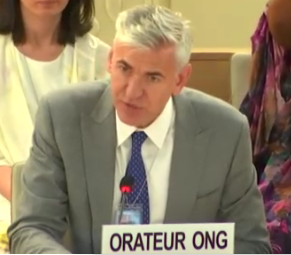
The ICJ today highlighted rising threats to the rule of law in Europe, specifically mentioning Poland, Hungary, Turkey, and Kazakhstan in a statement to the UN Human Rights Council in Geneva.
The statement read as follows:
“The International Commission of Jurists (ICJ) adopted a Declaration on Reinforcing the Rule of Law last March at its 19th World Congress in Tunis.
The Tunis Declaration (link) stresses that not only are human rights and the Rule of Law indispensable to the betterment of the human condition, but to address such contemporary challenges as catastrophic climate change and the effects of digital technology.
Against these standards, however, the ICJ is concerned at the increasing and serious threats to the Rule of Law and those who defend it around the world, including across Europe.
In Poland, the attacks on the judiciary continue under the guise of disciplinary proceedings against judges who took recourse to EU institutions to defend the Rule of Law.
Hungarian authorities, while pausing their reforms of administrative courts, have not abandoned unjustified restrictions on the judiciary’s independence and on civil society.
Finally, in Turkey, the judiciary continues to have no guarantees in law to guarantee its independent functioning.
Across Central Asia, lawyers may face disciplinary or criminal persecution for discharging their profession independently. For example, in Kazakhstan, Sergey Sizintsev was disbarred on arbitrary grounds for criticizing a problematic reform of the legal profession.
The ICJ urges the Council to give attention to these developments of extreme concern.