May 16, 2013 | News
La CIJ hoy expresó su preocupación ante la posibilidad de que la sentencia emitida días atrás por el Juzgado de Mayor Riesgo A en el juicio por Genocidio y Delito contra los Deberes de Humanidad sea anulada.
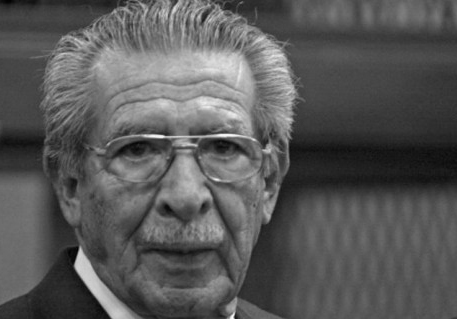
La CIJ tambien expresó su preocupación que el proceso contra el General Efraín Rios Montt (photo) por Genocidio y Delitos contra los Deberes de Humanidad tenga que repetirse.
La Corte de Constitucionalidad (CC) está examinando recursos legales planteados relacionados a la sentencia de 80 años de cárcel contra el exjefe de Estado.
Durante todo el juicio, los jueces del Tribunal recibieron presiones constantes, no solo de parte de los abogados de la defensa, sino que también de otros grupos externos que promueven más impunidad en este caso, dijó la CIJ.
Además, constantemente los abogados de la defensa presentaron diferentes recursos de amparo y otros recursos legales, con el único fin de obstaculizar el proceso y no permitir que se emitiera sentencia.
Frente a todos estos ataques, los jueces del Tribunal de Mayor Riesgo A demostraron una conducta intachable, apegada a derecho y con una firme determinación de terminar con la impunidad que ha existido alrededor de este caso.
Ramón Cadena, Director de la Oficina de la Comisión Internacional de Juristas para Centro América expresó: “Sería muy negativo para el Estado de Guatemala si se llega a anular la sentencia. La impunidad que ha existido ha hecho mucho daño a la población y a las víctimas quienes habían perdido la fe en la justicia.”
Finalmente, Cadena puntualizó: “Es más valioso que un Estado reconozca mediante una sentencia que se cometieron graves crímenes de guerra, de lesa humanidad y genocidio, a seguir escondiendo su responsabilidad con diferentes mecanismos de impunidad.”

May 13, 2013 | Адвокаси, Новости, Статьи, Юридические заявления
 Сегодня МКЮ опубликовал свои рекомендации по законопроекту, вносящему изменения в дисциплинарную систему судей в Российской Федерации.
МКЮ считает что Законопроект о внесении изменений в статьи 121 , 14 и 15 Закона Российской Федерации «О статусе судей в Российской Федерации» предусматривает целый ряд положительных изменений. Тем не менее, МКЮ с сожалением отмечает, что авторы законопроекта не воспользовались возможностью ввести в действие более обширные реформы, направленные на ликвидацию институциональных, материальных и процессуальных недостатков системы, создающих почву для злоупотреблений и способствующих произвольному и непоследовательному применению мер дисциплинарного взыскания.
Russia-judicialdisciplinelaw-comment-2013-rus (скачать комментарий на русском)

May 13, 2013 | News
On 13 May, the Hong Kong Court of Final Appeal granted W, a transgender woman, the right to marry her male partner. The ICJ, which made submissions in the case, applauds this decision.
W is a resident of Hong Kong who has undergone gender reassignment surgery, paid for by the Hong Kong Government, and who holds a national identity card and passport recording her sex as female.
In 2008 she applied to the Registrar of Marriages seeking confirmation that she could marry her male partner.
The Registrar denied her request on the grounds that “the biological sexual construction of an individual is fixed at birth and cannot be changed.”
Because “only an individual’s sex at birth counts,” the Registrar would not celebrate the marriage.
The trial court and court of appeal upheld the Registrar’s interpretation of the Marriage Ordinance and Matrimonial Causes Ordinance and ruled that it did not conflict with Hong Kong’s Basic Law or its obligations under the International Covenant on Civil and Political Rights.
These courts relied on the 1970 British case of Corbett v. Corbett, which held that sex was fixed immutably at birth.
W won her case at the Court of Final Appeal, which ruled in a 5-4 decision that the Marriage Ordinance and Matrimonial Causes Ordinance ignored the “psychological and social elements of a person’s sexual identity” and thus were inconsistent with the constitutional right to marry.
Furthermore, the ordinances were unconstitutional because they denied W the right to marry at all and thus impaired the very essence of the right.
While the Court granted the parties leave to make further submissions as to the exact nature of the declaratory relief, it held that “a transsexual in W’s situation” should in principle be granted a declaration that she is in law a woman within the meaning of the marriage ordinances and “therefore eligible to marry a man.”
Importantly, the Court also stated: “We would not seek to lay down a rule that only those who have had full gender reassignment surgery involving both excising and reconstructive genital surgery, qualify. We leave open the question whether transsexual persons who have undergone less extensive treatment might also qualify.”
“This is a historic decision,” said Alli Jernow, Senior Legal Advisor at the International Commission of Jurists. “Not only has W won her own case at the Court of Final Appeal, her courage and commitment have changed the lives of transgender people in Hong Kong.”
The parties have an additional 21 days to file written submissions. The Court’s proposed order gives the Hong Kong legislature time to respond but indicates that even in the absence of intervening legislation, the marriage ordinances would be given a remedial interpretation to include W.
Photo by K.Y. Cheng: Michael Vidler, solicitor of the appellant, holds the judgment in his hand outside Court of Final Appeal.

May 13, 2013
The ICJ today published its recommendations on a draft law introducing changes to the disciplinary system for judges in the Russian Federation.
The ICJ considers that the Draft Law amending Articles 12-1, 14 and 15 of the Law of the Russian Federation “On the Status of Judges in the Russian Federation” includes a number of positive amendments. Nevertheless, the ICJ regrets that this opportunity has not been taken to introduce more comprehensive reforming legislation, to address the institutional, substantive and procedural weaknesses in the disciplinary system that allow for abuse and facilitate arbitrariness and inconsistency in the application of disciplinary sanctions against judges.
Russia-judicialdisciplinelaw-comment-2013-eng (download the comment in English)
Russia-judicialdisciplinelaw-comment-2013-rus (download the comment in Russian)
May 10, 2013 | News
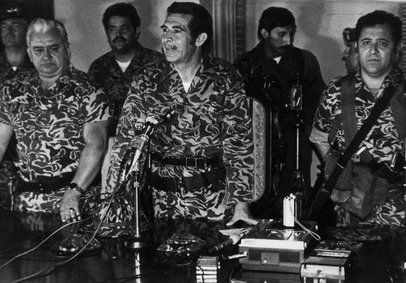
La CIJ celebra que el proceso contra el General Efraín Rios Montt (center on the photo) por Genocidio y Delitos contra los Deberes de Humanidad haya concluido el viernes 10 de mayo en la ciudad de Guatemala.
La CIJ observó el debate por medio del abogado Miguel Moerth y apoyó proceso y el debido cumplimiento del Derecho Internacional de los Derechos Humanos y del Derecho Internacional Humanitario por medio del peritaje presentado por el Director de su oficina para Centroamérica.
Dicha oficina se ha mantenido atenta y ha abogado por el derecho de las víctimas a la verdad y la justicia.
Durante el proceso la CIJ llamó la atención sobre el uso abusivo de la figura del amparo, recusaciones, incidentes y otros recursos presentados por la defensa que pretendieron en diferentes momentos anular u obstaculizar el desarrollo del juicio.
La CIJ respalda decididamente al Tribunal de Mayor Riesgo “A” por haber llevado a cabo su difícil tarea, con respeto a las normas del debido proceso y la garantía del derecho de defensa de los acusados y, por haber resistido con las presiones recibidas durante el juicio, que incluyeron amenazas contra integridad personal de miembros del Tribunal.
La CIJ considera que el derecho de las víctimas a un juicio justo e imparcial y a conocer la verdad de los hechos, ha sido respetado con las acciones llevadas a cabo durante el juicio por dicho Tribunal.
Wilder Tayler, Secretario General de la Comisión Internacional de Juristas expresó: “Celebramos este triunfo de la Justicia sobre la Impunidad. Después de 30 años y de tanto esfuerzo, el derecho a la justicia de las víctimas ha sido respetado; la sociedad guatemalteca ha dado un primer y muy importante paso en el camino hacia la reconciliación. Esta sentencia fortalece el Sistema de Justicia en Guatemala y constituye un importante precedente para evitar que crímenes tan graves puedan repetirse. Constituye igualmente un ejemplo para toda la región americana en su combate contra la impunidad”.
Photo: Bettman/Corbias