Dec 4, 2012
In a report published today, the ICJ calls for comprehensive reforms of the disciplinary system for judges in Russia as a means to ensure an independent judiciary that is an effective guardian of the rule of law.
The ICJ report Securing Justice: the Disciplinary System for Judges in the Russian Federation focuses on disciplinary action against judges, in particular on dismissals.
It considers how dismissals and the disciplinary system affect the independence of judges, which is essential to the Rule of Law and the right to a fair trial.
An unusually high number of judges are dismissed each year in the Russian Federation, the report says.
“The threat of dismissal, and the uncertainty of the grounds on which a judge can be dismissed, affects the capacity of all judges to act independently,” said Róisín Pillay, Director of the ICJ Europe Programme. “The threat of disciplinary action may hang over a judge for many years, since there is no limitation period for such action. This makes the judge susceptible to pressure from within the judicial hierarchy or from the executive.”
When disciplinary action is taken, there is a lack of guarantees to ensure fair procedures for the judges concerned, the report further notes.
The report makes recommendations for the reform of laws and procedures on judicial discipline in the Russian Federation to strengthen the safeguards for judges against abuse.
It also stresses that a deeper and more universal culture of respect for the judiciary and its independence, as well as a sense of autonomy and empowerment within the judiciary itself, are necessary to prevent abuses of the judicial disciplinary process.
“Such reform should be conducted through consultation with civil society, academic and legal experts, as well as with the judiciary,” Róisín Pillay added.
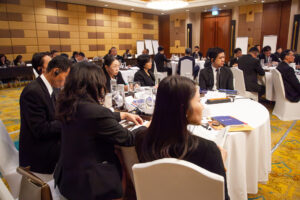
The Report follows an ICJ mission to the Russian Federation in April 2012, to assess the guarantees in regard to disciplinary procedure, grounds for disciplining and dismissals of judges and their potential effect on the security of tenure and the independence of the judiciary.
The mission included Azhar Cachalia, Judge of the Supreme Court of Appeals of South Africa and Commissioner of the ICJ; Alejandro Salinas, lawyer from Chile and a member of the CIJL Advisory Committee; Róisín Pillay, Director of the ICJ Europe Programme, and Temur Shakirov, Legal Adviser at the ICJ Europe Programme.
The mission held meetings with the President of the Supreme Court; with judges of the High Arbitration Court, including members of the Disciplinary Judicial Presence and the Judicial Commission on Ethics of the Judicial Council; with the Judicial Department under the Supreme Court; with members of the Human Rights Council under the President of the Russian Federation and its Head, the Human Rights Adviser to the Russian Federation President; with a number of former judges who had been dismissed or resigned; with academic experts on matters of judicial discipline and the judicial system; and with lawyers and human rights NGOs.
Contact:
Róisín Pillay, Director, ICJ Europe Programme, roisin.pillay(at)icj.org
Temur Shakirov, Legal Adviser, ICJ Europe Programme, temur.shakirov(at)icj.org
Russia-ICJ Mission-Press release-2012-rus (full text in pdf)
Russia-ICJ Mission Report-Publications-2012 (full text in pdf)
Russia-ICJ Mission Reprot-Publications-2012-rus (full text in pdf)
Dec 3, 2012 | E-bulletin on counter-terrorism & human rights, News
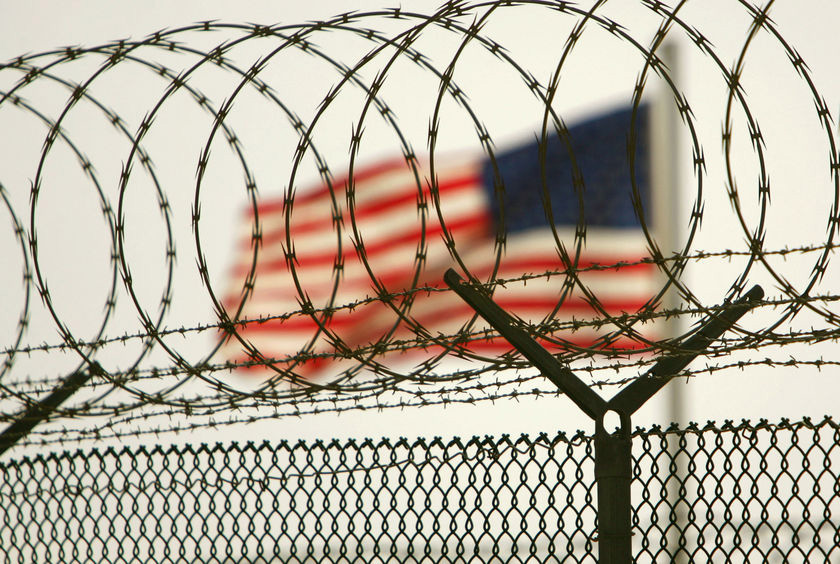
Read the 68th issue of ICJ’s monthly newsletter on proposed and actual changes in counter-terrorism laws, policies and practices and their impact on human rights at the national, regional and international levels. The E-Bulletin on Counter-Terrorism and Human...
![Arthur Chaskalson mourned]()
Dec 3, 2012 | News
 It was with great sadness that the ICJ learned of the death of its former President Arthur Chaskalson at the age of 81 this weekend.
A renowned human rights lawyer and a tenacious opponent of the apartheid government, Arthur Chaskalson was part of Nelson Mandela’s defence team in the 1963 Rivonia Trial, which saw Mandela and other ANC leaders sentenced to life.
He then helped establish the Legal Resources Centre, a non-profit organization seeking to use the law to pursue justice and human rights around South Africa. He ran the Centre from 1978 until 1993.
President of South Africa’s Constitutional Court (1994-2001), Chaskalson became Chief Justice of the same court from 2001 to 2005, after which he retired.
He was elected as an ICJ Comissioner in 1995 and served as President of the organization from 2002 to 2008.
In 2005, the ICJ convened the Eminent Jurists Panel, comprising eight leading international experts who spent three years conducting a worldwide investigation into the impact of counter-terrorism laws and practice on human rights globally.
Arthur Chaskalson chaired the panel, which held 16 hearings covering forty countries in all regions of the world.
Chaskalson also played a major role in the panel’s report, which concluded that many States had confronted the threat of terrorism with ill-conceived measures undermining the Rule of Law and human rights, which has proved to be an important reference for the post 9/11 era.
Dec 1, 2012
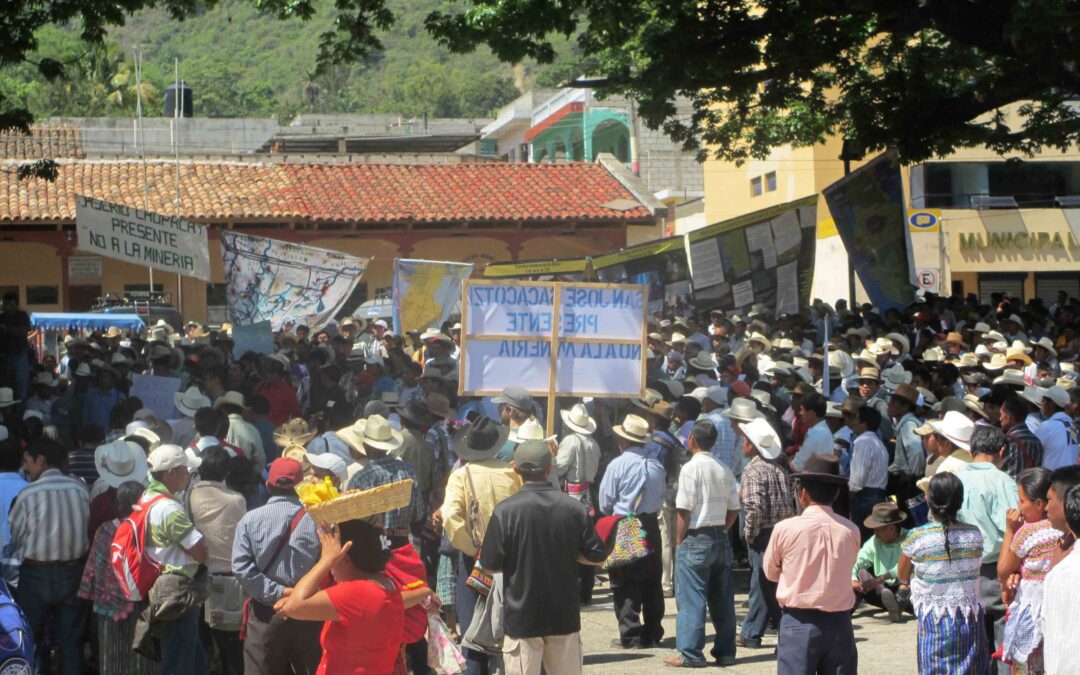
La criminalización de la protesta social en Guatemala es un fenómeno recurrente, con el objeto de deslegitimar a sus actores y anular el impacto político de las organizaciones sociales a través del uso del Derecho Penal como un instrumento de represión.
Dec 1, 2012
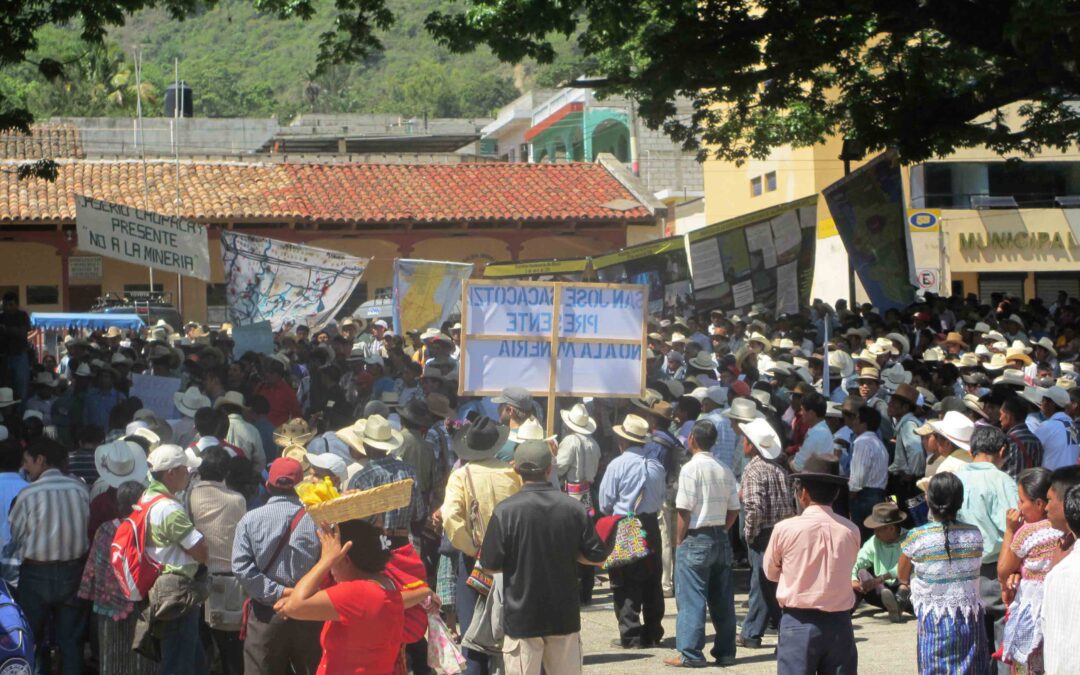
La criminalización de la protesta social en Guatemala es un fenómeno recurrente, con el objeto de deslegitimar a sus actores y anular el impacto político de las organizaciones sociales a través del uso del Derecho Penal como un instrumento de represión.
La región latinoamericana se ha caracterizado por una serie de confl ictos armados durante las últimas décadas del siglo XX y persisten las políticas discriminatorias que han generado descontento en la sociedad.
Las demandas sociales no han encontrado los canales adecuados para materializarse y la protesta social cada vez encuentra más represión por parte de agentes estatales y no estatales.
Con este fin se reprimen las libertades de pensamiento, expresión y reunión fuera de los límites establecidos por el derecho internacional de los derechos humanos.
La presente publicación aborda la criminalización de la protesta social en Guatemala y de sus actores a través del análisis de diferentes conceptos que se relacionan con la temática y de varios casos vinculados a la defensa de los derechos humanos.
En el primer capítulo se aborda la conceptualización de la protesta social y el rol que desempeñan los defensores y defensoras de derechos humanos que deriva en la penalización de sus acciones.
En el segundo capítulo se aborda el contenido de las libertades de pensamiento, expresión y reunión que pueden se objeto de determinadas limitaciones acordes a la normativa internacional de derechos humanos.
En el tercer capítulo se establecen los mecanismos de protección para defensores y defensoras de derechos humanos, tanto en el ámbito internacional como nacional.
En el cuarto capítulo se analizan los patrones de criminalización de la protesta social en algunos casos paradigmáticos en Guatemala, vinculados a la defensa de los recursos naturales de pueblos indígenas.
Guatemala-Criminalizacion de la protesta social-publications-2012-spa (full text in pdf)