Jun 13, 2019 | News
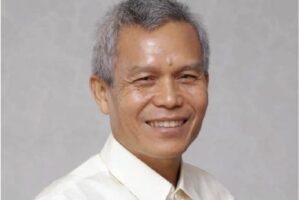
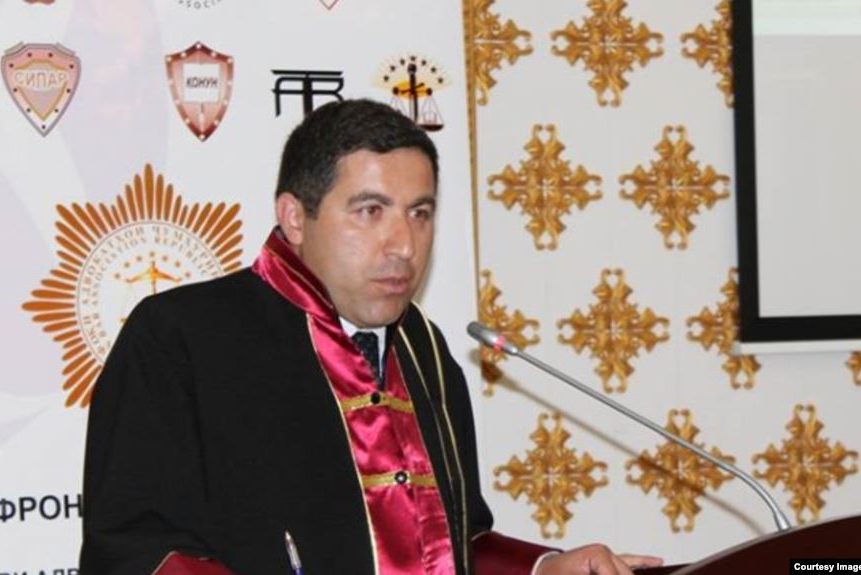
Today, the ICJ called on the authorities in Tajikistan to immediately release a prominent lawyer who is currently serving a sentence of imprisonment of 28 years on dubious charges.
The UN Working Group on Arbitrary Detention (WGAD) published a decision in Mr Yorov’s case on (date), finding that “the trials of Mr. Yorov were carried out in total disregard for the guarantees encapsulated in article 14 of the Covenant, being of such gravity as to give the deprivation of liberty of Mr Yorov an arbitrary character […].”
The Working Group recommended that the government remedy the situation of Yorov without delay and to this end “release Mr. Yorov immediately and accord him an enforceable right to compensation and other reparations, in accordance with international law”.
The ICJ has previously expressed concern that Buzurgmehr Yorov’s conviction may constitute a reprisal for his defense work in high-profile political trials in connection with his representation of thirteen leaders of the Islamic Renaissance Party of Tajikistan (IRPT).
The ICJ earlier expressed concerns at the conviction of the lawyer to a 28 year sentence in prison, which is based on clearly improper charges related to the defense of his clients.
The ICJ welcomes the decision of the WGAD and calls on the Tajikistan authorities to fully implement the decision and to take all necessary measures to protect lawyer Yorov, his family and his lawyers against any threats to their security, or any intimidation, hindrance, harassment or improper interference with their performance of their professional functions as lawyers.
In this regard, the ICJ notes recent protests by dozens of individuals who took part in a rally against Yorov in front of the representative offices of the United Nations and the European Union in Tajikistan, soon after the decision of the WGAD.
Posters of the demonstrators called on the UN High Commissioner of Human Rights to “take her hands off Tajikistan” and named organisations that had defended Mr Yorov or brought the petition on behalf of Yorov to the UN WGAD.
In this context, it is imperative that the Tajikistan government immediately publicly affirm the legitimacy of the decision of the WGAD and make clear its commitment to complying with it, the ICJ underlined.
Background
Buzurgmekhr Yorov was arrested two years ago on 28 September 2015, on charges of “fraud” and “forgery of documents.” Later, he was accused of violating three more articles of the Criminal Code, including in relation to alleged “public calls for extremist activity.”
On 6 October 2016, The Dushanbe City Court sentenced Yorov to 23 years imprisonment in a strict regime prison.
In March 2017, Yorov was sentenced to an additional two years’ deprivation of liberty for “contempt of court and insulting the representative of power.” In August 2017, he received a further three years sentence on charges of “insulting the president.”
The ICJ has, on a number of occasions, expressed its serious concerns over the arrest and conviction of Buzurgmehr Yorov and other lawyers in Tajikistan.
On 24 May 2019, the UN Working Group on Arbitrary Detention, a group of independent experts established in 1991 whose members are appointed by the UN Human Rights Council, published an Opinion finding a number of violations of human rights of Yorov protected under the International Covenant on Civil and Political Rights and recommended as a remedy his immediate release, payment of compensation or other reparation and conducting an investigation into the violation of Yorov’s rights.
The UN Basic Principles on the Role of Lawyers require that the Governments ensure that lawyers “are able to perform all of their professional functions without intimidation, hindrance, harassment or improper interference ”. Under these Principles “where the security of lawyers is threatened as a result of discharging their functions, they shall be adequately safeguarded by the authorities.” The right to “offer and provide professionally qualified legal assistance or other relevant advice and assistance in defending human rights and fundamental freedoms” is guaranteed by the Declaration on the Right and Responsibility of Individuals, Groups and Organs of Society to Promote and Protect Universally Recognized Human Rights and Fundamental Freedoms (Article 9.3(c)).
Jun 12, 2019 | News
The ICJ today expressed concern at recent developments in Moldova, which are effectively paralyzing governance in the country.
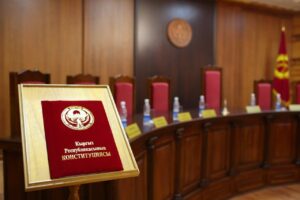
During the past week, the Constitutional Court has ordered the dissolution of Parliament, suspended its functioning and invalidated its subsequent acts, including the appointment of a government and speaker, and has triggered the removal of the President.
The ICJ is particularly concerned at the excessively swift procedure through which the Constitutional Court reached its decisions to dissolve Parliament, remove a sitting President of the Republic and replace him with the Prime Minister. The ICJ calls attention to the unhelpful timing of the Constitutional Court ruling that was issued on the very day it identified as the end of the Parliamentary term, depriving Parliament of the clarity needed to exercise its powers.
These developments occur against the background of the manifest deficiencies in the institutional independence of the Moldova judiciary which were documented in a recent ICJ report.
In the report issued in March 2019, the ICJ highlighted the problematic appointment in 2018 of three judges of the Constitutional Court in circumstances that did not ensure a sufficient level of transparency, during an electoral campaign and without an open competition process. The report noted that the three appointed judges have previously been Prosecutor General, director of the intelligence service and chair of the legal committee of Parliament, part of the then ruling political majority.
The ICJ welcomes the announcement by the Secretary General of the Council of Europe that the Venice Commission has been asked to issue an urgent opinion on the constitutional crisis.
“The rule of law is the common ground on which constitutional conflicts must be solved”, said Massimo Frigo, Senior Legal Adviser of the Europe Programme of the ICJ. “We call on all institutions and parties in Moldova to seek a solution that squarely complies with the rule of law and the international law and standards to which Moldova has subscribed. In this regard, we urge all parties concerned to wait for the opinion by the Council of Europe Venice Commission in this matter and to reconsider the situation in light of its findings.”
Background
The Constitutional Court, in decisions issued on 7, 8 and 9 June 2019, held that Parliament should be dissolved for having been unable to establish a government within three months of the end of the previous Government’s term of office.
The decisions triggered the removal from office of the President of the Republic, Igor Dodon, for having refused to dissolve Parliament. This led to the interim appointment of Pavel Filip, as acting President of the Republic.
The Court also declared unconstitutional and void any act issued by Parliament after 7 June.
Neither Parliament nor President Dodon have accepted the decisions of the Constitutional Court on their removal or on the validity of their acts, nor do they consider as legitimate the appointment of Pavel Filip as acting President.
Parliamentary factions constituting the current majority in Parliament had reached a deal to form a coalition government and appointed a speaker and Prime Minister.
According to the Constitutional Court’s interpretation of article 85 of the Constitution, these agreements failed to respect the three-month deadline.
Others have put forward different interpretations of when the deadline of the three months period to appoint a Government would elapse, and of the obligation of the President of the Republic to dissolve Parliament.
Article 85 of the Constitution states:
(1) In the event of impossibility to form the Government or in case of blocking up the procedure of adopting the laws for a period of three months, the President of the Republic of Moldova, following consultations with parliamentary fractions, may dissolve the Parliament.
(2) The Parliament may be dissolved, if it has not accepted the vote of confidence for setting up of the new Government within 45 days following the first request and only upon declining at least two requests of investiture.
(3) The Parliament may be dissolved only once in the course of one year.
(4) The Parliament may not be dissolved within the last six months of the term of office of the President of the Republic of Moldova nor during a state of emergency, martial law or war.
Contact:
Massimo Frigo, ICJ Senior Legal Adviser: t: +41 22 979 3805; e: massimo.frigo(a)icj.org

Jun 8, 2019 | Multimedia items, News, Publications, Reports, Thematic reports, Video clips
The Indian Government must give effect to recent rulings of the Supreme Court and end discrimination and other human rights violations and abuses based on real or perceived sexual orientation, gender identity and expression, the ICJ said today at the Delhi launch of its new report on the conditions of LGBTQ people in India.
The ICJ’s 152-page report Living with Dignity: Sexual Orientation and Gender Identity-Based Human Rights Violations in Housing, Work, and Public Spaces in India details human rights violations suffered by LGBTQ persons in their family homes, workplaces, and public spaces including streets, public toilets, public transport and shopping centres.
Following on the Supreme Court’s decisions in NALSA and Navtej, which strongly affirmed the human rights of LGBTQ persons, the report identifies legal and policy challenges, as well as structural barriers that prevent them from enjoying the full range of human rights.
”Despite the promise of recent jurisprudence, the Indian government has not consistently met its constitutional and international obligations to guarantee the rights of LGBTQ persons,” said Frederick Rawski, ICJ Asia Director.
“The ICJ encourages the Indian State to build on existing efforts to protect these rights to ensure full compliance with the right to live with dignity in terms of the Indian Constitution and international human rights law,” he added.
The Living with Dignity report identifies a wide range of violations and abuses of rights in the context of housing, work and public spaces.
Human rights violations associated with housing included discrimination in accessing rental accommodation, harassment and violence by landlords and by families, and arbitrary evictions.
The report sets out instances of discrimination in the workplace, at all stages of employment, and throughout the formal and informal sectors.
It also documents obstacles faced by LGBTQ persons seeking access to public spaces, including discriminatory policing, gendered toilets and transport, harassment and abuse by State officials, and discriminatory targeting through the application of public nuisance, sex work and anti-beggary laws.
The report offers a set of recommendations meant to make existing law and policy more protective of LGBTQ persons’ rights and calls for the amendment or repeal of certain existing laws.
“There is no single law or policy solution to ending long-standing and systemic discrimination. But legal and policy reforms are essential to addressing the abuses suffered by LGBTQ persons and these must include the effective, inclusive and meaningful participation of a diverse range of LGBTQ individuals and advocacy groups,” Rawski said.
The report also recommends the convening of a nationwide consultation geared towards the enactment of a comprehensive anti-discrimination law prohibiting discrimination on the grounds of sexual orientation and gender identity as is required by international human rights law.
In a preface to the report, ICJ Commissioner and former Chief Justice of the Delhi High Court, Justice Ajit Prakash Shah, indicates his hope that the report will “be used as a tool by lawyers, human rights defenders and policymakers” and “contribute to enhancing public discourse on LGBTQ rights, as well as broader issues of discrimination and the rule of law in India”.
Download
Report: Living with Dignity: Sexual Orientation and Gender Identity-Based Human Rights Violations in Housing, Work, and Public Spaces in India (English)
Executive Summary (English)
Infographics
SOGIE-based Human Rights violations in Housing
SOGIE-based Human Rights violations at Work
Barriers experiences by LGBTQ people in accessing Public Spaces
Contact
Maitreyi Gupta (Delhi), ICJ International Legal Adviser for India, e: maitreyi.gupta(a)icj.org, t: +91 7756028369
Frederick Rawski, ICJ Asia Pacific Region Director, e: frederick.rawski(a)icj.org, t: +66 644781121
Read also
Briefing Paper on Navtej Singh Johar et al. v. Union of India and Others, July 2018.
Unnatural Offences”: Obstacles to Justice in India Based on Sexual Orientation and Gender Identity, February 2017.
ICJ Briefing Paper on Implementation of NALSA Judgment, 2016.
Watch the video

Jun 7, 2019 | News
The ICJ today condemned the impending moves to subject three prominent Saudi clerics to an inevitably unfair trial on dubious charges that might result in sentences of death and arbitrary execution.
According to credible media reports citing Saudi government sources, Salman al-Odah, Ali Al-Omari and Awad al-Qarni, three prominent Saudi clerics, will almost certainly be convicted, sentenced to death and executed soon after Ramadan.
The media reports follow last April’s mass executions of 37 people, and the crucifixion of one them, following their conviction and sentencing to death for similar “terrorism” related charges.
The ICJ calls for the clerics’ release unless they can be charged with a recognizable criminal offence consistent with the rule of law, and tried before a competent, independent, and impartial court that ensures fair trial rights.
“Saudi Arabia is abusively resorting to terrorism related charges, unfair trials, and sentences of death followed by arbitrary execution to permanently silence perceived critical voices,” said Said Benarbia, the ICJ’s MENA Programme Director.
“Instead of perpetuating egregious violations of the right to life, Saudi authorities must administer justice fairly and in accordance with international law and standards,” he added.
One of the defendants, Salman al-Odah, was charged by prosecutors in September 2018 with 37 offences, including “belonging to a terrorist group: the Muslim Brotherhood,” “stirring public discord and inciting people against the ruler,” “calling for change in government,” “supporting Arab revolutions,” “possessing banned books” and “describing the Saudi government as a tyranny.”
The ICJ fears that Salman al-Odah may be subject to these charges simply for exercising his protected right to freedom of expression.
Together with the other two clerics, Salman al-Odah faces trial before the specialized criminal court, an exceptional court that fails to ensure respect of fair trial rights and that has been used to try those suspected of committing terrorism related offences, political activists, and human rights defenders.
The ICJ is concerned that since their arrest in September 2017, the clerics have allegedly been subject to incommunicado detention and prolonged solitary confinement for months. Such treatment amounts to torture or cruel, inhuman and degrading treatment, prohibited under international law.
Carrying out executions following proceedings that fail to scrupulously observe international fair trial standards always amounts to an arbitrary deprivation of life.
The ICJ opposes the use of the death penalty in all circumstances as a violation of the right to life and a form of cruel, inhuman and degrading punishment.
The ICJ underscores that the United Nations General Assembly, by an overwhelming majority, has repeated called on States that retain the death penalty to impose an immediate moratorium on executions with a view to abolition.
The ICJ calls on the Saudi authorities to immediately move toward abolishing the death penalty and impose an immediate moratorium on executions.
Background
The clerics’ detention and ongoing trial are part of a broader crackdown on activists and dissidents since September 2017, including through politicized judicial proceedings and trumped up charges under the 2014 Royal Decree.
The Decree criminalizes as terrorism offences acts that do not involve serious violence, including acts that aim to suspend the enforcement of the Constitution or some of its articles, as well as any acts that undermine the State’s prestige and standing.
Such broad definitions have effectively been used to criminalize the legitimate and peaceful exercise of human rights, including the rights to freedom of expression, association and assembly, and the right to take part in the conduct of public affairs.
The 2014 Royal Decree also allows the Minister of Interior to order the arrest of any person suspected of committing terrorism related offences, and for those arrested to remain in pre-trial detention for up to six months and to be prohibited from communicating with their family members for up to three months. Those arrested cannot be released pending trial without the authorization of the Minister of Interior or someone authorized by him.
Such conditions contravene international standards on the rights to liberty and to a fair trial.
Saudi Arabia-Death penalty-News-2019-ARA (Arabic version, in PDF)

Jun 7, 2019
The ICJ has presented its response to a European Commission consultation on how to strengthen protection of the rule of law in EU Member States through promotion, prevention mechanisms and measures to hold States accountable for rule of law violations.
In its response to the European Commission consultation , the ICJ highlights the declarations of ICJ Congresses from the Act of Athens in 1955 to the Tunis Declaration of 2019, which have helped to define and explain the rule of law. The ICJ’s long experience of working to advance the rule of law around the world has shown the need both for institutional and procedural safeguards for the rule of law, and for developing strong national rule of law cultures. The EU has an important role to play in supporting these protections in EU Member States, but it does not act alone in this field. The EU’s work on rule of law should be carefully positioned to take account of UN and Council of Europe standards and mechanisms, in the interests of the most effective possible strategies to protect the rule of law in Europe. Furthermore, for the EU to be credible in the action it takes to protect and promote the rule of law, the EU institutions themselves met be above reproach in their compliance with Rule of Law principles.
As regards the promotion of the rule of law, the ICJ underlines the importance of a shared understanding and commitment to the rule of law amongst legal and political communities, and the general public. The EU can make a significant contribution to supporting such understanding, through support and funding for civil society in its defence and promotion of the rule of law, through building the capacity of legal professionals including judges, prosecutors and lawyers to uphold the rule of law, and through support for building the engagement of national parliaments on rule of law issues.
In order to prevent threats to the rule of law, the ICJ supports the development of regular, uniform rule of law reviews by which EU Member States’ laws and practices are measured against objective standards by independent experts. Such assessments should be removed from political influence and should be conducted through an open and transparent process, and should be co-ordinated with existing initiatives of the EU and mechanisms of the UN and Council of Europe. The reviews could be conducted by a new independent, specialised Agency on the rule of law, or in co-operation with the Venice Commission of the Council of Europe.
It is vital that there are effective EU mechanisms to respond to violations of the rule of law in EU Member States. Both the European Court of Human Rights and the Court of Justice of the EU are essential to this response. The EU should therefore do all in its power to support the European Court of Human Rights and the implementation of its judgments. Infringement proceedings before the CJEU should be initiated regularly and promptly where the Commission identifies rule of law problems that violate EU law or affect the application of EU legislation. Institution of Article 7 TEU proceedings in appropriate cases is also vital to uphold the credibility of any rule of law assessment mechanism, and in the long term, consideration should be given to amending the treaties to strengthen this mechanism.
The full ICJ submission can be read here.