Oct 14, 2011
In this submission, the ICJ highlights the failure of the Moroccan authorities to comply with the Committee’s previous recommendations.
During its 47th session on 31 October to 25 November 2011, the UN Committee against Torture will undertake an examination of the fourth periodic report of the Kingdom of Morocco. In preparation for this examination, and in response to Morocco’s combined report, the Committee issued a list of issues to be considered during the forthcoming examination. The ICJ has submitted a parallel report to the Committee against Torture, which includes replies to aspects of some questions in the Committee’s list of issues, and sets out concrete recommendations for Morocco’s implementation of obligations under the Convention against Torture and other Cruel, Inhuman or Degrading Treatment or Punishment. The ICJ’s submission focusses in this respect on three thematic areas: (i) torture under the Moroccan legal framework; (ii) torture and ill-treatment in the context of the United States-proclaimed “war on terror” and United States-led “secret renditions” program; and (iii) torture and ill-treatment in the context of combating “terrorism” in Morocco.

Oct 14, 2011
In this submission, the ICJ highlights several issues which it considers should be of particular concern to the Committee in its consideration of the periodic reports of Greece.
During its 47th session on 31 October to 25 November 2011, the UN Committee against Torture will undertake an examination of the combined fifth and sixth periodic reports of Greece. The ICJ has submitted a parallel report to the Committee against Torture, which focusses on the failure of the Greek asylum system, in practice, to comply with the obligations of non-refoulement (as this applies to article 3 of the Convention against Torture and other Cruel, Inhuman or Degrading Treatment or Punishment); and at the prevalence of conditions of detention for migrants, as well as living conditions for migrants, that amount to cruel, inhuman or degrading treatment in violation of obligations to prevent such treatment under articles 2, 11 and 16 of the Convention.

Oct 12, 2011
 This briefing paper addresses the proposal for a Directive on the Right of Access to a Lawyer in Criminal Proceedings and the Right to Communicate Upon Arrest.
The ICJ warmly welcomes the draft Directive, as an important support for effective implementation in EU Member states of the right of access to a lawyer as recognized in international human rights law and standards.
The paper makes recommendations for strengthening the protection offered by the Directive on several points, and responds to comments of the Presidency, and of certain Member States, on the Commission’s draft.
EU directive on the right of access to a laweyer-analysis brief-2011 (full text, PDF)
Oct 11, 2011 | Events
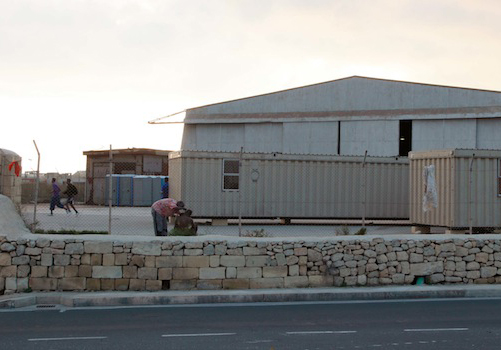
On 29 September, the ICJ, the Maltese NGO “aditus”, and the UNCHR office in Malta organized these trainings with the support of the European Commission Representation in the country.
The trainings targeted stakeholders working with migrants, asylum seekers and refugees, as well as those not working with these groups.
The topics covered included general human rights principles, international refugee law, human rights in Malta, detention of migrants and economic, social and cultural rights. The primary aims of the trainings were to facilitate migrant mainstreaming and the promotion of a rights-based approach to migrant issues.”

Oct 11, 2011 | Advocacy, Analysis briefs
Since 2009, the UN High Commissioner for Human Rights has called for the strengthening and increased funding for the UN treaty bodies.
The UN treaty bodies are the monitoring mechanisms established under the universal treaties on international human rights.
To date, however, this strengthening process has inadequately addressed the need to strengthen, streamline and coordinate the Individual Communications procedures of the treaty bodies.
A coalition of NGOs has therefore issued a joint statement on the strengthening of these procedures, which represent a key aspect of the right of access by all to international justice in the context of human rights. The joint statement includes recommendations to States, the Office of the High Commissioner for Human Rights, and the treaty bodies themselves.
statement strengthening treaty body-analysis brief-2011 (full text in English, PDF)