Apr 4, 2019
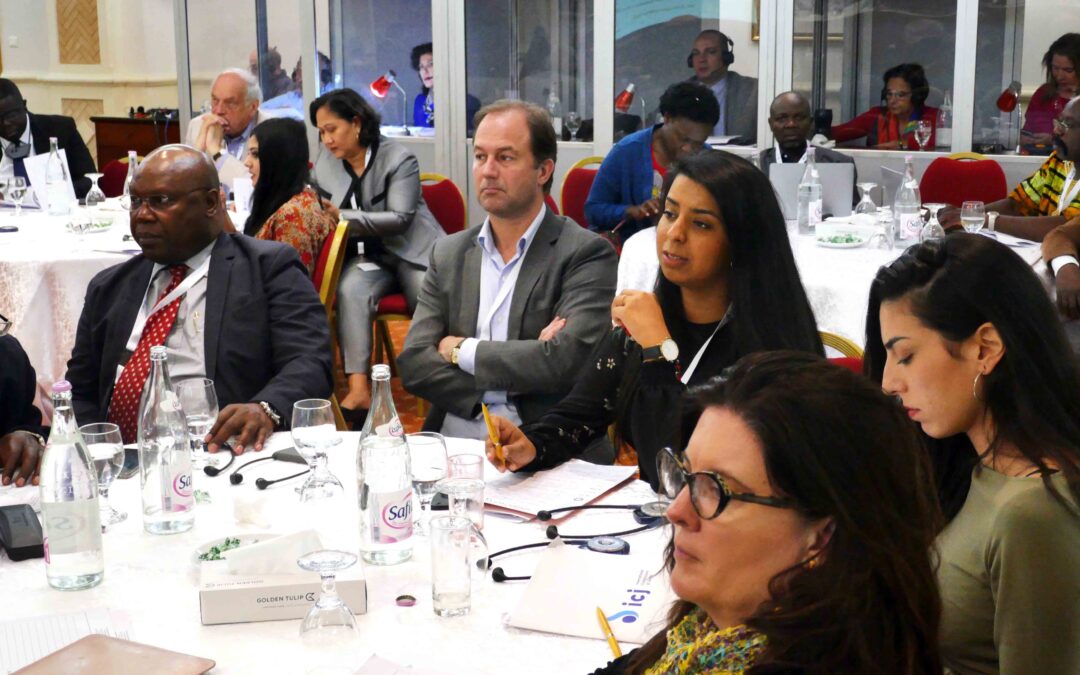
At the 19th World Congress of the ICJ held in Tunisia on 23-24 March, some 100 distinguished judges, lawyers came together to adopt the Tunis Declaration on Reinforcing the Rule of Law. The Declaration was published today. Watch the Congress video clip.
The Tunis Declaration reaffirms the ICJ’s unyielding commitment to defend and advance the Rule of Law and human rights at a time when commitment to them by States and other powerful actors appears to be wavering.
It stresses that not only are human rights and the Rule of Law indispensable to the betterment of the human condition and a dignified life for all people, but also must be harnessed and developed to address such contemporary challenges as catastrophic climate change and the effects of digital technology.
The Declaration sets out key elements of the Rule of Law and human rights and aspects of their application to the independence of judges and lawyers; access to justice and accountability; security; equality and non-discrimination; and civil society space and fundamental freedoms.
In respect of each of these areas, the ICJ, including its Commissioners, Honorary Members, National Sections and Affiliate Organizations commit themselves to a particular course of action.
ICJ President Robert Goldman said: “Since its founding in 1952, the ICJ has played a preeminent, if not unique, role in seeking to promote and uphold the rule of law around the globe. While notable progress has been made over the years, we sadly are now in a period of clear regression.”
“Today the very concept of the rule of law is itself under attack, particularly by self-styled populist leaders on the Left and Right who have embraced and espouse authoritarian, nationalistic and xenophobic policies.”
“Their policies have led to the demonization of immigrants, asylum seekers and minorities, as well as attacks on human rights defenders and civil society organizations, attacks on the civilian judiciary, attacks on the media, attacks on and arrests of opposition leaders, and the use of counter-terrorism laws against peaceful protesters and the use of military courts to try them.”
“Such practices are exquisitely antithetical to and utterly destructive of the rule of law and the rights based system that the ICJ has sought to promote and protect over the years.”
“While these new challenges to human rights and the international legal framework supporting them are grave indeed, the ICJ is, by experience and deeds, is uniquely qualified to meet them.”
“The Tunis Declaration and plan of action for the ICJ vigorously reaffirms our vision of a rule of law that upholds the dignity and human rights of every person everywhere in the world.”
Download
Universal-ICJ The Tunis Declaration-Advocacy-2019-ENG (the Tunis Declaration, in PDF)
Universal-ICJ Congresses-Publications-Reports-2019-ENG (the ICJ Congresses booklet, in PDF)
Watch the ICJ Congress 2019 video:

Apr 4, 2019 | News
Today, the ICJ urged Singapore’s Parliament not to pass the Protection from Online Falsehoods and Manipulation Bill 2019 (‘Online Falsehoods Bill’), which was tabled on Monday, 1 April.
The ICJ said that the bill, if passed into law, would result in far-reaching limitations on freedom of expression, opinion and information in Singapore, and could be wielded to curtail important discussion of matters of public interest, including content critical of the government.
“This bill, if passed, would make the government the sole arbiter of what information is permissible online and what is not, creating a real risk that the law will be misused to clamp down on opinions or information critical of the government,” said Frederick Rawski, ICJ Director for Asia and the Pacific.
The bill authorizes ministers to direct individuals, owners or operators of online platforms, digital advertising and internet intermediaries to remove, make corrections to, disable or block access to a “false statement of fact”, if such action is deemed to be “in the public interest”. Such ministerial directions can be made even if a false statement “has been amended or has ceased to be communicated in Singapore”.
The bill does not provide any real definition of “false statement of fact” and does not clarify what constitutes “public interest”. The bill also fails to provide for exceptions or defences such as honest mistake, parody, artistic merit, or public interest. Executive discretion is also not subject to judicial review or oversight under its provisions.
Criminal penalties for non-compliance with the law are severe, and include hefty fines and up to ten years’ imprisonment for violations.
These may be imposed on individuals and/or owners or operators of online platforms, as well as intermediaries who facilitate the communication of such statements, including social networking services, search engine services, internet-based messaging services and video-sharing services.
The bill is also clear that communications through SMS (Short Message Service) and MMS (Multimedia Messaging Service) fall under its remit.
“The spread of misinformation online is a complex problem that cannot be effectively addressed by simply granting broad discretion to government officials to censor online expression,” said Rawski.
“A multi-pronged approach that protects the rights to free expression, opinion and information is required, beginning with better media literacy education and free access to information, including to opinions critical of the government,” he added.
Contact
Frederick Rawski, ICJ Asia Pacific Regional Director (Bangkok), e: frederick.rawski(a)icj.org
Singapore-fake news bill-News-web story-2019-ENG (full story with additional information, in PDF)

Apr 2, 2019 | Comunicados de prensa, Noticias
La CIJ lamenta que el Presidente de la República y otros funcionarios del Organismo Ejecutivo, se resistan a dialogar con las y los representantes de las Comunidades Afectadas por la Construcción de la Hidroeléctrica Chixoy (COCAHICH).
Las Comunidades Afectadas por la Construcción de la Hidroeléctrica Chixoy (COCAHICH) han llevado a cabo una negociación de más de diez años con las autoridades del Estado de Guatemala, que culminó con la aprobación de un Plan de Reparación de los daños y perjuicios causados por la construcción de la Hidroeléctrica Chixoy y la respectiva Política Pública para la reparación a las víctimas, contenida en el Acuerdo Gubernativo 378-2014.
Lamentablemente, las autoridades del actual Gobierno no han cumplido con su correcta implementación y se ha venido dando un retardo malicioso, que perjudica notablemente los derechos de las víctimas a la reparación colectiva, retardo que re-victimiza a las personas y una vez más, viola los derechos humanos de las víctimas.
Es importante recordar que existe un principio general del derecho, que afirma que los compromisos adquiridos mediante convenios, pactos o acuerdos, deben cumplirse de buena fe.
Ante dicho retardo, las comunidades se encuentran ejerciendo su derecho de protesta pacífica y han solicitado una audiencia con las autoridades al más alto nivel, quienes durante todo el día lunes 1ro. de abril, se negaron a recibirlos.
La CIJ hace un llamado al Presidente de la República, para que reciban a las y los representantes de COCAHICH y sus asesores, para que se pueda solucionar el asunto por la vía del diálogo. La CIJ está convencida que este asunto requiere de un diálogo franco y de buena fe.
Ramón Cadena, Director de la CIJ para Centro América expresó: “El Presidente de la República debe respetar el diálogo y evitar que los derechos de las víctimas vuelvan a ser violados y debe honrar los compromisos adquiridos en el Plan de Reparaciones e instruir a todos los funcionarios de las entidades involucradas, para que tomen las acciones que sean necesarias y asi cumplir inmediatamente con los compromisos contenidos en el mismo.”

Apr 2, 2019 | News
The ICJ raised serious human rights concerns following the announcement by the Government of Brunei of the third phase of implementation of the 2013 Syariah Penal Code with its entering into force on 3 April 2019.
This week, the Syariah Penal Code will come into full effect, which means the imposition of horrific punishments – including the severing of limbs, whipping, and stoning to death – on those found to have committed acts such as rape, adultery, sodomy, and to have engaged in extramarital sexual relations.
“There are no circumstances under which punishments such as stoning, amputation or public flogging are acceptable under international law,” said Frederick Rawski, ICJ’s Regional Director for Asia and the Pacific.
“They are blatant violations of the prohibition on all forms of torture and other cruel, inhuman or degrading treatment or punishment,” he added.
Stoning, amputation and public flogging are contrary to the commitment that Brunei made when it became a party to the Convention on the Elimination of All Forms of Discrimination against Women (CEDAW), including its obligations to take all necessary measures to eliminate all forms of discrimination against women.
Those punishments also violate the Convention on the Rights to the Child (CRC) to which Brunei is a party.
The ICJ also notes that consensual sexual activities, such as sodomy, adultery and other extramarital and premarital sexual relations, as much as consensual same-sex sexual conduct, do not constitute recognizably criminal offences under international human rights law and standards and should therefore not be criminalized at all.
The UN Special Rapporteur on Torture has stated that “any form of corporal punishment is contrary to the prohibition of torture and other cruel, inhuman or degrading treatment or punishment”, and cannot be considered a “lawful sanction” under international law.
When Brunei’s Syariah Penal Code was adopted in October 2013, the ICJ condemned it for violating international human rights law and standards.
The Syariah Penal Code will also effectively reintroduce the death penalty, which has generally been viewed as having been de facto abolished, as it has not been imposed since 1957.
“The re-introduction of the use of the death penalty in the Syariah Penal Code is out of step with the global trend towards the abolition of capital punishment and the establishment of a moratorium on executions,” said Rawski.
In addition, the ICJ is concerned about the disproportionate and discriminatory impact of the Code on women and girls and on lesbian, gay, bisexual and transgender individuals in the country.
Although the 2013 Syariah Penal Code states that the penalty of stoning to death applies regardless of whether the offender is male or female, women face a greater risk of being convicted and sentenced to death because they are more likely to be found guilty of adultery or of otherwise having engaged in extramarital sexual relations.
“In addition to imposing penalties that are in clear violation of international law, the underlying ‘offenses’ are themselves discriminatory,” said Rawski.
“The Code is particularly regressive coming at a time when other Commonwealth countries are taking steps to de-criminalize same-sex consensual relations, and end discrimination and violence against women,” he added.
The ICJ strongly urges the Government of Brunei to withdraw the 2013 Syariah Penal Code, and take steps to ensure that its laws comply with international law and standards, consistent with Brunei’s obligations under international human rights instruments, including the CEDAW and the CRC.
Contact:
Emerlynne Gil, ICJ Senior International Legal Adviser, t: +66 840923575, e: emerlynne.gil(a)icj.org
Additional information:
On 17 December 2018, the UN General Assembly adopted a resolution calling for a global moratorium on the death penalty, with the support of a 120 countries.
According to the Office of the High Commissioner for Human Rights more than 160 UN member countries have either abolished the death penalty or introduced a moratorium on its use in law or practice.
The ICJ considers the imposition of the death penalty to be a violation of the right to life and the prohibition of torture and other cruel, inhuman or degrading treatment or punishment.
Apr 1, 2019 | News
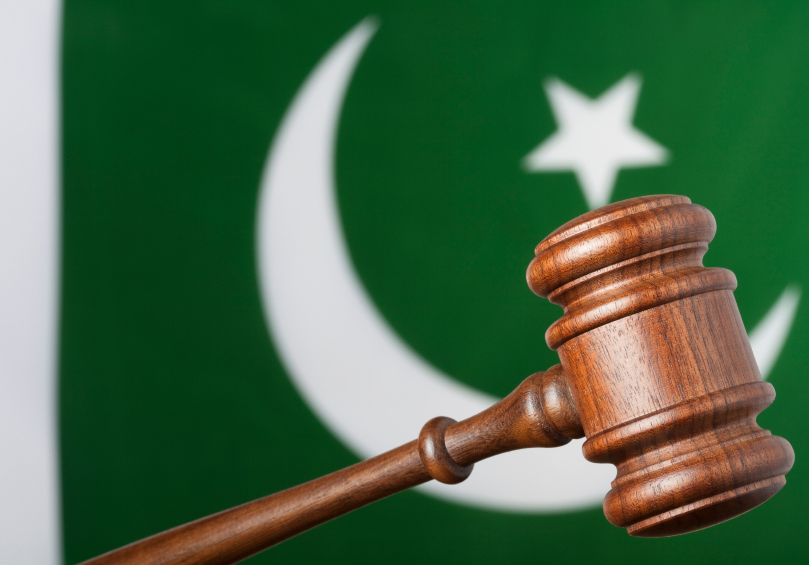
As military courts in Pakistan once again cease to have jurisdiction over civilians for terrorism-related offences, the Government must bring reforms to strengthen the country’s criminal justice system, the ICJ said today.
Perpetrators of terrorist attacks and other serious crime must be brought to justice fair trials before competent, independent and impartial courts as required under international law, the ICJ added.
“The lapse of the jurisdiction of military courts over civilians is a step in the right direction, but unsurprisingly – even four years after military courts were empowered to try civilians – there is no sign of the promised reforms to strengthen the ordinary criminal justice system to effectively and fairly handle terrorism-related cases,” said Frederick Rawski, ICJ’s Asia Director.
The 23rd Amendment and corresponding amendments to the Army Act, 1952, lapsed on 30 March 2019, as their respective two-year sunset clauses expired. So far, the Government has failed to get support from opposition parties for a constitutional amendment to once again extend the jurisdiction of military courts to conduct trials of civilians.
“The Government must not re-enact legislation to continue secret military trials of civilians, nor resort to more short-term, short-sighted security measures that are contrary to Pakistan’s obligations to protect human rights,” Rawski said.
“Instead, the Government should urgently invest in enhancing the capacity and security of judges, investigators and prosecutors to make the regular criminal justice system more effective in conducting fair, credible terrorism trials, and bringing perpetrators to account without imposing the death penalty.”
According to military sources and ICJ’s monitoring of military trials in Pakistan since January 2015, military courts have convicted 617 people for terrorism-related offences, out of which 346 people have been sentenced to death and 271 people have been given prison sentences. At least 56 people have been hanged. Only four people have been acquitted.
The ICJ has documented serious fair trials violations in the operation of military courts, including: denial of the right to counsel of choice; failure to disclose the charges against the accused; denial of a public hearing; failure to give convicts copies of a judgment with evidence and reasons for the verdict; and a very high number of convictions based on “confessions” without adequate safeguards against torture and ill treatment.
Contact
Frederick Rawski, ICJ Asia Pacific Regional Director (Bangkok), e: frederick.rawski(a)icj.org
Reema Omer, ICJ International Legal Adviser for Pakistan (London), t: +447889565691; e: reema.omer(a)icj.org
Additional information
Military courts were first empowered to try civilians for certain terrorism-related offences in January 2015 through the 21st Amendment to the Constitution and amendments to the Pakistan Army Act, 1952, which were in operation for a period of two years.
The expansion of the jurisdiction of military tribunals was a key part of the Government’s 20-point National Action Plan, adopted following the attack on the Army Public School in Peshawar in December 2014. NAP envisioned military courts to be a short-term “solution” to try “terrorists”, to be operational only for a two-year period during which the government would bring about necessary “reforms in criminal courts system to strengthen the anti-terrorism institutions”.
Despite promises that military courts were only temporary, after the expiration of the 21st Amendment, on 31 March 2017, Parliament enacted the 23rd Amendment and amendments to the Army Act to renew military courts’ jurisdiction over civilians. The amendments were given retrospective effect from 7 January 2017, and were due to lapse two years after their date of “commencement”. The expanded jurisdiction of military courts lapsed on 30 March 2019 (even though earlier reports suggested the amendments would expire on 6 January 2019) — two years after the date of “operation” of the 23rd Amendment).
The ICJ opposes the death penalty in all circumstances as a form cruel, inhuman and degrading punishment and an arbitrary denial of the right to life. The ICJ recalls that the UN General Assembly has by overwhelming majorities repeatedly called on all states the retain the death penalty to place a moratorium on the practice with a view to abolition. Pakistan previously had such a moratorium from 2008 to 2014.