Apr 1, 2019 | News
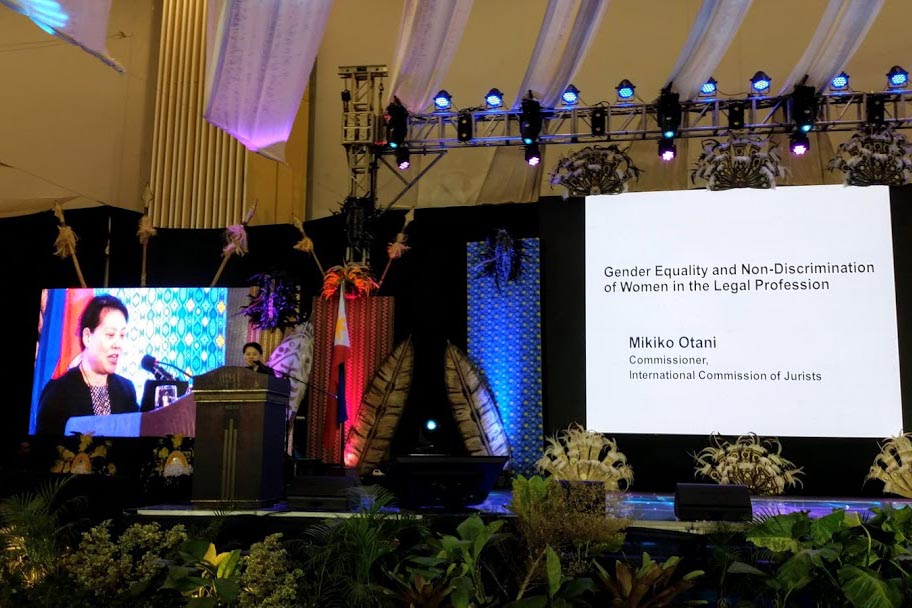
On 31 March, Mikiko Otani, ICJ’s Commissioner and a member of the UN Committee on the Rights of the Child, spoke to Filipino lawyers at the bi-annual National Lawyers’ Conference of the Integrated Bar of the Philippines (IBP), which took place at the Iloilo Convention Center, Iloilo City.
Mikiko Otani, who had been Chair of the Committee on International Human Rights of the Japan Federation of Bar Associations (JFBA) remains active in the JFBA, talked about the importance of advancing gender equality in the legal profession and the important initiatives of the JFBA on eliminating gender discrimination.
She noted that “female lawyers experience many forms of discrimination in the workplaces, practices, court rooms and bar associations.”
In countries all over the world, many formal barriers women used to face in entering the legal profession, including admission to law schools, the bar, have been eliminated.
However, women continue to face barriers, some of which are specific to the legal profession, but others common to women who work more generally.
Mikiko Otani noted that when she started practice as a lawyer in 1990, women applicants for jobs at law firms would often be asked during the interview whether they planned on getting married or having children.
Law firms preferred to hire male lawyers as they were thought to be unencumbered with looking after household matters, such as housekeeping and child care.
She recalled, “My colleagues questioned my decision to get married and have children almost immediately after becoming a lawyer while also continuing my practice as this was an unusual for women lawyers in Japan to do at that time. They felt that my decision to start a family at that point would be a hindrance to my career.”
She also talked about the bias observed in case assignment, where only male lawyers would be assigned to cases that required extensive traveling, while female lawyers would be often assigned to family cases, which are considered to be easy, unpopular or low-profile cases.
There was also frequent bias against female lawyers in promotion or offering partnership in law firms, contributing to a major gender gap in income between male and female lawyers.
In 2008, the JFBA formulated a Basic Plan which included the study of inequalities between male and female lawyers in Japan, finding ways to ensure a work-life balance for women, creating complaint handling bodies, and hosting trainings and educational activities in order to promote gender equality.
Mikiko Otani’s remarks resonated among many female lawyers in the Philippines, who shared in the discussion that followed that they face the same challenges.
“As lawyers, it is our responsibility to assist everyone, including women, in accessing justice,” said Marienne Ibadlit, a member of the Board of Governors of the IBP.
“We cannot be faithful to this responsibility if within our profession, we perpetuate gendered relationships and social inequalities that discriminate against women. A bar association that is committed to gender equality is a prerequisite to a justice system that does not discriminate against women and ensures the full enjoyment of women of their human rights.”
Contact:
Emerlynne Gil, Senior International Legal Adviser for Southeast Asia, t: +662 619 8477 (ext. 206) ; e: emerlynne.gil(a)icj.org
Mar 31, 2019 | News
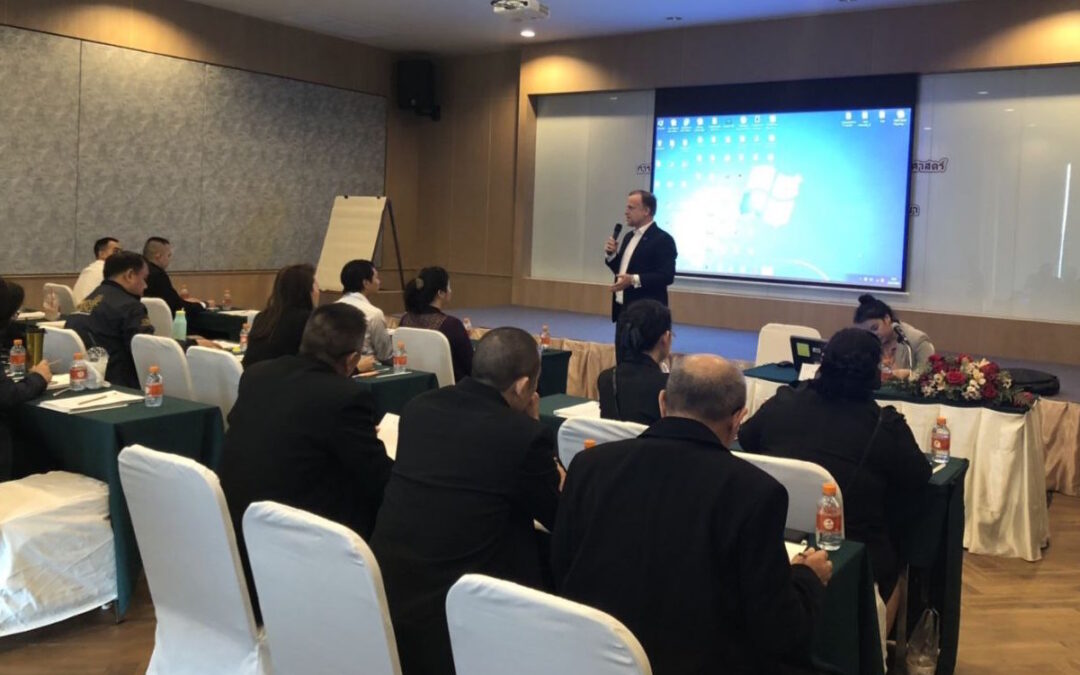
From 29 to 31 March 2019, the ICJ co-hosted a workshop in Ayutthaya province for authorities from Thailand on Human Rights, Investigation Techniques and Forensic Examination of Evidence. The event focused on how such investigations should be conducted in accordance with international human rights law and standards.
The workshop was co-hosted with Thailand’s Ministry of Justice and the United Nations Office of the High Commissioner for Human Rights (OHCHR).
The participants included 35 criminal investigators, public prosecutors, representatives of the Ministry of Justice’s Department of Special Investigation (DSI), the Central Institute of Forensic Science (CIFS), the Ministry of Defense, the National Anti-Corruption Commission and the Office of the Narcotics Control Board.
Kingsley Abbott, Senior Legal Adviser for Global Redress and Accountability at the ICJ and a member of the Working Group in revising the Minnesota Protocol, presented a summary of the international human rights legal framework applicable to the investigation of unlawful deaths and enforced disappearance.
He also introduced an outline of the revised Minnesota Protocol on the Investigation of Potentially Unlawful Death (2016), which was launched in Thailand on 25 May 2017.
The Protocol formed the core of the materials used at the workshop. He also addressed the use of telecommunication evidence as evidence at trial.
Other speakers included:
- Amornrat Lekwichai, Senior Professional Level Forensic Scientist from the CIFS, who addressed the use of telecommunication and digital evidence in criminal cases towards establishing the identity of suspects;
- Pornthip Rojanasunan, Adviser with the CIFS and a member of the Advisory Panel in revising the Minnesota Protocol, who spoke on forensic pathology and the need for independent autopsies in an independent and impartial investigative process;
- Badar Farrukh, Human Rights Officer from OHCHR, who addressed witness interviews and witness protection;
- Angkhana Neelapaijit, National Human Rights Commissioner and spouse of lawyer Somchai Neelapaijit, a victim of enforced disappearance; and
- Somchai Homlaor, a leading Thai human rights lawyer and member of several independent fact-finding commissions, who raised concerns about challenges for accountability for human rights abuses in Thailand’s criminal justice.
This workshop is part of the ICJ’s ongoing efforts to ensure the domestic implementation of international law and standards on the investigation of potentially unlawful deaths and enforced disappearances.
The ICJ has held several Workshops on the same topic including:
Regional Workshops
National Workshops
Contact
Kingsley Abbott, Senior Legal Adviser for Global Redress and Accountability, ICJ Asia Pacific Regional Office, t: +66 94 470 1345, e: kingsley.abbott@icj.org
Mar 29, 2019 | News
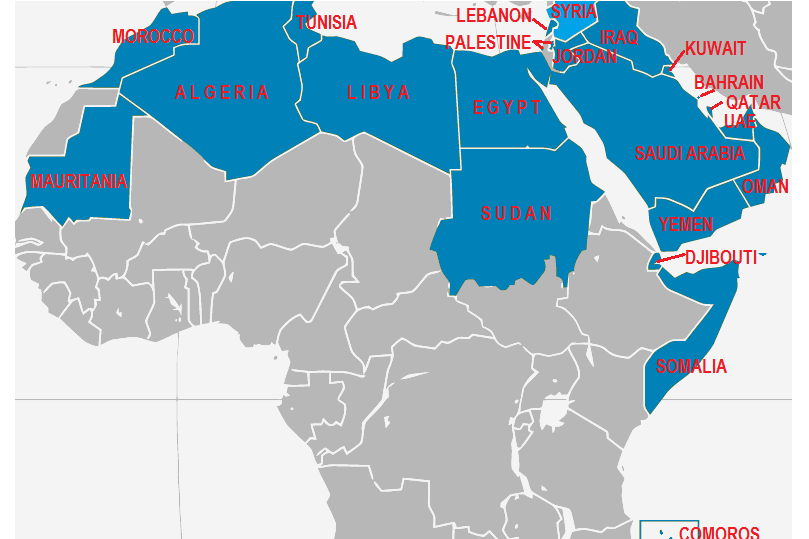
As leaders gather for the League of Arab States (LAS) Summit beginning on 31 March 2019 in Tunis, the ICJ called on them to place human rights and accountability for violations at the forefront of their agenda.
In particular, the ICJ urged the Summit to take immediate steps to revise the Statute of the Arab Court of Human Rights in line with international standards to allow access by victims of human rights violations in the region to such a Court.
“We’ve been witnessing a spike in gross human rights violations across the Arab region, including in extrajudicial executions, enforced disappearances, arbitrary detentions, and torture and other ill-treatment,” said Said Benarbia, the ICJ’s MENA Programme Director.
“The region is in dire need of a credible and independent judicial mechanism to provide justice for human rights violations, the overwhelming majority of which presently go unaddressed,” he added.
The ICJ called on external participants to prioritize human rights in their discussions with League member States at the Summit.
Expected attendees include United Nations Secretary-General Antonio Guterres, the European Union High Representative for Foreign Affairs and Security Federica Mogherini, the Head of the African Union Commission Moussa Faki Mahamat, and the Secretary General of the Organization of Islamic Cooperation Yousef bin Abdul Al-Othaimeen.
Many States in the region are plagued by widespread and systematic violations.
These range from torture, enforced disappearance and arbitrary detentions in Egypt, attacks against human rights defenders and journalists in Saudi Arabia, including the high profile enforced disappearance and killing of Saudi journalist Jamal Khasshogi, as well as the judicial harassment of human rights defenders and political activists throughout the region.
Civilian populations have borne the brunt of violations and crimes through military operations by governments and armed groups in Yemen, Syria and Libya, and in the context of the Israeli-Palestinian conflict.
“International leaders mustn’t sit back and follow the agendas of rights-violating States at this Summit, which will no doubt be directed towards further entrenchment of their authoritarian regimes at the expense of victims,” said Benarbia.
“Instead, they should urge LAS members States to ensure accountability for human rights violations in the region, including by revising and then making operational the Statute of the Arab Court,” he added.
The ICJ said that the process of revision should only be done with the participation of a wide range of stakeholders, civil society, judges, academics, bar associations, and victims of violations.
Contact:
Said Benarbia, Director of the ICJ Middle East and North Africa Programme, t: +41-22-979-3817; e: said.benarbia(a)icj.org
Background
The Statute of the Arab Court of Human Rights, which aims to establish a regional human rights court for Arab States, was approved by the LAS Ministerial Council on 7 September 2014, but is yet to come into force.
The ICJ and others have identified significant flaws in the Statute, highlighted in the 2014 ICJ report. The report notes that the Statute does not allow victims themselves to submit complaints directly to the Court, making access to justice an illusion. In addition, the Statute does not provide for sufficient guarantees to ensure judicial independence and impartiality; does not provide adequate protective measures for petitioners, their representatives or witnesses; and fails to require the Court to interpret the Arab Charter in line with international human rights obligations.
MENA-Arab Court HR-News-2019-ARA (full story in Arabic, PDF)
Mar 28, 2019 | Advocacy, Non-legal submissions
Today, the ICJ filed a submission to the Human Rights Council’s Working Group on the Universal Periodic Review in advance of its review of Kazakhstan’s human rights record in October-November 2019.
In its submission, the ICJ considered the situation with the independence of the legal profession in Kazakhstan and provided information on the status of international human rights treaties ratified by Kazakhstan.
The ICJ called on the Human Rights Council and the Working Group to recommend Kazakhstan:
• to amend the current legislation to ensure that representatives of the executive, such as the Ministry of Justice, are not included in the disciplinary bodies of the legal profession;
• to amend the current legislation to ensure that the qualification procedures are fully governed by the legal profession in Kazakhstan in line with international law and standards on the role of lawyers; in particular, the Qualification Commissions should be bodies of the Bar Association while their composition should predominantly consist of lawyers delegated by the Bar Association itself;
• to ensure that as the main stakeholder in any reforms affecting the legal profession, the Bar Association participates in such reforms in a meaningful way;
• to take effective measures to prevent further interference by the executive and law enforcement bodies in the exercise of lawyers’ professional duties, in particular prevent the practice of bringing disciplinary complaints against lawyers solely for their defence of their clients or legitimate exercise of their right of freedom of expression;
• to ensure that the right of lawyers to freedom of expression is respected, especially in regard to matters of public interest and law.
Furthermore the ICJ suggested:
• To ratify the Agreement on the Privileges and Immunities of the International Criminal Court.
• To ratify the Optional Protocol to the Covenant on Economic Social and Cultural Rights and International Convention on the Protection of the Rights of All Migrant Workers and Members of their Families as well as the Second Optional Protocol to the International Covenant on civil and Political Rights.
Kazakhstan-ICJ UPR 2019-Advocacy-Non legal submissions-2019-ENG (full text of submission, in PDF)

Mar 28, 2019 | Advocacy, Non-legal submissions
Today, the ICJ and Adalah for Rights and Freedoms (Adalah) filed a submission to the Human Rights Council’s Working Group on the Universal Periodic Review in advance of its review of Egypt’s human rights record in November 2019.
In their submission, the ICJ and Adalah drew the the attention of the Working Group on the UPR to the following concerns:
- arbitrary arrests and detentions and systematic use of pre-trial detention;
- the systematic use of torture, ill-treatment and enforced disappearance;
- the imposition of death penalty following unfair trials; and
- the politicization of the judiciary and the use of courts as a tool of repression.
The ICJ and Adalah called on the Working Group and the Council to urge the Egyptian authorities to :
- End the practice of holding detainees incommunicado;
- End all other forms of arbitrary detention;
- Comprehensively reform the pre-trial detention framework, including by ensuring that resort to it is exceptional, and that such detention may be ordered only when it is determined on the basis of evidence that it is necessary, proportionate and reasonable in the circumstances of the individual case;
- Ensure that pre-trial detention is not mandatory for all individuals charged with a particular category of felony or misdemeanor, or based on the potential sentences for the offences alleged;
- Ratify the International Convention for the Protection of All Persons from Enforced Disappearance (CED);
- Enact a crime of enforced disappearance in the Egyptian Criminal Code consistent with article 2 of the CED;
- Amend article 126 of the Criminal Code with a view to enacting a crime of torture consistent with article 1 of the CAT;
- Accept independent monitoring of detention facilities by allowing independent observers immediate access to detainees and prisoners, and to that end, accede to the Optional Protocol to the CAT;
- Implement all the recommendations of the CAT following its article 20 inquiry;
- Amend Egyptian law and abolish the use of the death penalty;
- Pending abolition, implement an immediate moratorium on all executions and on the imposition of capital punishment, including in cases of involving intentional killings;
- Pending abolition, ensure that proceedings in death penalty cases conform to the highest standards of judicial independence, competence and impartiality, and strictly comply with all fair trial rights;
- Pending abolition, ensure that the right to appeal in death penalty cases include review of both the factual and the legal aspects of the case by a higher ordinary, independent and impartial tribunal;
- Pending abolition, provide for the right of individuals convicted in death penalty cases to seek a pardon, commutation of sentence or clemency.
- Ensure that all convictions in death penalty cases that followed unfair trails are quashed;
- End Executive interference in judicial affairs;
- Limit the jurisdiction of military courts to trials of military personnel only for breaches of military discipline; and
- Abolish Emergency State Security Courts.
Egypt-Adalah_ICJ UPR-Advocacy-Non Legal Submissions-2019-ENG (full text of submission, in PDF)