Mar 15, 2019
Today the ICJ issued a Legal Brief note in order to help in understanding the offence of Subverting a Constitutional Government under Zimbabwe law.
Following protests that occurred in most major cities and towns in Zimbabwe in January 2019, a number of activists, human rights defenders, civil society leaders and opposition leaders have been arrested and charged with ‘subverting constitutional government’ as provided for under section 22 of the Criminal Law (Codification and Reform) Act [Chapter 9:23] (hereinafter referred to as the Criminal Code).
This legal briefing note seeks to provide an explanation of the elements of the crime and how it has been construed by Zimbabwean courts, and whether and to what the resort to section 22 has accorded with international law and standards, including African regional standards.
Under Zimbabwe’s existing laws, a person may be charged with an offence known as ‘subverting constitutional government’.
This is a crime akin to but less serious than treason. It is nonetheless an offence which attracts a sentence of up to 20 years in prison.
Various protesters have been arrested on the allegations that their public statements amounted to inciting the commission of this crime.
Following the January 2019 protests, more than 5 protesters and MDC opposition members have been charged with this crime.
Despite the high number of arrests based on this charge in the past few years, there have been no convictions.
Where the basis of the charge are public statements made, the question of what exceeds legitimate exercise of the right to freedom of expression arises.
As such, there is need to interrogate where the line is drawn between legitimate and illegitimate exercise of the right to freedom of expression.
International human rights law, pursuant both universal and African regional standards, protects for the rights of persons to freedom of opinion and expression (Article 9 ACHPR; article 19 ICCPR), freedom of assembly (article 11 ACHPR;21 ICCPR) article, freedom of association (article 10 ACHPR; article 22 ICCPR), and the right to political participation (article 25 ICCPR).
These provisions in these international instruments impose an obligation on all state parties to respect the rights of persons under their jurisdiction.
Zimbabwe as a member state is bound by these provisions and similar provision under sections 58 (freedom of assembly and association), section 59 (freedom to demonstrate and petition), section 60 (freedom of conscience) and section 61 (freedom of expression).
These rights and fundamental freedoms, when exercised by human rights defenders, have been accorded heightened protection in international standards in particular through the UN Declaration on the Right and Responsibility of Individuals, Groups and Organs of Society to Promote and Protect Universally Recognized Human Rights and Fundamental Freedoms (Declaration on Human Rights Defenders), adopted in 1999 by consensus of the General Assembly
While these freedoms are not absolute, under international law, any restrictions must be (i) legitimate, provided by law which is clear and accessible to everyone and formulated with sufficient precision to enable an individual to regulate his or her conduct; (ii) proven strictly necessary to protect the rights or reputation of others, national security or public order, public health or morals and (iii) proven to be the least restrictive and proportionate means to achieve the purported aim.
Contact
Elizabeth Mangenje, e: elizabeth.mangenje@icj.org
Brian Penduka, e: brian.penduka@icj.org
Arnold Tsunga, e: arnold.tsunga@icj.org
Zimbabwe-Subverting Constitutional Gvt-Advocacy-Analysis Brief-2019-ENG (full legal brief in PDF)
Mar 15, 2019
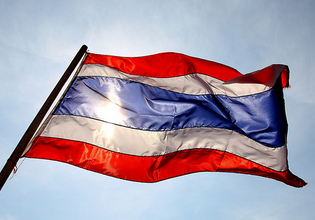
Today, ICJ and Human Rights Lawyers’ Association (HRLA) submitted recommendations to the Ministry of Justice on Thailand’s draft National Action Plan on Business and Human Rights (‘draft NAP’), dated 14 February 2019, scheduled for public consultation between 15 February 2019 and 15 March 2019.
The organizations called for modifications to the draft NAP to ensure adequate legal and other protections for human rights defenders and their work, which was indicated as the identified as one of the NAP’s key priority areas.
The ICJ and HRLA welcomed the overall commitment expressed by the Thai Government, including the Ministry of Justice’s, to implement the United Nations Guiding Principles on Business and Human Rights (UNGPs) through the NAP.
The organizations expressed concern, however, at the removal of a commitment that had been included in earlier versions of the NAP to “push for an Anti- Strategic Litigation against Public Participation (SLAPP) law” from the current draft NAP.
This removal was justified in the draft NAP on the grounds that the Court of Justice had already introduced legal amendments to prevent SLAPP lawsuits, in particular by enacting revisions of the Criminal Procedure Code (Articles 161/1 and 165/2). The draft NAP also refers to certain powers of a public prosecutor as another means of preventing SLAPP lawsuits.
ICJ and HRLA indicated that these laws were inadequate to prevent judicial harassment of human rights defenders and called for the draft NAP to include concrete action with the force of law to protect individuals, and in particular human rights defenders, from judicial harassment, including through SLAPP lawsuits.
Background
Thailand is among the first countries in the ASEAN region to have begun the elaboration of a NAP. The UN Human Rights Council has stressed the importance of the development of National Action Plans by States to implement the UN Guiding Principles on Business and Human Rights, which include the obligation to provide protections for persons from any adverse human rights impact of business activity.
On 15 February 2019, the Ministry of Justice circulated a final draft of the NAP for public consultation.
Upon finalization of the draft following the consultation, the draft will be forwarded to the Office of the National Economics and Social Development Council for their consideration before being sent to the Cabinet for approval.
The draft NAP sets out 4 key priority areas including (1) labour; (2) land, environment and natural resources; (3) human rights defenders; and (4) cross border investment and multi-national enterprises.
The draft NAP has set out several action points aimed to address concerns regarding the above-noted key priority areas for the period of 5 years (2019-2023).
Thailand-SLAPP Analysis-Advocacy-Analysis brief-2019-ENG (analysis in English, PDF)
Thailand-SLAPP Analysis-Advocacy-Analysis brief-2019-THA (analysis in Thai, PDF)

Mar 15, 2019 | News
The ICJ called on the Government of Malaysia to take immediate steps to protect the right of all persons in the country to freedom of expression and assembly, after seven organizers of the International Women’ Day (IWD) March were summoned for questioning by police authorities on 14 March 2019.
“It is very concerning that the Malaysian authorities continue to rely on repressive legislation to control and undermine freedom of expression and freedom of assembly in the country,” said Emerlynne Gil, ICJ’s Senior International Legal Adviser.
The Women’s March took place in Kuala Lumpur, on 9 March 2019. The demands of the participating groups included an ‘end of all violence based on gender and sexual orientation’, the ban of all child marriages, and the setting of RM1,800 as a minimum wage.
A statement by the Dang Wangi District Police Deputy Chief identified the organizers as individuals who had spoken at an ‘LGBT’ rally.
There were reportedly taken in for questioning on 18 March for potential violations of Section 4(1) of the Sedition Act and Section 9(5) of the Peaceful Assembly Act. They remain at risk of being charged for these offences.
The ICJ considers the Sedition Act 1948 and the Peaceful Assembly Act 2012 to be incompatible with international standards. The ICJ has previously called on the Government of Malaysia to abolish both laws, which have historically been used to silence voices of those challenging governmental policy.
The laws place restrictions on the exercise of freedom of expression that are overbroad, unnecessary and disproportionate, and inconsistent with rule of law and human rights principles. The Pakatan Harapan Government committed itself to abolishing the Sedition Act 1948 and the Peaceful Assembly Act 2012, but has not done so to date.
“The vague definition of ‘seditious tendencies’ in the Sedition Act has been used as a tool for silencing government critics and human rights defenders by previous administrations. It is disappointing that the Malaysian authorities have ended the moratorium on the use of the Sedition Act 1948, and continue to use it, instead of moving towards its abolition,” said Gil.
According to international standards, any limits on the right to peaceful assembly should not require prior authorization by the authorities. Notification requirements must not be unduly bureaucratic and be used only for the purpose of allowing the authorities to facilitate the exercise of the right to peaceful assembly, and to protect public safety.
In a 14 March statement, the organizers claimed to have been in regular communication with the police and to have been in compliance with the relevant notice provisions of the Peaceful Assembly Act.
The ICJ calls on the Malaysian authorities to end any investigations targeting the organizers of the Women’s March pursuant to the Peaceful Assembly and Sedition Act. It also calls on the Government to abolish the Peaceful Assembly Act and the Sedition Act.
Contact
Emerlynne Gil, ICJ Senior International Legal Adviser, t: +66 840923575, e: emerlynne.gil(a)icj.org
Malaysia-Womens March-News-web stories-2019-ENG (full story with additional information, in PDF)
Mar 15, 2019
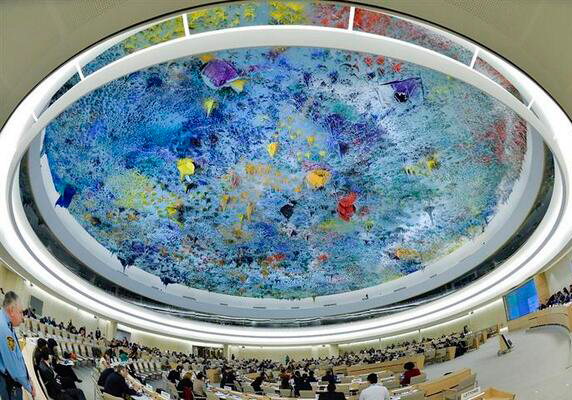
The ICJ has joined other NGOs in calling for renewal of the mandate of the UN Special Rapporteur on human rights in Iran.
The letter, signed by 42 Iranian and international NGOs, can be downloaded in PDF format here: HRC40 – Iran – Joint NGO letter on the renewal of the mandate of the SR on Iran_FINAL
Mar 13, 2019 | Comunicados de prensa, Noticias
La CIJ, conjuntamente con una jueza de Honduras y otra de Costa Rica, de sus respectivas asociaciones de jueces, sostuvieron una reunión con el Presidente de la Corte Suprema de Justicia.
Una vez más, pidieron la destitución del Director de Seguridad Institucional del Organismo Judicial, ya que a partir de dicho nombramiento, las y los jueces más independientes e imparciales, empezaron a ser vigilados ilegalmente y se han sentido vulnerables e inseguros.
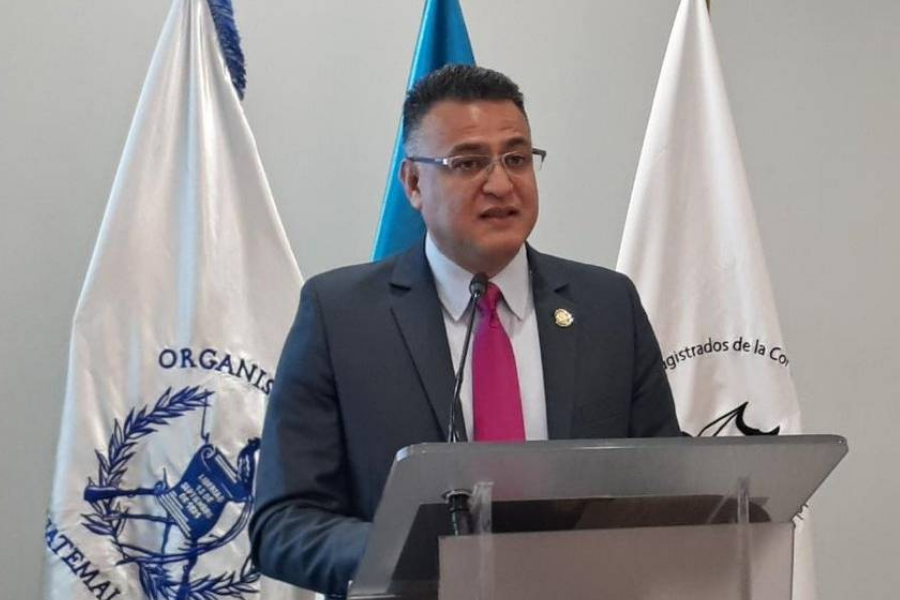
El día de hoy, gracias a una nota periodística, se supo que el Director de Seguridad Institucional del Organismo Judicial, Roberto Mota Bonilla (foto), tiene orden de captura, por la supuesta comisión del delito de violencia contra la mujer.
Esta nueva acusación hace insostenible que el Presidente de la Corte Suprema de Justicia lo siga protegiendo y manteniendo en su puesto y el pleno de magistrados de dicha Corte debería ahora intervenir, por tratarse de un asunto relacionado directamente con la seguridad de jueces y juezas.
“Tal y como nos informara el día de ayer el Presidente de la Corte Suprema de Justicia, en él recae la responsabilidad del nombramiento del Director de Seguridad Institucional, pero los asuntos de seguridad de jueces, debe discutirlos con el pleno de la Corte Suprema de Justicia,” expresó Ramón Cadena, Director de la CIJ para Centroamérica.
La CIJ hace un llamado a las autoridades del Estado de Guatemala, para que respeten el Estado de Derecho y que cesen los ataques en contra de la independencia del Poder Judicial y de las y los jueces que administran justicia en forma independiente e imparcial.
Lamentablemente, tal y como lo confirmara el Presidente del Organismo Judicial, está a la espera de informe de Auditoría Interna para tomar una decisión definitiva. Sin embargo, ante estos nuevos hechos, no debería esperar el informe para tomar una decisión. El Director de Seguridad Institucional Roberto Mota Bonilla, debería ser destituido en forma inmediata.