Feb 18, 2019 | Advocacy
National, regional and international NGOs, including the ICJ, play a critical role in the work of the treaty bodies through monitoring the implementation of the treaties at the national level, providing information to the treaty bodies, and encouraging states to give effect to the treaty bodies’ recommendations.
This document contains a call from NGOs for an inclusive review process on treaty body strengthening.

Feb 15, 2019
The ICJ has published an overview of international standards on judges’ and prosecutors’ freedoms of expression, association and assembly, in a submission to the UN Special Rapporteur on the Independence of Judges and Lawyers.The document responds to the Special Rapporteur’s call for input for an upcoming report to the UN Human Rights Council in Geneva.
The submission outlines the relevant international standards and key regional jurisprudence and standards, as well as illustrative national cases and practice and several academic sources.
The ICJ concludes, among other things, that:
- Judges and prosecutors are like other citizens entitled to freedom of expression, belief, association and assembly, subject only to necessary and proportionate restrictions for valid purposes.
- In principle any such restrictions that are specifically related to their judicial functions, should be established by the judiciary itself or another independent body with majority membership of judges.
- Any proceedings against a judge or prosecutor related to their exercise of these freedoms should comply fully with international human rights law and standards in terms of the grounds and procedures, including as set out in standards on independence of the judiciary and prosecutors.
- Judges and prosecutors should be required to recuse themselves from any case where they have previously exercised these freedoms in a way that would give rise to a reasonable apprehension of bias in their subsequent conduct of the case.
- At the same time, the above considerations do not mean that a judge or prosecutor can never engage in expression, association or assemblies that touch on issues or parties that could speculatively come before the courts at some future point. Total isolation from the community and society is neither realistic nor desirable.
- In general, involvement in or comment on matters of party politics carry particularly high risks of giving rise to perceptions of lack of independence and there is relatively wide scope to enact restrictions on this ground.
- It is particularly important that judges (and prosecutors) can exercise their freedoms of expression, association and assembly in order to address: threats to the independence of the judiciary; threats to judicial integrity; fundamental aspects of the administration of justice; or to otherwise promote and protect universally recognized human rights and fundamental freedoms and the rule of law. As such, there is very limited scope for any authority to restrict exercise of these freedoms for these purposes.
- The relevant standards and principles apply to online forms of expression and association (including social media) in an equal or analogous manner to their application to offline forms. However, judges and prosecutors should be aware of and take into account practical aspects of online forms of expression and association.
The full submission can be downloaded in PDF format here: Universal-SRIJL Judges-Advocacy-non legal submission-2019-ENG
Feb 15, 2019 | News
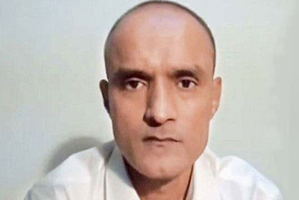
The International Court of Justice will hold public oral hearings in India v. Pakistan (Jadhav case) from 18 to 21 February 2019. Before they commence, the International Commission of Jurists (ICJ) has published a briefing paper to clarify the key issues and relevant laws raised in the case in a Question and Answer format.
The case concerns Pakistan’s failure to allow for consular access to an Indian national, Kulbhushan Sudhir Jadhav, detained and convicted by a Pakistani military court on charges of “espionage and sabotage activities against Pakistan.”
India has alleged that denial of consular access breaches Pakistan’s obligations under Article 36(1) of the Vienna Convention on Consular Relations (VCCR), to which both States are parties.
Pakistan has argued, among other things, that the VCCR is not applicable to spies or “terrorists” due to the inherent nature of the offences of espionage and terrorism, and that a bilateral agreement on consular access, signed by India and Pakistan in 2008, overrides the obligations under the VCCR.
ICJ’s Q&A discusses the relevant facts and international standards related to the case, including: India’s allegations against Pakistan; Pakistan’s response to the allegations; the applicable laws; and the relief the International Court of Justice can order in such cases.
Contact:
Frederick Rawski (Bangkok), ICJ Asia Pacific Regional Director, e: frederick.rawski(a)icj.org
Reema Omer (London), ICJ International Legal Adviser, South Asia t: +447889565691; e: reema.omer(a)icj.org
Additional information
While the case at issue is limited to denial of consular access under the VCCR, it engages other critical fair trial concerns that arise in military trials in Pakistan.
The International Commission of Jurists has documented how Pakistani military courts are not independent and the proceedings before them fall far short of national and international fair trial standards. Judges of military courts are part of the executive branch of the State and continue to be subjected to military command; the right to appeal to civilian courts is not available; the right to a public hearing is not guaranteed; and a duly reasoned, written judgment, including the essential findings, evidence and legal reasoning, is denied.
The case also underscores one of inherent problems of the death penalty: that fair trial violations that lead to the execution of a person are inherently irreparable.
Download the Q&A:
Pakistan-Jadhav case Q&A-Advocacy-Analysis brief-2019-ENG
Feb 13, 2019 | Multimedia items, News, Video clips
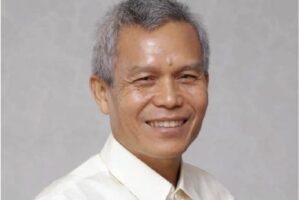
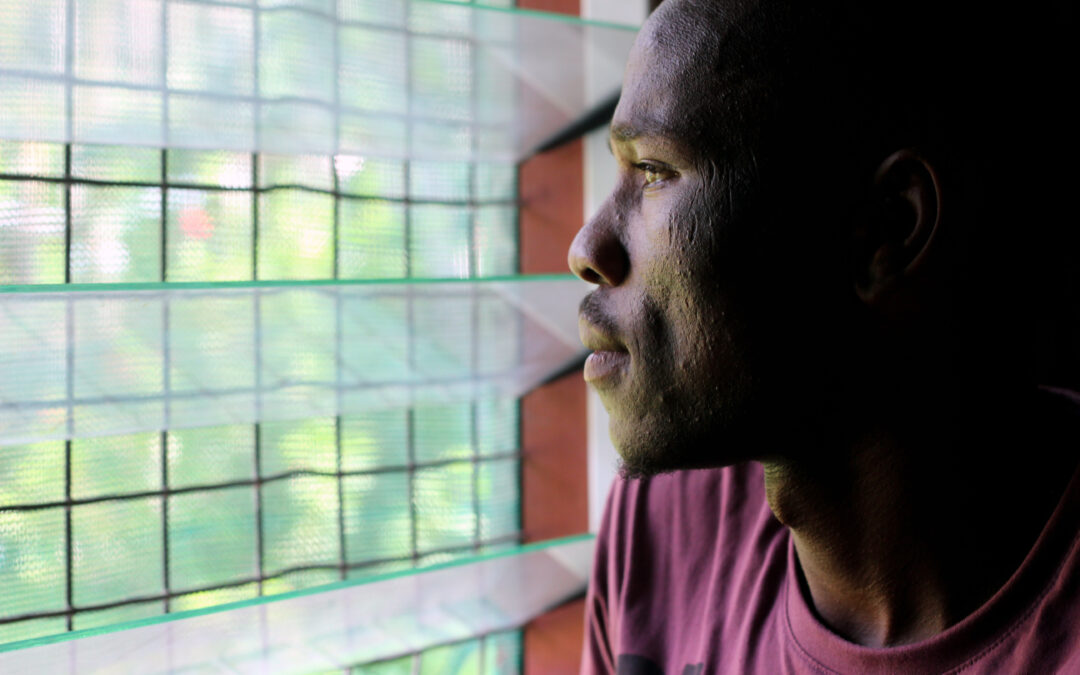
Sudanese refugee activist Abdul Aziz Muhamat is the 2019 Martin Ennals Award Laureate. He was among three finalists, selected last October by a jury of ten of the world’s leading human rights organizations, including the ICJ, together with Marino Cordoba Berrio (Colombia) and Eren Keskin (Turkey).
“This award sheds light on the very cruel refugee policy of the Australian Government. It also brings international attention to the dangers and ill-treatment faced by refugees all over the world, including in countries that claim they uphold the Refugee Convention,” said Abdul Aziz Muhamat.
The 2019 laureate was fleeing war in Darfour. In October 2013, he was forcibly transferred to the island of Manus (Papua New Guinea), as part of Australia’s “offshore” refugee policy, when the boat he was on was intercepted by the authorities.
More than five years on, he is still stranded on the island, like hundreds of refugees and asylum seekers, and subject to deprivation, harassment, humiliation and violence.
“This young man was only 20 when he first arrived on Manus island. Since then, he never stopped raising his voice for those who have been stripped of their most basic rights together with him. He showed extraordinary tenacity and courage, always resisting peacefully even after a police officer shot him in the leg,” said Dick Oosting, Chair of the Martin Ennals Foundation.
“The Australian Government must meet its international obligations and put an end to these inhumane practices,” he added.
Living conditions on Manus island have been denounced by human rights organizations.
“Men are dying, notably for lack of appropriate medical care. Some of them, including children, committed suicide. We need safety, we need freedom, we need hope. Opposing this cruel system helps preserve my self-esteem and my human dignity,” Abdul Aziz Muhamat said.
“I will continue to fight until all of us are safe and free,” he added.
The two other finalists of the 2019 Martin Ennals Award are Eren Kerskin (Turkey) and Marino Cordoba Berrio (Colombia).
A lawyer who has been engaged for over 30 years in advancing the rights of women, Kurds and LGBTI+ notably, Eren Kerskin was recently sentenced to twelve and a half years in prison for supporting the shuttered pro-Kurdish newspaper Özgür Gündem.
She has been accused of denigrating the Nation and insulting the President in her chronicles.
“Freedom of expression and freedom of thought are severely punished in Turkey nowadays. The government tolerates no dissenting voices. I know that by resisting we can change the world. Thank you for not forgetting us. Your solidarity and support give me the courage to continue the struggle,” she said.
Marino Cordoba Berrio is a leading figure within the Afro-Colombian community, which has been repeatedly stripped of its rights and lands.
For two decades, he has been struggling for the rights of his ethnic and other marginalized groups, at the risk of his own life in a country where more than 400 social leaders and human rights defenders have been killed in the past two years.
“Historically, we have suffered from political, economic and social exclusion. To seek and obtain justice for my people is crucial for our survival,” he said.
“Under the peace agreement and thanks to our efforts, ethnic groups’ rights are recognized and so is the need to protect them. It’s high time for the government of Colombia to meet its commitments and put an end to the escalating violence affecting our communities,” he added.
The Martin Ennals Award for human rights defenders is given out since 1994. It honours individuals who have shown outstanding commitment to the promotion and protection of human rights, despite the risks involved.
This award aims at shedding light on their situation and their work. It provides them with international recognition and protection, as well as financial support to pursue their activities.
The three finalists were honoured today during a ceremony organized by the City of Geneva.
The jury of the Martin Ennals Award comprises ten of the world’s leading human rights organizations: the ICJ, Human Rights Watch, Amnesty International, FIDH, Human Rights First, International Service For Human Rights, Brot für die Welt, Front Line Defenders, the World Organization Against Torture and HURIDOCS.
Contact:
Olivier van Bogaert, Director Media & Communications, ICJ representative in the MEA Jury, t: +41 22 979 38 08 ; e: olivier.vanbogaert(a)icj.org
Watch video of MEA Laureate 2019:
Watch the whole MEA 2019 Ceremony in Geneva:
Feb 13, 2019
Today, the ICJ and the Human Rights Joint Platform (IHOP) published a briefing paper on the system of Turkish Criminal Peace Judgeships and its compliance with international law.
Since their creation in 2014, the Turkish criminal peace judgeships have been the focus of much criticism with regard to violations of human rights, as they are at the forefront of the authorisation or judicial review of decisions restricting the right to liberty and other human rights.
This briefing paper assesses the institution of the criminal peace judgeships in Turkey, established in 2014, and its compliance with the obligations undertaken by Turkey under international human rights law.
The ICJ-IHOP briefing paper concludes that the system of the criminal peace judges in Turkey does not meet international standards for independent and impartial review of detention, and suggests a set of detailed constitutional and legislative reforms to put the system back in line with Turkey’s human rights obligations.
The publication in English here.
The publication in Turkish here.