Jan 18, 2019
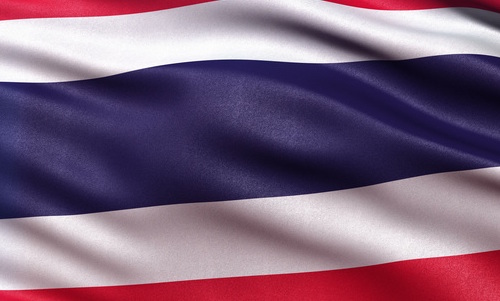
Today, the ICJ submitted recommendations to the Committee Considering the Draft Prevention and Suppression of Torture and Enforced Disappearance Act (‘Draft Act’) and urged that the Draft Act be amended without delay in order to ensure compliance with Thailand’s international legal obligations.
The Act, if properly conceived and implemented, will help ensure that Thailand is able to effectively address the crimes of torture and enforced disappearance, including by holding perpetrators accountable.
The Committee was recently set up by Thailand’s National Legislative Assembly (‘NLA’) to review the Draft Act, under discussion since 2017.
The recommendations were made with respect to the most recent amendments to the Draft Act that were approved by the NLA, in its first reading on 20 December 2018.
The ICJ’s recommendations reflect proposals for changes that ICJ and Amnesty International jointly first submitted to the Ministry of Justice on 23 November 2017.
While the ICJ welcomes the NLA’s decision to retain certain sections regarding emergency situations and non-refoulement in the Draft Act, it expressed concern at a number of deficiencies that would need to be addressed in order to bring the Draft Act into line with Thailand’s international human rights obligations, including the UN Convention against Torture and Other Cruel, Inhuman or Degrading Treatment or Punishment (UNCAT) and the International Convention for the Protection of All Persons from Enforced Disappearances (ICPPED).
The key concerns include:
- Incomplete definitions of the crimes of torture and enforced disappearance, as well as of other key terms;
- Absence of provisions concerning cruel, inhuman and degrading treatment or punishment (“CIDT/P”);
- Inadequacy of provisions relating to modes of liability for crimes described in the Draft Act;
- Inadequacy of provisions on the inadmissibility in legal proceedings of statements and other information obtained by torture, CIDT/P and enforced disappearances as evidence in legal proceedings; and
- Insufficient safeguards against torture, CIDT/P and enforced disappearances.
Background
Thailand is a State party to the International Covenant on Civil and Political Rights (ICCPR) and UNCAT, and has signed, but not yet ratified, ICPPED.
The Draft Act was produced by the Ministry of Justice in consultation with non-governmental organizations and other civil society actors. Public hearings on the Draft Act, as required by the 2017 Constitution, were conducted through a series of meetings, including a forum that was co-hosted by the ICJ.
The evaluation of the public hearings was prepared by the Ministry of Justice and included the recommendations that were submitted by the ICJ and Amnesty International in November 2017. However, not all of the critical issues raised were satisfactorily addressed.
The amended Draft Act was proposed to the Cabinet, which later forwarded it to the NLA.
Thailand’s NLA requires three readings of a bill before it can be passed into a law.
On 20 December 2018, the Draft Act was approved by the NLA, in its first reading, during meeting No. 86/2561, with 167 supporting, 3 against and 15 abstaining.
Consequently, 15 Committee members were appointed to review the bill within 45 days before to the second and third readings by the NLA. 10 of 15 members of the Committee are from the Thai military, police or navy.
The Committee’s revision of the Draft Act was due to have been completed by 2 February 2019, but this deadline has reportedly been extended for another 30 days.
The NLA will reportedly stop passing any laws before the national elections, due to be held on 24 March 2019, and will be terminated on the day prior to the date of convocation of the first sitting of the National Assembly after the elections.
The termination of the NLA would leave the status of the bill in doubt, and at the least mean significant delays in its consideration and passage.
Download:
Thailande-Torture and enforced dis-Advocacy-non legal submission-2019-ENG (full text in English, PDF)
Thailande-Torture and enforced dis-Advocacy-non legal submission-2019-THA (full text in Thai, PDF)
Read also:
ICJ and Amnesty International, Recommendations to Thailand’s Ministry of Justice on the Draft Prevention and Suppression of Torture and Enforced Disappearances Act

Jan 16, 2019
The trial of civilians by military courts is a glaring surrender of human rights and fundamental freedoms, found the ICJ in its Briefing Paper Military Injustice in Pakistan released today.
The Pakistani Government must not extend the tenure of military courts to try civilians for terrorism-related offences, the ICJ said.
“Military trials of civilians have been a disaster for human rights in Pakistan,” said Frederick Rawski, ICJ’s Asia Director.
“As a recent judgment of the Peshawar High Court has confirmed, proceedings in these tribunals are secret, opaque, and violate the right to a fair trial before an independent and impartial tribunal,” he added.
In the briefing paper, the ICJ has documented serious fair trials violations in the operation of military courts, including: denial of the right to counsel of choice; failure to disclose the charges against the accused; denial of a public hearing; failure to give convicts copies of a judgment with evidence and reasons for the verdict; and a very high number of convictions – more than 97 per cent – based on “confessions” without adequate safeguards against torture and ill treatment.
The ICJ has also demonstrated how military courts are being used to give legal cover to the practice of enforced disappearances.
The use of military courts to try civilians is inconsistent with international standards, the ICJ recalled.
According to the military, in the four years since military courts were empowered to try terrorism-related offences, they have convicted at least 641 people. Some 345 people have been sentenced to death and 296 people have been given prison sentences. Only five people have been acquitted. At least 56 people have been hanged.
An earlier law giving military courts authority to try civilians will lapse on 30 March 2019. Last week, the Cabinet approved a proposal to extend the tenure of military courts for another two years. The Government is currently in consultation with opposition parties to get consensus on the extension.
“Extending the tenure of military courts is an attempt to deflect attention from the real issue: the Government’s failure to enact reforms to strengthen the criminal justice system during the four years military courts have been in operation,” said Rawski.
“The Government must account for its failure to deliver on the promise of delivering justice for the victims of terrorism and other abuses in Pakistan instead of once again extending the “exceptional” use of military courts for civilian trials,” he added.
The ICJ fears that repeated extensions risk making the practice effectively permanent.
If the Government decides to table legislation to extend the tenure of military courts, the Parliament must take a stand in defense of the rights of all people in Pakistan, instead of once again extending a discredited and abusive process, the ICJ says.
Contact
Frederick Rawski (Bangkok), ICJ Asia Pacific Regional Director, e: frederick.rawski(a)icj.org
Reema Omer, ICJ International Legal Advisor (South Asia) t: +447889565691; e: reema.omer(a)icj.org
Additional Information
The National Assembly and Senate of Pakistan passed the 21st amendment to the Constitution in January 2015, authorizing military courts to try civilians for terrorism-related offences for a period of two years. The 21st amendment lapsed on 6 January 2017.
Despite earlier promises that military courts were only temporary and “exceptional”, after the expiration of the 21st Amendment, Parliament enacted on 30 March 2017 the 23rd Amendment and amendments to the Army Act to renew military courts’ jurisdiction over civilians. The amendments were given retrospective effect from 7 January 2017, and were due to lapse two years after their date of “commencement”.
According to the law ministry, the expanded jurisdiction of military courts will lapse on 30 March 2019. (Earlier reports had suggested the amendments expired on Jan 6, 2019 — two years after the date of “operation” of the 23rd Amendment.)
Pakistan-military courts-Advocacy-Analysis brief-2019-ENG (full briefing paper in PDF)

Jan 15, 2019
The ICJ and CORE argue that mining giant Vedanta has a duty of care to villagers affected by its Zambian subsidiary’s copper mining activities.
The UK Supreme Court is to hear an appeal on 15 and 16 January from mining giant Vedanta Resources, in a case brought by 2,000 Zambian villagers who claim that their water and land have been poisoned by the firm’s operations.
The Court will consider evidence from the ICJ and corporate accountability group CORE, that under existing law and international standards, Vedanta owes a legal duty of care to the Zambian villagers. Acceptance of this principle would make the merits of the case arguable before UK Courts and allow for their jurisdiction to hear the case in future proceedings.
Vedanta is seeking to overturn a Court of Appeal ruling from last year, which upheld the High Court’s view that UK Courts would have jurisdiction to hear the case in significant part on the basis that a UK parent company may owe a duty of care to third parties affected by its subsidiaries’ activities.
The CORE and the ICJ submission to the Court argues that the Court of Appeal’s conclusion is supported by international standards on companies’ human rights and environmental responsibilities; UK government publications aimed at implementing those standards, including its Business & Human Rights Action Plan; and comparative law jurisprudence.
Vedanta has stated that its “sustainable development agenda” has been developed in line with the international standards to which the submission refers.
These standards are therefore relevant to the factual question of whether Vedanta controlled and/or had assumed responsibility for the activities of its Zambian subsidiary, Konkola.
The case is a pivotal test for the development in the UK, and across common law and possibly other jurisdictions of parent company liability for human rights and environmental harm.
Victims of corporate human rights abuses face multiple barriers in holding companies to account and securing access to justice.
A clear statement from the UK Supreme Court affirming the duty of care principle would assist communities who have been harmed by corporate activities, and would provide an important affirmation of the scope of parent companies’ obligations.
Contact
Carlos Lopez, ICJ Senior Legal Adviser, t: +41 22 979 3816 ; e: carlos.lopez(a)icj.org
UK-Intervention-ICJ-CORE-Advocacy-legal submission-2019-ENG (full submission in PDF)
Jan 14, 2019 | News
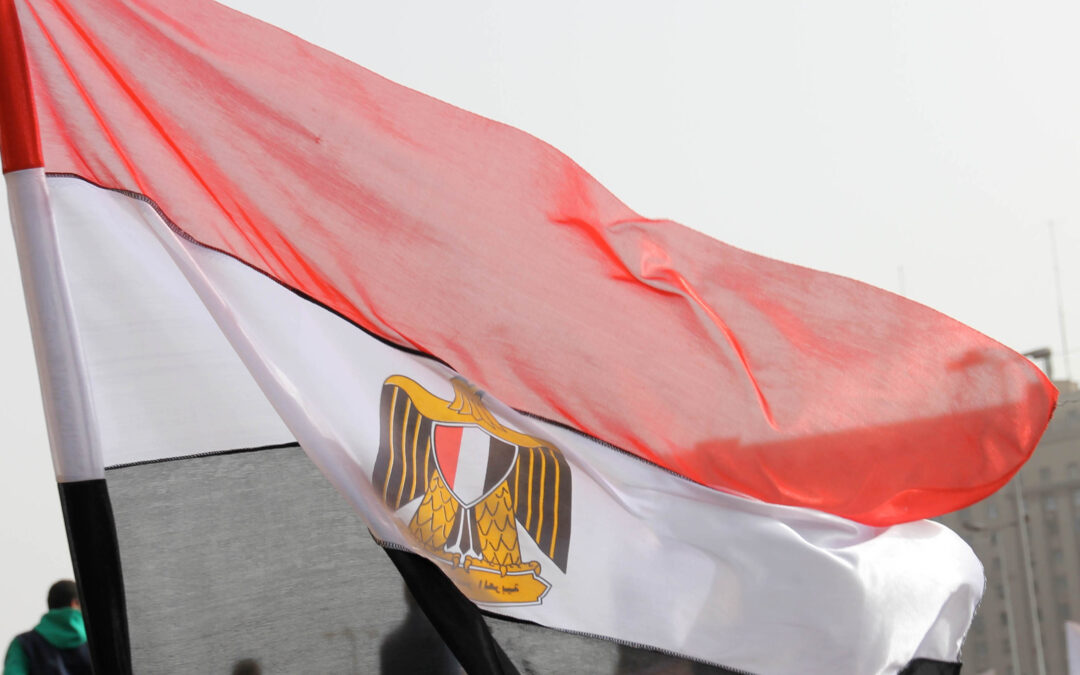
Today the ICJ condemned the conviction of prominent Egyptian political activist Ahmed Douma and called for his immediate removal from solitary confinement and release from prison.
Ahmed Douma, political activist and founding member of the now banned 6 April pro-democracy movement established in 2008, was convicted by the South Cairo Criminal Court on Wednesday 9 January 2019.
The conviction, resulting in a sentence of 15 years in a maximum security prison and a six million Egyptian pounds (US$335,000) fine, followed a re-trial on charges under the Penal Code and Law No. 10 of 1914 on Illegal Assembly including using force and violence against military and police officers, disrupting traffic, participating in an illegal assembly for such purposes, burning the Egyptian Scientific Institute, vandalizing public property, and possessing Molotov Cocktails and rocks to vandalize public property.
The charges relate to his involvement in a three-week sit-in protest outside the Cairo Cabinet Offices in November and December 2011 against the Supreme Council of the Armed Forces’ decision to appoint Kamal Al Ganzouri as Prime Minister, and calling for a civilian government during the post-revolution transition period. The protest erupted in clashes between military forces and protestors on 16 December 2011, which lead to the death of 18 protestors by live ammunition, injury of more than 1900 others and property damage. Douma and 268 others were charged with all offences without distinction.
Ahmed Douma has been held in solitary confinement since late 2013 in connection with his conviction in another case.
Before handing down the sentence, Judge Mohamed Shereen Fahmy stated the country was “plagued by the intellectually defeated and the socially […] lost in the maze of life, seeking a position through which they can establish themselves as national symbols, liars, deceivers, and accomplices, […] who one would expect to be the homeland’s protectors, but in reality, they are its worst foes.”
“The harsh sentence is a clear message to all political activists that any political activity or dissent will not be tolerated under Egypt’s military dictatorship,” said Said Benarbia, Director of ICJ’s MENA Programme. “Judge Fahmy’s statement demonstrates he was never independent and impartial, but was implementing the political will of the al-Sisi led government. The Egyptian regime’s politicization of the judiciary means those with opposing views are unlikely to have a fair trial.”
On 22 December 2013, a Cairo Misdemeanor Court convicted Ahmed Douma in another case, along with two other political activists and founding members of the 6 April movement, Ahmed Maher and Mohamed Adel, for “illegally organizing a protest” under Law No. 107 of 2013 on the Right to Public Meetings, Processions and Peaceful Demonstrations. They were sentenced to three years’ imprisonment and fined 50,000 Egyptian pounds (US$7,239) each.
Since that conviction, Douma has been detained in solitary confinement, with minimal time outside his cell each day. Prolonged solitary confinement is prohibited under international law.
“The Egyptian Authorities are subjecting a political activist to severe ill-treatment in reprisal for his participation and his role in the pro-democracy uprisings of January 2011 and as a warning to others to take heed of what will happen should you dare to express your views. Ahmed Douma’s solitary confinement for more than five years is a breach of Egypt’s obligations under international law,” said Said Benarbia.
Contact:
Said Benarbia, Director of the ICJ Middle East and North Africa Programme, t: +41-22-979-3817; e: said.benarbia(a)icj.org
Egypt-Release Ahmed Douma-News-Web Story-2019-ENG Full press release (English, PDF)
Egypt-Release Ahmed Douma-News-Web Story-2019-ARA Full press release (Arabic, PDF)

Jan 11, 2019 | Incidencia, Noticias
La CIJ envió una carta sobre la coyuntura actual en Guatemala al Secretario General de la Organización de Estados Americanos.
El contenido de la carta:
Señor Secretario General
El Secretario General de la Comisión Internacional de Juristas (CIJ) desea expresarle su preocupación por la crisis política que se está presentando en Guatemala. Los actos del Gobierno de Guatemala en contra de la Comisión Internacional contra la Impunidad en Guatemala (CICIG), organización de las Naciones Unidas que cuenta con el apoyo decidido de la Comunidad Internacional, tanto en lo que se refiere al apoyo financiero, como en recursos humanos, socavan el Estado de Derecho y constituyen una alteración del orden constitucional de Guatemala.
Las últimas decisiones del Presidente de la República, Sr. Jimmy Morales, están repercutiendo negativamente en el Estado de Derecho y en la lucha contra la Impunidad. Por ello, la Comisión Internacional de Juristas (CIJ), ha llevado a cabo un análisis de coyuntura que permita comprender mejor la situación actual en Guatemala; cómo ésta afecta al Estado de Derecho y la Democracia y además, dicho análisis proporciona elementos para una posible evaluación colectiva de dicha situación, de conformidad con la Carta Democrática Interamericana.
Por ello, me pemito entregarle por este medio, el documento “La coyuntura actual en Guatemala. Análisis de la comisión Internacional de Juristas (CIJ)” de fecha 29 de diciembre de 2018. De esta forma, esperamos facilitar procesos de discusión orientados a fortalecer el Estado de Derecho en Guatemala, así como la discusión sobre una posible aplicación de la carta Democrática Interamericana. Sabemos que otros guatemaltecos y guatemaltecas están mandando información a la Secretaría de Asuntos Políticos de la Organización de los Estados Americanos, incluido el jurista Francisco Villagrán de León y esperamos que todo ello, contribuirá a una mejor comprensión de esta difícil situación.
Sin más por el momento, quedo de Usted con las muestras de mi más alta consideración y estima,
Sam Zarifi
Secretario General
Comisión Internacional de Juristas
Guatemala-advocacy-open letter-2019-SPA Carta (en español)
Guatemala-threats to democracy-advocacy-analysis-2019-SPA Análisis completo de la coyuntura actual (en español).