Nov 26, 2018 | News
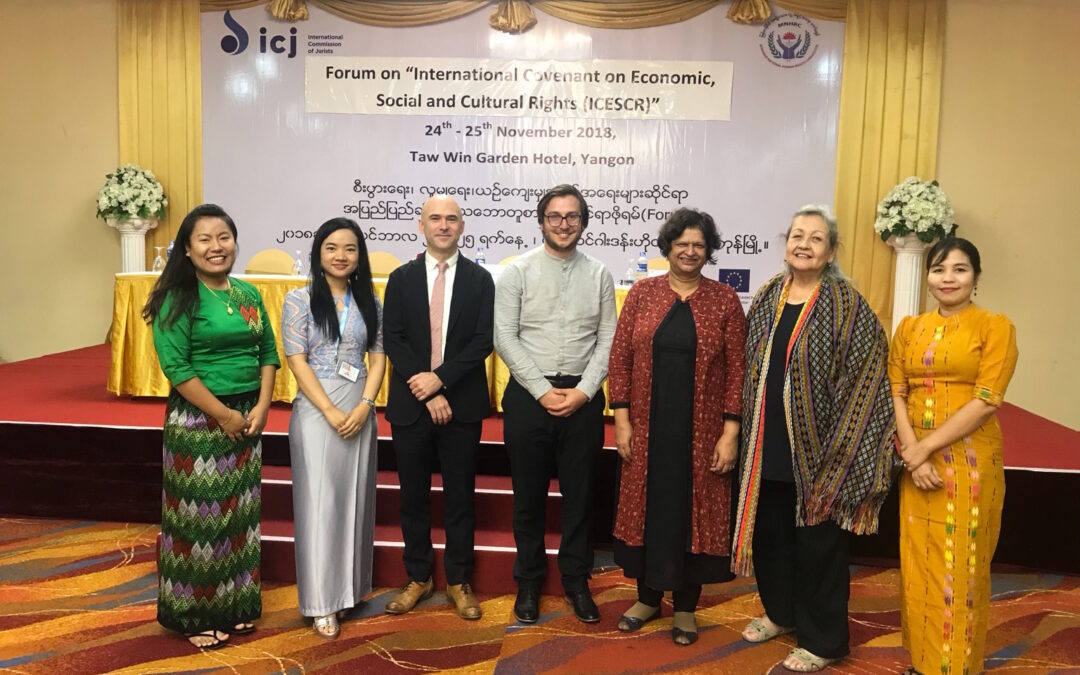
The ICJ convened a Forum of international legal experts and Myanmar civil society actors in Yangon from the 24 to 25 November 2018 on Myanmar’s obligations under the International Covenant on Economic, Social and Cultural Rights (ICESCR).
Representing each of Myanmar’s 14 States and Regions, more than 130 civil society members attended the event, which was co-hosted with the Myanmar National Human Rights Commission in collaboration with Dan Church Aid, Norwegian Church Aid, Equality Myanmar and the Local Resource Center.
The ICJ’s Asia Pacific Regional Director, Frederick Rawski, introduced the Forum objectives which were to raise awareness of the rights, obligations and reporting processes associated with Myanmar’s ratification of the ICESCR on 6 October 2017.
As a State Party to the ICESCR, Myanmar is obliged to respect, protect and fulfill a variety of human rights including the rights to: decent work, an adequate standard of living, adequate housing, food, water and sanitation, social security, health, and education.
The Chairperson of the UN Committee on Economic, Social and Cultural Rights, Virginia Brás Gomes, discussed the vital role civil society plays in documenting and providing information about human rights challenges, and advocating for law to be enforced and interpreted in compliance with the State’s international law obligations.
Virginia B. Dandan of the Philippines, a former Chairperson of the Committee, described the rights protected under ICESCR and highlighted the universality of human rights and the indivisibility of economic, social and cultural rights from other human rights including protection from discrimination.
Visiting Myanmar from the ICJ’s Southern Africa Office, legal adviser Timothy Fish Hodgson, ICJ Legal Adviser in the ICJ Africa Programme, discussed from a comparative perspective the justiciability of ESC rights in South Africa, and the roles lawyers and other civil society actors have played in progressing rights protections.
Legal advisers from the ICJ’s Myanmar Team moderated a series of panel discussions where civil society representatives discussed challenges and opportunities related to the realization of ESC rights in Myanmar.
Separate to this initiative, the visiting international experts also travelled to Nay Pyi Taw to engage with government. Myanmar’s first State report to the ESCR Committee is due in late 2019, also opening opportunities for civil society engagement.
This event was part of the ICJ’s ongoing effort to convene civil society actors to discuss the promotion and protection of human rights through legal mechanisms.
Nov 25, 2018 | News
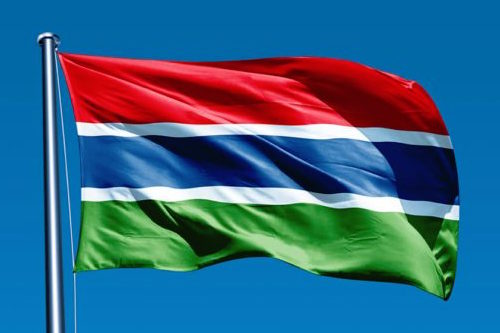
The International Commission of Jurists (ICJ) welcomes the formal declaration of the Gambia to allow individuals and certain non-governmental organizations with observer status access to complain of human rights violations against the Gambian State at the African Court on Human and Peoples Rights.
Gambia became the ninth African State to make the declaration to allow individual access the African Court on Human and Peoples Rights. The ICJ called on other States to follow suit rapidly.
“The Gambian government should be applauded, but more African States need to step up to reinforce their international human rights obligations by allowing victims of violations direct access to the Court and to empower the African Human Rights Court to do the work for which it was set up.” said Arnold Tsunga, Director of the ICJ African Regional Progamme. “It is only through extensive depositing of article 34(6) by the majority of African states that the court can be truly an African Court”.
In addition to granting access to individuals, the Declaration made under article 34(6) of the Protocol to the African Charter on Human and Peoples’ Rights triggers the courts jurisdictional competency under article 5(3) to allow for a limited number of NGOS access.
“The promise of human rights protection under the African human rights system can only be realized when political leaders match rhetoric with such action as allowing individuals to seek an effective remedy by direct access to regional human rights mechanisms like the African Court,” added Arnold Tsunga.
The ICJ emphasized that despite the significant human and material resources invested in the Court since its establishment in 2006, the African Court has been unavailable to great majority of Africans, since very few States had so far entered the declaration recognizing its competency.
Other States that have previously made declarations include Benin, Burkina Faso, Côte d´Ivoire, Ghana, Malawi, Mali, Tanzania and Tunisia.
Although, complaints of human rights violation can only be brought directly before the Court against the nine States that have made the declaration, victims of human rights violation of almost all African States can already bring claims against other states through the non-judicial communication procedure available at the African Commission on Human and Peoples´ Rights.
The ICJ stressed while access to the Commission’s procedures is important, it was not an adequate substitute for the kind of binding legal remedy that can be only ordered by a Court. The ICJ noted poor rate of compliance with decisions of the African Commission.
Contacts:
Arnold Tsunga, Director of the Africa Regional Programme, International Commission of Jurists C: +263 77 728 3248, E: arnold.tsunga(a)icj.org
Solomon Ebobrah, Senior Legal Advisor, Africa Regional Programme, International Commission of Jurists.C: +234 803492 7549, E: solomon.ebobrah(a)icj.org
Nov 23, 2018 | News
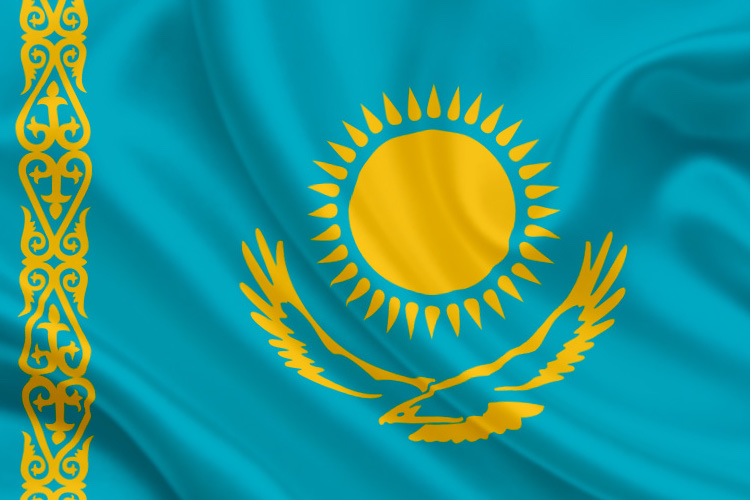
The ICJ is concerned at increasing government interference with the independence of the legal profession, including through intimidation and harassment of the leadership of the National Bar Association and individual lawyers in Kazakhstan.
In the last two months, there have been a series of resignations in the leadership of the National Bar, including Anvar Tugel, ex-President of the National Bar Association who publicly announced that his resignation was the result of “disagreement with the reform proposed by the Ministry of Justice”.
He explained that the “reform” aimed to remove the leadership of the Bar Association.
In his public statement, Tugel points out that several presidents of the local bar associations, faced pressure.
Indeed, Yakubenko Raisa and Vladimir Zolotov presidents of Aktyubinsk and Pavolodar bar associations respectively faced disbarment proceedings in the Kazakhstan courts, initiated by the Ministry of Justice.
The disciplinary charges against them are related to their administration of the bar associations.
He also pointed out that pressure was also exerted on individual lawyers, who had been invited to the Ministry of Justice and instructed which decisions to vote for at the National Conference of delegates of the regional bar associations.
Furthermore, Sergei Sizintsev, the Executive Director of the National Bar Association, has been unexpectedly dismissed from his position following the resignation of Anvar Tugel.
“Instructions about the outcome of the vote, apparently unjustified disciplinary proceedings against high profile lawyers and other such actions constitute interference with the independence of the legal profession and are of concern” Temur Shakirov, ICJ Europe and Central Asia Programme Senior Legal Adviser, said today.
“These developments cannot but create a chilling effect on the lawyers in Kazakhstan, including those independent lawyers who openly spoke against the reform of the legal profession,” he added.
Such measures are inconsistent with international law and standards on the independence of the legal profession, including the United Nations Basic Principles on the Role of Lawyers.
The ICJ calls on the State authorities, including the Ministry of Justice, to refrain from interference with the internal matters of the Bar, especially with the election of its governing bodies.
The interim leadership of the National Bar Association should ensure that elections to positions in the governing bodies are fair and transparent and are not a result of inappropriate interference from whatever quarter.
The ICJ will continue to monitor developments regarding the Kazakhstan legal profession, including disbarment proceedings against heads of regional bar associations, and other instances of apparent pressure on lawyers related to their opposition to reforms of the profession earlier criticized by the ICJ.
Background
The UN Basic Principles on the Role of Lawyers state that lawyers are entitled to form and join self-governing professional associations to represent their interests, promote their continuing education and training and protect their professional integrity.
The executive body of the professional associations shall be elected by its members and shall exercise its functions without external interference (Principle 24)
International principles on the role of lawyers also require the State to ensure that neither disciplinary sanctions, nor other measures such as criminal penalties, are unfairly or arbitrarily imposed on lawyers for action taken in accordance with their professional duties, and in accordance with accepted standards of professional conduct, including those enshrined in the Basic Principles on the Role of Lawyers
According to Principle 16 of the UN Basic Principles it is the obligation of the governments to ensure that lawyers “are able to perform all of their professional functions without intimidation, hindrance, harassment or improper interference” and that they do not “suffer, or be threatened with, prosecution or administrative, economic or other sanctions for any action taken in accordance with recognized professional duties, standards and ethics”.
The Law ‘On the Professional Activities of Advocates and Legal Assistance’ was signed into law on 10 July 2018.
Earlier the ICJ expressed concern in respect to the new law, as contradicting international law and standards on the independence of the legal profession, by enabling the executive to influence or to have control over who is allowed to practice law and substantial influence on disciplinary proceedings against lawyers. Read the full text here.
Read also
ICJ statement following the mission to Kazakhstan on the independence of the legal profession.
Nov 23, 2018 | Новости
Сегодня МКЮ совместно с Центром исследования правовой политики и Союзом адвокатов Таджикистана проводит в Душанбе региональную конференцию по вопросам независимости и роли адвокатов.
Адвокаты из Таджикистана и других стран Центральной Азии, СНГ и Европы обсудят правовые гарантии, которые должны быть предоставлены адвокатам, чтобы обеспечить их способность защищать права человека в отношении своих доверителей, а также роль адвокатских объединений с точки зрения защиты безопасности и независимости адвокатов.
Они рассмотрят вопрос о роли комитетов по защите прав адвокатов, образованных в составе адвокатских объединений ряда стран региона, а также о том, как обеспечить наиболее эффективную работу данных специализированных органов.
По итогам конференции будут подготовлены рекомендации по защите адвокатов региона.
Контакты:
Тимур Шакиров, старший правовой советник, Программа по Европе и Центральной Азии
temur.shakirov(a)icj.org
Nov 22, 2018
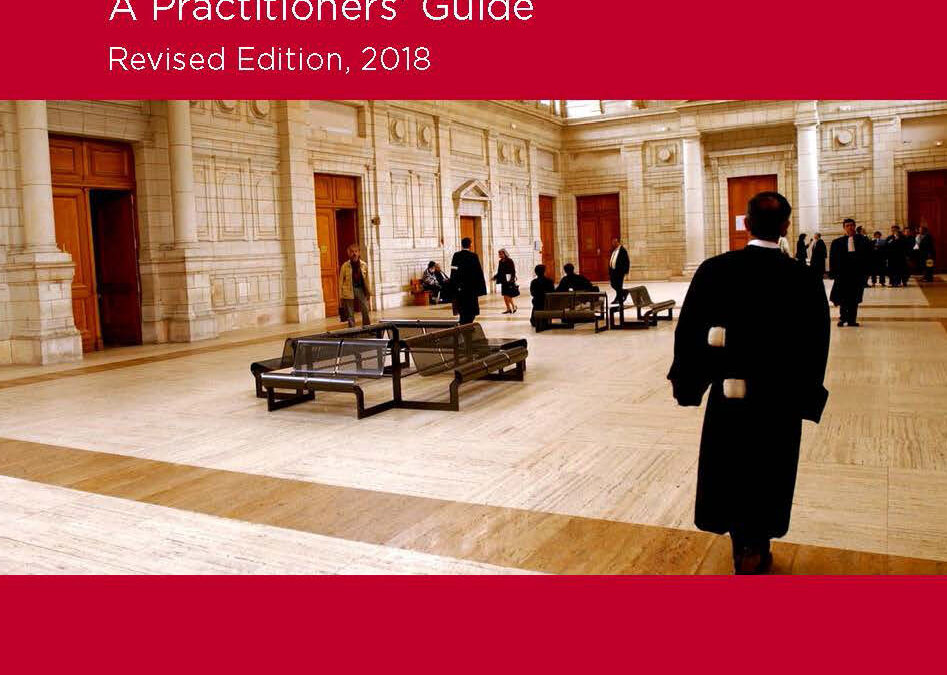
Under its Global Redress and Accountability Initiative, the ICJ has launched its 2018 update to Practitioners’ Guide No 2, outlining the international legal principles governing the right to a remedy and reparation for victims of gross human rights violations and abuses by compiling international jurisprudence on the issues of reparations.
The Guide is aimed at practitioners who may find it useful to have international sources at hand for their legal, advocacy, social or other work.
Amongst revisions to the Guide, the 2018 update includes new sections on terminology and on non-discrimination;updated sections on the notions of ‘collective victims’, ‘collective rights’, the rights of ‘groups of individuals’; additional references to the work of the Committeeon the Elimination of Discrimination against Women and the Committee on the Rights of the Child; an updated section on remedies for unlawful detention, including references to the 2015 UN Basic Principles and Guidelines on Habeas Corpus; and updates on gender-based violence and on violations occurring in the context of business activities.
The Guide first recalls the States’ general duty to respect, protect, ensure and promote human rights, particularly the general duty of the State and the general consequences flowing from gross human rights violations (Chapter 1).
It then defines who is entitled to reparation: victims are, of course, the first beneficiaries of reparations, but other persons also have a right to reparation under certain circumstances (Chapter 2).
The Guide goes on to address the right to an effective remedy, the right to a prompt, thorough, independent and impartial investigation and the right to truth (Chapters 3-4).
It then addresses the consequences of gross human rights violations, i.e. the duty of the State to cease the violation if it is ongoing and to guarantee that no further violations will be committed (Chapter 6). It continues by describing the different aspects of the right to reparation, i.e. the right to restitution, compensation, rehabilitation and satisfaction (Chapter 7).
While the duty to prosecute and punish perpetrators of human rights violations is not necessarily part of the reparation as such, it is so closely linked to the victim’s right to redress and justice that it must be addressed in this Guide (Chapter 8).
Frequent factors of impunity, such as trials in military tribunals, amnesties or comparable measures and statutes of limitations for crimes under international law are also discussed (Chapter 9).
The guide is now also available in Turkish.
Download
Universal-Right to a Remedy-Publications-Reports-Practitioners’ Guides-2018-ENG (full text in English, PDF)
Universal-Right-to-a-Remedy-Publications-Reports-Practitioners-Guides-2018-TR [1] (full text in Turkish, PDF)
Universal-Right-to-a-Remedy-Publications-Reports-Practitioners-Guides-2018-THA (full text in Thai, PDF)