Nov 22, 2018 | News
The ICJ welcomes the landmark decision by the North Gauteng High Court in the Duduzile Baleni and 128 Others v Minister of Mineral Resources in which the Court affirmed the principle of free, prior and informed consent in relation to mining activities.
On Thursday the 22nd of November 2018, the Court declared that the Minister of Mineral Resources cannot grant a license to any mining company without first obtaining the full and informed consent of the affected community.
It concluded: “The applicants in this matter [have] the right to decide what happens with their land. As such they may not be deprived by their land without their consent. Where the land is held on a communal basis – as in this matter – the community must be placed in a position to consider the proposed deprivation and be allowed to take a communal decision in terms of their custom and community on whether they consent or not to a proposal to dispose of their rights to their land.”
“This decision is a positive step towards protecting the rights of vulnerable communities from the excesses of States in the benefit of corporations. Informed consent from affected communities is vital for economic activities to bring development that enriches the lives of the communities where the companies operate,” said Arnold Tsunga, ICJ Africa Regional Programme Director.
“The ICJ will continue to support the community through its cooperation with Ms. Nonhle Mbuthuma of the Amadiba Crisis Committee. We regard the community as Human Rights Defenders who are fighting to protect their internationally recognized economic, social and cultural rights,” he added.
The ICJ calls on the South African government to respect the judgment which conforms with the requirements of South African legislation, the South African Constitution, judgments of the Constitutional Court of South Africa and international human rights law.
Contact
Arnold Tsunga, Director of the ICJ Africa Regional Programme, m: +263 77 728 3248, e: arnold.tsunga(a)icj.org
South Africa-Xolobeni decision-News-web story-2018-ENG (full stroy with additional information, in PDF)
Nov 21, 2018 | Noticias
En el contexto actual de Guatemala, es notorio que el riesgo de abusos de poder y de violaciones a los derechos humanos, ha aumentado significativamente. Esta situación ha hecho surgir graves tensiones entre la Justicia Constitucional, a cargo de la Corte de Constitucionalidad y los poderes Ejecutivo y Legislativo.
Este tipo de tensiones y conflictos se han presentado recientemente, cuando el Tribunal Constitucional ha invalidado actos del Poder Ejecutivo por ser inconstitucionales.
Las y los magistrados de la Corte de Constitucionalidad han demostrado en dichos casos, que pueden emitir resoluciones, sin que se subordinen al Poder Ejecutivo o a otro poder fáctico y velando por la protección de los derechos humanos de todas las personas.
Ramón Cadena, Director de la Comisión Internacional de Juristas expresó que “es necesario reconocer que las y los Magistrados de la Corte de Constitucionalidad, desempeñan una función sumamente difícil, que requiere muy elevadas cualidades judiciales y éticas. Sin embargo, por difícil y compleja que sea su función, cuando el poder público se ejerce con abuso de autoridad y contraviniendo el Derecho Interno y el Derecho Internacional de los Derechos Humanos, la Corte de Constitucionalidad debe fijar los límites que el Derecho Constitucional e Internacional impone al ejercicio del poder.”
Nov 20, 2018 | News
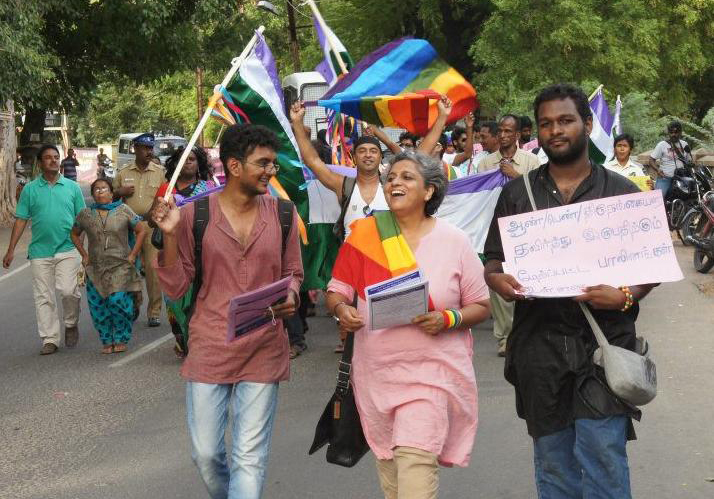
On the Transgender Day of Remembrance, the ICJ calls on all South Asian States to fulfill their international obligations to respect, protect and ensure the right to life of all transgender persons, including by investigating alleged violations of their right to life promptly, thoroughly and effectively.
While there has been some progress in protecting the human rights of transgender individuals through legislation and judicial decisions, in South Asia rampant violence from both state and non-state actors continues to place their lives at risk.
Most governments do not collect data on violence against transgender persons.
Trans Murder Monitoring, which records cases of murder of transgender persons based on accounts from individuals and civil society organizations, reports 2609 unnatural deaths of trans and gender-diverse persons across 71 countries between January 2008 and September 2018.
In South Asia, between 2008 and 2016, 58 transgender persons were reported murdered in India, 37 in Pakistan, 2 in Nepal, and 2 in Bangladesh.
“It is laudable that Pakistan, India and Nepal have taken measures to end discrimination against transgender persons, and have recognized their right to self-identify,” said Frederick Rawski, ICJ Asia-Pacific Director.
“However, violence, harassment, extortion, rape and murder of transgender persons continue to be committed. Police frequently refuse to file complaints, and are often themselves complicit in violence against transgender persons,” he added.
The judiciary has played an important role in protecting transgender rights in India, Nepal and Pakistan.
The Supreme Courts in all three countries have issued decisions recognizing transgender persons’ rights, including the right to self-identity one’s gender.
These decisions have acknowledged that transgender persons are particularly targeted with violence by state and non-state actors, and that police have largely failed to protect them from violence.
In some cases, the courts have ordered that new remedies be created under the law, and sought the enforcement of existing laws protecting transgender rights.
However, many of these decisions remain unimplemented, and violence against transgender people remains rampant in South Asia.
“The ICJ calls on all governments in the region to ensure that laws, policies and practices affecting transgender persons comply with international human rights law and standards,” Rawski said.
“All human rights abuses against transgender persons must be investigated, and the perpetrators brought to justice, including law enforcement officials who harass or abuse persons based on their gender identity,” he added.
Contact
Frederick Rawski, ICJ Asia Pacific Director, t: +66 644781121 ; e: Frederick.rawski(a)icj.org
Background
In India, in 2014, the Supreme Court in NALSA v. UOI recognized the right of transgender persons to self-identify their gender.
The Court has further acknowledged the existence of human rights violations against transgender persons at the hands of the police and private individuals and recommended that state and central government take steps to create public awareness about transgender persons’ rights.
Per a 2015 survey by the Kerala Government, “52% of the TGs [transgender people] are facing harassment from the police and “96% do not raise complaints against violence because of their gender identity”.
In Nepal, in 2007, the Supreme Court in Sunil Babu Pant v. Government of Nepal recognized the right of individuals to identify as male, female or “third gender”.
However, transgender persons continue to face arbitrary harassment and detention by security forces under laws like Public Offences Act, 1970, which allow for arrests without due process for up to 25 days.
This resulted in the Supreme Court of Nepal ordering law enforcement officials to desist from arresting persons based on their “personal interest or appearance,” though the decision remains largely unimplemented.
In Pakistan, in 2009, the Supreme Court directed the Government to recognize the human rights of transgender persons and subsequently, in 2018, the Parliament passed a law prohibiting discrimination against transgender persons.
The Transgender Persons (Protection of Rights) Act, 2018 of Pakistan prohibits harassment of transgender persons, including sexual, physical, mental and psychological harassment, and creates new remedies for complainants in addition to those available under the criminal justice system.
The effectiveness of the law remains to be seen, as police are often complicit in violence against transgender persons, particularly in extorting money from transgender women sex workers.
Read also
ICJ Practitioners’ Guide No. 4: Sexual Orientation, Gender Identity and International Human Rights Law, which provides legal practitioners, activists and policy-makers with detailed and practical references on international standards on sexual orientation, gender identity, gender expression, and sexual characteristics.
ICJ Comparative Law Casebook: Sexual Orientation, Gender Identity, and Justice, which provides legal practitioners, activists and policy-makers with a compilation of legal cases on sexual orientation, gender identity, gender expression and sex characteristics.
ICJ India 2017 Report: “Unnatural Offences” Obstacles to Justice in India Based on Sexual Orientation and Gender Identity, which provides a legal analysis of the discrimination and abuse faced by the LGBTI community in India based on over 100 interviews with LGBTI persons.
Nov 20, 2018
The ICJ said today that the Nepal Army’s petition before the Supreme Court seeking to overturn convictions of soldiers for the 2004 killing of 14-year-old Maina Sunuwar was riddled with legal flaws. Its success would be a blow to the fight against impunity in Nepal.
On the 12th Anniversary of the signing of the Comprehensive Peace Agreement (CPA), the ICJ released an analysis of the Nepal Army’s legal arguments in the petition to upend the convictions issued by the Kavrepalanchowk District Court for the killing Maina Sunuwar while in Army custody.
“The Nepal Army has sought to overturn the convictions of Maina’s killers by putting forth specious legal arguments that do not hold up under Nepali or international law, or in light of the past decisions of the Supreme Court,” said Frederick Rawski, ICJ Asia Pacific Director.
In the legal briefing, the ICJ sets out (i) Nepal’s obligations under international law and the Nepal Supreme Court’s jurisprudence to investigate and prosecute perpetrators of human rights violations; (ii) the impropriety of jurisdiction by a military court-martial in cases of serious human rights violations; and (iii) refutes the argument that the convictions violated principles of ‘double jeopardy’.
The briefing sets out international law and jurisprudence establishing the Government’s duty to prosecute serious human rights violations as distinct and separate from its obligation to establish the truth, including as part of a transitional justice process.
The briefing comes at a moment when the future of justice for conflict era crimes and human rights violations in Nepal is uncertain.
In July, a draft bill amending the existing legislative framework governing the transitional justice process was criticized by civil society, victim groups and human rights organizations – including in a joint analysis by the ICJ, Amnesty International and Trial International.
While a government panel elicited comments at consultations with victims and civil society, the government never produced a revised draft or conducted follow-up.
“How can the people of Nepal, and particularly conflict victims, have faith in government proposals to press forward on transitional justice when the Nepal Army continues to fight even minimal accountability with disingenuous legal arguments, such as in the case of Maina Sunuwar?” said Rawski.
“The foundation for any process moving forward must be the best interests of victims, a commitment to accountability, and respect for international human rights obligations. This has been affirmed many times over by the Supreme Court,” he added.
Contact
Frederick Rawski, ICJ Asia Pacific Director, t: +66 64 478 1121 ; e: frederick.rawski@icj.org
Background
Maina Sunuwar was subjected to enforced disappearance, torture and unlawful killing after a covert military operation, which included the involvement of then captain Niranjan Basnet on 17 February 2004.
The military refused to acknowledge Maina’s detention for many months.
After overcoming a number of procedural and political hurdles stretching over years, on 16 April 2017, the Kavre District Court sentenced three retired army officers to life imprisonment for Maina Sunuwar’s murder.
In September 2017, the Nepal Army filed a writ petition in the Supreme Court challenging the decision of the Kavre Court on several grounds, including that military courts had proper jurisdiction over the original case, that the District Court convictions violated the principle of ‘double jeopardy’ because the defendants had already been tried by a court-martial, and that the court system no longer had jurisdiction over conflict-related cases following the establishment of transitional justice institutions.
Nepal-Petition to overturn convictions for Maina Sunuwar killing-Advocacy-Analysis brief-2018-ENG (Full Analysis brief, in PDF)
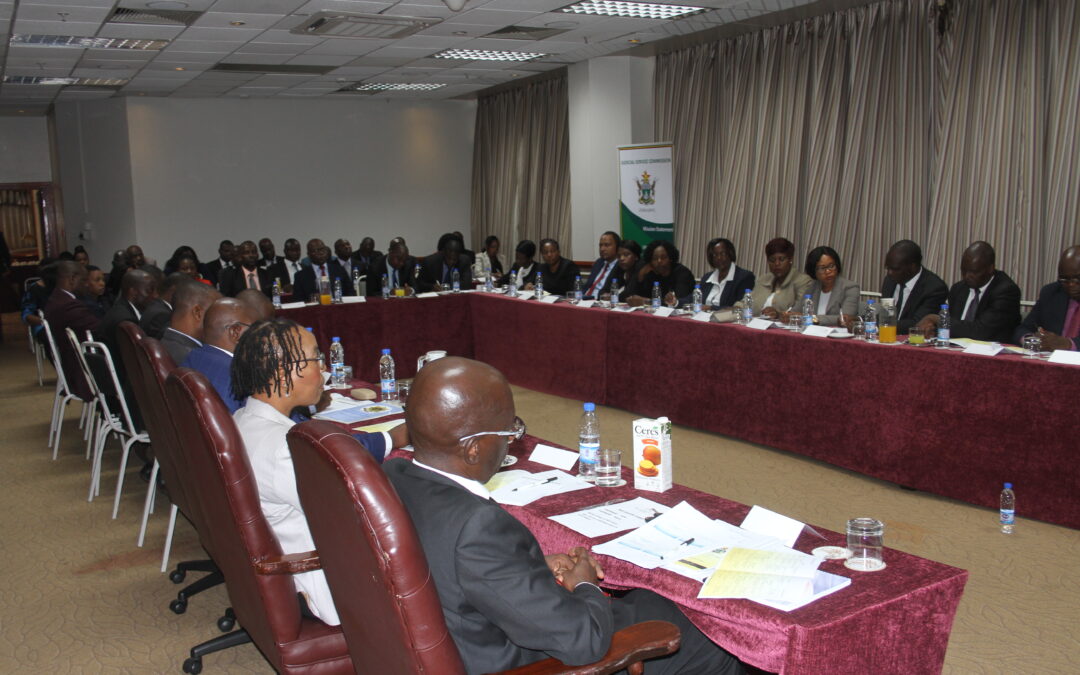
Nov 17, 2018 | News
The Judicial Service Commission (JSC) of Zimbabwe with the support of the ICJ convened a two-day workshop from 16 to 17 November 2018 in Harare to train magistrates designated to the anti-corruption court. 56 Magistrates (39 males 17 females) attended the Workshop.
Speaking during the workshop the Honourable Chief Justice, Luke Malaba encouraged the magistrates to work diligently to “flash out” corrupt elements from society.
He lamented that the current court practice seems to merely launder accused persons through constant remands which eventually lead to failed cases resulting in impunity for corruption in the country.
He pointed out that corruption is a threat to the rule of law urging the judiciary to be conscientious in dealing with corruption cases.
The workshop is part of a broader justice sector intervention by the JSC with the support of the ICJ, through generous funding provided by the European Union (EU) targeting combating corruption in the legal system.
The two-day training meeting looked at equipping 56 magistrates with the skills and knowledge to adjudicate cases of white-collar crime.
The training covered international best practices in the setting up of such courts, substantive law on corruption and practical court administration issues.
Besides the quality of the investigations, the effectiveness of the anti-corruption courts will also depend on the integrity and competency of the officers appointed to preside over them.
This workshop is one of a number of initiatives that the JSC are effecting with the support of the ICJ and the EU to contribute to a reduction in the levels of corruption and strengthen the ability of the justice system to resolve corruption and resource diversion cases in Zimbabwe.
Contact
Brian Penduka on brian.penduka(a)icj.org or +263772274307