Sep 18, 2018 | Новости
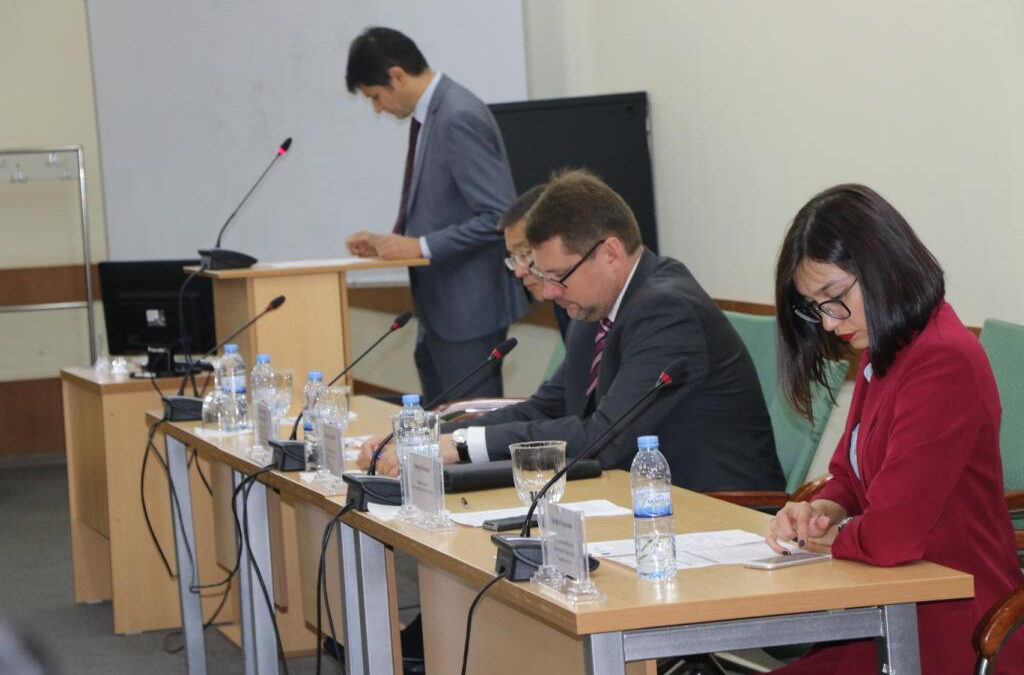
Сегодня Международная комиссия юристов (МКЮ) и Ташкентский государственный юридический университет (ТГЮУ) открывают серию экспертных дискуссий по экономическим, социальным и культурным правам (ЭСК) для развития гражданского общества в продвижении ЭСК прав и стандартов в Узбекистане.
Экспертные дискуссии являются частью проекта «Доступ к правосудию в области экономических, социальных и культурных прав» (ACCESS), реализуемого при поддержке Европейского союза.
Обсуждения экспертов направлены на повышение осведомленности об имплементации международного права и стандартов в области ЭСК прав в национальных судах, также в целях обеспечения доступа к правосудию в области ЭСК прав и эффективного использования международного права прав человека в применении ЭСК прав.
Каждые два месяца дискуссии будут объединять юристов, адвокатов, специалистов, ученых и студентов-юристов посредством интерактивных обсуждений, исследовательских работ, обзорных статей и аналитических записок. Отдельные статьи будут опубликованы к концу 2019 года.
«Сотрудничество нашего университета с Международной комиссией юристов (МКЮ) при поддержке Европейского Союза намечает значимые перспективы для всех. Ташкентский государственный юридический университет (ТГЮУ) рад началу сотрудничества с Международной комиссией юристов (МКЮ). Данное сотрудничество будет иметь значение в дальнейшем повышении уровня информированности общественности о реализации международно-правовых норм и стандартов в области экономических, социальных и культурных прав в национальных и международных юрисдикциях, доступе к правосудию с точки зрения экономических, социальных и культурных прав, а также эффективном использовании международного права в области прав человека для защиты этих прав», отметил Эсемурат Каниязов, Ректор ТГЮУ и заместитель министра юстиции Республики Узбекистан. Также он дополнил, «таким образом, планируемое сотрудничество будет также способствовать дальнейшему прогрессу в области проведения исследований нормативно-правовой базы Узбекистана в сфере экономических, социальных и культурных прав и соблюдения требований международного права в области прав человека.»
«Эти дискуссии по экономическим, социальным и культурным правам в качестве подлежащих защите прав в свете международного права прав человека имеют решающее значение для понимания юридического характера ЭСК прав и способности отдельных лиц иметь доступ к правосудию при их защите», – сказал Тимур Шакиров, старший советник по правовым вопросам МКЮ. «Экономические, социальные и культурные права, включая право на труд и справедливые условия труда, социальное обеспечение, семейную жизнь и доступ к жилью, продовольствию, воде, здравоохранению и образованию, и другим правам человека, могут и должны быть гарантированы, как это закреплено в Международном пакте об экономических, социальных и культурных правах, участником которого является Узбекистан. МКЮ рада осуществлению данной инициативы, которую мы начинаем совместно с ТГЮУ», – добавил он.
Для более подробной информацией, просим обращаться:
Дильфуза Куролова, Консультант по правовым вопросам Международная комиссия юристов (МКЮ), Т: +998 90 9050099 ; E: dilfuza.kurolova(a)icj.org
Sep 18, 2018 | Advocacy, Non-legal submissions
The ICJ today urged the UN Human Rights Council to establish a mechanism to preserve evidence of crimes under international law occurring in Myanmar, with a view to eventual prosecution of those responsible.
The statement, delivered during an interactive dialogue with the UN International Fact Finding Mission, read as follows:
“The International Commission of Jurists (ICJ) has monitored justice and human rights in Myanmar for more than five decades. The ICJ has an established presence in the country supporting justice actors to protect human rights through the rule of law.
With this experience, the ICJ views the Independent International Fact Finding Mission’s conclusions as painting an authoritative picture of the general situation in Myanmar, particularly in its highlighting of the pervasive damage of military impunity upon human rights, rule of law and the nascent democratic process.
The rule of law cannot be established, let alone flourish, without accountability for perpetrators of human rights violations and redress for victims and their families.
The Fact Finding Mission’s findings of crimes under international law, including crimes against humanity in Rakhine, Kachin and Shan states, and the identification of alleged perpetrators, necessitate immediate action.
The Government of Myanmar is unwilling and unable to effectively and genuinely provide justice for crimes, particularly when perpetrated by security forces. International action must not be deterred or delayed by the latest government inquiry, which is incapable of providing accountability or redress and may promote impunity by undermining credible international justice mechanisms.
The ICJ calls for a unified Council resolution at this session to establish an International Impartial and Independent Mechanism. This is urgently required to preserve evidence before its further deterioration, and to demonstrate a commitment to justice. Failing to act now risks further denying justice for victims and emboldening perpetrators.
Violations against Rohingya constitute an egregious yet emblematic example of systematic persecution of minority groups that has persisted in Myanmar for decades.
The ICJ would like to ask the Fact-Finding Mission: how can the Council best ensure accountability for the full range of crimes under international law committed against minorities throughout Myanmar and prevent their continuation and recurrence?”
For more information see:
Myanmar: why an IIIM and Security Council referral are needed despite the ICC ruling relating to Bangladesh
Myanmar: Government’s Commission of Inquiry cannot deliver justice or accountability
Sep 18, 2018
The ICJ today urged States not to vote for candidates whose human rights records should disqualify them from membership, in upcoming elections to the UN Human Rights Council.
The ICJ together with dozens of other NGOs made the call in an open letter to all UN member States:
“To Permanent Representatives of Member States of the UN General Assembly
18 September 2018
Member States of the UN should refrain from voting for candidates to the Human Rights Council that are unfit for membership
Excellencies,
Ahead of the next UN Human Rights Council (“HRC” or “the Council”) election, we, the undersigned national, regional and international civil society organisations, write to urge your delegation to refrain from voting for candidates that blatantly fail to fulfil the Council membership standards outlined in UN General Assembly (UNGA) resolution 60/251.
Paragraphs 8 and 9 of resolution 60/251 state that the UNGA:
- Decides that the membership in the Council shall be open to all States Members of the United Nations; when electing members of the Council, Member States shall take into account the contribution of candidates to the promotion and protection of human rights and their voluntary pledges and commitments made thereto […];
- Decides also that members elected to the Council shall uphold the highest standards in the promotion and protection of human rights [and] fully cooperate with the Council […].
We are concerned that several of the States that are running for election fail to fulfil minimal requirements with regard to both the promotion and protection of human rights and cooperation with the Council and other UN human rights bodies and mechanisms. Some of these candidates show a pattern of non-cooperation with the UN human rights system and attacks against UN Special Procedure Mandate-Holders that is incompatible with Council membership. Furthermore, some of this year’s candidates have engaged in acts of intimidation and reprisals against human rights defenders and civil society organizations, who play a key role in the Council’s work. Voting for these candidates would undermine the Council’s credibility and institutional integrity.
We urge you to treat human rights considerations and the substantive Council membership criteria outlined in resolution 60/251 as paramount in electing members to the Council, rather than engaging in vote trading or privileging political considerations over fundamental human rights.
In October 2018, the next HRC election will determine which States sit as Members of the Council in the next three years (2019-2021). Considering that States must receive a simple majority of votes (i.e., 97) to be elected, that voting takes place by secret ballot, and that electing States are under no obligation to vote for each and every candidate within a regional group, we urge your delegation to simply refrain from voting for unfit candidates. Doing so will require leaving the ballot blank for those candidate States your delegation considers unfit.
Sincerely,
African Centre for Democracy and Human Rights Studies (ACDHRS)
African Centre for Justice and Peace Studies (ACJPS)
Americans for Democracy & Human Rights in Bahrain (ADHRB)
ARTICLE 19
Asian Forum for Human Rights and Development (FORUM-ASIA)
Asian Legal Resource Centre (ALRC)
Bahrain Institute for Rights and Democracy (BIRD)
Cairo Institute for Human Rights Studies
Centro de Estudios Legales y Sociales (CELS)
CIVICUS: World Alliance for Citizen Participation
Commonwealth Human Rights Initiative (CHRI)
Conectas Direitos Humanos
Connection e.V., Germany
DefendDefenders (the East and Horn of Africa Human Rights Defenders Project)
EEPA
Eritrea Focus
Eritrean Diaspora in East Africa (EDEA)
Eritrean Law Society (ELS)
Eritrean Movement for Democracy and Human Rights (EMDHR)
Geneva for Human Rights (GHR)
Global Centre for the Responsibility to Protect
Global Initiative for Economic, Social and Cultural Rights
Horn of Africa Civil Society Forum
Human Rights Association / İnsan Hakları Derneği (İHD)
Human Rights Concern – Eritrea (HRCE)
Human Rights House Foundation
Human Rights Law Centre
Human Rights Watch
Information Forum for Eritrea (IFE)
International Commission of Jurists
International Federation of Action by Christians for the Abolition of Torture (FIACAT)
International Federation for Human Rights (FIDH)
International Humanist and Ethical Union (IHEU)
International Movement Against All Forms of Discrimination and Racism (IMADR)
International Service for Human Rights
Network of Eritrean Women
PEN Eritrea
Reporters Without Borders (RSF)
Southern Africa Human Rights Defenders Network (SAHRDN)
World Organisation Against Torture (OMCT)
Zimbabwe Lawyers for Human Rights (ZLHR)”
Sep 18, 2018 | News
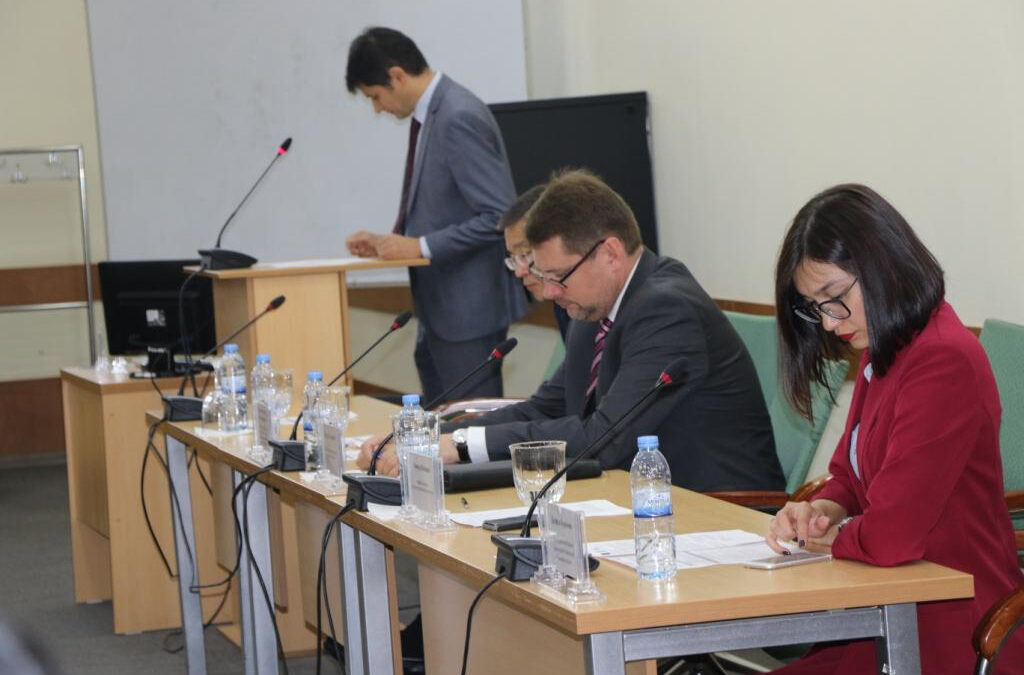
Today, the ICJ and the Tashkent State University of Law (TSUL) are launching a series of expert discussions on economic, social and cultural rights (ESC) to advance civil society in promoting these rights in Uzbekistan.
These expert discussions are part of the project “Access to justice in economic, social and cultural rights project (ACCESS)” supported by the European Union.
They aimed to increase awareness about the implementation of international law and standards on ESC rights before national courts, to facilitate access to justice for ESC rights and effective use of international human rights law for ESC rights.
Every two months, they will bring together lawyers, advocates, specialists, academia and law students via interactive discussions, research papers, peer review articles and policy papers. Selected papers will be published by the end of 2019.
“The cooperation of our university with the ICJ and with support of the European Union opens big perspectives for all of us,” said Esemurat Kaniyazov, Rector of TSUL and Deputy minister of justice of the Republic of Uzbekistan.
“Tashkent State University of Law (TSUL) is happy to start cooperation with the International Commission of Jurists (ICJ), which will have an impact into further increase of awareness level of the society about implementation of the international legal norms and standards in economic, social and cultural rights in domestic courts, access to justice from point of view of economic, social and cultural rights and also effective application of international human rights law for protection of these rights,” he added.
“So, planned cooperation will affect further progress in conducting research of the normative and legal base of Uzbekistan in economic, social and cultural tights and follow the obligations of the international human rights law,” Kaniyazov said.
“These discussions on economic, social and cultural rights as justiciable rights in light of international human rights law are crucial for the understanding the legal nature of ESC rights and ability of individuals to have access to justice when defending them,” said Temur Shakirov, Senior legal adviser of ICJ.
“Economic, social and cultural rights including the right to work and equitable conditions of work, social security, family life and access to housing, food, water, health care and education and other human rights can and must be guaranteed as enshrined in the International Covenant on Economic, Social and Cultural rights to which Uzbekistan is a party. The ICJ looks forward to this initiative we are starting jointly with the TSUL,” he added.
Contact:
Dilfuza Kurolova, ICJ Legal consultant, t: +998 90 9050099 ; e: dilfuza.kurolova(a)icj.org
Sep 17, 2018 | Events, Multimedia items, News, Video clips
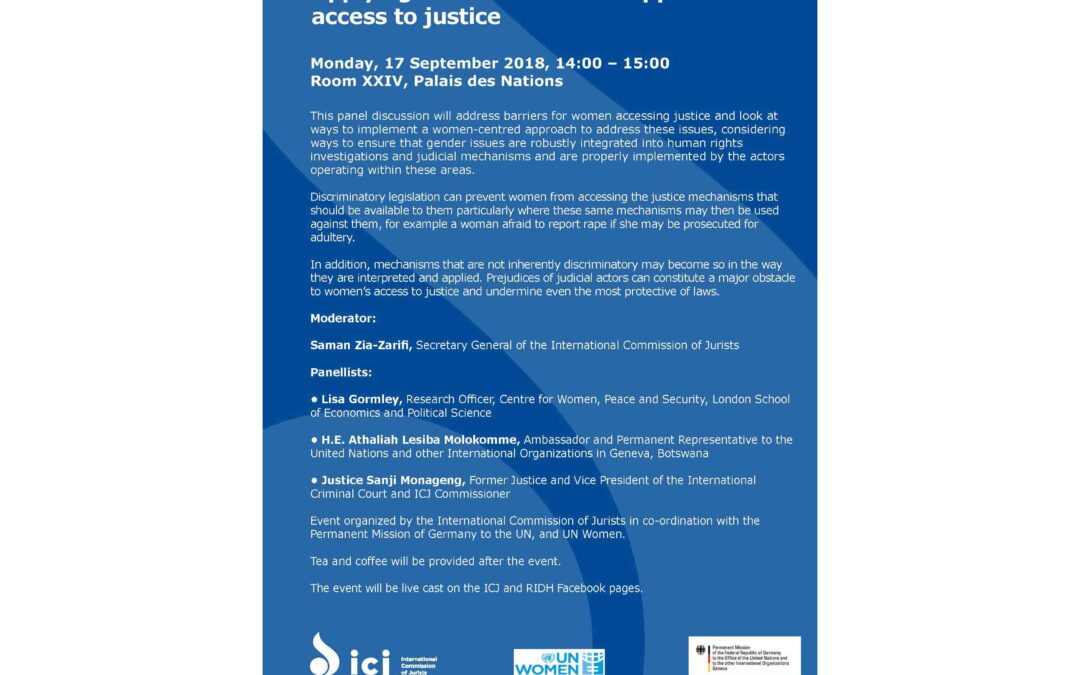
This panel discussion was held today at the Palais des Nations in Geneva.
The event addressed barriers for women accessing justice and look at ways to implement a women-centred approach to address these issues, considering ways to ensure that gender issues are robustly integrated into human rights investigations and judicial mechanisms and are properly implemented by the actors operating within these areas.
Discriminatory legislation can prevent women from accessing the justice mechanisms that should be available to them particularly where these same mechanisms may then be used against them, for example a woman afraid to report rape if she may be prosecuted for adultery.
In addition, mechanisms that are not inherently discriminatory may become so in the way they are interpreted and applied. Prejudices of judicial actors can constitute a major obstacle to women’s access to justice and undermine even the most protective of laws.
Moderator:
Saman Zia-Zarifi, Secretary General of the International Commission of Jurists
Panellists:
• Lisa Gormley, Research Officer, Centre for Women, Peace and Security, London School of Economics and Political Science
• H.E. Athaliah Lesiba Molokomme, Ambassador and Permanent Representative to the United Nations and other International Organizations in Geneva, Botswana
• Justice Sanji Monageng, Former Justice and Vice President of the International Criminal Court and ICJ Commissioner
Event organized by the ICJ in co-ordination with the Permanent Mission of Germany to the UN, and UN Women.
Watch the video:
https://www.facebook.com/ridhglobal/videos/565112000574216/
Side event ICJ WHR (flyer in PDF)