Jun 5, 2021 | Noticias
Las autoridades colombianas deben impedir de manera inmediata que los funcionarios encargados de hacer cumplir la ley utilicen fuerza excesiva en respuesta a las protestas. Además, deben retirar las funciones de mantenimiento del orden público que se les han asignado a las fuerzas militares, dijo hoy la CIJ.
Durante el transcurso de las actuales protestas, que se siguen en contra de las actuales condiciones sociales y culturales, múltiples organizaciones de derechos humanos y de la sociedad civil han documentado violaciones masivas a los derechos humanos, incluidos casos de tortura y malos tratos, violencia sexual, ejecuciones extrajudiciales y desaparición forzada.
“Los reportes de violencia y uso excesivo y, frecuentemente innecesario, de la fuerza por parte de los agentes encargados de hacer cumplir la ley, son parte de un fracaso más amplio de las autoridades de adoptar medidas efectivas para proteger y garantizar el derecho a la vida y el derecho a la protesta pacífica”, dijo Carolina Villadiego, Asesora Legal de la CIJ para América Latina.
Según Indepaz una organización no gubernamental local, al 30 de mayo de 2021, al menos 71 personas habían muerto, posiblemente de manera ilícita, en el marco de las protestas. La situación es particularmente grave en Cali. En esta ciudad, en un solo día, el 28 de mayo de 2021, fue reportado que al menos 13 personas murieron.
Adicionalmente, en Cali, se ha documentado que individuos armados hicieron disparos y usaron fuerza letal contra manifestantes, incluyendo a manifestantes pertenecientes a grupos étnicos. En al menos un incidente, múltiples videos muestran que oficiales de policía estuvieron presentes cuando particulares dispararon armas de fuego sin que hubieran tomado medidas para evitar los disparos o arrestar a los individuos armados.
“Las autoridades deben adelantar investigaciones prontas, exhaustivas e imparciales por estas violaciones, con miras a enjuiciar a los responsables de los hechos”, dijo Carolina Villadiego.
La CIJ también está profundamente preocupada con la militarización de varias regiones del país, como respuesta a la protesta. El 28 de mayo de 2021, el presidente Duque expidió el Decreto 575 de 2021.
Este Decreto autoriza la intervención de las fuerzas militares en al menos ocho de los treinta y dos departamentos del país con el fin de levantar los bloqueos de vías e impedir la instalación de nuevos bloqueos por partes de los manifestantes.
El Decreto omite incorporar limitaciones al uso de la fuerza por parte de las fuerzas militares, que es fundamental de acuerdo con estándares internacionales como los Principios Básicos sobre el Empleo de la Fuerza y de Armas de Fuego.
Adicionalmente, el Decreto establece un amplio margen de maniobra para las actuaciones de las fuerzas militares en actividades de mantenimiento del orden público en escenarios de protestas y manifestaciones. Lo anterior, a pesar de que estas fuerzas no han sido diseñadas ni entrenadas para proteger a los civiles o hacer labores de vigilancia durante las protestas o escenarios de alteración del orden público.
La CIJ urge a las autoridades colombianas a que den fiel cumplimiento a lo establecido en los Principios Básicos sobre el Empleo de la Fuerza y de Armas de Fuego y otros estándares internacionales relacionados con el uso de la fuerza y con la intervención de las fuerzas militares para el control de protestas y manifestaciones. En este tema, el gobierno debe dar fiel cumplimiento a lo establecido por la Corte Suprema de Justicia en su sentencia de septiembre de 2020 sobre medidas para garantizar la protesta pacífica.
En dicha sentencia, la Corte Suprema identificó serias violaciones en la intervención de agentes encargados de hacer cumplir la ley, especialmente la Policía Nacional, en las protestas y manifestaciones. La Corte identificó violencia sistemática contra los manifestantes, la existencia de estereotipos y prejuicios en contra de quienes han criticado las políticas del gobierno y una falta de mecanismos de rendición de cuentas de los funcionarios públicos.
En consecuencia, la Corte ordenó varias medidas para hacer frente a la situación y garantizar el derecho a la protesta pacífica. Entre estas medidas, la Corte ordenó la adopción de un protocolo para regular el uso de la fuerza durante las protestas, el cual debe estar en concordancia con los estándares internacionales en materia de derechos humanos.
La CIJ llama al Gobierno colombiano a garantizar el derecho a la protesta pacífica. De acuerdo con lo mencionado por el Comité de Derechos Humanos, el derecho a la protesta puede generar perturbaciones o bloqueos al movimiento peatonal o vehicular, que pueden dispersarse “por regla general, solo si la perturbación es “grave y sostenida””.
La CIJ también urge al Gobierno Nacional a cooperar completamente con la misión de la Comisión Interamericana de Derechos Humanos (CIDH) que tendrá lugar entre el 8 de junio al 10 de junio de 2021. El Gobierno debe respetar y asegurar la independencia e imparcialidad de la CIDH durante la visita.
Finalmente, si bien la gran mayoría de los manifestantes han actuado de manera pacífica, han existido algunos incidentes violentos. La CIJ llama a todas las personas a evitar la violencia durante las protestas y condena los crímenes cometidos contra algunos oficiales de policía, incluyendo el homicidio de dos oficiales, las heridas graves que sufrió un oficial luego haber sido impactado por una bomba Molotov y el ataque sexual del cual fue víctima una oficial.
La CIJ también deplora que algunos bloqueos de las vías hayan afectado el suministro de servicios médicos esenciales y rechaza el incendio del Palacio de Justicia de Tuluá y de otros edificios públicos. Cualquier persona involucrada en acciones delictivas debe ser investigada por un órgano independiente, y de ser hallada culpable en un juicio imparcial, debe ser debidamente sancionada.
Contactos:
Carolina Villadiego Burbano, Asesora Legal para América Latina de la CIJ. Email: carolina.villadiego@icj.org
Rocío Quintero M, Asesora Legal para América Latina de la CIJ. Email: rocio.quintero@icj.org
Jun 4, 2021 | News
Colombian authorities should immediately stop law enforcement officials from using excessive force to respond to protests and withdraw the military from law enforcement functions, said the ICJ today.
Over the course of ongoing protests, largely against economic and social conditions, multiple human rights and other civil society organizations have documented widespread human rights violations, including instances of torture and ill-treatment, sexual violence, extrajudicial killings, and enforced disappearances.
“The reports of violence and excessive and often unnecessary use of force by law enforcement officials are part of a wider failure of the authorities to adopt effective measures to protect and guarantee the right to life and the right to peaceful protest” said Carolina Villadiego, ICJ legal adviser for Latin America.
According to Indepaz, a local Non-Governmental Organization, as of 30 May 2021, at least 71 people had been killed, likely unlawfully, in the context of the protests. The situation is particularly dire in Cali where in just one day, 28 May 2021, 13 people were reportedly killed. In addition, it has been documented that firearms and lethal force have been deployed against protestors, including indigenous persons, by armed individuals in Cali. In at least one incident, multiple video recordings show police officials were present during the shootings and took no action to stop the shootings or apprehend the armed individuals.
Police and other law enforcement officials have the obligation to defend the rights of people, including their right to protest, and to protect them from violence by others. Colombian law enforcement officials have not only violated their obligation to avoid use of unnecessary or excessive use of force against people, but in Cali, they seem to have failed to prevent criminal violence by armed individuals as well.
“There must be a prompt, thorough and impartial investigation into these violations with a view to holding accountable those responsible”, said Carolina Villadiego.
The ICJ is also deeply concerned with militarization of the response to the protests. On 28 May 2021, President Duque issued Decree 575 of 2021 that authorizes the intervention of military forces in at least eight departments out of thirty two in the country, to assist in the lifting of any kind of roadblocks and to prevent the installation of new blockades by protesters. The Decree fails to consider any limitation of the use of force by military forces in line with international law standards such as the UN Basic Principles on the Use of Force by Law Enforcement.
Additionally, the sweeping and overbroad scope of the Decree to involve the military forces in what are inherently law enforcement functions does not consider that they are not trained or designed to protect civilians during protests or scenarios of public order disruption.
The ICJ urges the Colombian Government to fully respect the UN Basic Principles and other international standards on the use of force and the intervention of military forces to control protests and demonstrations. In this regard, the Government must fully comply with the September 2020 ruling on measures to guarantee peaceful protests issued by the Colombian Supreme Court.
In the ruling, the Supreme Court identified serious violations regarding the intervention of law enforcement officials, especially police officials, in protests and demonstrations. The Court identified systematic violence against demonstrators, the existence of stereotypes and prejudice against those who criticize the government’s policies, and a lack of mechanisms to hold the officials accountable.
Consequently, the Court ordered several measures to address this situation and guarantee the right to peaceful protest, including adopting and implementing a protocol to regulate the use of force during protests and manifestations, in accordance with international human rights standards.
The ICJ also calls on the Colombian Government to guarantee the right to peaceful protest. As the UN Human Right Committee has clearly affirmed, the right to peaceful protest may entail the disruption of vehicular or pedestrian movement, which “may be dispersed, as a rule, only if the disruption is “serious and sustained””.
While the vast majority of protestors have acted peacefully, there have been some instances where they have not. The ICJ calls on all persons to avoid violence during the protests and condemns the crimes committed against police officials, including the killing of at least two police officers, the serious injuries suffered by one police officer after being hit by a Molotov cocktail, and the sexual violence suffered by a police woman.
The ICJ deplores the particular use of some roadblocks that have affected the delivery of essential medical services, as well as the fires at the courthouse in Tuluá and other public buildings. Any individual engaging in criminal behaviour must be impartially investigated and, if found guilty in a fair trial, brought to account.
Finally, the ICJ also urges the National Government to fully cooperate with the mission of the Inter-American Commission on Human Rights (IACHR) to Colombia that will take place from 8 June to 10 June 2021. The Government should respect and ensure the IACHR’s independence and autonomy during the visit.
Contacts:
Carolina Villadiego Burbano, Latin American Legal and Policy Adviser, email: carolina.villadiego(a)icj.org
Rocío Quintero M, Latin American Legal Adviser, email: rocio.quintero(a)icj.org
Jun 4, 2021 | Agendas, Events, News
As part of its work to raise awareness and deepen the understanding about the importance of civil liability for the objective of improved accountability of business-related human rights abuses and access to justice and reparations, the ICJ is partnering with the Bonavero Institute of Human Rights to organize an online symposium.
The symposium is open to practitioners, policymakers, civil society, academics, and students working on these subjects. It will feature two panel discussions on Zoom on 7 June 2021 and 14 June 2021.
Past decades saw an emerging trend towards reliance on civil liability claims to address business-related human rights abuses (e.g., Lungowe v Vedanta and Okpabi v Shell in the UK; Choc v Hudbay Minerals and Araya v Nevsun in Canada; Akpan v Shell in the Netherlands; Jabir and others v KiK Textilien in Germany).
The ICJ and the Bonavero Institute of Human Rights’ symposium will discuss the wider implications of recent jurisprudence and identify the remaining gaps in the law.
The discussions will focus on a range of issues, including 1) the contours of rules on the duty of care; 2) prospects for supply chain liability under the law of civil remedies; 3) parent company liability and complicity under civil law; 4) prospects of access to justice.
Please follow the links below to register separately for each panel. The symposium will also involve a series of blogs by experts in the field to be published by Opinio Juris starting 21 June 2021.
Panel 1 ‘Duty of care and parent company liability’
Day and time: 7 June 2021 at 14.00 – 16.00 BST
To register for Panel 1, please click here
Panel 2 ‘Access to justice and civil claims for business-related human rights abuses: Challenges and opportunities’
Day and time: 14 June 2021 at 14.00 – 16.00 BST
To register for Panel 2, please click here
This symposium is co-convened by Dr Carlos Lopez and Dr Ekaterina Aristova. Please get in touch with the organisers if you have any questions. The symposium is part of the project on civil liability for human rights violations led by the Bonavero Institute and funded by the Oak Foundation.
Jun 4, 2021 | Advocacy, Open letters
In May 2021 the ICJ wrote to The MultiChoice Group in South Africa urging it to suspend Emmanuel TV on any of the DSTV platforms for broadcasting televangelist Pastor TB Joshua’s multiple video clips ostensibly depicting violent ‘conversion therapy’ and hate speech against LGBT persons amounting to discrimination and human rights abuses. MultiChoice responded that it has “no editorial control or oversight” over Emmanuel TV as it is a “third-party channel” and therefore MultiChoice cannot investigate the incident further or take any remedial action.
MultiChoice claims on their website to “entertain, inform and empower African communities”. In addition to this, their entertainment platforms are a hub for approximately 14 million people across 50 countries. MultiChoice has a huge reach into African countries and in the homes of millions of people living in Africa. As a result, they have a responsibility to act in a way which does not promote harmful practises.
In response to ICJ’s letter, MultiChoice stated that it does not review the content broadcast on third-party channels such as Emmanuel TV prior to its broadcast. In place of a thorough investigation, the entertainment group said that it contacted Emmanuel TV and the latter stated that the ‘conversion therapy’ clips were not broadcast in April 2021. It is significant to note that Emmanuel TV did not deny that the clips were aired at all. Rather, MultiChoice alleged that it was simply “unable” to independently verify that the clip was broadcasted in April 2021 or at all.
Contrary to the impression given in its letter to the ICJ, MultiChoice is not limited to investigating offensive broadcasts that are aired within a specific time period. Additionally, while the ICJ notes MultiChoice’s assertion that Emmanuel TV is a third-party channel and consequently MultiChoice has no editorial control or oversight over the content of the channel, the ICJ believes that MultiChoice has a duty to not broadcast material that is discriminatory and in contravention of the South African Constitution.
MultiChoice has a responsibility to conduct a serious investigation into this matter and take the necessary remedial action. Consequently, we do not find that Emmanuel TV’s confirmation to MultiChoice, that the clip was not broadcast during April 2021 is sufficient; and MultiChoice’s inability to verify whether this program was broadcast at all, is unsatisfactory.
The UN Independent Expert on protection against violence and discrimination based on sexual orientation and gender identity, under the umbrella of the United Nations Human Rights Commission, has concluded in May 2020, that conversion therapy amounts to torture and ill-treatment and has called for a global ban on such practices.
In light of this, the ICJ is of the view that MultiChoice has a greater responsibility to the African audience to refrain from participating in the broadcast of such harmful practices, and must publicly take a stance against facilitating the airing of such broadcasts. The ICJ believes that MultiChoice’s responsibility as Africa’s “leading entertainment company” is not to pay “lip service” to the values of the South African Constitution, but rather to hold itself to higher thresholds of accountability.
ICJ has consequently urged MultiChoice to:
- Independently investigate this and other discriminatory and potentially unlawful broadcasts by Emmanuel TV and take appropriate remedial measures.
- Undertake to exclude Emmanuel TV as part of MultiChoice’s package to the public, or alternatively, to heavily condition its contract with Emmanuel TV to disallow the broadcast of offensive materials; should the investigation lead to the conclusion that the clip was broadcasted by them.
- Ensure that such offensive materials are not broadcast on any MultiChoice channels, irrespective of their status as third-party channels.
- Offer an apology from Multichoice Group to the LGBT persons, unless MultiChoice is able to demonstrate independently that the clip was not broadcast at all on their platform, neither by Emmanuel TV nor by any other third-party channel.
- Undertake an updating of the MultiChoice Group’s internal policies to bring them in line with human rights standards, the South African Constitution, and local laws on non-discrimination. This includes contractual arrangements with third party channels like Emmanuel TV which may broadcast discriminatory content.
Contact
Kaajal Ramjathan-Keogh, ICJ Africa Director, Kaajal.Keogh(a)icj.org
Tanveer Jeewa, Legal and Communications Officer, Tanveer.Jeewa(a)icj.org
Jun 4, 2021 | News
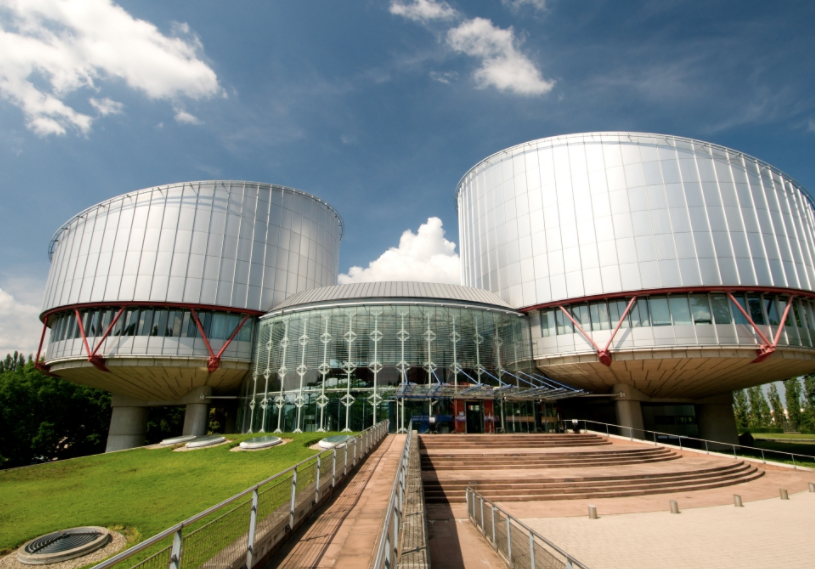
(Istanbul, June 4, 2021) – The Council of Europe should insist that Turkey comply immediately with judgments from the European Court of Human Rights (ECtHR), or face infringement proceedings, a group of leading nongovernmental organizations working on human rights in Turkey said today.
An upcoming Council of Europe Committee of Ministers meeting on June 7-9, 2021, will review the Turkish government’s failure to implement two leading ECtHR judgments that ordered the immediate release of the human rights defender Osman Kavala and the Kurdish politician Selahattin Demirtaş. Human Rights Watch, the International Commission of Jurists, and the Turkey Human Rights Litigation Support Project urged the committee to use all available measures to require Turkey to rectify its flagrant non-compliance with its obligations, the court judgments, and the committee’s decisions on this matter.
“The Committee of Ministers should be using every means it has to push Turkey to implement the Kavala and Demirtaş judgments,” said Aisling Reidy, senior legal adviser at Human Rights Watch. “That means that the committee should be prepared to trigger infringement proceedings against Turkey if it persists with its defiance of the European Court’s binding judgment in favor of Kavala, and to call for the immediate release of Demirtaş with a commitment to escalate measures if it does not happen.”
The three groups repeated their March 2021 call for the committee to commence infringement proceedings against Turkey for flouting its decisions requesting Kavala’s release and urged the committee to issue a second decision for Demirtaş’s immediate release. The committee should also make clear that if Demirtaş is not released, it will take further action at its September session.
The ECtHR ruled on December 10, 2019, that by holding Kavala in pretrial detention since November 2017 and prosecuting him on the basis of his human rights activities, the Turkish authorities had “pursued an ulterior purpose, namely to silence him as a human rights defender.”
Similarly, the ECtHR ruled on December 22, 2020, that by holding Demirtaş in pretrial detention since November 2016 and prosecuting him for his activities and speeches protected under the European Convention on Human Rights (ECHR), the Turkish authorities had pursued an ulterior purpose of preventing him from carrying out his political activities, depriving voters of their elected representative, and “stifling pluralism and limiting freedom of political debate: the very core of the concept of a democratic society.”
In both cases, the Court found that by using detention for political ends, Turkey had violated the right to liberty and other rights, and had misused the discretion given to governments to impose limitations on rights for illegitimate purposes (articles 5 and 18 of the ECHR respectively). The Court took the rare step of ordering their immediate release.
Despite the fact that the landmark judgments are legally binding, the Turkish authorities have snubbed the Strasbourg court and ignored the Committee of Ministers’ decisions calling for the men’s release.
“Turkish prosecutors and judges have sought to circumvent the authority of the European Court by adopting the tactic of opening new criminal proceedings against Kavala and Demirtaş based on the reclassification of the same facts,” said Helen Duffy of the Turkey Human Rights Litigation Support Project “This cynical non-compliance with the court’s judgments requires a robust response from the Committee of Ministers.”
On May 21 when the retrial of Kavala for his alleged role in the 2013 Gezi Park protests opened, Turkish authorities merged that case with another concerning his alleged involvement in the 2016 coup attempt and espionage. The Istanbul 30th Assize Court hearing the case extended his detention. The next hearing against Kavala is scheduled for August 6.
In Demirtaş’s case, Ankara 22nd Assize Court on April 19 merged an existing case against him with a new case before it despite the fact that it involved the same or similar facts, which the European Court had held consisted of peaceful political speeches and activities protected under the ECHR. In the new case, the facts used as the evidence have been reclassified under different charges.
The indictment now charges Demirtaş and 107 co-defendants with crimes that include attempting to undermine the unity and territorial integrity of the state, murder, and robbery, all on the basis of tweets and political speeches they made in the period before deadly protests that took place in southeast Turkey from October 6-8, 2014. Demirtaş’s co-defendants include current and former members of parliament from the Peoples’ Democratic Party (HDP). The first hearing of the merged cases against Demirtaş took place on April 26. The next hearing is scheduled for June 14.
Read the full press release here: Turkey Flouts European Court Judgments_press release_2021_ENG