Jun 18, 2020
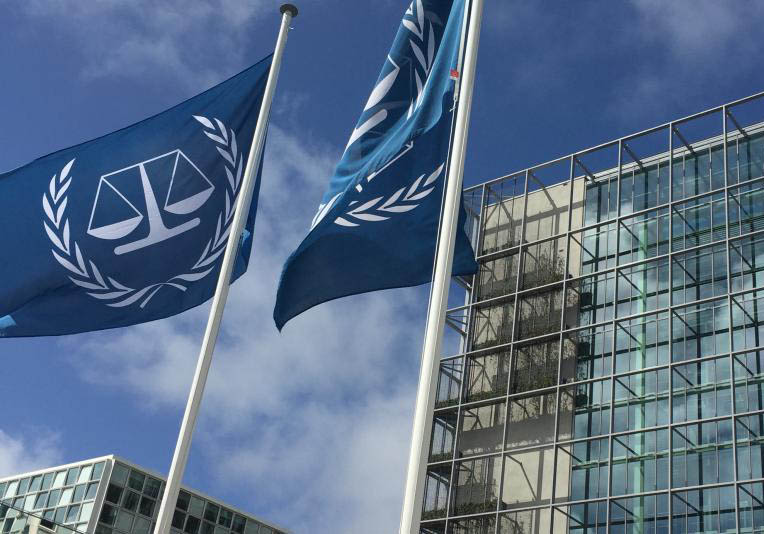
The ICJ has urged United Nations Special Procedures to act in response to recent steps taken by the United States against staff of the International Criminal Court (ICC) and their families.
On 11 June 2020, the US President signed an Executive Order declaring a national emergency and authorizing the targeting and sanction of individual staff of the ICC engaged in efforts to investigate US and allied personnel, including as part of the Prosecutor’s investigation of the situation in the Islamic Republic of Afghanistan.
“These actions constitute a direct and reprehensible attack on the independence and impartiality of the International Criminal Court in an effort to subvert its important mandate, which includes providing justice to victims of the most serious crimes in international law,” said Kingsley Abbott, Coordinator of the ICJ’s Global Accountability Initiative.
“By referring the situation to the UN Experts, we hope they will issue a formal communication of concern and seek to persuade US authorities to end their ongoing attacks against the ICC and its staff.”
The ICJ addressed its letter to Ms Mary Lawlor, Special Rapporteur on the situation of human rights defenders, Mr Diego García-Sayán, Special Rapporteur on the independence of judges and lawyers, Mr Fabian Salvioli, and Special Rapporteur on the promotion of truth, justice, reparation and guarantees of non-recurrence, urging them to:
- issue a public statement condemning these actions and reaffirming the importance of the ICC and its staff being able to fulfil the Court’s mandate free from interference; and
- send a communication to the United States urging it to reverse or revoke all orders, laws, policies or practices that interfere in or undermine the work of the ICC and its staff and refrain from taking steps or making comments in the future which may amount to interference in the independence and impartiality of the Court.
Background
On the same day the Executive Order was signed, US Secretary of State, Michael Pompeo, spoke to the media at a joint press conference.
Calling the ICC a “kangaroo court”, he announced that “the Trump Administration is taking the following actions”:
- authorizing the imposition of economic sanctions against ICC officials directly engaged in the ICC efforts to investigate U.S. personnel or allied personnel against that allied state’s consent, and against others who materially support such officials’ activities; and
- expanding visa restrictions for officials directly engaged in those same investigations including to their family members.
The UN Special Procedures of the UN Human Rights Council are independent human rights experts who hold specific country-focussed or thematic mandates.
They carry out a number of functions including reporting to and engaging in dialogue with States and civil society at the Human Rights Council, conducting country visits, engaging in advocacy, and acting on individual cases and concerns of a broader nature by sending communications to States and others in which they bring alleged violations to their attention.
On 21 September 2018, together with ten other organisations, the ICJ sent a joint letter to UN Special Procedures regarding threats made by the then US National Security Adviser, John Bolton, against the ICC and its staff in September 2018.
On 22 March 2019, UN experts Mr Michel Forst, then Special Rapporteur on the situation of human rights defenders, and Mr Diego García-Sayán, Special Rapporteur on the Independence of Judges and Lawyers, issued a press release expressing concern at Bolton’s remarks, reaffirming the important mandate of the ICC and saying they were in contact with the US authorities on the issue.
Contact
Kingsley Abbott, Coordinator of the ICJ’s Global Accountability Initiative, t: +66 94 470 1345; e: kingsley.abbott(a)icj.org
Universal-Letter to SP re ICC & US-Advocacy-Open letters-2020-ENG
Jun 18, 2020 | Advocacy, Non-legal submissions
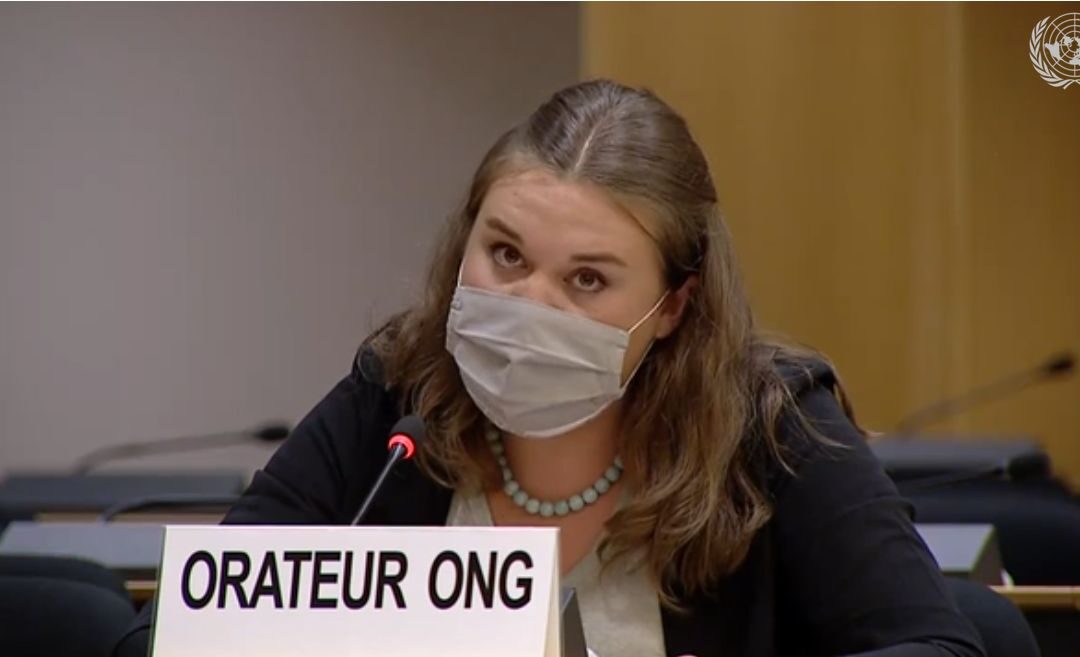
Speaking at the UN Human Rights Council in Geneva today, the ICJ urged action on excessive use of force, including unlawful killings, disproportionately targeting people of African descent and other minorities, by police throughout the United States of America, as well as in other countries.
The statement, delivered during an urgent debate on “current racially inspired human rights violations, systemic racism, police brutality and the violence against peaceful protest” that was requested by African countries, read as follows:
“Black lives matter.
The International Commission of Jurists (ICJ) condemns widespread incidents of unlawful and unnecessary use of force, including lethal force, by police throughout the United States of America, disproportionately targeting people of African descent and other minorities.
Many jurisdictions in the United States disregard, in law and in practice, universal standards including under the International Covenant on Civil and Political Rights and the UN Basic Principles on the Use of Force and Firearms by Law Enforcement Officials. These incorporate the requirements of proportionality and necessity and affirm that lethal force may only be used when strictly unavoidable to protect life. The ICJ is also concerned that doctrines of “qualified immunity” in practice result in impunity for extrajudicial killings and other serious human rights violations by police. The UN Human Rights Committee and the Committee against Torture, among others, have already called on the US to address these deficiencies in meeting their international legal obligations.
The United States is not alone in such abusive and racially discriminatory practices, which plague countries on every continent. While the Council is rightly giving long overdue attention to the United States, this must not serve as an excuse for any other State to fail to acknowledge and address similar violations within their own jurisdictions.
The ICJ supports calls for an independent international mechanism to address systematic racism in law enforcement in the United States and elsewhere.”
Jun 17, 2020 | Feature articles, News
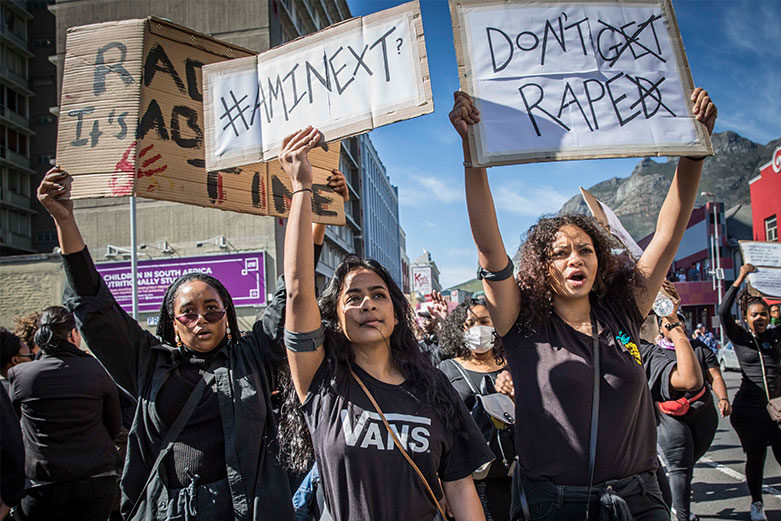
While reports suggest a decrease in crime during lockdown due to restricted movement, violence against women, including gender-based violence (GBV), continues unabated, and has likely worsened throughout Africa, replicating global trends in this regard.
Africa has a serious GBV crisis, which domestic legislative frameworks and accountability mechanisms have failed to fully address.
Various factors contribute to the increasing incidence of GBV in Africa. These factors are facilitated by the failure of States to adequately discharge their obligations to protect persons from gender based violence, through legal reform and administrative actions.
The issues manifest in gender insensitive actors and institutions that administer justice, impunity for abuses, and limited capacity of justice actors to properly handle cases due to lack of training and resources.
There are also challenges in issuance of restraining and protection orders. All these problems are reinforced by a widespread lack of willingness to recognize, understand and engage with women’s rights by State actors.
In Africa, more than one in three women (36.6%) report having experienced physical, and/or sexual partner violence or sexual violence by a non-partner. Studies have also found that the highest prevalence of child sexual abuse is in Africa.
This GBV crisis in Africa has been worsened by the coronavirus pandemic, which has contributed to a surge in GBV. The pattern of rape, sexual violence, and killing of women continues to spread across the continent, even during this health crisis.
On 27 May, the news of the rape and killing of a 22-year-old student while she studied in an empty church in Nigeria sparked outrage and protests in many parts of the country.
In South Africa, the body of 28-year-old woman Tshegofatso Pule was found on 8 June. She had been stabbed and hanging from a tree; she was eight-months pregnant at the time.
There have been several reports of femicide since some COVID-19 restrictions were lifted in South Africa. In Zimbabwe, increasingly there have been reports of rape and other sexual violence being used as political weapons to suppress political opposition in Zimbabwe.
Recently, there have been reports that three leaders of the MDC-A party were abducted and subjected to torture which included sexual violence after staging a flash demonstration against failure of the government to address livelihood issues during the Covid-19 lockdown.
While the demonstrations were led by both men and women, allegations focused on sexual violence against women by State agents have been made on numerous occasion especially following protests against the government. In both instances the response by the State authorities has been to challenge the allegations before conducting a thorough investigation.
In the recent case of the MDC-A leaders, officials have not only refuted the allegations but also charged the victims for breaching Covid-19 regulations and recently arrested them for allegedly ‘faking abduction’ and lying about torture..
Global Standards
All States must protect against gender based violence, whether by State or private actors, pursuant to their obligations under the International Covenant on Civil and Political Rights, the UN Convention Against Torture, the Convention on the Prevention of all forms of Discrimination against Women (CEDAW) and the Convention on the Rights of the Child. Most African countries are parties to these international treaties.
In addition, States of the African Union are bound to respect a range of international law and standards which prohibit gender based discrimination and sexual violence, most notable are the African Charter, and the Protocol to the African Charter on Human and People’s Rights on the Rights of Women (the Maputo Protocol) and the African Charter on the Rights and Welfare of the Child.
Article 4 of the Maputo Protocol provides that “every woman shall be entitled to respect for her life and the integrity and security of her person. All forms of exploitation, cruel, inhuman or degrading punishment and treatment shall be prohibited.
States parties shall take appropriate and effective measures to enact and enforce laws to prohibit all forms of violence against women, including unwanted or forced sex whether the violence takes place in private or in public.” Article 16 of the African Charter on the Rights and Welfare of the Child includes sexual abuse of children as a form of torture, cruel, inhumane and degrading treatment.
As explained by the CEDAW Committee, all States, including African States, have a due diligence obligation to prevent, investigate, prosecute and punish rape and other GBV.
It is noteworthy that, 17 years into its existence, not all African countries have ratified or signed the Maputo Protocol, with only 42 out of 55 AU member states having ratified the convention. Of the few countries which have comprehensive domestic legal frameworks to eliminate all forms of violence against women, they too often face challenges in implementation.
States have the primary responsibility to take effective measures to eradicate GBV. States have an obligation to take the necessary action at all levels to ensure the elimination of harmful gender norms and stereotypes, as well as to ensure the elimination of GBV.
African countries need to urgently respond to the scourge of GBV in the region. The ICJ intends to publish a series of legal briefs on the “State of Rape Law” as provided in various jurisdictions in Africa, in order to highlight the challenges in criminal justice systems in relation to addressing the crime of rape and to provide concrete recommendations for reform.
Jun 16, 2020 | News
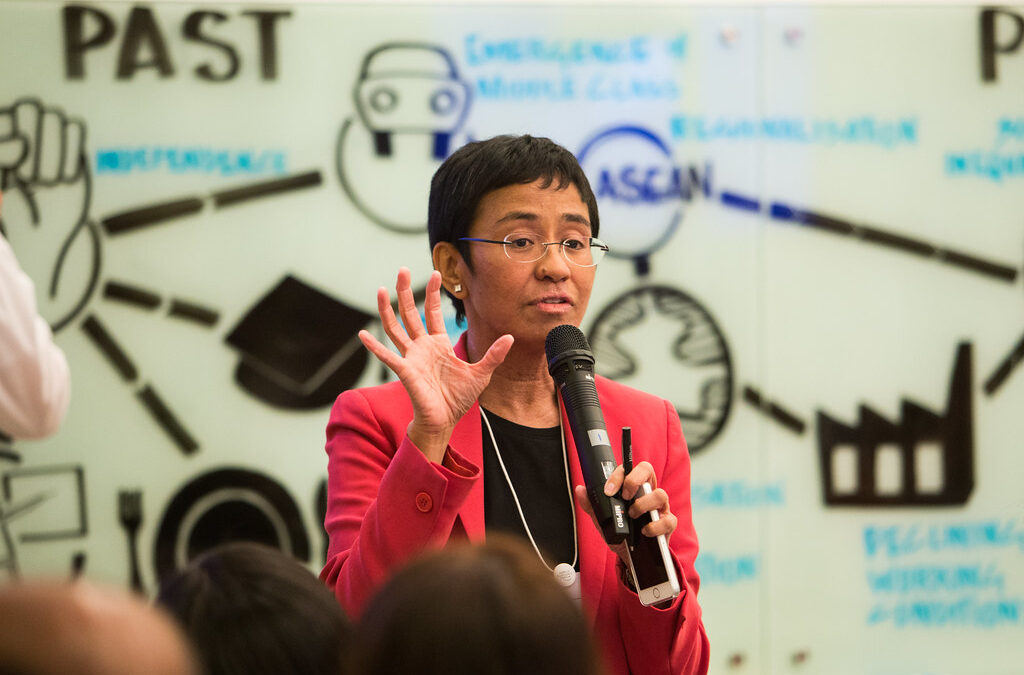
Today, the ICJ condemned the prosecution and conviction of journalists Maria Ressa and Reynaldo Santos, Jr. after the Manila Regional Trial Court found them guilty of cyber-libel for an article published on the news website Rappler. The ICJ called for the judgment to be reversed on appeal.
The ICJ also called on the Philippines to reform its laws to remove the possibility of criminal sanction for defamation and libel offenses, in line with its international legal obligations. The ICJ recalled that imprisonment for such offenses is never permissible.
“The guilty verdict is a new low for the Duterte administration, and adds to an atmosphere of intimidation that creates a chilling effect on online expression, especially for journalists seeking to hold the government to account,” said Frederick Rawski, ICJ Asia-Pacific Director.
“The conviction is not only a miscarriage of justice in this particular case; it also sets a terrible precedent for the use of criminal defamation laws to prosecute speech online in the Philippines and elsewhere in the region.”
Ressa and Santos were convicted pursuant to Section 4(c)(4) of the 2012 Cybercrime Prevention Act (CPA), and sentenced to imprisonment of up to six years and a fine of PhP 200,000 (approx. USD 4,000). Ressa is the executive editor of Rappler while Santos was the author of the article. Ressa’s conviction comes after years of legal harassment, forming part of a pattern of attacks upon the press by the Duterte government and placing the Philippines in violation of the right to freedom of expression under the International Covenant on Civil and Political Rights (ICCPR), to which the Philippines is a party.
The charges involved an article first published in May 2012 on the Rappler website, months before the CPA was enacted in September 2012. The article reported on businessman Wilfredo Keng’s alleged involvement in “human trafficking and drug smuggling.” Keng initiated the criminal proceedings against Ressa and Santos in October 2017, five years after the article was published.
However, the trial court considered the article to have been “republished” on 19 February 2014 when Rappler updated the article on its website to fix a typographical error. Further, since the CPA does not expressly mention the prescriptive period, the trial court held that Republic Act No. 3326 applies, which provides a 12-year prescriptive period for offenses punished under a ‘special law’ such as the CPA. In contrast, ordinary libel under the Revised Penal Code carries a one-year prescriptive period.
“Regardless of the merits of the case, criminal sanction involving imprisonment must never be imposed for defamation,” said Rawski.
“On top of this general consideration, the judgment even sets a dangerous precedent by expanding the prescriptive period and ‘publication’ requirement for the crime of libel, contradicting well-established protections against ex post facto laws and that any ambiguity in penal laws must be resolved in favor of the accused.”
The right to freedom of expression under Article 19 of the ICCPR extends to political discourse, commentary on public affairs and journalism. The UN Human Rights Committee, the supervisory body for the ICCPR, has called on States to abolish existing criminal defamation laws and reserve defamation for civil liability. The Committee concluded in 2012 that the Philippines’ criminalization of defamation, including under the CPA, breaches its obligations under the ICCPR. Article 15 of the ICCPR also prohibits the prosecution of persons for acts that were not considered a crime at the time of commission.
The Committee and the UN Human Rights Council have affirmed that these safeguards apply online as well as offline, as Article 19 protects expression regardless of frontiers and through any media of one’s choice. The UN Special Rapporteur on freedom of expression has consistently called for decriminalization of defamation as a criminal offence, which is inherently harsh and encourages self-censorship.
Contact
Emerlynne Gil, Senior International Legal Adviser, +662 619 8477 (ext. 206), emerlynne.gil(a)icj.org
Download
Philippines-Maria-Ressa-Press-Release-2020-ENG (PDF)
Related work
Report: Curtailing Free Expression, Opinion and Information Online in Southeast Asia
Philippines: order to major media outlet to stop airing violates freedom of expression and access to information
Jun 15, 2020 | Multimedia, Noticias
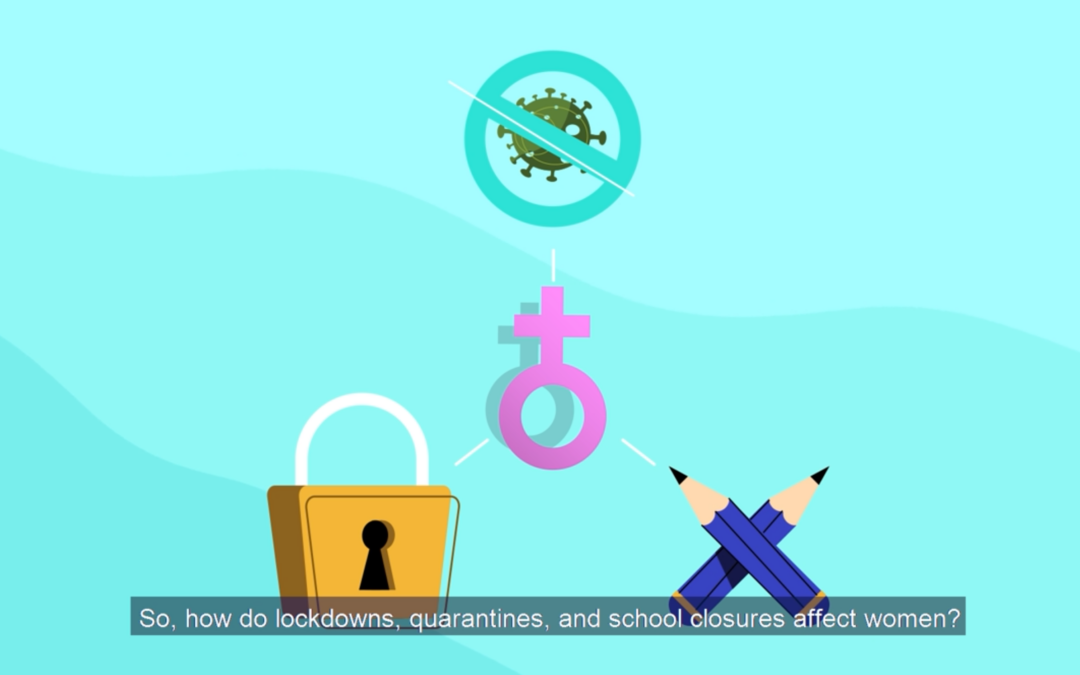
Como parte de las actividades que la CIJ adelanta en relación con la crisis generada por el COVID-19, se encuentra el monitoreo sobre la protección y garantía de los derechos de las mujeres. Al respecto, informes de todas partes del mundo indican un aumento en los casos de violencia domestica y nuevos problemas para acceder a la justicia.
En consideración a ello, los equipos de la CIJ en África y en Asia trabajaron juntos para realizar una animación sobre el impacto que las medidas de aislamiento y similares han tenido en los derechos de las mujeres.
La animación también ofrece sugerencias a los Estados sobre las medidas que se pueden adoptar para proteger los derechos de las mujeres. En particular, se llama la atención a los Estados sobre la importancia de adoptar un enfoque de género en sus políticas.
La animación fue lanzada en inglés durante un webinar, el 26 de mayo de 2020. Durante el webinar, mujeres defensoras de derechos humanos de Asia, África y el Medio Oriente discutieron sobre el impacto que las medidas impuestas para contener el avance del virus han tenido en los derechos de las mujeres.
Contacto:
Shaazia Ebrahim, Oficial de comunicaciones (CIJ Africa), Correo electrónico: shaazia.ebrahim(a)icj.org