Mar 12, 2020
An opinion piece by Ruth Panjaitan, ICJ National Legal Adviser in Indonesia.
Late last year, the Indonesian parliament was about to vote on a new Penal Code to replace the existing Kitab Undang-Undang Hukum Pidana (KUHP), the culmination of decades of efforts to revise the country’s penal laws. The draft of the new Penal Code, however, was met with massive protests and vigorous public opposition that it prompted President Joko Widodo to appeal to lawmakers to postpone its passage.
The proposed Penal Code is now back in the hands of lawmakers who are promising more consultations with the public, including on its most contested and problematic provisions. The Parliament and the Ministry of Law and Human Rights jointly agreed to include the Penal Code as one of 50 priority draft laws in the national program legislative (prolegnas). It is thus expected that the Penal Code will be finalized this year.
There are a number of provisions in the draft law that, if implemented, would not comply with Indonesia’s international law obligations and would carry adverse human rights consequences for numerous people in the country. These provisions relate to such areas as the right to privacy, freedom of speech, and freedom of association.
In many ways, the law would pose particularly dire consequences for women’s human rights in Indonesia. Article 433 on adultery is one such provision that the ICJ and many human rights organizations and advocates have called on lawmakers to remove this from the draft.
The existing Penal Code already problematically criminalizes adultery, defining it as sexual intercourse between a married man or woman when the sexual partner is not his/her spouse. But under the proposed draft law, the definition of adultery has been expanded to include sexual acts between an unmarried woman and an unmarried man. Furthermore, the penalty has been increased so that a person found guilty thereof may be imprisoned for up to two years. The prosecution of Article 433 may only be commenced upon the complaint of the spouse, parents, or children of the alleged offenders.
The criminalization of adultery is not compliant with international law and standards, including the right to privacy and non-discrimination and equal protection of law. In this connection, various international human rights instruments, including the Committee on the Elimination of All Forms of Discrimination Against Women (CEDAW Committee) and the UN Working Group on Discrimination against women in law and practice, have consistently called for the repeal of laws criminalizing adultery. This is because the enforcement of adultery laws leads to discrimination and violence against women, as well as an infringement on the right to privacy.
Harmful gender stereotypes and rigid constructions of femininity lay at the core of this disparity. Women are expected to be sexually modest. A woman’s modesty is inextricably linked to her partner’s masculinity and her family’s honor. Hence, if a woman shows or is perceived to be sexually immodest, then her male partner would be viewed as weak and vulnerable. The woman would also be accused of bringing dishonor to her family. These harmful gender stereotypes are still very much present in Indonesia. In fact, in 2012, the CEDAW Committee expressed concern in its Concluding Observations on Indonesia’s periodic reports that there is the “persistence of adverse cultural norms, practices, traditions, patriarchal attitudes regarding roles, responsibilities and identities of women and men in the family and in society.”
There has been continuous trend throughout the world of countries reforming and abolishing often archaic laws criminalizing adultery. In 2018, India made the move of abolishing its colonial-era adultery law. The Philippines is now currently revising its Penal Code and one of the key considerations in the discussions is the abolition of the provisions on adultery. Indonesia now has the opportunity to step up and assert itself as a progressive leader in Asia in eliminating discrimination against women by removing the provision criminalizing adultery in its draft Penal Code.
To download in Bahasa Indonesia , click here.
This article was first published in Tempo, available at: https://kolom.tempo.co/read/1318052/dekriminalisasi-pasal-perzinaan
Mar 11, 2020 | Advocacy, Non-legal submissions
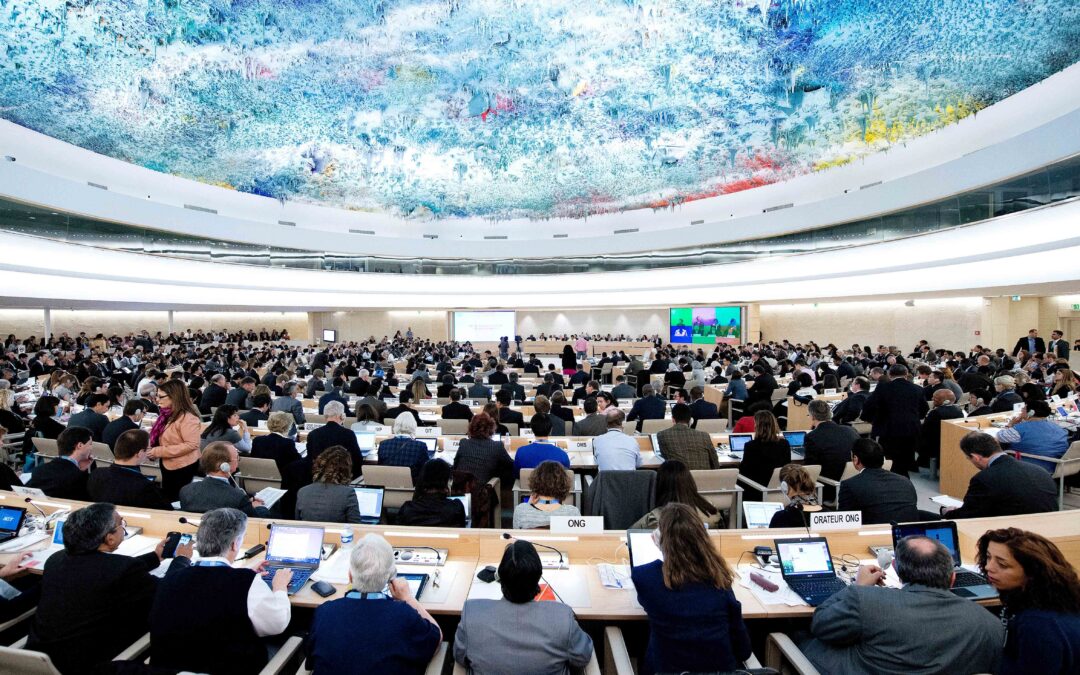
ICJ has joined other NGOs in urging India, Pakistan and the Human Rights Council, to take action to address the grave situation for human rights in Jammu & Kashmir.
The joint statement read as follows:
“Our organizations express grave concern over the human rights situation in Jammu & Kashmir, where the authorities imposed severe restrictions after a decision to revoke constitutional autonomy on 5 August 2019, including one of the world’s longest internet shutdowns, which the Indian Supreme Court has said violates the right to freedom of expression.
Hundreds were arbitrarily arrested, and there are some serious allegations of beatings and abusive treatment in custody, including alleged cases of torture. Three former chief ministers, other leading politicians, as well as separatist leaders and their alleged supporters, remain in detention under the Public Safety Act (PSA) and other abusive laws, many without charge and in undisclosed locations outside of Jammu & Kashmir. This violates fair trial safeguards of the criminal justice system and undermines accountability, transparency, and respect for human rights. Journalists and human rights defenders have been threatened for criticizing the clampdown. These violations, as those committed over the past decades, are met with chronic impunity.
We urge the government of India to ensure independent observers including all human rights defenders and foreign journalists are allowed proper access to carry out their work freely and without fear, release everyone detained without charge, and remove restrictions on the rights to freedom of expression and freedom of movement, including where they have been denied the right to leave the country by being placed on the ‘Exit Control List’.
We also call on the governments of India and Pakistan to grant unconditional access to OHCHR and other human rights mechanisms to Kashmir.
We further urge the Council to establish an independent international investigation mechanism into past and ongoing crimes under international law and human rights violations by all parties in Kashmir, as recommended by the UN High Commissioner for Human Rights.
Thank you.
- Amnesty International
- Asian Forum for Human Rights and Development (FORUM-ASIA)
- CIVICUS – World Alliance for Citizen Participation
- Human Rights Watch
- International Commission of Jurists
- International Federation for Human Rights Leagues (FIDH)
- International Service for Human Rights
- World Organisation Against Torture (OMCT)”
Mar 10, 2020 | Advocacy, Non-legal submissions
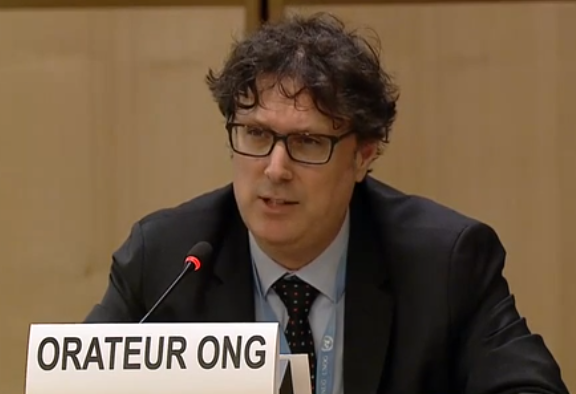
The ICJ and other NGOs today highlighted the discriminatory character of India’s Citizenship Amendment Act, and called for accountability for violence and excessive use of force in relation to protests against it, today at the Human Rights Council in Geneva.
The joint statement, delivered in a general debate, read as follows:
“India’s Citizenship (Amendment) Act, 2019 (CAA) arbitrarily excludes certain groups at risk of persecution, such as Muslims, from accessing an expedited path to citizenship, based on their religious affiliation.
The CAA is inconsistent with rule of law principles and international law, including the right to equality before the law and the right to non-discrimination, protected under human rights treaties such as the International Covenant on Civil and Political Rights and the International Convention on the Elimination of All Forms of Racial Discrimination, to which India is a party.
The implementation of the National Register of Citizens (NRC) in Assam risks making 1.9 million persons stateless. A nationwide NRC will put more people at risk.
Our organizations urge the Indian government to amend the CAA to ensure that any path to citizenship provides for equal protection for persecuted persons, and does not discriminate on grounds such as religion or national origin.
We also urge India to develop a comprehensive refugee law that addresses the plight of persecuted minorities in a non-discriminatory manner, and to accede to the 1951 Refugee Convention and its 1967 Protocol.
We further call on India to respect the right to peaceful assembly, and to ensure accountability for those alleged to have instigated violence or used excessive force in relation to the nationwide protests against the CAA.”
The statement was delivered by ICJ on behalf also of Asian Forum for Human Rights and Development (FORUM-ASIA), CIVICUS – World Alliance for Citizen Participation, Human Rights Watch, International Service for Human Rights (ISHR), Minority Rights Group International, and World Organization against Torture (OMCT).
The statement can be downloaded in PDF format here: ICJ statement GD item 4 India (10-03-2020)

Mar 10, 2020 | Advocacy, Non-legal submissions
The ICJ today spoke in the final interactive dialogue with the current UN Special Rapporteur on human rights in Myanmar, at the Human Rights Council in Geneva.
The statement read as follows:
“The ICJ salutes what the current Special Rapporteur has achieved in the mandate despite withdrawal of cooperation by the Government, and shares the concerns expressed in this final report (A/HRC/43/59), particularly the urgent need to establish peace and security in Rakhine State without compromising human rights law and international criminal accountability for gross human rights violations.
The ICJ recalls the obligations of Myanmar under international human rights law. The Government must ensure that human rights are not violated in the context of conflict with the Arakan Army. The longstanding internet shutdown in Rakhine and Chin States must be ended. Due process rights of persons arrested must be respected.
The ICJ also welcomes the Order of provisional measures in the case brought by The Gambia at the International Court of Justice. Myanmar must comply and prevent further acts of genocide.
The Myanmar Government must also ensure accountability for mass atrocities. In a briefing paper last year, the ICJ proposed Constitutional, legislative and institutional reform of Myanmar’s National Human Rights Commission to enable it to independently and effectively investigate allegations of human rights violations. The Myanmar Government should also cooperate with the Independent Investigative Mechanism for Myanmar and the International Criminal Court.
The ICJ would like to ask: based on your experience in the mandate, how can States best strengthen support for the mandate and the various international accountability initiatives underway?”
Mar 9, 2020 | News
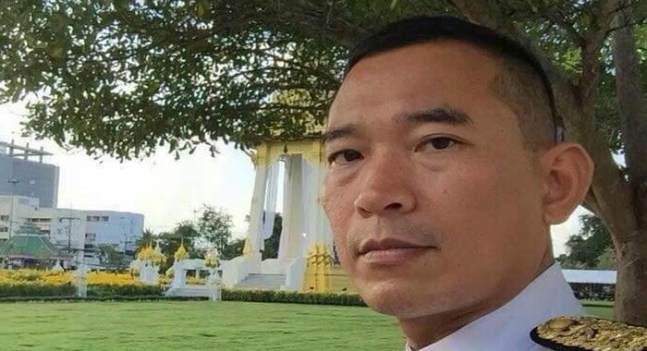
The ICJ today expressed regret at the death of Judge Khanakorn Pianchana, who committed suicide on 7 March 2020. Judge Khanakorn was widely known after an attempted suicide in October 2019 following the delivery of a verdict which he claimed was interfered by a senior judge.
Judge Khanakorn previously served as Vice Presiding Judge of the Yala Provincial Court in Thailand’s restive southern region. He passed away on 7 March 2020 at his home in Chiang Mai province.
Background
Before the suicide, Judge Khanakorn posted a two-page letter on his Facebook page, in which he claimed that he had been subject to disciplinary proceeding and had criminal charge brought against him after he had publicized his concerns about interference by a superior judge into certain rulings. These involved five individuals detained and interrogated under special security laws in southern Thailand.
In October 2019, Judge Khanakorn claimed in a public letter that he had been ordered by a senior judge to rewrite a ruling in which he exonerated the five individuals charged with murder, for lack of evidence. Following his delivery of the verdict, he shot himself in the chest in a courtroom at Yala Provincial Court.
After his first suicide attempt, according to the Office of the Judiciary’s Press Release dated 18 November 2019, the Judicial Commission initiated an investigation against him for violations of provisions on discipline of judicial officials. He was subsequently transferred to the Court of Appeal Region 5 in Chiang Mai, at which time he was further investigated for committing criminal offences under the Firearms, Ammunition, Explosives, Fireworks and Imitation Firearms Act.
On 7 March 2020, according to the interview gave by Secretary-General of Office of the Judiciary, an initial investigation of the Judicial Commission found that there had been no improper interference, and the disciplinary actions and the criminal charges that are brought against Judge Khanakorn were based on his actions for carrying a gun into court and using the gun to attempt suicide.
Contact
Frederick Rawski, ICJ Asia-Pacific Director, t: +66 64 478 1121; e: frederick.rawski(a)icj.org
Download
To download the statement in Thai, click here.