Nov 30, 2023 | Advocacy, Analysis briefs, News
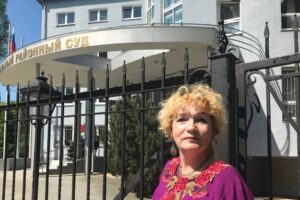
The International Commission of Jurists (ICJ), in an amicus curiae brief submitted today, has requested the East Jakarta District Court to give effect to Indonesia’s international legal obligations concerning freedom of expression and information in their adjudication of a case concerning criminal charges against two human rights defenders, Haris Azhar and Fatia Maulidiyanti.
Nov 28, 2023 | Cases, News
FOR IMMEDIATE RELEASE
Berlin, November 28, 2023 – A German court in the city of Celle is expected to deliver a verdict on November 30, 2023, in the first trial in Germany for crimes committed in The Gambia, Gambian and international civil society groups said today in releasing a question and answer document about the trial.
The groups are: the African Network against Extrajudicial Killings and Enforced Disappearances (ANEKED), the European Center for Constitutional and Human Rights (ECCHR), the Gambian Center for Victims of Human Rights Violations, Human Rights Watch, the International Commission of Jurists, Reporters Without Borders (RSF), the Rose Lokissim Association, the Solo Sandeng Foundation, and TRIAL International.
This trial is possible because Germany recognizes universal jurisdiction over certain serious crimes under international law, allowing for the investigation and prosecution of these crimes no matter where they were committed and regardless of the nationality of the suspects or victims.
The trial concerns Bai L., an alleged member of the “Junglers,” a paramilitary unit also known as the “Patrol Team,” which was set up by then-president Yahya Jammeh in the mid-1990s. Jammeh’s 22-year rule was marked by systematic oppression and widespread human rights violations, including torture, extrajudicial killings, enforced disappearances, and sexual violence against actual and perceived opponents.
German prosecutors accuse Bai L. of being a Junglers driver involved in the attempted murder of Ousman Sillah, a lawyer; the murder of Deyda Hydara, a journalist; the attempted murder of Ida Jagne and Nian Sarang Jobe, who worked with the independent newspaper Hydara; and the murder of a former Gambian soldier, Dawda Nyassi
The verdict in the Bai L. case represents a major step in the search for justice for years of abuses committed under Jammeh’s rule in The Gambia, the groups said. The Bai L. trial reinforces the role that governments like Germany can play in advancing justice for atrocities committed abroad under the principle of universal jurisdiction.
Civil society groups will hold a news conference online on Thursday, November 30 after the verdict is issued – scheduled for 3:30 pm CET – at the following link: https://us06web.zoom.us/j/81236784593?pwd=tvLgbtT3I8N9rF2Db2XTIRyH3Kn1gv.1
To read the question-and-answer document, please see the attached PDF:
Questions and Answers on first German trial for serious crimes
For more information, please contact:
For Reporters Without Borders, in Dakar, Sadibou Marong (English, French): +221-70-960-40-92 (mobile); or smarong@rsf.org. Twitter: @cheikhsadbu
For TRIAL International, in Geneva, Babaka Mputu (English, French, German): +41-775-07-04-56 (mobile); or media@trialinternational.org. Twitter: @Trial
For Human Rights Watch, in New York, Elise Keppler (English, French): +1-917-687-8576 (mobile); or kepplee@hrw.org. Twitter: @EliseKeppler
For Solo Sandeng Foundation, in Germany, Fatoumatta Sandeng (English, German, Mandinka, Wollof): +49-163-174-7519 (mobile); or solosandengfoundation@gmail.com. Twitter: @solosandengfound
For ANEKED, in New York, Nana-Jo Ndow (English, French, Spanish, Portuguese): +1-929-684-5734 (mobile); or nanajo.ndow@aneked.org. @theANEKED
For Reporters Without Borders, in Berlin, Nicola Bier (German, English, French, Spanish, Italian): +49-160-9957-6073 (mobile); or nicola.bier@reporter-ohne-grenzen.de. Twitter: @ReporterOG
Lawyer for Baba Hydara and Omar and Modou Nyassi, in Celle, Patrick Kroker (German, English, French): +49-170-813-6258 (mobile); or info@patrickkroker.net. Twitter: @pkroker2
For International Commission of Jurists, in New York, Reed Brody (English, Spanish, French, Portuguese): +1-917-388-6745 (mobile); or reedbrody@gmail.com. Twitter: @reedbrody
Nov 24, 2023
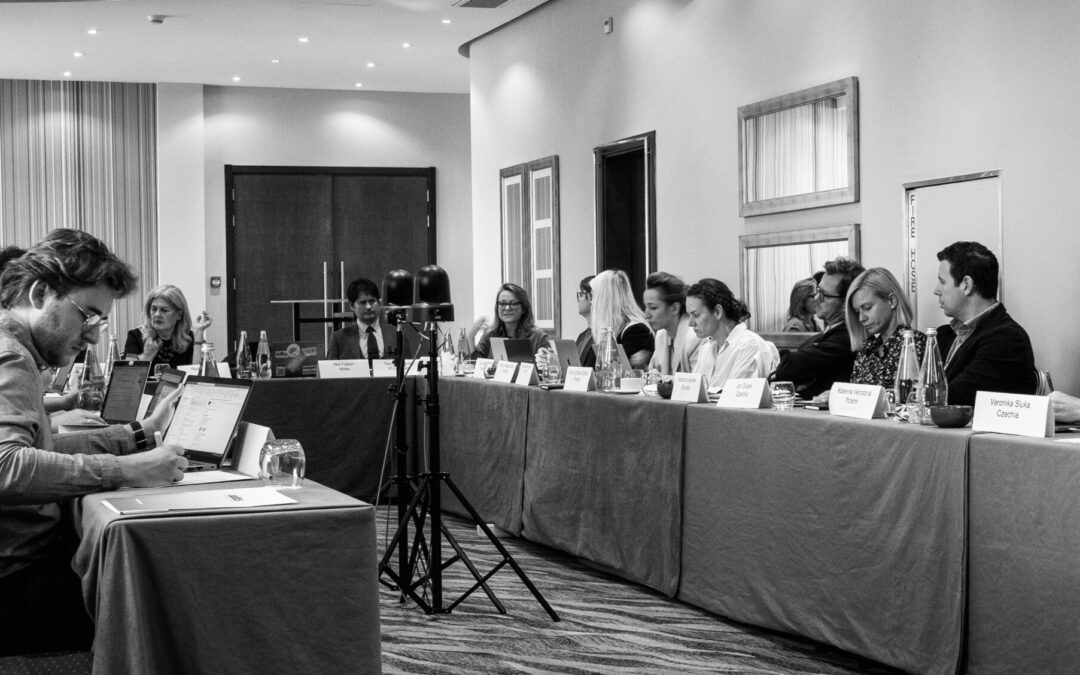
The International Commission of Jurists (ICJ), in collaboration with aditus, Human Rights in Practice, Forum for Human Rights, Free Courts organized a workshop for lawyers on judicial independence and strategic litigation in Malta on 23 and 24 November 2023. The event focused on critical issues of judicial independence, including, appointment procedures, administration of justice, and freedom of expression and association of judges.
Judicial independence is essential for democracy and human rights protection, yet it is frequently under attack or pressure. Judicial independence is possible only with independent organisation and governance, and when judges’ human rights are guaranteed. This includes strict selection criteria and transparency in the appointment of judges and prosecutors, and it implies respect of freedom of expression and association of judges.
The participants discussed the challenges in guaranteeing both institutional and individual independence of judges, and in ensuring fairness and transparency in the appointment procedures. The workshop also focused on the possible limitations of the freedom of expression and association of judges. It was noted that judges often fear repercussions for expressing their opinions and participating in associations or protests.

 The workshop brought together experts and practitioners from six EU Member States – the Czech Republic, Hungary, Malta, Poland, Romania and Slovakia – to discuss their experiences. The participants discussed the international legal framework and the possible ways to protect judicial independence focusing on the role of strategic litigation.
The event was the second of a series of workshops, each considering different aspects of judicial independence. These workshops aim to contribute to the development of the Final Mapping Report with recommendations on strategic litigation for practitioners in the EU, as part of the ROLL (Rule of Law for Lawyers) project.
Please see the workshop agenda here.
Please find recordings of some of the workshop presentations here.
Nov 24, 2023 | Events, News
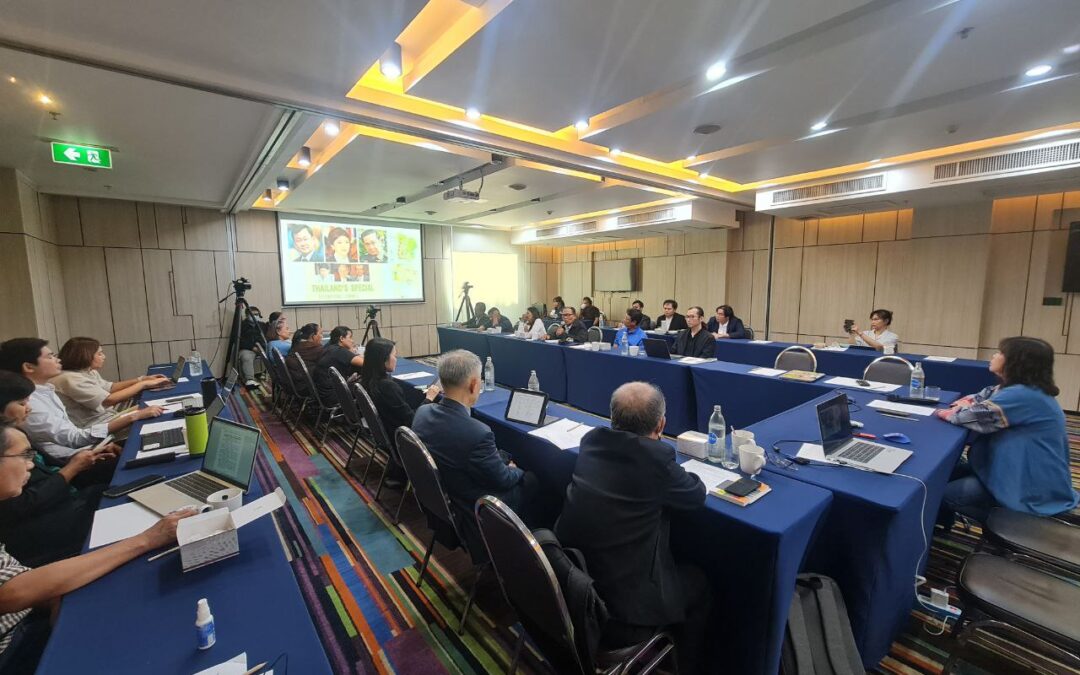
“The law governing the development of Thailand’s Eastern Economic Corridor (EEC) must be evaluated and revised to address concerns raised by local communities, and align with Thailand’s international human rights obligations,” concluded participants at a dialogue hosted by the International Commission of Jurists (ICJ), Land Watch Thai, EEC Watch, ENLAW Thai Foundation, and Thai Public Broadcasting Service (Thai PBS) in Bangkok, on 22 November 2023.
Participants shared recommendations aimed at improving the Eastern Special Development Zone Act B.E. 2561 (2018) (‘EEC Act’), which governs the operation of the EEC, to better serve the rights and interests of persons in affected communities. These suggestions will be compiled by the organizers and submitted as part of the official consultation process during the 2024 evaluation by the Office of the Eastern Special Development Zone Policy Committee (‘EEC Office’).
The EEC is a special economic zone in Thailand being developed in the eastern coastal provinces of Rayong, Chonburi, and Chachoengsao, along the Gulf of Thailand. Its objective is to promote investment in next-generation industries utilizing innovation and high technology.
“The EEC Act, however lofty are its stated aim, fails to incorporate adequate protection of human rights. While the EEC Act nominally acknowledges international human rights standards such as the United Nations Guiding Principles on Business and Human Rights’ protect, respect, and remedy framework, as well as the principle of promoting and protecting human rights in policy preparation, it fails to provide for adequate means to ensure implementation of these and other human rights standards,” said Sanhawan Srisod, ICJ’s Legal Adviser.
“According to Thai law, the evaluation must achieve goals that include aligning the law with Thailand’s international obligations under international law. Therefore, the EEC Office cannot complete the evaluation process without thoroughly addressing current gaps in compliance,” added Srisod.
The ICJ recommendations presented include the need to incorporate safeguards against forced eviction, in accordance with international human rights law, and to recognize the social, cultural, spiritual, economic, environmental, and political value of land for communities, with special emphasis on the significance for tenant farmers and small-scale food producers. Responsible land-based investments and implementing human rights due diligence are also critical elements.
A survey conducted before the dialogue with 44 affected individuals in Chonburi and Rayong provinces revealed a pattern of practices that fail to comply with Thailand’s international human rights obligations. They include:
- Lack of adequate participation of residents in the consultation process of the EEC Act.
- Absence of representation of locally affected individuals/communities in the Committee overseeing the EEC, primarily composed of governmental authorities and representatives from business sectors.
- The EEC Committee and Office hold overly broad powers without adequate checks and balances.
- The absence of effective grievance and compliance mechanisms within the EEC Office.
- Disregard for the impact of activities on local livelihoods during policy implementation.
- Ineffectiveness and inadequacy of remedies provided for individuals affected by EEC operations.
Participants suggested amending the EEC Act to address these concerns and ensure real participation, inclusiveness, adequate livelihood, a healthy environment, effective remedies, and other human rights of communities in the area.
Additionally, it addressed ongoing litigation initiated by communities challenging town planning within the EEC, specifically challenging the re-designation of agricultural, natural, and environmental reserved zones to industrial zones, which is currently pending before the Central Administrative Court.
Background
The participants comprised 30 affected individuals living in the areas of the EEC and civil society actors. This is the second dialogue following the initial one in June 2023, addressing the same topic.
According to the Act on Legislative Drafting and Evaluation of Law B.E. 2562 (2019), all Thai laws must undergo outcome evaluation at least every five years.
Speakers at the dialogue included:
- Chanchao Chaiyanukit, Former Permanent Secretary of the Ministry of Justice
- Pornpana Kuaycharoen, Land Watch Thai
- Sanhawan Srisod, ICJ
- Saowaruj Rattanakhamfu, Thailand Development Research Institute (TDRI)
- Somnuck Jongmeewasin, EEC Watch
- Sondhi Kodchawat, Environmental Researcher
- Sumitchai Hattasan, Center for Protection and Revival of Local Community Rights
- Supaporn Malailoy, ENLAWThai Foundation
- Sutthikiat Kodchaso, ENLAWThai Foundation
Contact
Sanhawan Srisod, ICJ Associate International Legal Adviser, e: sanhawan.srisod@icj.org
Further reading
Thailand: laws governing development of Eastern Economic Corridor and Special Economic Zones fail to adequately protect human rights – ICJ report
Nov 22, 2023 | Advocacy, Joint Statement
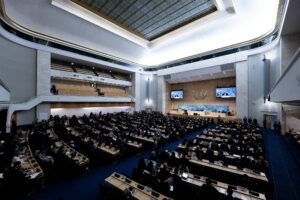
In light of credible allegations of ongoing violations of international humanitarian law arising from the protracted armed conflict in Israel and the Occupied Palestinian Territory, in particular in the Gaza Strip, the International Commission of Jurists (ICJ), Amnesty International (AI), and Human Rights Watch (HRW) support the call by a number of High Contracting Parties to the 1949 Geneva Conventions addressed to Switzerland, in its capacity as the depository of the four Geneva Conventions, to convene an urgent Conference of High Contracting Parties to the Geneva Convention Relative to the Protection of Civilian Persons in Time of War of 12 August 1949 (“the Fourth Geneva Convention”).
This call is based on Common Article 1 to the four Geneva Conventions, which states that “The High Contracting Parties undertake to respect and to ensure respect for the present Convention in all circumstances”. Underscoring the continued relevance of this body of law, the ICJ, AI, and HRW recall operative paragraph 1 of the UN Security Council Resolution 2712 on the situation in the Middle East, including the Palestinian question, of 15 November 2023 demanding “that all parties comply with their obligations under international law, including international humanitarian law, notably with regard to the protection of civilians, especially children.” In the same vein, our organisations recall operative paragraph 2 of the UN General Assembly, entitled Protection of civilians and upholding legal and humanitarian obligations, of 26 October 2023 demanding “that all parties immediately and fully comply with their obligations under international law, including international humanitarian law and international human rights law, particularly in regard to the protection of civilians and civilian objects, as well as the protection of humanitarian personnel, persons hors de combat, and humanitarian facilities and assets”.
The ICJ, AI, and HRW call on all High Contracting Parties to uphold the fundamental principle of international law that treaties must be executed in good faith, and fulfil their obligations under Common Article 1 “to ensure respect” for the Fourth Geneva Convention by participating in the Conference and acting collectively to prevent further violations of international humanitarian law in the Occupied Palestinian Territory and Israel.
The ICJ, AI, and HRW consider that in the circumstances currently prevailing in Israel and the Occupied Palestinian Territory, including, in particular, the Gaza Strip, ensuring respect for international humanitarian law requires, at a minimum, a suspension of arms transfers to the parties to the conflict; ensuring accountability for serious violations of international humanitarian law; supporting and cooperating with the Independent International Commission of Inquiry on the Occupied Palestinian Territory, including East Jerusalem, and Israel, and with the International Criminal Court’s ongoing Palestine investigation; and supporting other pathways to accountability including through the principle of universal jurisdiction.
Contact:
Said Benarbia, Director, ICJ Middle East and North Africa Programme, email: said.benarbia@icj.org
Katherine Iliopoulos, Legal Adviser, ICJ Middle East and North Africa Programme, email: katherine.iliopoulos@icj.org