Oct 5, 2023 | News
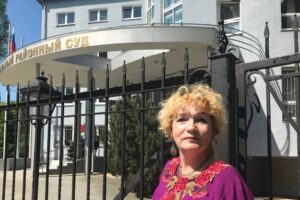
The ICJ condemns the recent prosecution of two lawyers, Dalila Msadek and Islem Hamza, who act as defence counsel in a high-profile case involving political opposition figures. On 29 September 2023, the Public Prosecutor of the Tunis Court of First Instance initiated criminal proceedings against Dalila Msadek and Islem Hamza, who are members of the legal team defending a number of political opponents of the regime of Tunisia’s President, Kais Saied, some of whom have been detained since February 2023 for their alleged involvement in the so-called conspiracy case based on charges related to “terrorism” and “State security”.
البيان باللغة العربية على هذا الرابط
The ICJ further condemns the prosecution of Ayachi Hammami, also acting as defence counsel in the “conspiracy case”, who is scheduled to appear before the investigating judge of the “counter-terrorism” specialized judicial unit on 10 October 2023. Ayachi Hammami was informed that he was being prosecuted in the “conspiracy case” on 3 May 2023.
The prosecutions of Dalila Msadek, Islem Hamza and Ayachi Hammami are emblematic illustrations of a pattern of judicial harassment of lawyers representing individuals involved in political cases in Tunisia where the lawyers themselves are targeted solely because of their legitimate professional activities, ultimately underming their ability to defend their clients’ human rights, free from intimidation, hindrance, harassment or improper interference.
“This growing pattern of judicial harassment of lawyers solely for their legitimate discharge of their professional duties violates their human rights, including to liberty and security of person, fair trial, work and freedom of expression, as well as their clients’ right to a fair trial, including the right to defend themselves and to legal representation and assistance,” said Said Benarbia, ICJ MENA Director.
Dalila Msadek and Islem Hamza face charges of “spreading fake news with the aim of threatening public security through audio-visual media”, pursuant to article 24 of Decree-law 2022-54 of 13 September 2022, and of “processing of personal data relating to criminal offences, their investigation, criminal proceedings, penalties, preventive measures or criminal records”, pursuant to articles 13 and 87 of Organic Law No. 2004-63 on the protection of personal data. Dalila Msadek and Islem Hamza are being prosecuted in connection with statements they made on the radio on 28 and 29 September 2023 in which they mentioned having requested that the investigating judge of the ”counter-terrorism” specialized judicial unit should hear the diplomats whom their clients allegedly met as part of the “conspiracy” of which the prosecution accuses them.
Since June 2023, Islem Hamza has also been prosecuted in a separate case, under article 24 of Decree-Law 54, following a statement she made on the radio, in her capacity as a defence lawyer of arrested political opponents, denouncing the conditions of transfer of detainees as inhumane. Similarly, Ayachi Hammami has been prosecuted since January 2023 in a distinct case pursuant to Decree-Law 54 based on a statement he made in his capacity as a defence lawyer of the dismissed judges.
The ICJ considers that, to prosecute Islem Hamza, Dalila Msadek and Ayachi Hammami, the prosecution authorities have latched onto statements that Islem Hamza, Dalila Msadek and Ayachi Hammami made in the legitimate discharge of their professional duties as lawyers towards their clients. In addition, their statements constitute the protected exercise of their right to freedom of expression and, as such, cannot be subject to criminal prosecution under general principles of criminal law and international human rights law and standards.
Islem Hamza, Dalila Msadek and Ayachi Hammami are not isolated cases: Abdelaaziz Essid is also being prosecuted based on a statement he made as a defence lawyer in the “conspiracy case”. Moreover, Ghazi Chaouachi and Rhida Belhaj, who were representing other defendants in the “conspiracy case”, are being prosecuted in that very same case before the “counter-terrorism” specialized judicial unit.
“After arbitrarily detaining peaceful political opposition members, the authorities are increasingly using the criminal law to harass and intimidate defence lawyers and disrupt the legitimate discharge of their professional duties,” said Said Benarbia. “In so doing, they are sending the chilling message that any lawyers who represent defendants in political cases expose themselves to the risk of being prosecuted on spurious criminal charges.”
The ICJ calls on the Tunisian authorities to drop all criminal charges against all lawyers currently prosecuted solely for the legitimate discharge of their professional duties and the peaceful exercise of their right to freedom of expression and to immediately end all practices that hinder the work of lawyers.
Background
Since 2022, State authorities have increasingly targeted Tunisian lawyers for their legitimate defence work and for exercising their human rights. On 26 May 2023, several mandate holders of the UN Human Rights Council Special Procedures expressed concern over some of these cases.
According to information available to the ICJ, at least 27 lawyers are facing or have faced criminal prosecutions since 2022 based on charges related to, among others, “terrorism” and “State security”, or based on public statements critical of the executive. Among these, three – Noureddine Bhiri, Ghazi Chaouachi and Rhida Belhaj, who began a hunger strike on 2 October 2023 along with other detainees in the “conspiracy case” – are currently in detention; three other defence lawyers – Abdelrazak Kilani, Mehdi Zagrouba and Seifeddine Makhlouf – have been tried and imprisoned by military courts; and 15 others have been banned from traveling, including Lazhar Akermi following his release from pre-trial detention.
Lawyers, like any other person, enjoy the right to freedom of expression, as protected under human rights treaties to which Tunisia is party. These include the International Covenant on Civil and Political Rights and the African Charter on Human and Peoples’ Rights.
The UN Basic Principles on the Role of Lawyers and the African Commission on Human Peoples’ rights’ Principles and Guidelines on the Right to a Fair Trial in Africa reaffirm this principle and state that governments shall ensure that lawyers are able “to perform all of their professional functions without intimidation, hindrance, harassment or improper interference”, and “to travel and to consult with their clients freely both within their own country and abroad.”
The UN Special Rapporteur on the Independence of Judges and Lawyers has urged public prosecutors “ to closely monitor situations and cases in which lawyers might be criminalized for performing their duties. When such circumstances arise, appropriate orders should be issued to prevent public prosecutors from maliciously prosecuting members of the legal profession who criticize State officials and institutions in the exercise of their independence and freedom of expression.”

Oct 2, 2023
Today, a coalition of international and Egyptian NGOs has submitted a detailed legal analysis to the UN Committee against Torture concluding that the Egyptian authorities’ use of torture is so widespread and systematic as to amount to a crime against humanity under customary international law.
The legal analysis forms the basis of the report, “Torture in Egypt: A Crime Against Humanity”, written by REDRESS in collaboration with the Egyptian Initiative for Personal Rights (EIPR), the Egyptian Commission for Rights and Freedoms (ECRF), Dignity, the Committee for Justice (CFJ) and the International Commission of Jurists (ICJ). It was submitted to the Committee against Torture ahead of its review of Egypt’s record under the UN Convention against Torture that will take place on 14 and 15 November.
The legal analysis concludes that the nature of torture in Egypt qualifies as a crime against humanity under customary international law, by which Egypt is bound, due to:
- A pattern in the methods of torture used by the Egyptian authorities, including beatings, electrical shocks, sexual violence, such as forced anal examinations and “virginity tests”, the denial of access to medical care and treatment, lack of family contact, and other acts that cause severe pain and suffering.
- The methodical use of torture, both physical and psychological, as a political tool to stifle dissent and for discriminatory purposes by the Egyptian authorities.
- Widely available documentation of the prevalence of torture in Egypt, including decisions from regional and UN human rights bodies, NGOs and media reports, that establish that the highest spheres of State power know or should know that torture is being used widely against dissenters and others in Egypt. The report shows that State officials must have taken measures knowing that they were being committed as part of an attack against civilian dissenters, to advance a State policy.
The report documents how members of the National Security Agency and the National Police are directly responsible as perpetrators of systematic torture. Also implicated in torture are members of the Military Intelligence and General Intelligence Agencies. In addition, the judiciary and State prosecution services, including the Supreme State Security Prosecution directly contribute to these crimes by enabling an environment that facilitates the commission of torture and other ill-treatment.
The report argues that acts of torture in Egypt are part of a State policy enabled by Egypt’s emergency laws, “counter-terrorism” laws and policies, and the rampant impunity for the violations committed by State security and law enforcement officers.
Egypt’s history of torture stretches back four decades, going back to former President Hosni Mubarak’s 30-year authoritarian regime, which normalised the use of torture and arbitrary detention under the guise of fighting terrorism. However, when he was deposed by a popular uprising in 2011, and replaced by Egypt’s first democratically elected president, President Mohammad Morsi, Morsi and his party, the Muslim Brotherhood, continued the use of torture against protestors. Military commander Abdel Fattah el-Sisi then carried on using systematic torture as a tool of repression against political dissidents and activists after coming to power through a coup in 2013.
The report notes that, in the last few years, there has been a spike in the targeting of activists and human rights defenders, who are tortured by police officers and security forces while in incommunicado detention before official charges are filed against them. Some minorities, such as lesbian, gay, bisexual and transgender individuals, are also subject to torture because of their real or perceived sexual orientation, gender identity or gender expression.
The report cites many cases, such as that of the lawyer Ibrahim Metwally, who was arrested in 2017 at Cairo International Airport when he was travelling to Geneva to speak about the enforced disappearance of his son before the UN Working Group on Enforced or Involuntary Disappearances. He was then himself subjected to enforced disappearance, as well as torture and other ill-treatment, by NSA officers. Another case is the case of detained activist Alaa Abdel Fattah, whose lawyer Mohamed Al-Baker was arrested in 2019 while representing him before the Supreme State Security Prosecution. Al-Baker was subjected to ill-treatment and sentenced to four years in prison for “spreading false news using a social networking site,” before being released under a presidential pardon in July 2023.
Egypt is the only country to have been the subject of two inquiries by the Committee against Torture following receipt by the Committee of reliable information indicating that torture was being systematically practiced in the country. Both concluded, in 1996 and 2017, that the practice of torture was widespread and systematic in Egypt. In an unprecedented move in 2021, 31 States at the UN Human Rights Council expressed deep concern about Egypt’s application of “counter-terrorism” legislation against human rights defenders and others. In April 2023, the UN Human Rights Committee reiterated its concern on this same issue.
As the brutal crackdown on civil society continues to intensify in Egypt, the report calls on the Egyptian government to urgently act to end the systematic use of torture, to hold those responsible to account, and to repair the harm inflicted on victims, including by enacting law and policy reforms. In addition, the report urges the UN Human Rights Council to establish an investigative body, such as a Commission of Inquiry or a Fact-Finding Mission, or a Special Rapporteur on the human rights situation in Egypt, tasked with monitoring, investigating and establishing the facts and circumstances of torture as a crime against humanity in Egypt, as well as other violations of human rights. The evidence collected by such a body would facilitate accountability efforts. All States should also ensure that perpetrators of torture in Egypt are held to account, including through universal jurisdiction cases, civil claims, sanctions, and other available avenues for accountability.
Rupert Skilbeck, Director of REDRESS, said:
“For decades, the Egyptian authorities have been given free rein to abuse their citizens through arbitrary detention, enforced disappearances and torture. Torture is dismissed as merely isolated acts of misconduct instead of being seen for what it really is: a deliberate attack on Egypt’s citizens that is a crime against humanity. It is time to hold accountable those who perpetrate, tolerate, and cover up torture, including those in authority who turn a blind eye.”
Mohamed Lofty, Executive Director of ECRF, said:
“Through successive regimes, the Egyptian government has employed torture as a political tool to curtail dissent. Human rights defenders, minorities, journalists, academics, and opposition politicians have been disproportionately targeted as threats to the regime. State policy and laws, and rampant impunity, have perpetuated this cycle of torture.”

Oct 2, 2023
The International Commission of Jurists (ICJ) and Access Now sent a joint letter and an accompanying legal analysis to Cambodia’s Ministry of Post and Telecommunications and Ministry of Justice, calling for the withdrawal or substantial amendment of its Draft Law on Cybersecurity to bring its provisions in line with international human rights standards.
The draft law, if adopted, would likely undermine the rights to privacy and freedom of expression, while also risking personal security and exposing people to increased cyber threats.
“The Draft Law would require government licenses of cybersecurity services – an excessive provision that would hamper the ability of people and businesses in Cambodia from being able to secure themselves against intrusion into their networks and safeguard their data,” said Golda Benjamin, Asia Pacific Campaigner at Access Now. “Cambodia wants this draft law to deal with malicious cyber activities but in its current form, it will only create a new problem of having a cybersecurity landscape that imposes unreasonable administrative burdens to organizations, including small and medium enterprises and civil society.”
In the legal analysis attached to the joint letter, Access Now and ICJ point out that the vaguely worded and sweeping provisions in the Draft Law may be abused to allow government cybersecurity inspectors overbroad access to private data. It fails to provide for safeguards, but instead would grant a newly created body of cybersecurity inspectors immense power to investigate, observe, monitor, prevent and respond to cybersecurity threats and incidents. The Draft Law also fails to make provision to ensure that cybersecurity inspectors are properly qualified.
“These proposed arrangements are a recipe for executive abuse, especially given that the bill fails to provide for any independent or effective oversight or remedial mechanism to serve as check on governmental conduct and safeguard against any potential overreach,” said Ian Seiderman, Legal and Policy Director at the ICJ. “If this legislation is put forward for adoption, it needs to amended to correct these deficiencies and comply with Cambodia’s international legal obligations and rule of law principles.”
Access Now and ICJ urge Cambodia to strengthen their cybersecurity landscape to deal with malicious cyber activities and ensure that any law, policy, or practice to implement this goal complies with the country’s international human rights obligations. Effective cybersecurity requires a human-centric and human rights respecting approach.
Download
Read the joint letter here, and the joint legal analysis of the Draft Law on Cybersecurity here.
Contact
Daron Tan, ICJ Associate International Legal Adviser, e: daron.tan@icj.org
Sep 29, 2023 | News
The ICJ is concerned that the newly proposed Online Safety legislation, if adopted in its present form, would serve to crush free expression and further contract an already shrinking civic space in Sri Lanka.
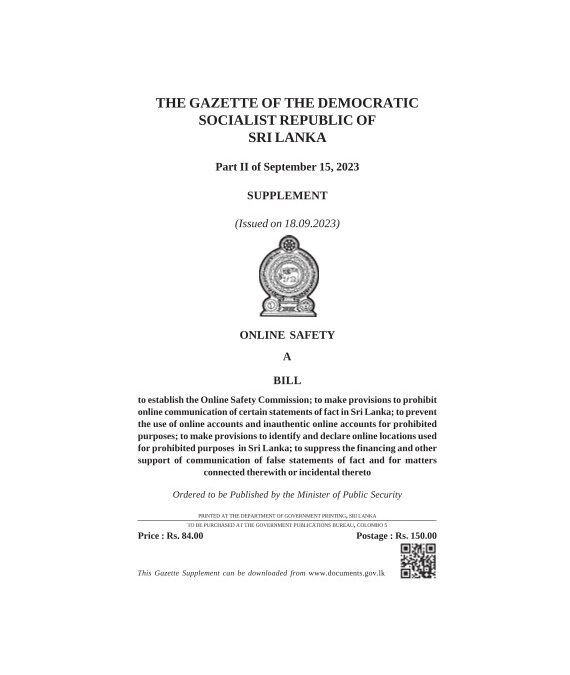
On 18 September 2023, the Ministry of Public Security gazetted a bill titled “Online Safety” intended to dramatically regulate the content of online communication, including by the general public.
The ICJ considers that several provisions of the bill would serve to undermine the exercise of human rights and fundamental freedoms in the country, including freedom of information and expression. Of particular concern are provisions related to the setting up, appointment and functions of an Online Safety Commission and other experts, the vague and overbroad wording of conduct designated as punishable offences and unnecessary and disproportionate punitive sanctions.
“While the spread of online hate-speech and disinformation need to be tackled, this bill is deeply flawed in its design and would be open to abuse by the Sri Lankan government, which has persistenty failed to uphold freedom of expression,” said Ian Seiderman, ICJ’s Legal and Policy Director. “It risks being used to suppress important public debate regarding the conduct of the government and matters of public policy,” he added.
The Bill would establish an “Online Safety Commission” that would act to: “prohibit online communication of certain statements of fact; prevent the use of online accounts and inauthentic online accounts for prohibited purposes; make provisions to identify and declare online locations used for prohibited purposes in Sri Lanka and to suppress the financing and other support of communication of false statements,” as well as other unspecified matters.
The Bar Association of Sri Lanka has called for the immediate withdrawal of the bill and for the adoption of a process of meaningful consultations with all relevant stakeholders prior to gazetting bills which ‘have a serious impact on the community at large.’
“The current draft fails to adhere to the principles of legitimacy, necessity and proportionality required for any State activity that restrict rights. It must be withdrawn or amended to be brought in line with Sri Lanka’s international human rights obligations guaranteeing freedom of expression, opinion, and information.” Seiderman added.
The ICJ considers that the Bill should not be evaluated in a vacuum, but instead must be read in conjunction with existing and proposed legislation that threaten human rights. Such laws include the extremely misused ICCPR Act of 2005, the Prevention of Terorrism Act (PTA), the Bureau of Rehabilitation Act, and the proposed Anti-Terrorism law which seeks to replace the PTA. This body of legislation, taken together, fosters a chilling effect on the exercise of fundamental freedoms restricting civil society while unduly expanding the reach of the security state.
Article 14 (1) (a) of the Sri Lankan Constitution gurantees the freedom of speech and expression. Article 19 of the International Covernant on Civil and Political Rights, to which Sri Lanka is a party, affirms the right to freedom of expression and opinion.
In July 2018, the UN Human Rights Council adopted by consensus a resolution affirming that “the same rights that people have offline must also be protected online, in particular freedom of expression, which is applicable regardless of frontiers and through any media of one’s choice, in accordance with articles 19 of the Universal Declaration of Human Rights and the International Covenant on Civil and Political Rights.”
Contact: Ian Seiderman, Legal & Policy Director, e: ian.seiderman@icj.org
See annexed below a summary analysis of some problematic aspects of the Online Safety Bill.
Sri Lanka: Selected flaws in the Online Safety Bill
- Wide ranging and overly broad powers of the Online Safety Commission and appointed Experts
The bill provides for the establishment of a five-member ‘Online Safety Commission’ that is to be appointed on the sole discretion of the President (clause 5). This is in contrast to other notionally independent commissions in Sri Lanka, the appointments to which require the consent of the Constitutional Council by way of nomination or ratification. This bill would give the president unfettered discretion where both appointment and removal is concerned.
The Commission would also be vested with a wide range of powers, some of which encroach into the functions of the judiciary. It essentially acts as sole arbiter of matter of fact and is entitled to issue notices or directives against any person, internet service provider (ISP) or internet intermediaries who/which is alleged to have communicated a prohibited or false statement. The bill does not specify the process through which the Commission would arrive at this decision.
Moreover, the Commission is granted authority to block websites and instruct ISPs to restrict access to specific online locations. This may result in undue government overreach and censorship and impermissible limitations on the exercise of the right to information protected by Article 14A of the Constitution and international law.
Further clause 37 allows for the Minister to appoint ‘Experts’ to assist police officers in investigations. The experts are private individuals who can accompany police officers during search procedures, but are also given the power upon authority granted by a police officer above the rank of a sub-inspector to require a person to hand over any documents or device, provide traffic data or be orally examined (clause 37 (6)). Such excessive powers in the hands of unaccountable private individuals provide avenues for abuse.
The bill does not provide provide for judicial review of the Commission’s decisions or procedures. Instead clause 49 seeks to protect the Commission, its staff, or any expert appointed under clause 37 from being brought to court for any act or omission done in good faith.
- Vague and overbroad offences
A particularly problematic aspect of the bill are provisions of vague and overbroad definitions of offences.
Article 19(3) of the ICCPR provides that the right to freedom of expression and opinion may be subject to certain restrictions, but that these restrictions must be provided by law and necessary for one of a limited numbers of legitimate purposes, namely to protect the rights and reputations of others, national security, public order or public health or morals. The measure of limitation must be proportionate, using the least restrictive means possible to achieve the purpose. The requirement that any restrictive measure be provided by law means that they must comply with the principle of legality, by which the law must be stated with precision as to allow persons to be able to conform their conduct in compliance.
Similarly, Article 15 (2) of the Sri Lankan Constitution provides for possibility of restriction of the right “as may be prescribed by law in the interests of racial and religious harmony or in relation to parliamentary privilege, contempt of court, defamation or incitement to an offence.”
The prohibitions listed in this draft legislation go beyond the restrictions allowed for under the ICCPR and the Sri Lankan Constitution, as clause 12 states that “any person who poses a threat to national security, public health or public order or promotes feelings of ill-will and hostility between different classes of people, by communicating a false statement, commits an offence.”
In addition, several acts that would constitute offence are only vaguely defined, if at all. This includes communicating a false statement “with the deliberate intention of wounding the religious feelings of any other person” (clause 16) or “outraging the religious feelings of any class of persons, insults or attempts to insult the religion or the religious beliefs of that class” (clause 17). These clauses are overbroad in that they would encompass expression that is protected under human rights law. Clause 14 makes it an offence to ‘wantonly giving provocation by false statement to cause riot’. This language is open to abuse by the authorities, as evidenced by practices arising from other legislation, including the ICCPR Act and the PTA.
Repeated mention of ‘religion’ in these provisions is a cause for concern as they come in a context where there is ongoing strife relating to contested religious sites between majority and minority religious communities, thus creating risk of selected application to silence expression by persons from minority religious communities.
- Disproportionate Punishment
The draft bill prescribes unjustifiably hefty punishments of fines and a period of imprisonment ranging from one, two, three or five years for overbroad and ill-defined offences. It also states that “in the event of a second or subsequent conviction, such term of imprisonment or fine or both such imprisonment and fine may be doubled.”
Clause 25 of the bill, which refers to ‘failure to comply with the directives of the Commission’ would make it an offence to fails to comply with such directive within a period of 24 hours and makes the person liable to imprisonment for a term not exceeding five years or to a fine not exceeding one million rupees.

Sep 28, 2023 | News
The ICJ is concerned at Thailand’s continued failure to bring justice to the loved ones of Karen activist Pholachi ‘Billy’ Rakchongcharoen, who was the victim of an apparent enforced disappearance in 2014, and apparent subsequent killing.
The ICJ calls on the responsible authorities to ensure that there is continuous effective investigation to determine definitively the fate of Billy and deliver justice to his family.
Today, Thailand’s Criminal Courts for Corruption and Misconduct Cases acquitted four Kaeng Krachan National Park officials, the last individuals seen with Billy, of murder-related charges, including premeditated murder and concealing the victim’s body. Only one of the accused, Chaiwat Limlikit-aksorn, former chief of Kaeng Krachan National Park, was convicted of charges and sentenced to three years in prison related to “malfeasance in office” for failing to hand Billy over to the responsible authorities after his arrest.
The Court, constituted of a panel of two judges, indicated that it did not believe that Billy had been released as claimed by the accused. Nevertheless, the Court concluded that there was not sufficient evidence to prove that the park officials orchestrated the killing.
“More than nine years of delays, including by inaction by the government until recently, and still no justice, is a blow to the victims. This constitutes yet another marker of Thailand’s consistent failure to hold accountable perpetrators of serious human rights crimes, potentially committed by State authorities,” said Sanhawan Srisod, ICJ Legal Adviser.
Billy was the victim of an apparent enforced disappearance, as he was last seen on 17 April 2014 in the custody of Kaeng Krachan National Park officials. The officials claimed they detained Billy for illegal possession of honey, but that they released him later the same day.
On 12 September 2019, the DSI located bone fragments, along with an oil tank submerged in water, which they identified as likely belonging to Billy. The subsequent DNA test indicated a maternal relation between the fragment and Billy’s mother, suggesting a blood relationship through the maternal line. However, the Court ruled today that there was insufficient evidence to establish that they belong to Billy, as opposed to other relatives who may have passed away during the same period.
This decision was made despite testimony from State forensic experts affirming the validity of the DNA test used in this case, which needed to be considered alongside other supporting facts. This includes testimonies given by the relatives and cultural expert about the absence of known blood relatives who had passed away without knowledge, and the Karen practice of not scattering the remains of the deceased in the river. Such testimony also aligns with the opinions of international forensic experts, specifically the Independent Forensic Expert Group established by the International Rehabilitation Council for Torture Victims, who were consulted by the prosecutors’ lawyers.
Enforced disappearance was recently made a specific crime under Thai law, following the adoption of the long-delayed Act on Prevention and Suppression of Torture and Enforced Disappearance, which came into effect in February this year. Under the Act, and international law, enforced disappearance is a continuous crime, which is not completed until the fate or whereabouts of the victim becomes known. Therefore, to the extent that there is any doubt that the discovered remains belonged to Billy, the crime must be considered to be ongoing and the law is applicable to Billy, even if it was not in force when he first “disappeared.”
Nevertheless, the Prosecution did not attempt to charge the accused with enforced disappearance, and the Court consistently rejected any reference to the crime made by the prosecution during the proceedings. This includes the rejection of expert witnesses proposed by the prosecutor’s lawyers who intended to testify about international law and standards governing enforced disappearance, following the rejections made by the accused.
“It is also unfortunate that the Thai court did not take into consideration the specific nature of the crime of enforced disappearance, often accompanied by very limited circumstantial evidence, which may be the only available means of establishing the crime. Such a crime also normally includes the powerlessness of the victim in the hands of the authorities, the use of state power to destroy direct evidence in an attempt at total impunity or to create the illusion of a perfect crime, all factors that have been taken into consideration in many cases in various jurisdictions worldwide when assessing the possible involvement of the suspects in crimes of this nature,” added Srisod.
During the trial, pursuant to the Act on Establishment of the Criminal Court for Corruption Cases B.E. 2559 (2016), the Court also used the so-called inquisitorial system, which is new to both lawyers and public prosecutors accustomed to the accusatorial style of the usual Thai court system. In this regard, lawyers voiced complaints that the judge on several occasions cut short the follow-up questions that the lawyers had planned to ask, citing that these issues had already been covered during their own examinations and other written submissions.
Background
Chaiwat Limlikit-aksorn was convicted under section 157 of the Criminal Code and section 123 of the Organic Act on Counter Corruption B.E. 2542 (1999).
Thailand has signed but not yet ratified the International Convention for the Protection of All Persons from Enforced Disappearance (ICPPED) and is a State Party to the International Covenant on Civil and Political Rights (ICCPR) and the Convention against Torture and other Cruel, Inhuman or Degrading Treatment or Punishment (CAT). The latter two treaties prohibit conduct making up enforced disappearance, and the crime is recognized as violation of both treaties.
The National Human Rights Commission of Thailand and local Thai Civil Society Organizations continue to receive complaints of alleged human rights violations at the hands of security forces constituting serious criminal conduct, including extraterritorial killings, torture and other ill-treatment, and enforced disappearances.
Between 1980 and August 2023, the UN Working Group on Enforced or Involuntary Disappearances also recorded and transmitted 93 cases of alleged enforced disappearance to Thailand. Currently, 77 of these cases remain unresolved.
Unfortunately, the number of cases in which these allegations have been investigated, let alone perpetrators prosecuted, remains low, as are instances where there has been access to effective remedies and provision of reparations for victims. In several instances, alleged victims of torture and other ill-treatment or the families of those who died as a result of these abuses have received some monetary payments falling short of full reparation, but the perpetrators have not yet been brought to justice.
This case also follows the acquittal of five police officers charged with the robbery and coercion of the “disappeared” human rights lawyer Somchai Neelapaijit in December 2015 due to a lack of evidence.
Further reading
Thailand: Indictment of park officials for killing of “Billy” is a significant step towards justice
Thailand: discovery of “Billy’s” remains should reinvigorate efforts to identify perpetrator(s)
Thailand: special investigation into apparent enforced disappearance of “Billy” welcome, but much more is needed
Thailand: ICJ submits recommendations on draft law on torture and enforced disappearance amendments
Justice for Billy: Time for Thailand to Account for Activist’s Disappearance
Contact
Sanhawan Srisod, Associate International Legal Adviser, ICJ, e: sanhawan.srisod@icj.org