Aug 17, 2020 | Advocacy, News
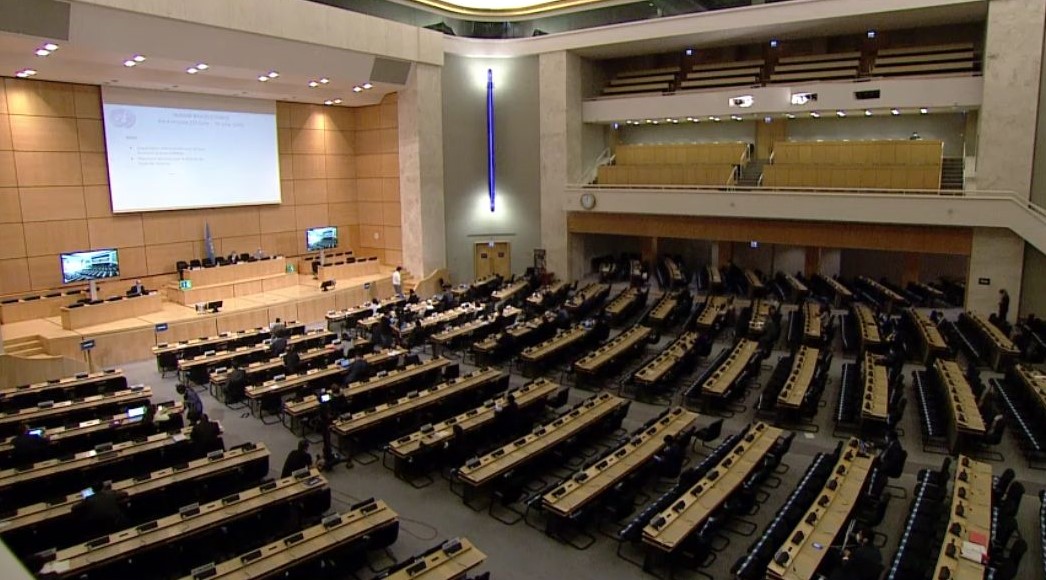
Today, the ICJ joined 83 other human rights organizations to call the United Nations Human Rights Council to renew and strengthen the mandate of the Independent International Fact-Finding Mission (FFM) on Venezuela in its upcoming session in September, and to ensure it has adequate resources to continue its critical work.
The ICJ considers that the lack of judicial independence in the country, recently addressed by the High Commissioner and documented by ICJ during several years, presents a major obstacle to victims seeking to access effective remedies and reparation for gross human rights violations in the country. There has also been near complete impunity for those responsible for such violations. The lack of effective accountability makes the work of the FFM indispensable
Last year at its 42nd session, UN Human Rights Council established the Independent International Fact-Finding Mission with a mandate to investigate extrajudicial executions, enforced disappearances, arbitrary detentions and torture and other cruel, inhuman or degrading treatment since 2014.
The Council expressed “grave concern at the alarming situation of human rights in the Bolivarian Republic of Venezuela, which includes patterns of violations directly and indirectly affecting all human rights (…) in the context of the ongoing political, economic, social and humanitarian crisis.”
The FFM’s first report is expected to be presented at the Council’s next session scheduled for 14 September to 6 October.
The NGO joint statement stressed that the report “will mark an important first step on the path to accountability in Venezuela through the documentation of the participation of those suspected of criminal responsibility. It is critical that the Human Rights Council respond meaningfully to the findings and recommendations in the report”.
The ICJ notes that the COVID-19 pandemic has engendered further stresses on the human rights situation. The United Nations Office for the Coordination of Humanitarian Affairs (OCHA) reported in July 2020 that an “assessment of water, hygiene and sanitation (WASH) conditions in 17 hospitals conducted by PAHO/WHO in 2019 found that 88.3 per cent of the assessed hospitals present a high risk that hygiene and sanitary conditions pose a health risk to patients and staff; the rest face a medium risk.”
The joint statement is available here.
Aug 13, 2020 | Advocacy, News
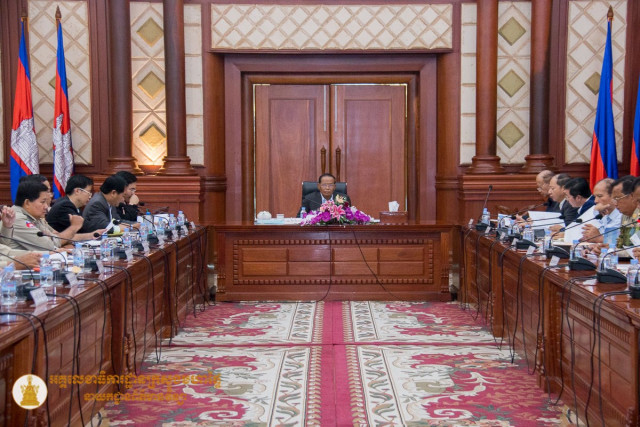
Today, the ICJ and 64 civil society organizations jointly called on the Royal Government of Cambodia (“RGC”) to discard the draft Law on Public Order (“draft law”) which, if adopted, would breach Cambodia’s international legal obligations.
The draft law aims to regulate public spaces and public behavior within those spaces, covering aesthetics, sanitation, cleanliness, noise, and social values, all under the broad aim of maintaining “public order”. It sets out a number of specific activities that are prohibited, lists a range of penalties that may be imposed for violations, and grants unfettered enforcement powers to authorities across all levels of government, with the proclaimed objective of creating “a more civilized society”.
The organizations expressed concern that the draft law contains multiple overbroad and arbitrary provisions which violate numerous human rights protections enshrined in the Constitution of the Kingdom of Cambodia and human rights treaties to which Cambodia is party, including the International Covenant on Civil and Political Rights and the International Covenant on Economic, Social and Cultural Rights.
Amidst an ongoing crackdown on fundamental freedoms in Cambodia, a number of existing laws already grant overbroad and unfettered powers to the RGC and are regularly deployed abusively to undermine human rights. Adoption of this draft Law on Public Order would serve to facilitate a further deterioration of the human rights situation in Cambodia.
The joint statement is available in English here.
The joint statement is available in Khmer here.
Contact
Kingsley Abbott, Senior Legal Adviser, ICJ Global Accountability Initiative e: kingsley.abbott(a)icj.org
See also
ICJ, ‘ICJ and 31 organizations jointly urge Governments to call for respect of human rights in Cambodia’, 22 July 2020
ICJ, ‘Cambodia: State of Emergency bill violates the rule of law’, 8 April 2020
ICJ, ‘Misuse of law will do long-term damage to Cambodia’, 26 July 2018
ICJ report, ‘Achieving Justice for Gross Human Rights Violations in Cambodia: Baseline Study’, October 2017

Aug 7, 2020 | Advocacy, Agendas, News
On 6-7 August the ICJ co-hosted a symposium on threats to judicial independence in East and Southern Africa.
The event was held with the collaboration of the Africa Judges and Jurists Forum, the Kenyan Section of the International Commission of Jurists Kenya Section, Open Society Initiative for Southern Africa, Southern Africa Development Community Lawyers Association, Malawi Law Society, Pan African Lawyers Association, East Africa Lawyers Association and the American Bar Association.
Recent actions taken to undermine judicial independence in East and Southern Africa include proposed constitutional amendments, executive interference with the functioning of the Judicial Service Commissions and verbal as well as physical threats against judges.
Participants in the symposium included judges, lawyers, academics and civil society representative. ICJ Commissioner and former Chief Justice of Kenya Dr Willy Mutunga, and Professor Jill Ghai of Katiba Institute delivered the key note addresses.
Dr Willy Mutunga speaking to challenges of judicial independence in the political context of Kenya in his keynote address, said “I believe that the independence of the judiciary… is about the integrity of the judicial officers… Building peoples’ confidence in the judiciary and the judicial officers depends on the integrity of the institution and its judicial officers and staff.”
In her address, Professor Jill Ghai evaluated various ways in which independence of the judiciary is undermined, taking into account examples from various countries.
“We must not relent in letting the Executive know that we are watching whenever there are attempts to undermine the judiciary,” Ghai said in closing.
ICJ Secretary General Sam Zarifi that judicial independence was facing genuine threats, not just in Africa but throughout the world.
“The issue of judicial independence has been at the heart of the ICJ’s work for the last 70 years almost… We have been defending the rule of law and human rights. For both of those the independence of the judiciary is absolutely essential,” Zarifi said.
On the second day of the symposium, participants into four groups discussed the nature of challenges and weaknesses in the Executive-Judiciary relations, litigation as a strategy for protecting judicial independence, strategies for increasing social and political activism in defence of judicial independence, and the prospects and strategies for regional and international advocacy in the age of COVID-19 respectively.
In his closing remarks, outgoing ICJ Regional Director Arnold Tsunga flagged Malawi as a recent case study where the judiciary had demonstrated its independence when the Constitutional Court nullified the 2019 presidential election results, citing widespread irregularities.
Watch the proceedings of the symposium here:
Welcome and keynote address
Closing remarks
Contact:
Justice Mavedzenge (ICJ Legal Advisor) t: +27793889990 e: justice.mavedzenge(a)icj.org
Shaazia Ebrahim (ICJ Media Officer) t: +27716706719 e: shaazia.ebrahim(a)icj.org
Jul 31, 2020 | Advocacy, Open letters
The ICJ and the South African Human Rights Defenders Network (SAHRDN) have written to the United Nations Special Rapporteur on the Situation of Human Rights Defenders, the African Commission on Human and Peoples’ Rights Special Rapporteur on Human Rights Defenders, and the Chairperson of African Commission on Human and Peoples’ Rights.
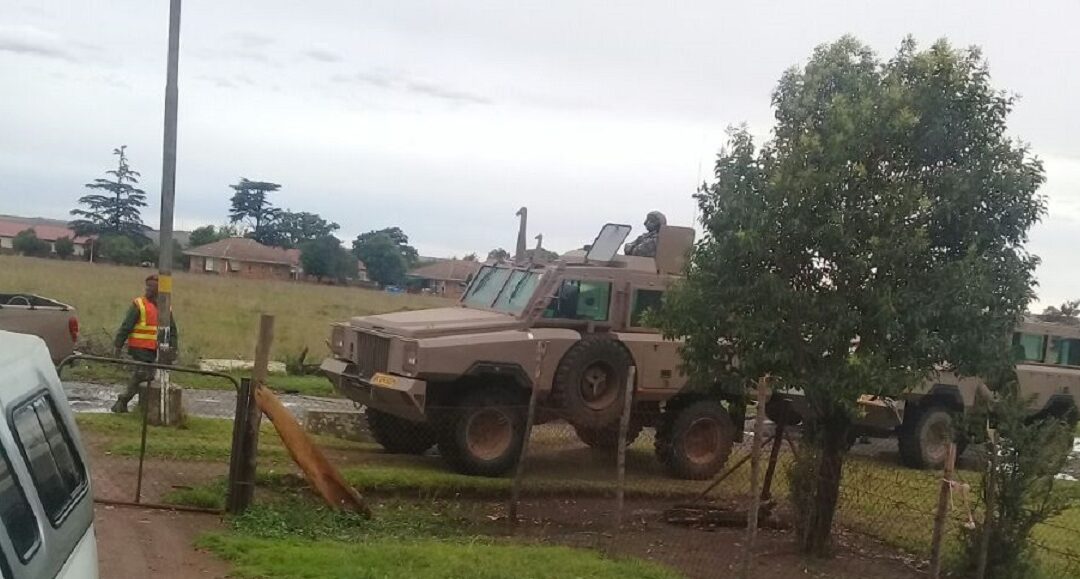
They have detailed the continued intimidation and harassment of the residents of Happiness village by the South African National Defence Force (SANDF).
“We have written to the Special Rapporteurs because the SANDF is unrelenting in its abuse of the resident’s despite the best efforts of their legal representatives and repeated court orders,” said ICJ Legal Adviser in South Africa Tim Fish Hodgson.
“A community leader was placed under house arrest guarded by four soldiers for seven days. Another resident was subjected to a punishment by which was told to lie flat on the ground and ‘pray to his God’ for simply leaving his home. Others have been assaulted. The SANDF deliberately conducts military exercises near the residents’ homes late at night to scare and intimidate them. All this with utter disregard for the law and in direct violation of a number of court judgments and orders”, he added.
The residents, who were forcibly and violently evicted from Marievale military base beginning in 2017, have repeatedly been granted court orders by the High Court declaring such evictions unlawful and directing the SANDF to refrain from harassing, threatening and intimidating the residents and not to restrict their movement.
Despite this, and in the midst of the COVID-19 pandemic, further evictions and constant harassment and intimidation continues unabated and has intensified to a point that the residents describe the SANDF as having “laid siege” to their homes in Happiness Village which is adjacent to Marievale military base.
Soldiers now police checkpoints, preventing visitors from entering the area and even journalists have been prevented from entering Happiness Village. The residents’ legal representatives were only allowed to visit a single community representative under armed military guard.
As the letter reveals, the SANDF’s actions amount to violations of the residents’ right to adequate housing protection in terms of the South African Constitution, the African Charter on Human and People’s Rights and the International Covenant on Economic, Social and Cultural Rights.
The intimidation, harassment, humiliation and assault of the residents’ amount to violations of the residents’ rights to liberty and security of person and may also amount to cruel, inhumane and degrading treatment or punishment in violation of the South African Constitution and international human rights law.
They seem to be geared at making the resident’s lives intolerable in order to secure evictions “through the backdoor”, which is explicitly prohibited in South African law.
The residents, represented by Lawyers for Human Rights, will once again be in urgent court on July 31 seeking an interdict to prevent further harassment, intimidation and restrictions on their movement by the SANDF. The legal representatives of the SANDF have indicated that they intend to oppose their application.
The ICJ has therefore implored the Special Rapporteurs to:
1. Call on the SANDF, the Minister of Defence and Military Veterans and on the Ekurhuleni Municipality to desist from any further evictions, relocation, intimidation, harassment, humiliation, and assault of the Marievale community residents;
2. Call on the SANDF, the Minister of Defence and Military Veterans and the Ekurhuleni Municipality to immediately lift and ensure the non-recurrence of restrictions on the movement on Happiness Village residents;
3. Call on the President of South Africa, as the Commander in Chief of the SANDF, to take appropriate action to ensure that the human rights violations that the residents of Marievale have suffered at the hands of the SANDF on a continuous basis since 2017 be investigated, and that appropriate action be taken to ensure access to justice and effective remedies for the residents; and
4. Call on the Parliamentary Portfolio Committee on Defence and Military Veterans to ensure the accountability of the Minister of Defence and Military Veterans for the human rights violations to which the SANDF has subjected the residents on a continuous basis since 2017.
Read the full letter here.
SouthAfrica-SAHRDN-ICJ Letter to SRs on HRDs-Advocacy-open letters-2020-ENG
Contact:
Tim Fish Hodgson (ICJ Legal Adviser) t: +27828719905; e: timothy.hodgson(a)icj.org
Jul 30, 2020 | Advocacy
The ICJ is concerned that in Kazakhstan, Kyrgyz Republic, Tajikistan and Uzbekistan the COVID-19 pandemic, and measures taken purportedly to contain it, have significantly curtailed access to justice. Restrictions have affected the operation of the courts and impeded lawyers’ ability to provide effective legal assistance to their clients.
In the context of the COVID-19 pandemic — whether under a state of emergency or not — States’ obligations under international human rights law to uphold the fundamental guarantees of a fair trial, and to ensure access to effective remedies for violations of human rights endure.
The right to a fair trial entails the right to adequate time and facilities to prepare a defense, which, in turn, requires the opportunity to communicate with one’s lawyer effectively and in confidence.
In light of this, the ICJ calls on Central Asian States to ensure that, while COVID-19 restrictions are in place, access to a lawyer continues to be ensured, and that measures be put in place so that lawyers are able to communicate with their clients safely, effectively and confidentially, including in places of detention or during online hearings.
In addition, wherever and whenever the authorities put in place restrictions on physical meetings or travel with the stated purpose of containing the COVID-19 pandemic, the ICJ calls on Central Asian States to ensure that access to court is guaranteed through specific legal, administrative and practical measures.
ICJ research and discussions with lawyers have shown that across Central Asia, regulations adopted during COVID-19 relating to the administration of justice have suffered from vague language, inconsistencies and unclear guidance.
In practice, this had serious implications for the right to fair trial of defendants: in some cases defence lawyers were not allowed to meet their clients who were charged with serious crimes; in other instances lawyer-client meetings were very short, undermining the ability of lawyers to take proper instructions from their clients and to advise them accordingly; in other cases defence lawyers met their clients in circumstances where the confidentiality of their communication was compromised as a result of the virtual communication platforms they were forced to use.
The restriction measures relating to the administration of justice that the authorities have imposed have also had negative consequences for access to justice and effective remedies for victims of human rights violations; notably, access to legal assistance in domestic violence cases was impeded across the region.
In many court buildings social distancing requirements were not adjusted in such a way as to uphold the right to a public hearing. There has been a lack of sufficient guidance on how the right to a public hearing may be ensured online, including as to how the right to equality of arms and the right to legal representation would be protected.
Download
Central Asia-Statement COVID-19-Advocacy 2020-ENG (full article with additional information, in PDF)