Nov 16, 2023 | Advocacy, News
The International Commission of Jurists (ICJ) strongly condemns the Government of Pakistan’s decision to expel over 1.4 million Afghan nationals, including unregistered refugees, forcibly removing them to a country where many, especially women and girls, have a well-founded fear of persecution. The organization is deeply concerned for the safety and well-being of people who have been left with no choice but to flee under threats of arrest or deportation, as cases of arbitrary arrests and detention, and instances of ill-treatment, are reported.
“The forcible removal of Afghans is particularly egregious considering the ongoing humanitarian crises in Afghanistan and the current political climate following the Taliban takeover. Returning anyone there, especially women and girls, is fraught with risks. The expulsion of refugees and asylum seekers violates the principle of non-refoulement under international law, which prohibits the forcible removal of anyone to a country or place where they would have a well-founded fear of persecution, such as a real risk of being tortured or otherwise ill-treated or other serious human rights violations”, said Melissa Upreti, ICJ Asia Director.
Estimates indicate that there are over 1.4 million undocumented Afghans in Pakistan, in addition to some 1.3 million registered Afghan refugees. On 3 October 2023, the Government of Pakistan announced its plans to repatriate “illegal foreigners.” This was followed by a circular stating that Afghan Citizen Cardholders and those with Proof of Registration would be exempted. The deadline for Afghan nationals to leave Pakistan was 1 November, and has recently been extended to 31 December 2023, following significant international pressure. However, there have been reports of these exemptions not being applied and Afghans facing increasing harassment and pressure from local authorities.
UN agencies have called attention to the possibility of a serious escalation in human rights violations resulting from the separation of families and deportation of minors as the Pakistani authorities implement their plans. Since August 2021, the UN High Commissioner for Refugees has urged States not to return Afghan nationals to Afghanistan given that the country continues to be affected by recurrent conflict, instability and climate-induced disasters.
The ICJ and its partners have documented detailed evidence of gender-based persecution of women and girls in Afghanistan, as a direct result of the mounting draconian restrictions on their human rights and freedoms since the Taliban takeover in August 2021, in a joint report released earlier this year with Amnesty International. In light of the gravity and systematic nature of the restrictions and prohibitions that women and girls face in Afghanistan, the two human rights organizations recommended that all Afghan women and girls outside Afghanistan should be considered prima facie refugees and granted international protection.
“There is no evidence of a change in the de facto authority’s mode of governance, which centres on the oppression of women and girls and severe deprivation of their fundamental rights. If anything, there is evidence that the situation for women and girls in Afghanistan has become worse. Expelling Afghan nationals from Pakistan, especially women and girls, along with their families and forcing them back to Afghanistan puts them at a real risk of persecution or other forms of serious harm for which no legal recourse is available in Afghanistan,” added Upreti.
Citing concerns about a breach of international law obligations by Pakistan, a number of UN Special Rapporteurs have said in a joint letter that, “the lack of domestic asylum laws and procedures does not absolve States of their obligations to uphold the principles of non-refoulement under international human rights and customary law.”
Pakistan’s National Commission for Human Rights (NCHR) has urged the Government to refrain from conducting the deportations and called for adherence to relevant provisions in national and international law pertaining to refugees.
Thousands of Afghans have already crossed the border and with the recent postponement of the deadline to leave the county, the fate of over a million Afghans hangs in the balance. The ICJ calls on the Government of Pakistan to immediately:
- Rescind the expulsion order, cease further deportations and harassment of Afghans and comply instead with its international law obligations,
- Create pathways for women, girls and their families who have been forced to leave under the order to safely return.
- Consult with civil society, members of the Afghan community living in Pakistan, the NCHR, and relevant international organizations in the development of appropriate policies.
Contact:
Raquel Saavedra, ICJ Legal Adviser, e: raquel.saavedra@icj.org
Oct 24, 2023 | Advocacy, News, Statements, Work with the UN
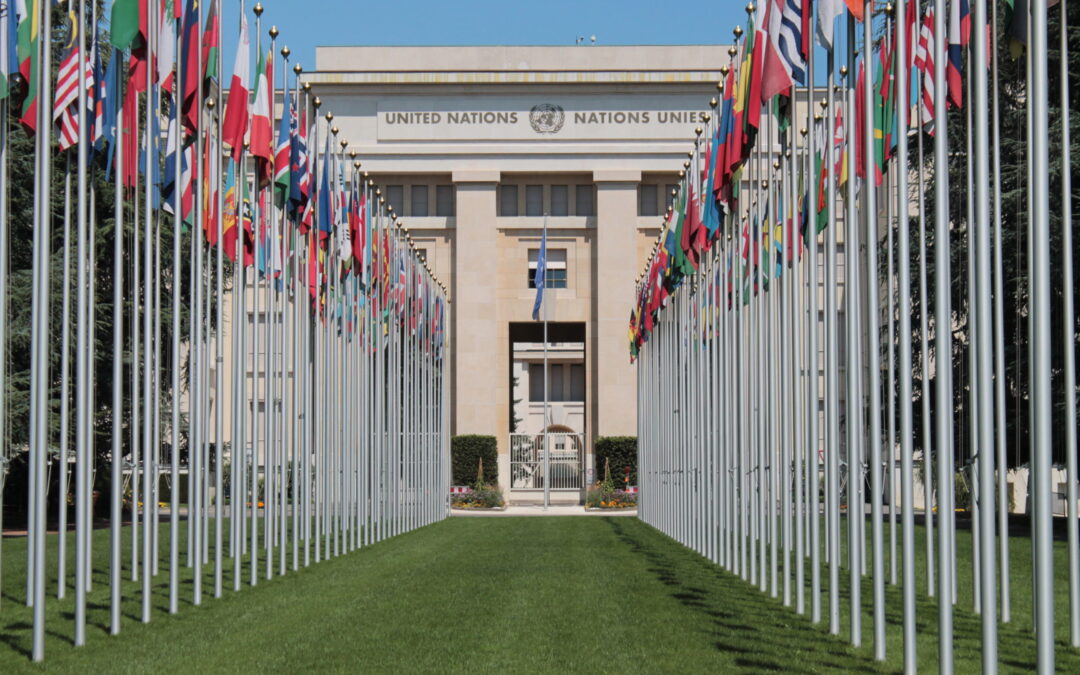
A week of negotiations started at the United Nations in Geneva yesterday to enhance the international legal framework to regulate business enterprises, especially transnational corporations, and increase accountability for human rights abuses and violations linked to their activities. The ICJ has been actively participating in the previous sessions of these negotiations in the last nine years and is committed to pursue its constructive contribution to the debate. Read our statement below.
“Thank you, Mr. Chair.
The International Commission of Jurists (ICJ) congratulates you on your election as the Chairperson-Rapporteur.
The ICJ acknowledges the efforts made by the Chairmanship to propose a revised and streamlined text on the basis of the various inputs received and consultations organized since the 8th session of this working group. We appreciate that this work has resulted in a more concise and clearer text in several places, which, in some respects, may better facilitate the negotiations ahead of us this week. It brings more internal coherence to the text and avoid repetitions that were affecting previous iterations. We also acknowledge that there are varying and divergent positions among States on the more difficult issues under discussion in this process and that you have proposed some compromise formulations to bridge the gaps.
We, however, regret that some critical provisions have disappeared from the revised draft in front of us at this session. The ICJ is particularly concerned that articles concerning prevention, liability and jurisdiction have been stripped of key elements that served to clarify international human rights law with regard to accountability for human rights abuses and violations in the context of business activities; and to ensure access to justice for the victims of such abuses and violations including through access to effective judicial remedies.
The ICJ will thus intervene in the negotiations during this 9th session in a constructive spirit with the aim to make proposals and comments addressing these gaps in the protection of human rights in the context of the activities of transnational companies and other business enterprises.
We are convinced that this process, after 9 years, needs to deliver an ambitious enough text so as to meet the needs of present and future victims and make a real contribution to the necessary development of international law in that area. For these reasons, we urge all States from all regional groupings to participate actively and constructively in the negotiations.
Thank you very much, Mr. Chairperson-Rapporteur.”
Statement delivered by:
Sandra Epal Ratjen, ICJ UN Representative and Senior Legal Adviser, e: sandra.epal@icj.org
Oct 19, 2023 | News
The International Commission of Jurists (ICJ) condemns the strike on al-Ahli hospital in the Gaza Strip on 17 October 2023, which according to the Palestinian Health Ministry killed more than 500 Palestinian civilians, mainly women and children, and injured hundreds more.
“Civilians and hospitals must be protected at all times”, said Said Benarbia, Director of the ICJ’s MENA Programme. “Intentional attacks on hospitals may amount to war crimes under international humanitarian law and must cease immediately”, added Benarbia.
Palestinian sources have said that the massacre was caused by an Israeli air strike. The Israeli Defence Forces have denied any responsibility, claiming that it was caused by a failed rocket launch by Palestinian armed groups.
Under the Geneva Conventions and customary international humanitarian law, States have an obligation to investigate war crimes with a view to bringing alleged perpetrators to justice.
The ICJ calls on the Office of the Prosecutor of the International Criminal Court (ICC) to allocate the necessary resources to respond to the escalating situation in Israel and Gaza with a view to investigating and establishing criminal responsibility for alleged war crimes and other violations of international humanitarian law committed by both parties.
According to the ICC Prosecutor Karim Khan, the ICC has jurisdiction over potential war crimes committed by Palestinian armed groups in Israel and Israelis in the Gaza Strip, even though Israel is not a State party. In 2015, Palestine acceded to the ICC Statute. In 2021, the Court ruled that its jurisdiction “in the Situation in Palestine extends to the territories occupied by Israel since 1967, namely Gaza and the West Bank, including East Jerusalem.”
On 12 October the Israel Defence Forces (IDF) ordered the entire population of northern Gaza, that is, more than 1 million people, to evacuate to southern Gaza within 24 hours in advance of a likely military ground offensive.
On 14 October, the World Health Organization (WHO) strongly condemned Israel’s repeated orders for the evacuation of 22 hospitals in the Gaza strip, and called on Israeli authorities to protect health facilities, health workers, patients and civilians.
“The Israeli evacuation order was issued in the absence of safe passage or a safe destination. It may amount to a transfer of parts of the population of the occupied territory, a war crime under the ICC Statute and a serious violation of international humanitarian law”, said Benarbia.
Under international humanitarian law, hospitals and other medical facilities are considered to be protected civilian objects. Unless they are used for military purposes, they shall be protected at all times and may not be the object of attack.
Under international humanitarian law, all parties to an armed conflict have an obligation to distinguish between military and civilian targets and to take all feasible precautions to protect civilians from attacks and from the effects of military operations. Indiscriminate attacks on civilians and civilian objects, including those perpetrated using weapons that are indiscriminate by nature, amount to breaches of international humanitarian law. Intentionally directing attacks against civilians amounts to war crimes under the under the Statute of the ICC and customary international law.
Furthermore, the ICJ is deeply concerned by reports of the use of white phosphorus by Israel in other military operations in Gaza and Lebanon.
“Israel must refrain from using white phosphorus, and any other means and methods of warfare that are inherently indiscriminate or that cause superfluous injury or unnecessary suffering”, added Benarbia.
White phosphorus has the potential to cause civilian harm due to the severe burns it causes and its lingering long-term effects on survivors. While it is not per se a prohibited weapon under international humanitarian law, its use in densely populated areas, such as the Gaza Strip, is prohibited as it violates the international humanitarian law requirement that parties to the conflict take all feasible precautions to avoid civilian injury and loss of life.
The ICJ also condemns the continued detention by Palestinian armed groups of approximately 200 hostages.
“Hostage-taking is prohibited under international humanitarian law, and those detained must be released immediately”, said Benarbia.
The ICJ also reiterates calls by the United Nations Secretary General, WHO and others for the establishment of a humanitarian corridor to enable humanitarian aid to enter the Gaza Strip.
Contact:
Said Benarbia, Director of the ICJ’s Middle East and North Africa Programme, email: said.benarbia(at)icj(dot)org
Oct 11, 2023 | Advocacy, News
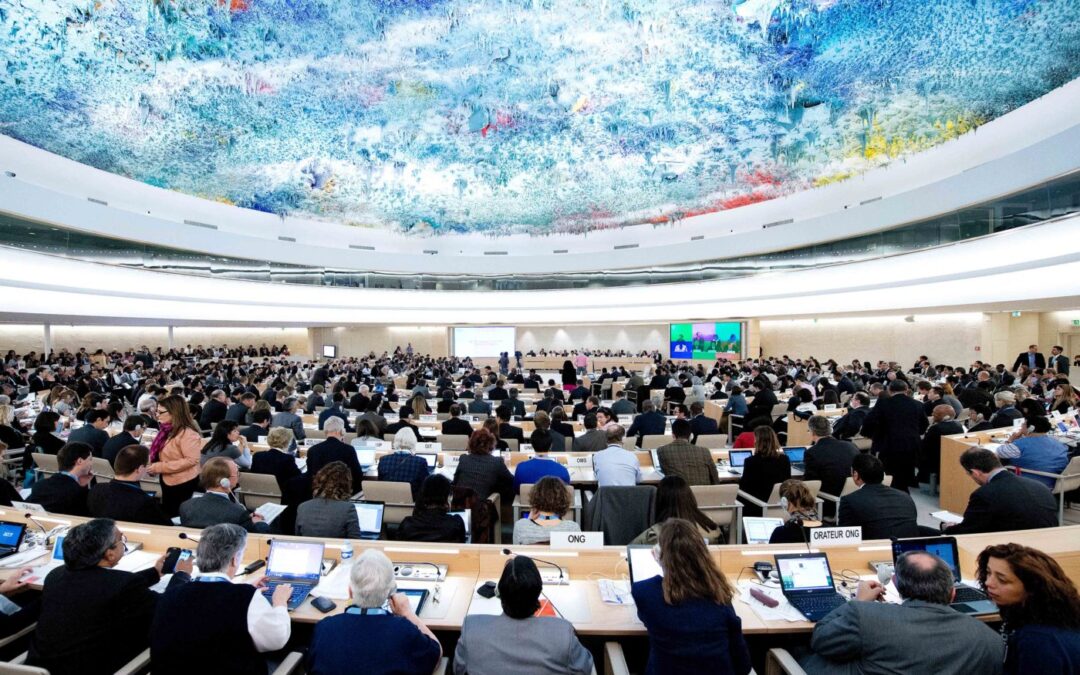
The International Commission of Jurists (ICJ) called the Human Rights Council’s (HRC) attention to the entrenched pattern of human rights violations in Cambodia, and called on the HRC to adopt a resolution to extend the Special Rapporteur’s mandate and ensure it has adequate resources and support.
Oral statement of the International Commission of Jurists (ICJ) during the Interactive Dialogue with the Special Rapporteur on the situation of human rights in Cambodia
“Madam Vice President,
The International Commission of Jurists (ICJ) concurs with the Special Rapporteur’s assessment that Cambodia has largely failed to implement the 20 human rights-related benchmarks proposed in his previous report to this Council.
In the lead-up to the national elections, there was a rapid escalation of the human rights and rule of law crisis in Cambodia. Human rights defenders and political opponents were convicted based on non-human rights compliant laws for exercising their right to freedom of expression, both online and offline, with new draconian laws on cybercrime and cybersecurity being drafted and considered.
The authorities have arbitrarily revoked licenses and blocked online access to independent media outlets without due process. The government at the highest level has employed rhetoric, reproduced online, to threaten and incite violence against political opponents with impunity, with credible reports of actual physical violence as an apparent consequence.
This systematic disregard for Cambodia’s international human rights obligations has been further exacerbated by the absence of an independent and impartial judiciary. The convictions of human rights defenders and political opponents were frequently accompanied by massive fair trial violations, including the effective application of a presumption of guilt.
It is imperative that the Council responds decisively to reverse this entrenched pattern of human rights violations in Cambodia by adopting a resolution to extend the Special Rapporteur’s mandate and ensuring it has adequate resources and support.
Thank you.”
Contact
Sandra Epal Ratjen, ICJ UN Representative and Senior Legal Adviser, e: sandra.epal@icj.org
Daron Tan, ICJ Associate International Legal Adviser, e: daron.tan@icj.org
Oct 10, 2023 | Advocacy, News
The International Commission of Jurists (ICJ) condemns the direct attacks against civilians in Israel, including deliberate killings of hundreds of civilians, the taking of hostages and the launching of indiscriminate rockets against civilians and civilian objects, perpetrated by Palestinian armed groups since 7 October 2023.
“I abhor the deliberate targeting of civilians and hostage-taking, and condemn the horrific escalation of violence in Israel and the Occupied Palestinian Territory,” said Santiago Canton, ICJ Secretary General. “These atrocities are crimes under international law and must stop immediately. Civilians held hostages should be released.”
The ICJ also condemns Israel’s retaliatory airstrikes against buildings in densely populated areas in Gaza, which have killed hundreds of Palestinian civilians, and the measures of collective punishment taken against civilians in Gaza, including a total siege on food, water, electricity and fuel.
“I urge the Israeli authorities to refrain from engaging in indiscriminate retaliations or any form of collective punishment against civilians and from using starvation as a method of warfare,” said Canton.
The ICJ calls on all parties to the conflict to respect their obligations under international humanitarian law to protect civilians caught up in the hostilities and for accountability for the crimes under international law that have been perpetrated.
The attack led by Palestinian armed groups began on 7 October 2023, with thousands of indiscriminate rockets fired on Israel as well as incursions in Israel of armed combatants shooting civilians en masse and taking hostages to Gaza.
Israel retaliated with attacks against the Gaza strip through waves of airstrikes targeting several residential buildings and a mosque.
The death toll reported as of this morning, 10 October, was of at least 900 Israelis and at least 700 Palestinians, with more than 2,600 Israelis and 3,700 Palestinians injured.
While Israel has already cut off electricity and fuel supplies to Gaza, on 9 October the Israeli Defence Minister announced a complete siege of Gaza, including food and water, adding “we are fighting human animals and we are acting accordingly.” On the same day, Hamas threatened to execute an Israeli captive for every Israeli bombing of a civilian building without warning.
Background
Israel has imposed an air, land and sea blockade on the Gaza Strip since 2007.
The ICJ has documented Israel’s systematic human rights violations against the Palestinians in the Occupied Palestinian territory, such as forced evictions and displacement, restrictions on freedom of movement and arbitrary deprivations of life and liberty.
The ICJ has further documented attacks by Israeli forces and Palestinian armed groups in the Gaza strip in violation of the prohibition against deliberate or indiscriminate attacks against civilians, including as a result of the launch by Palestinian armed groups of thousands of indiscriminate rockets into Israel.
In February 2023, the ICJ called on the Israeli authorities to stop all actions amounting to the war crime of collective punishment of the Palestinian people in the West Bank and East Jerusalem, including house and property demolitions, arbitrary revocation of residency and citizenship rights and forcible deportation of Palestinians from the Occupied Palestinian Territory.
The ICJ recalls that willful killing, willfully causing great suffering or serious injury to body or health, unlawful deportation and taking of hostages committed against civilians and members of armed forces placed hors de combat, as well as extensive destruction of property not justified by military necessity and carried out unlawfully and wantonly, are grave breaches of the Fourth Geneva Convention and Additional Protocol I to the Geneva Conventions and amount to war crimes under the Rome Statute and customary international law. Intentionally directing attacks against the civilian population and civilian objects and intentionally using starvation of civilians as a method of warfare by depriving them of objects indispensable to their survival, including willfully impeding relief supplies as provided for under the Geneva Conventions, as well as measures of collective punishment against protected persons, also amount to war crimes.
Contact:
Said Benarbia, Director of the ICJ’s Middle East and North Africa Programme, email: said.benarbia(at)icj(dot)org