Oct 2, 2023
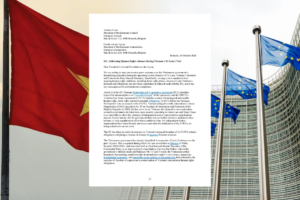
The International Commission of Jurists (ICJ) and Access Now sent a joint letter and an accompanying legal analysis to Cambodia’s Ministry of Post and Telecommunications and Ministry of Justice, calling for the withdrawal or substantial amendment of its Draft Law on Cybersecurity to bring its provisions in line with international human rights standards.
The draft law, if adopted, would likely undermine the rights to privacy and freedom of expression, while also risking personal security and exposing people to increased cyber threats.
“The Draft Law would require government licenses of cybersecurity services – an excessive provision that would hamper the ability of people and businesses in Cambodia from being able to secure themselves against intrusion into their networks and safeguard their data,” said Golda Benjamin, Asia Pacific Campaigner at Access Now. “Cambodia wants this draft law to deal with malicious cyber activities but in its current form, it will only create a new problem of having a cybersecurity landscape that imposes unreasonable administrative burdens to organizations, including small and medium enterprises and civil society.”
In the legal analysis attached to the joint letter, Access Now and ICJ point out that the vaguely worded and sweeping provisions in the Draft Law may be abused to allow government cybersecurity inspectors overbroad access to private data. It fails to provide for safeguards, but instead would grant a newly created body of cybersecurity inspectors immense power to investigate, observe, monitor, prevent and respond to cybersecurity threats and incidents. The Draft Law also fails to make provision to ensure that cybersecurity inspectors are properly qualified.
“These proposed arrangements are a recipe for executive abuse, especially given that the bill fails to provide for any independent or effective oversight or remedial mechanism to serve as check on governmental conduct and safeguard against any potential overreach,” said Ian Seiderman, Legal and Policy Director at the ICJ. “If this legislation is put forward for adoption, it needs to amended to correct these deficiencies and comply with Cambodia’s international legal obligations and rule of law principles.”
Access Now and ICJ urge Cambodia to strengthen their cybersecurity landscape to deal with malicious cyber activities and ensure that any law, policy, or practice to implement this goal complies with the country’s international human rights obligations. Effective cybersecurity requires a human-centric and human rights respecting approach.
Download
Read the joint letter here, and the joint legal analysis of the Draft Law on Cybersecurity here.
Contact
Daron Tan, ICJ Associate International Legal Adviser, e: daron.tan@icj.org
Sep 26, 2023
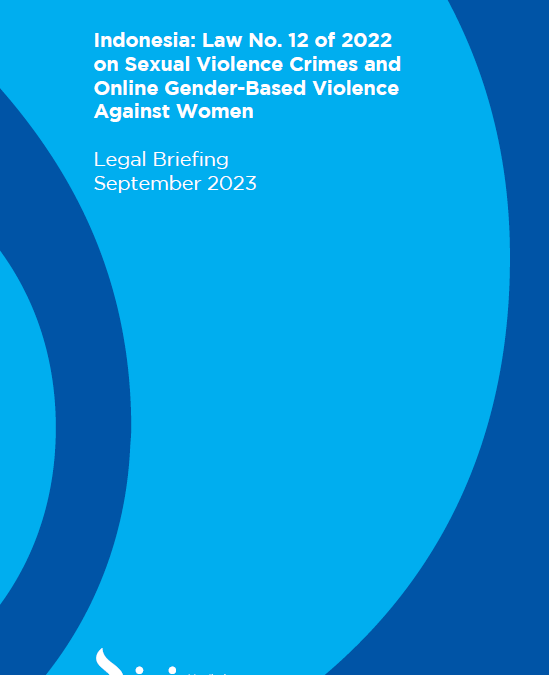
The Indonesian authorities should ensure that women are effectively protected against online gender-based violence (OGBV) by implementing Law No. 12 of 2022 on Sexual Violence Crimes (Law 12/2022) and by addressing its shortcomings in line with international human rights law, the International Commission of Jurists (ICJ) highlighted in a briefing paper published today.
In a thirty-page briefing paper analyzing Law 12/2022, the ICJ identified gaps in the recently adopted Law 12/2022 relating to OGBV, and addressed recommendations to the Indonesian authorities on how to enhance the country’s ability to fulfill its international human rights law obligations to prevent and punish acts of OGBV.
“While Law 12/2022 represents a step in the right direction with respect to preventing and punishing OGBV against women in Indonesia, much still needs to be done to effectively protect women against all forms of OGBV, and to ensure that victims/survivors are able to access justice and legal remedies,” said Daron Tan, ICJ Associate International Legal Adviser.
Law 12/2022 entered into force in May 2022. The law criminalizes acts of sexual violence, including certain manifestations of OGBV. Among other things, the legislation also guarantees legal protection and remedies for victims/survivors of certain acts of sexual violence.
The ICJ’s briefing paper underscores that acts of OGBV violate the human rights of victims/survivors guaranteed under international human rights law. Indonesia has international human rights law obligations to prevent acts of OGBV, and to investigate, prosecute and punish them when they occur.
The briefing paper identifies certain shortcomings in Law 12/2022 requiring improvement so as to more effectively address OGBV, including the limited scope of OGBV acts covered by the legislation and the need to ensure its gender-sensitive implementation.
“The Governmental Regulations to implement Law 12/2022, which are currently being formulated with the aim of adopting them before the end of 2023, present a great opportunity for the Indonesian authorities to ensure that Law 12/2022 may better address acts of OGBV in line with the country’s legal obligations under international human rights law and standards,” added Yogi Bratajaya, ICJ Legal Consultant.
The ICJ’s briefing paper also analyzes the human rights responsibilities of technological companies, such as Meta, X (formerly Twitter) and TikTok, to prevent and address acts of OGBV. These companies’ activities may risk enabling acts of OGBV against women, including through the algorithmic amplification of content amounting to or disclosing evidence of OGBV on their platforms.
The briefing paper provides concrete recommendations to the Indonesian authorities on how they can improve the provisions and implementation of Law 12/2022 in line with international human rights law to effectively protect women against OGBV. The briefing paper also provides recommendations to tech companies on how they can fulfil their responsibilities under international human rights standards to prevent acts of OGBV and effectively address them when they occur.
Briefing Paper Launch
The briefing paper was launched on 26 September 2023. The launch included a panel discussion, which drew together women’s rights organizations, journalists, lawyers and tech companies’ representatives to discuss the ongoing efforts in Indonesia to protect women against OGBV and ensure access to justice for victims/survivors.
The panelists at the launch were:
- Daron Tan, Associate International Legal Adviser, ICJ;
- Yogi Bratajaya, Legal Consultant, ICJ;
- Andy Yetriyani, Head of the National Commission on Violence Against Women (Komnas Perempuan);
- Uli Pangaribuan, Director of the Legal Aid Foundation of the Association of Women for Justice Jakarta (LBH APIK Jakarta);
- Endy Bayuni, Member of the Meta Oversight Board; and
- Nani Afrida, Editor in Chief, Independen.id
Download
The full briefing paper is available in English and Bahasa Indonesia (PDF). This press release is available in Bahasa Indonesia here.
Contact
Daron Tan, ICJ Associate International Legal Adviser, e: daron.tan@icj.org
Yogi Bratajaya, ICJ Legal Consultant, e: yogi.bratajaya@icj.org
Further reading
ICJ, “ICJ publishes guidance for laws to prevent and address online gender-based violence against women“, 19 May 2023
Apr 21, 2023
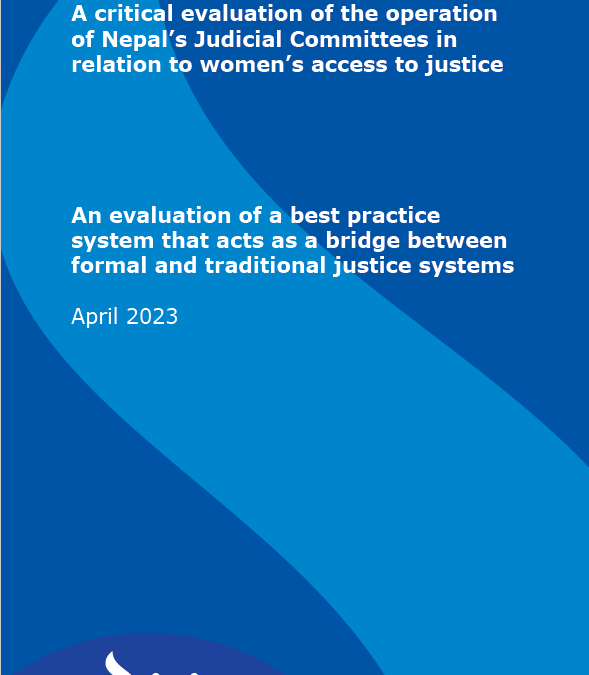
In a briefing paper released today, the International Commission of Jurists (ICJ) has recommended to Nepal government to adopt legislative and policy guidelines for the independent and effective functioning of judicial committees in order to promote access to justice for women
Download the briefing paper in English, click here
Download the briefing paper in Nepali, click here

Apr 20, 2023
The responsible Lesotho authorities have failed to ensure that learners with disabilities are able to enjoy their right to an education. This is because the country has not adequately adopted or implemented its laws and policies guaranteeing inclusive education. As a result many children with disabilities are not attending school at all, or are experiencing schooling which is not inclusive, equal or of adequate quality.

Feb 22, 2023
Today, more than 15 years after Thailand became a State Party to the UN Convention Against Torture and Other Cruel, Inhuman or Degrading Treatment or Punishment (UNCAT), its long-delayed Act on Prevention and Suppression of Torture and Enforced Disappearance comes into effect. The International Commission of Jurists (ICJ) and Amnesty International welcome the law’s entry into force. Both organizations urge the authorities to follow this positive step with measures both to enforce the law and to make further international human rights commitments protecting against torture and ill-treatment and enforced disappearance.