Apr 6, 2017
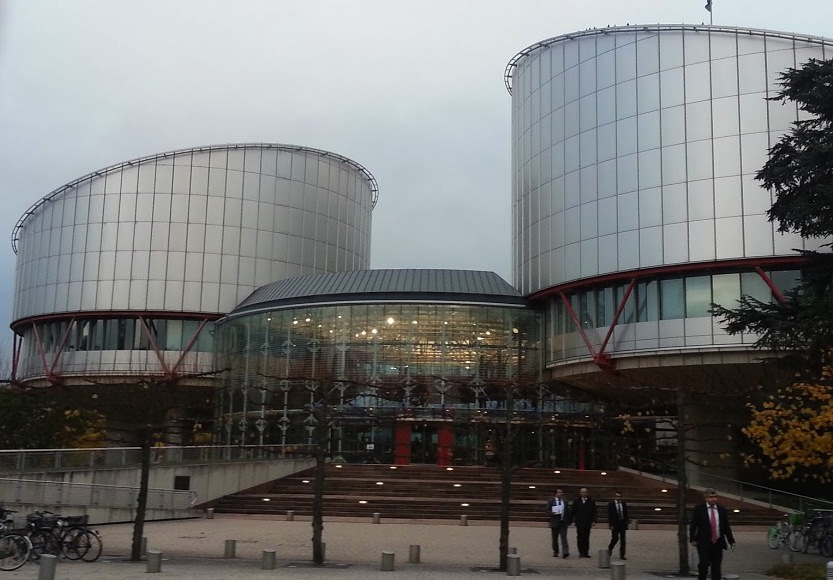
The ICJ has intervened before the European Court of Human Rights in a case of alleged abduction of a Tajik national and transfer to his country of origin where he could be at risk of torture or ill-treatment.
The International Commission of Jurists (ICJ) intervened in the case of K.F. v. Russia. K.F. had been subject to a procedure of extradition to Tajikistan to answer for terrorism-related offences there. The procedure was stalled by the interim measures issued by the European Court of Human Rights in the case. On the day of his release, for the expiry of the maximum term for detention, he disappeared. The family informed his lawyer that he was being held in a remand prison in Tajikistan.
In this submission, the ICJ provided the Court with an analysis, based on international law sources, of the positive obligations of States parties to the European Convention to ensure that no transfer is carried out of persons subject to interim measures enjoining such transfer by the European Court. The submission includes a comparative analysis of the law, jurisprudence and practice of other regional human rights systems. The ICJ also assessed the capacity of the Russian legal system to protect against transfers in violation of the Convention rights and, in particular, of the interim measures of the Court.
The ICJ concluded that the Russian authorities have not yet provided an effective protection programme that would ensure the respect of the interim measures of the European Court in cases of alleged abductions. Furthermore, the ICJ pointed out that the lack of any effective investigations and public condemnation of practices of abduction is detrimental to the effective implementation of the Court’s interim measures.
The ICJ submitted that this continued lack of compliance by Russian authorities with the rulings of the European Court affects the whole system of compliance with interim measures. The recurrence of this situation, therefore, requires the formulation of specific measures to enhance systemic changes in Russian law and practice.
Russianfederation-KF_v_Russia-ECtHR-amicus-ICJ-final-eng-2017 (download the third party intervention)
Mar 31, 2017
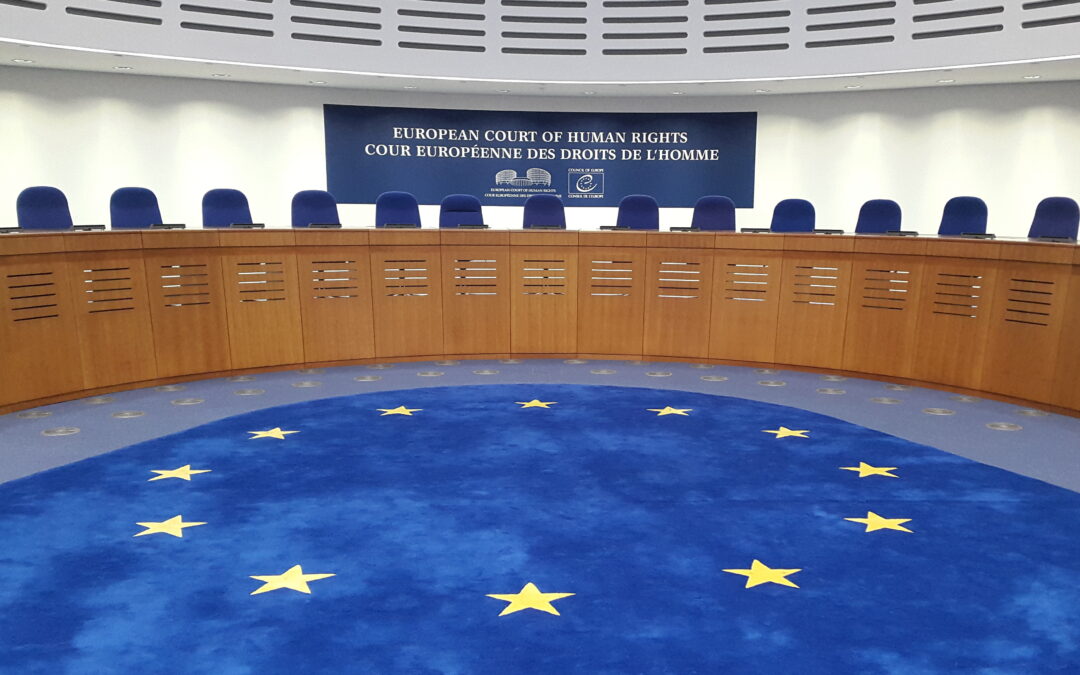
The ICJ and Amnesty International intervened before the European Court of Human Rights to promote access to justice in Switzerland for a victim of torture at the hands of the former Tunisian Government.
Abdennacer Naït-Liman, a Tunisian national, claims to have been tortured at the hands of officers of the former Tunisian regime. Years after having obtained refugee status in Switzerland, he sought criminal prosecution of one of the perpetrators when this last arrived to Geneva for medical treatment. While his arrest and the consequent criminal prosecution had not been possible, Mr Naït-Liman has sought to introduce a civil action for damages for the violation of his human rights. Swiss courts have dismissed this action on jurisdictional ground and he challenged this situation before the European Court of Human Rights.
In their intervention, the International Commission of Jurists and Amnesty International have provided the Court with observations concerning a range of issues, including:
- The international legal framework pertaining to the issue of universal civil jurisdiction relevant to the interpretation of article 6 ECHR, in particular the States’ obligation under Article 14(1) of the Convention against Torture to provide procedures permitting any victim to obtain reparation for torture committed abroad;
- Forum necessitates (forum of necessity) allowing courts to have jurisdiction over civil matters as a means to prevent a denial of justice; and
- The right to reparation for individuals in international human rights law with regard to the content of the obligation to provide reparation.
Switzerland-icj&ai-NaitLiman-Advocacy-legal submission-2017-ENG (download the third party intervention)

Mar 31, 2017
On 31 March, the ICJ and eight NGOs submitted a set of joint observations to the UN Committee Against Torture on its draft revised General Comment No. 1 on the implementation of Article 3 of the UN Convention against Torture and Other Cruel, Inhuman or Degrading Treatment or Punishment.
Universal-NGO submission UN Cmt Torture-Advocacy-Legal submissions-2017-ENG (full text, in PDF)
Mar 30, 2017
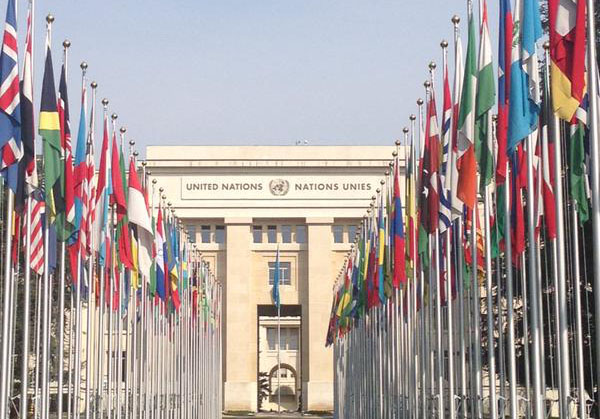
The ICJ and Human Rights Commission of Pakistan (HRCP) have made a submission to the Committee against Torture in advance of its examination of Pakistan’s initial report under the Convention against Torture and other Cruel, Inhuman or Degrading Treatment or Punishment.
ICJ and HRCP’s submission draws the Committee’s attention to concerns related to:
- Legal framework relevant to torture and other ill-treatment in Pakistan;
- Compatibility with the Convention, as well as other relevant international standards, of draft legislation purporting to incorporate the Convention against Torture into Pakistan’s domestic law;
- Allegations of torture and other ill-treatment of individuals facing trials before military courts in connection with terrorism-related offences;
- Prevalence of torture and other ill-treatment documented by HRCP; and
- Enforced disappearances as torture and other ill-treatment.
The Committee will examine Pakistan’s initial report during its 60th session, which will be held from 18 April to 12 May 2017.
Following the review, the Committee will adopt Concluding Observations setting out recommendations to the Pakistani Government.
Pakistan-CAT ICJ HRCP-Advocacy-legal submissions-2017-ENG (full text in PDF)

Mar 20, 2017
Today, the European Committee of Social Rights registered a collective complaint prepared by the ICJ in cooperation with Forum for Human Rights, against the Czech Republic.
The complaint argues that the Czech Republic fails to ensure equal legal protection and participation of children below the age of criminal responsibility in the pre-trial stage of juvenile justice procedures.
The ICJ and FORUM submit that serious systemic flaws in the Czech juvenile justice system deprive a specific group of particularly vulnerable individuals – children below the age of criminal responsibility – of an adequate level of social protection and leave them at risk of inappropriate or unfair procedures leading to arbitrary punitive measures, in violation of Article 17 of the European Social Charter, both alone and read in conjunction with the principle of equality in the preamble to the Charter.
This situation concerns more than one thousand children every year and as a matter of urgency, it requires a structured response.