Sep 19, 2016
The ICJ intervened today before the European Court of Human Rights in a case of extradition of an Uzbek national to his country of origin where he could be at risk of torture or ill-treatment.
The International Commission of Jurists (ICJ) intervened in the case of S.U. v. Russia.
In its submissions, the ICJ analysed the legal framework governing extraditions from the Russian Federation to Central Asian States, in particular Uzbekistan, as well as Russia’s extradition practice, including through the use of diplomatic assurances. These submissions aim to assist the Court in assessing the compliance of this law and practice with the European Convention on Human Rights (ECHR) and, in particular, with its procedural non-refoulement obligations.
The ICJ concluded that the analysis of the law and practice reveals a number of critical human rights deficits.
The ICJ submitted that the lack of respect for the procedural aspect of the principle of non-refoulement, the consequent ineffectiveness of domestic remedies in this regard, in the Russian Federation, and the abysmal record of Uzbekistan in upholding its obligation to respect and protect the prohibition of torture or other ill-treatment mean that extraditions from the Russian Federation to Uzbekistan entail a high risk of violations of both substantive and procedural aspects of the principle of non-refoulement.
RussianFederation-ICJ-AmicusBrief-S.U.-ECtHR-legalsubmission-2016 (download the third party intervention)
Aug 15, 2016
The ICJ and others intervened before the European Court of Human Rights in a case of five undocumented children of Afghan nationality subject to detention and/or closed reception measures in Greece.
The International Commission of Jurists (ICJ), the European Council on Refugees and Exiles (ECRE) and the AIRE Centre jointly intervened in the case of Sh.D and others v. Greece.
After his arrest by the police, Sh.D was placed in detention in a police station and then transferred to a reception centre for undocumented minors. The other four unaccompanied minors are currently living in the Idomeni camp at the border with the Former Yugoslav Republic of Macedonia.
In this case, the European Court of Human Rights is called to rule on whether their detention and reception conditions were lawful and/or constituted an inhuman or degrading treatment under the European Convention on Human Rights.
In their third party intervention, the three human rights organizations submitted the following arguments:
- The UN Convention on the Rights of the Child (CRC) must be implemented in all of the European Court of Human Rights (ECtHR) decisions that concern children. Since the principle of the best interests of the child must be upheld as a primary consideration in all actions concerning children, children must never be deprived of their liberty, under 5(1) ECHR, without a rigorous examination of the individual circumstances of the case, of necessity and proportionality, including a mandatory and prior assessment of less coercive measures.
- For children to have effective enjoyment of their rights under international law, in particular the ECHR, and EU law, including the right to liberty and security and the right to asylum, their needs, welfare and well-being must be individually assessed. The discharge of State obligations to ensure enjoyment of these rights is reliant on the appointment of a guardian with the necessary expertise and who has the specific duty to assist the child by enabling him or her to access rights under EU law.
- Since measures affecting the right to liberty and other Convention rights must be undertaken in accordance with national law, they must also, where Contracting Parties are EU Member States, be undertaken in accordance with EU law.
Greece-ICJ&others-AmicusBrief-ShD&others-ECtHR-legalsubmission-2016 (download the third party intervention)
Aug 1, 2016
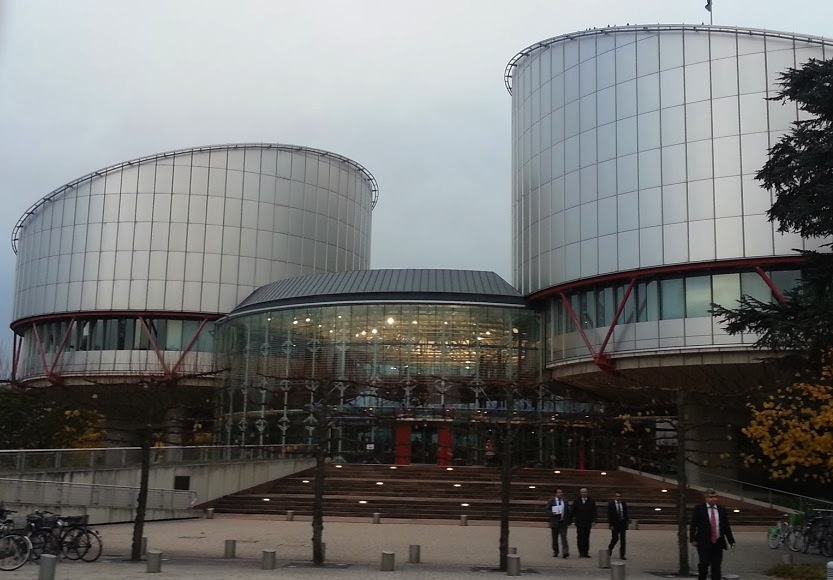
On 29 July 2016, the ICJ and other groups submitted a third-party intervention in the joint cases of Nikolay Alekseyev and Movement for Marriage Equality v. Russia and Nikolay Alekseyev and Others v. Russia before the European Court of Human Rights.
The cases concern the Russian authorities’ refusals to register associations defending the rights of homosexuals.
In their written submissions to the European Court of Human Rights, the ICJ, the European Human Rights Advocacy Centre (EHRAC) and the European Region of the International Lesbian, Gay, Bisexual Trans and Intersex Association (ILGA-Europe) focused on the extent of legitimate restrictions on the right to freedom of association for the protection of morals having regard, in particular, to the right to respect for private life under Article 8 of the European Convention on Human Rights.
The comments drew upon the European Court’s case-law; authoritative interpretation of other applicable sources of international law and comparative international law.
RUSSIA-INTERVENTION ALEKSEYEV ECtHR-LEGALINTERVENTION-2016-ENG

Jul 26, 2016
The ICJ and Lawyers Rights Watch Canada (LRWC) today submitted a joint amicus curiae in the criminal defamation proceedings against human rights defender Andy Hall.
The defamation charges have arisen in the context of research he has carried out on allegedly poor labour conditions, and the alleged use of illegal child labour employed in Thailand’s tuna and fruit export industry.
The brief points out that the imposition of harsh penalties such as imprisonment or large fines on a human rights defender risks having a ‘chilling effect’ on the exercise of freedom of expression, which Thailand is bound to protect pursuant to its international legal obligations.
These include international human rights treaties to which Thailand is a party. The brief aims to clarify the nature and scope of these international legal obligations relating to the right of freedom of expression.
Thailand-Amicus Andy Hall-Advocacy-Legal Submission-2016-ENG (full text in English PDF)
Thailand-Amicus Andy Hall-Advocacy-Legal Submission-2016-THA (full text in Thai, PDF)

Jul 26, 2016
The ICJ today submitted to the Human Rights Committee information in preparation for the Committee’s examination of Pakistan’s initial periodic report under the International Covenant on Civil and Political Rights (ICCPR).
During its session in October 2016, the Human Rights Committee will adopt a List of Issues for the examination of the first periodic report of the Pakistan under the ICCPR in July 2017.
In its submission, the ICJ raised issues and suggested questions to be put to the Government of Pakistan concerning:
- The compliance of Pakistan’s counter-terrorism laws with the rights to life, liberty and fair trial, particularly in the context of its “military justice” system and the operation of the Protection of Pakistan Act;
- The continuing practice of enforced disappearances and impunity for law enforcement and military agencies; and
- The compliance of Pakistan’s blasphemy laws with the rights to life; freedom of expression; religion, thought and conscience; and fair trial.
This submission was based on the more detailed findings in recent reports of the ICJ.
PAKISTAN-HRC LOI SUBMISSION-Advocacy-legal submission-2016-ENG (full text in PDF)
Read also:
On Trial: the implementation of Pakistan’s blasphemy laws
Military injustice in Pakistan